Ayutthaya Day Trip from Bangkok: Trains, Tuk-Tuks & Temples

If you only have time for one day trip from Bangkok, make it Ayutthaya. Not because it’s the easiest or most famous choice, but because it’s one of the few places in Thailand where centuries of history are still etched into the landscape. You can see it in the collapsed brick prangs, in the headless Buddha statues, in the way banyan roots wrap around stone as if the jungle is slowly reclaiming what empires left behind. And you can feel it in the serene calm that settles over you when you step away from Bangkok’s intensity and into the open space of an old capital.

An Ayutthaya day trip from Bangkok is also one of those rare travel days that delivers more than it promises, and you can do it all without planning too much. You don’t need an expensive van tour or a packaged itinerary. You can simply take the local train, eat something uniquely Ayutthaya for breakfast, visit a handful of temples that are central to Ayutthaya’s history, have a riverside lunch, and still be back in Bangkok before the evening.

Ayutthaya sits in Central Thailand, roughly 80 kilometres north of Bangkok. It was once the capital of the Ayutthaya Kingdom, a powerful Siamese empire that lasted for more than four centuries. From 1350 until 1767, Ayutthaya was a dominant political and cultural centre in Southeast Asia, and at its peak it was a major trading city connected to the wider world. Merchants and envoys came from China, Persia, Japan, and Europe, and the city grew wealthy enough to build monumental temples and royal complexes on a scale that still impresses today, even in ruin.

Then, in 1767, Ayutthaya fell. The city was sacked and burned in a Burmese invasion, and much of what remains is the aftermath of a violent end rather than a slow decline. This is why the ruins feel different to many historical sites. They are not perfectly preserved. They are not fully restored. They are fractured, exposed, and honest, and that honesty is part of their power.

The heart of the experience is the Ayutthaya Historical Park, a UNESCO World Heritage Site that includes some of the most important temple ruins in Thailand. It’s not a single park you stroll through in an hour. Ayutthaya’s ruins are scattered across a historical island formed by rivers, with temples rising out of grassy fields, roadside lots, quiet corners behind trees, and open courtyards that catch the sun in a way that makes the brick glow. The layout matters because it shapes the day. Ayutthaya rewards visitors who treat it like a place to move through slowly.

That is what makes Ayutthaya from Bangkok such a satisfying trip. You are not just looking at ancient buildings. You are leaving the present behind for a few hours and walking through the remains of a former capital, where religion, royal power, trade, and daily life once overlapped. You get the big iconic sights, like the Buddha head in tree roots, but you also get quieter moments, like stepping into a living temple filled with local worshippers, or sitting by the river eating grilled prawns while long-tail boats drift past.

Ayutthaya Historical Park - Kat

Ayutthaya

Ayutthaya - Day Trip from Bangkok by Train

Ayutthaya

Ayutthaya - Buddha Statue.jpg

Ayutthaya

How to Get to Ayutthaya from Bangkok

There are several ways to do an Ayutthaya day trip, but the train is the best option if you want both convenience and atmosphere. Taking the train from Bangkok immediately changes the pace of the day. The city thins out, the scenery opens up, and the journey itself becomes part of the experience.

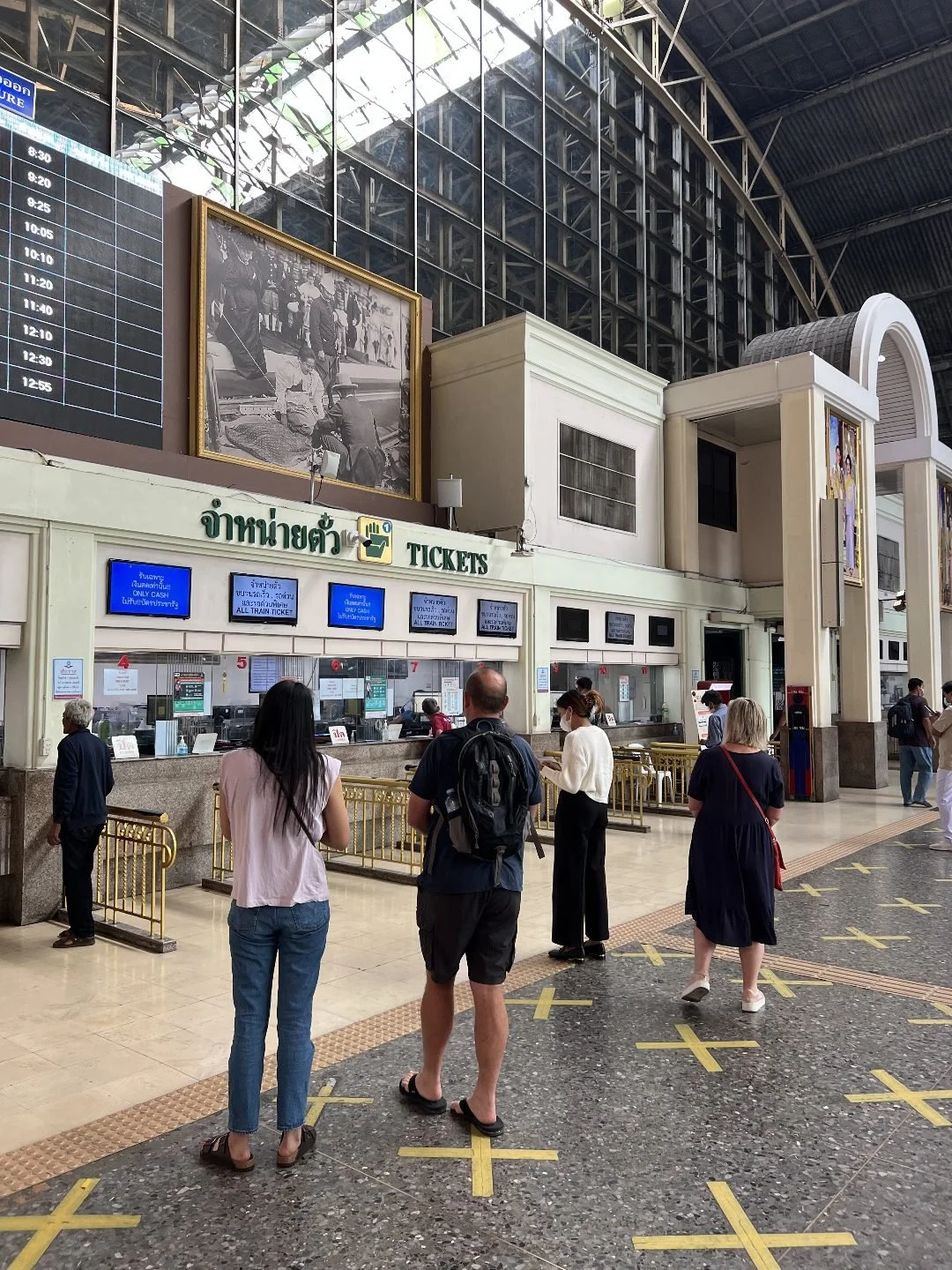
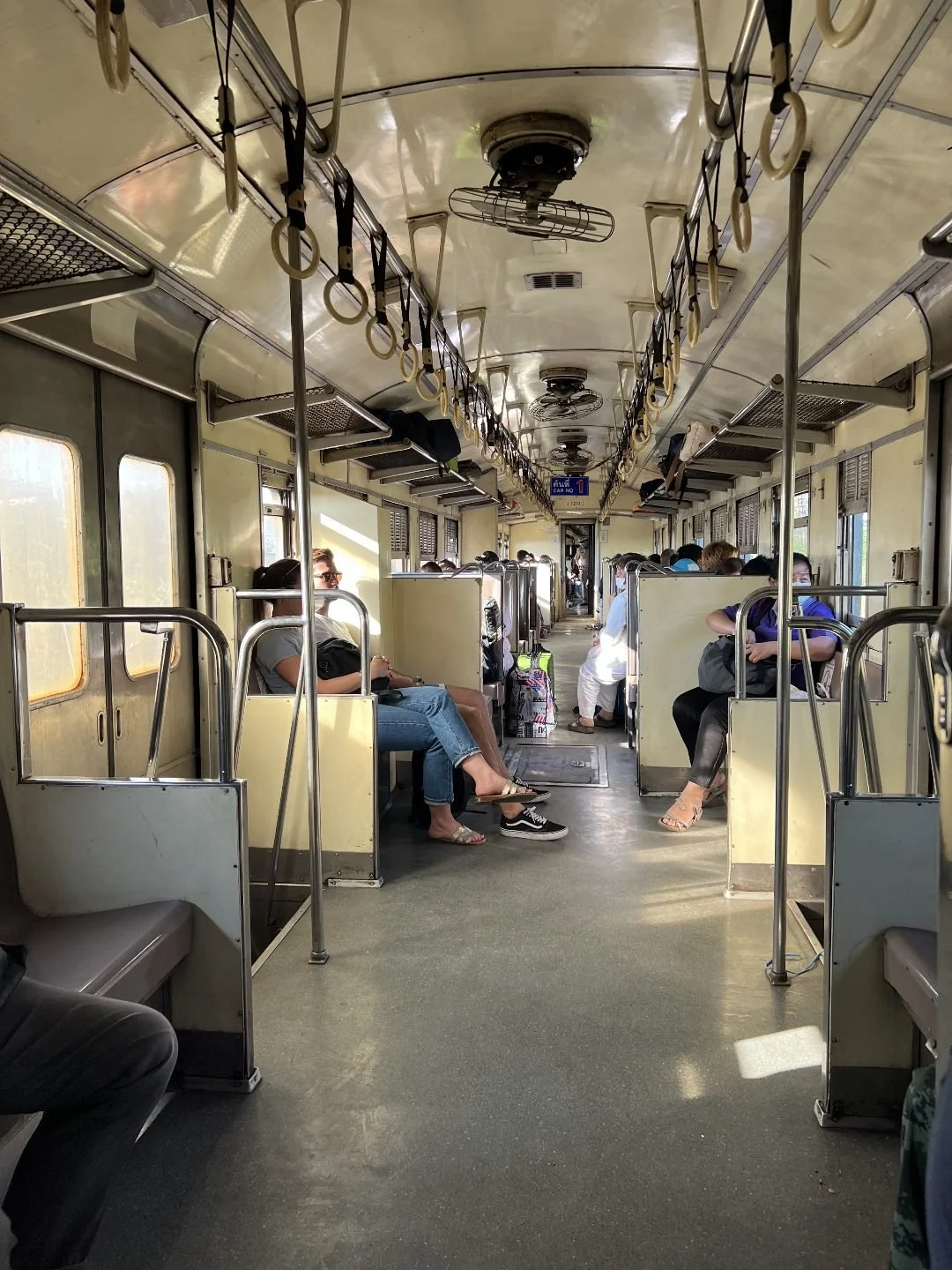
One of the most character-filled routes is the local train from Hua Lamphong Railway Station in Bangkok. This historic station still operates a few daily “Ordinary” trains to Ayutthaya. These are local, third-class-only trains, and they are slower than other services, often taking closer to two hours. That might sound like a downside until you realise what it offers. It is cheap, yes, but it is also deeply local. The carriages are simple, the windows are open, the air moves through naturally, and you watch Bangkok gradually loosen into suburbs, canals, small stations, and flat countryside.

The first stretch tends to feel like classic Bangkok edges, with low buildings, tangled power lines, and dense neighbourhoods pressed up against the tracks. Then the city thins out. You begin to see more greenery, wider skies, and the soft sprawl of Central Thailand. Vendors often move through the carriage with snacks and drinks, and commuters sit with the quiet patience of people doing a route they know by heart. It’s not a glamorous experience, but it is a real one, and it makes Ayutthaya feel earned.

Ayutthaya Railway Station sits on the eastern side of the river, just outside the historical island. This is important to know because it means you cannot simply walk out of the station and be at the temples. The ruins are spread out, and the main historical park area is several kilometres away.

Ayutthaya - Train Station

Hua Lamphong Railway Station

Ayutthaya - Train Day Trip

Hua Lamphong Railway Station

Ayutthaya - Train Station to Bangkok

Ayutthaya Railway Station

Ayutthaya - Local Train.jpg

Local train

How to Get Around Ayutthaya

Ayutthaya’s ruins are one of the biggest reasons the city is a UNESCO site, but the spread-out nature of those ruins is also what catches first-time visitors off guard. Ayutthaya is not one cluster of temples in a compact walking zone. It is a wide, scattered historical landscape, and the distance between sites is just enough to become tiring if you don’t have transport.

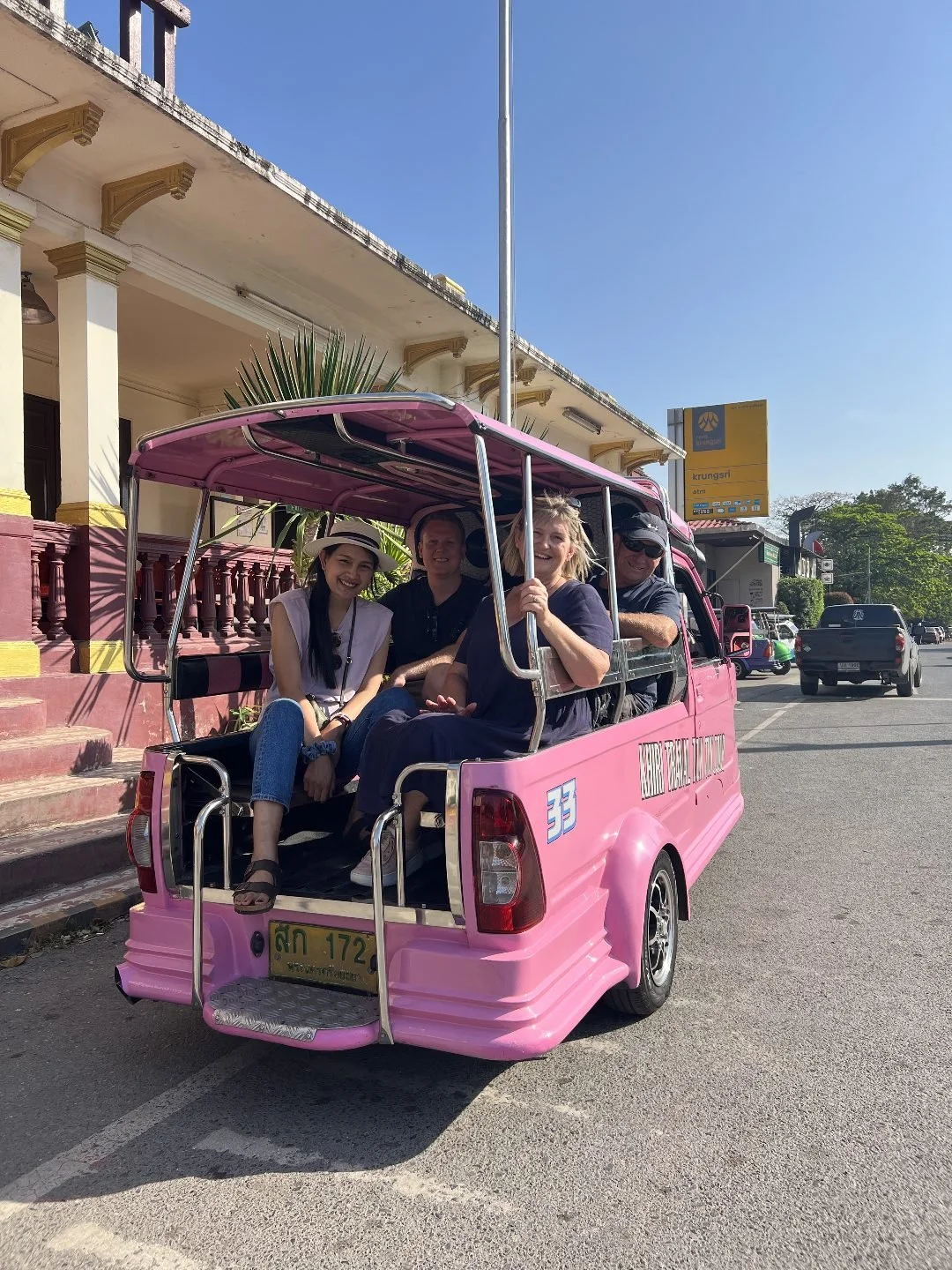
When you arrive at Ayutthaya Railway Station, you are greeted by tuk tuk drivers offering tours. You will probably see a few drivers waiting near the station entrance, and the offers begin almost immediately. In many places, this kind of approach can feel pushy. Although, in Ayutthaya, it’s more practical than pushy because tuk tuks are genuinely one of the best ways to experience the city in a single day.

The Ayutthaya Historical Park and the main temple areas are located around 4-5 kilometres from the station. Walking is possible, but it takes over an hour, and that is before you have even started visiting temples under the midday sun. Cycling is popular and can be beautiful, but it demands more effort, and in the hotter months the heat can turn an enjoyable ride into a grind. A tuk tuk solves these problems instantly.

On our visit to Ayutthaya, we decided to hire a tuk tuk driver and it turned out to be the best decision of the day. The driver became both transport and a quiet guide. He knew how to structure the route so we weren't constantly backtracking. He knew which temples worked best early, which ones were most crowded, and where to stop for food. Most importantly, he waited for us at each site. We would explore at our own pace, return to the tuk tuk when we were ready, and move on smoothly without stress.

This is what makes tuk tuks so effective for an Ayutthaya day trip. They allow you to see the highlights without racing, because the travel time between stops becomes effortless. You are not checking maps in the heat, negotiating bike rentals, or worrying about how far the next temple is. You are simply moving through Ayutthaya in a way that feels relaxed.

Tuk tuk tours also add a magical element. Ayutthaya is an ancient city, but it’s certainly not a dead one. Riding through modern streets between centuries-old ruins highlights the contrast between everyday life and the remains of the old capital. You pass school kids, small shops, canal-side houses, and local traffic, then suddenly you are at a temple complex that once belonged to kings.

Cycling remains a wonderful alternative if you want a slower, more cinematic experience and you have the right weather for it. Riding between the temples encourages a slower pace and closer attention to the surroundings, and it encourages detours into quieter ruins. However, for travelers doing Ayutthaya from Bangkok in one day, and especially for those arriving by train, tuk tuks are often the easiest way to see the best of the city without turning the day into a logistical project.

Ayutthaya - Tuk Tuk

Tuk Tuk

Ayutthaya - Tuk Tuk Tour

Tuk Tuk

How to Experience the Best of Ayutthaya in a Day

The best way to experience Ayutthaya in one day is to accept that you can’t see everything. Ayutthaya has dozens of ruins, and you could spend days exploring deeper corners. A day trip from Bangkok works best when you focus on a handful of sites that show you different sides of the old capital, and you pace the day so that it feels spacious rather than frantic.

10:00am: Boat Noodles at a Local Restaurant

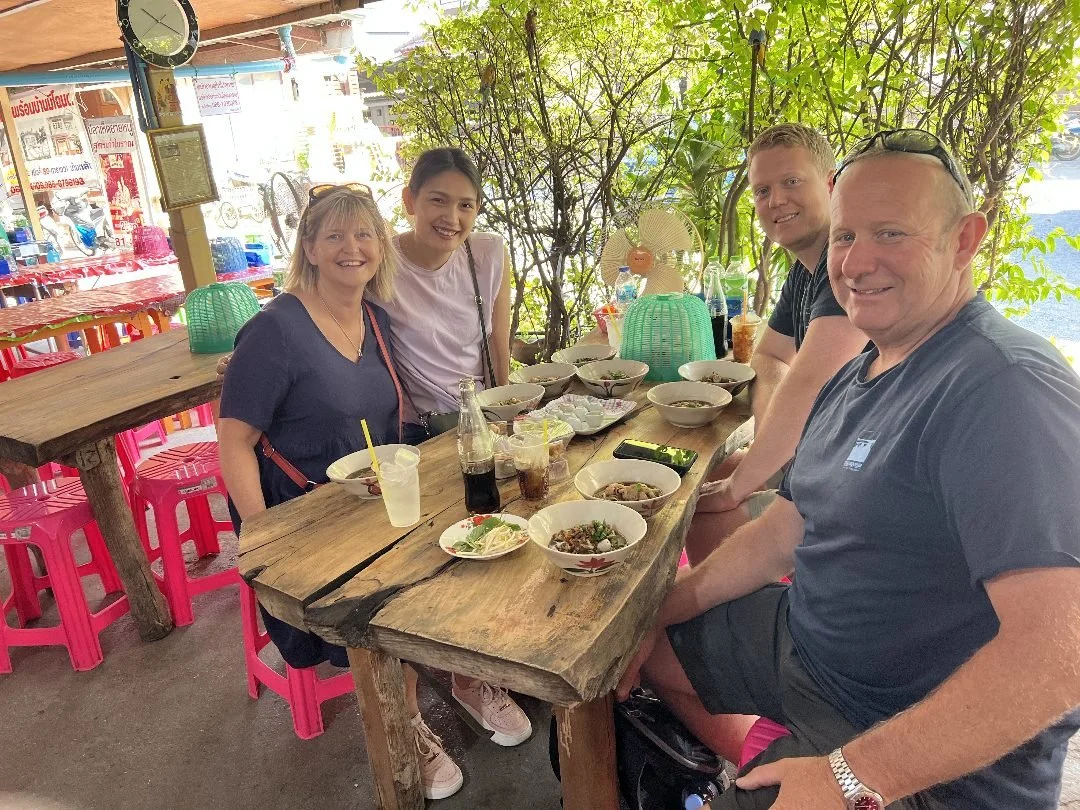
Ayutthaya is famous for its boat noodles. During the Ayutthaya Kingdom’s peak, canals were the city’s roads, and vendors sold food from boats that moved through the waterways. Boat noodles evolved in this environment. The soup needed strong flavour, quick serving time, and a practical serving style.

That is why the bowls are traditionally small. A snack-sized bowl was easier to hand to customers on riverbanks or other boats without spilling. Even today, the tradition remains, and it becomes part of the experience. You don’t order one large bowl and call it a meal. You order several small bowls and eat until you are full.

The broth is rich, dark, and aromatic. It is usually built on dark soy sauce, herbs, and Chinese spices like star anise and cinnamon. A small amount of cow or pig’s blood is often added. This tends to make some travelers hesitate, but in practice it acts as a natural thickener and deepens the flavour. The result is a broth with depth, warmth, and a slightly velvety texture that makes it feel more complex than a standard noodle soup.

Ayutthaya - Boat Noodles

Boat noodles

Ayutthaya - Boat Noodle Restaurant

Local restaurant

11:00am: Wat Phanan Choeng Worawihan

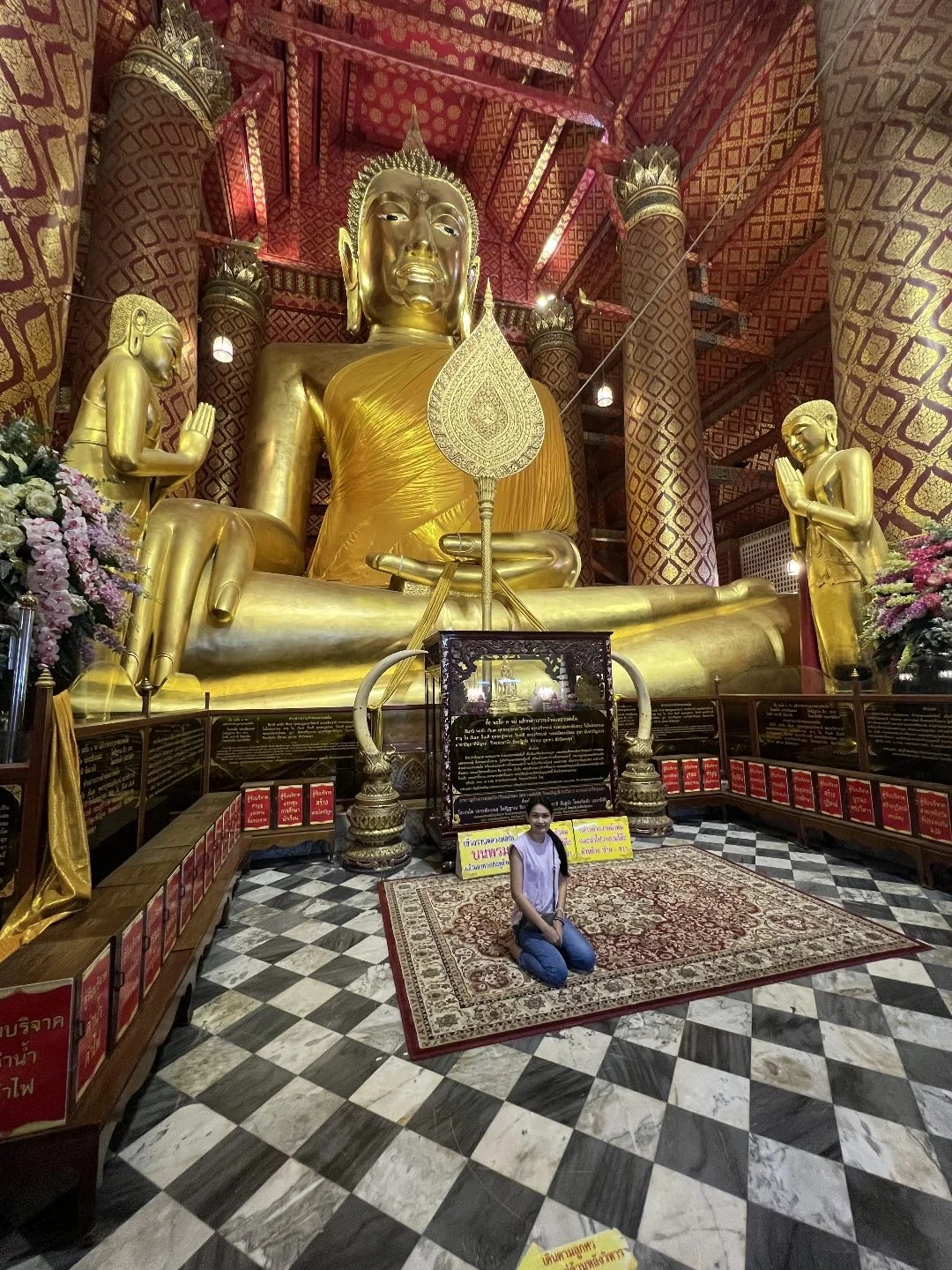
A strong first temple stop is Wat Phanan Choeng Worawihan, which predates Ayutthaya’s founding as a capital and remains an important place of worship for locals.

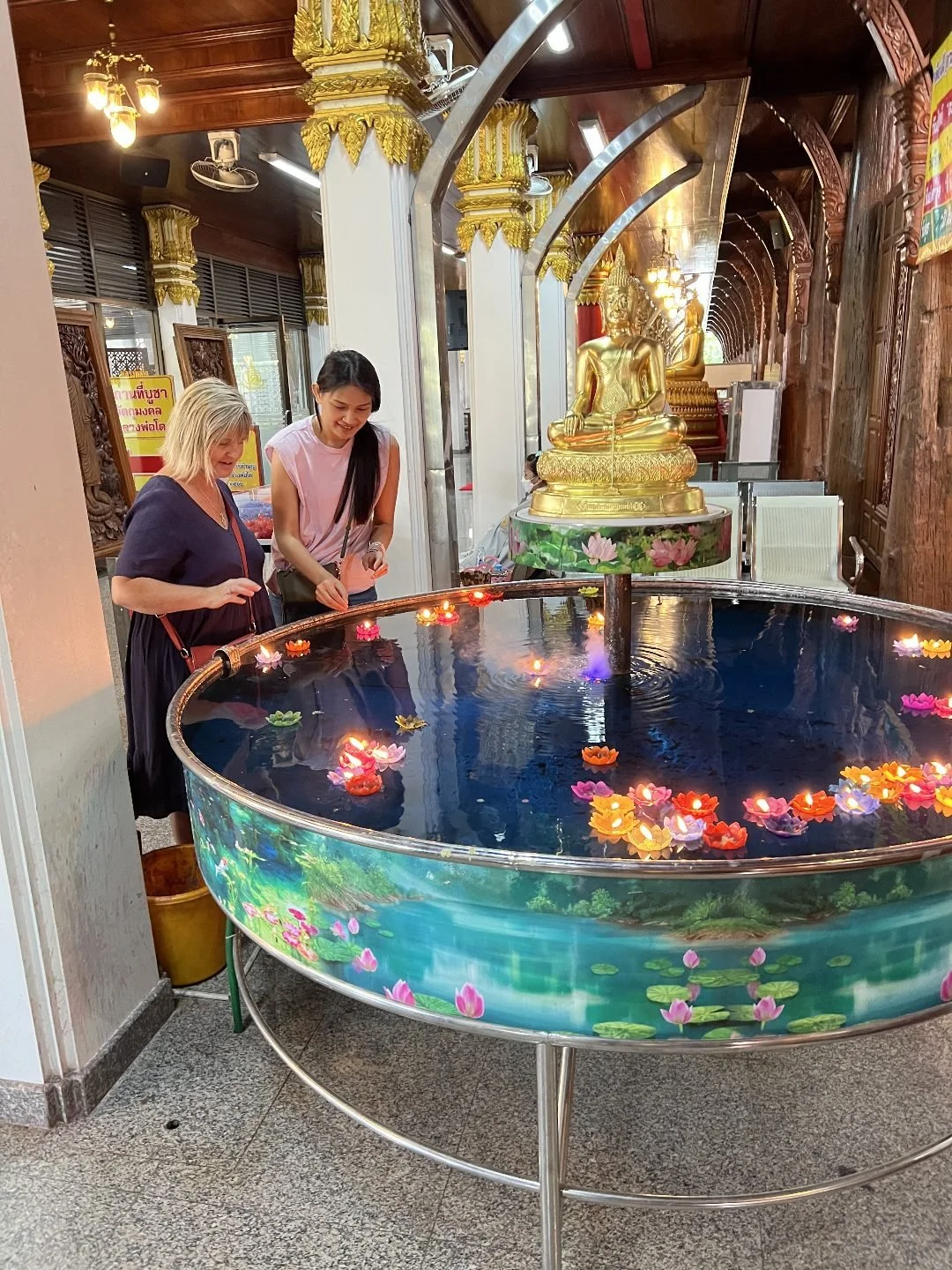
The main hall houses a revered seated Buddha statue that rises around 19 metres high. The scale is immediately striking, but what stays with you is the vibe. The hall feels devotional rather than touristic. You often see locals making offerings, lighting incense, and praying quietly. The energy is calm and sincere, and it shifts your mindset away from sightseeing and toward respect.

Wat Phanan Choeng Worawihan

Wat Phanan Choeng Worawihan

Wat Phanan Choeng Worawihan

Wat Phanan Choeng Worawihan

Wat Phanan Choeng Worawihan

Wat Phanan Choeng Worawihan

Wat Phanan Choeng Worawihan

Wat Phanan Choeng Worawihan

12:00pm: Wat Yai Chai Mongkhon

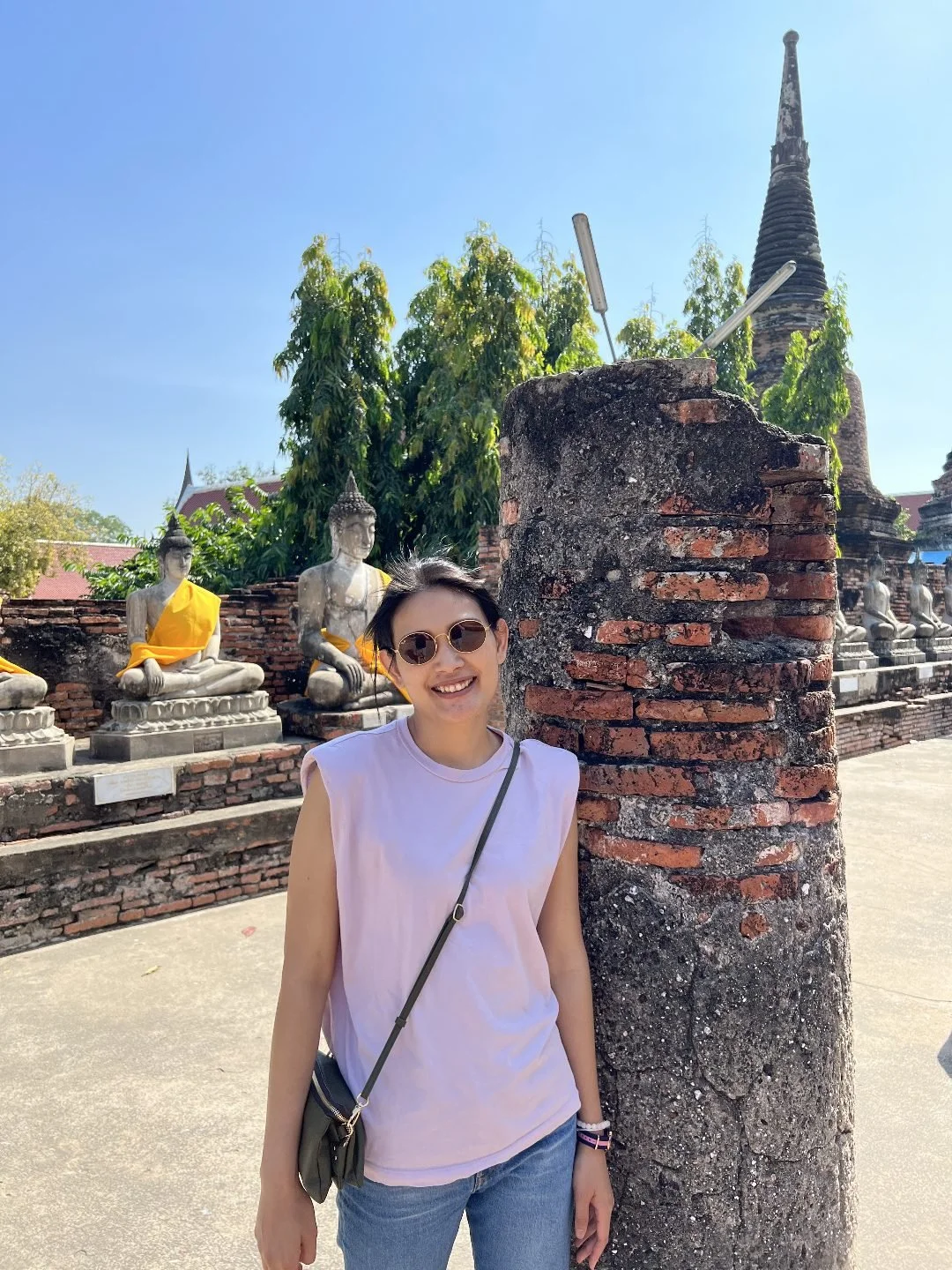
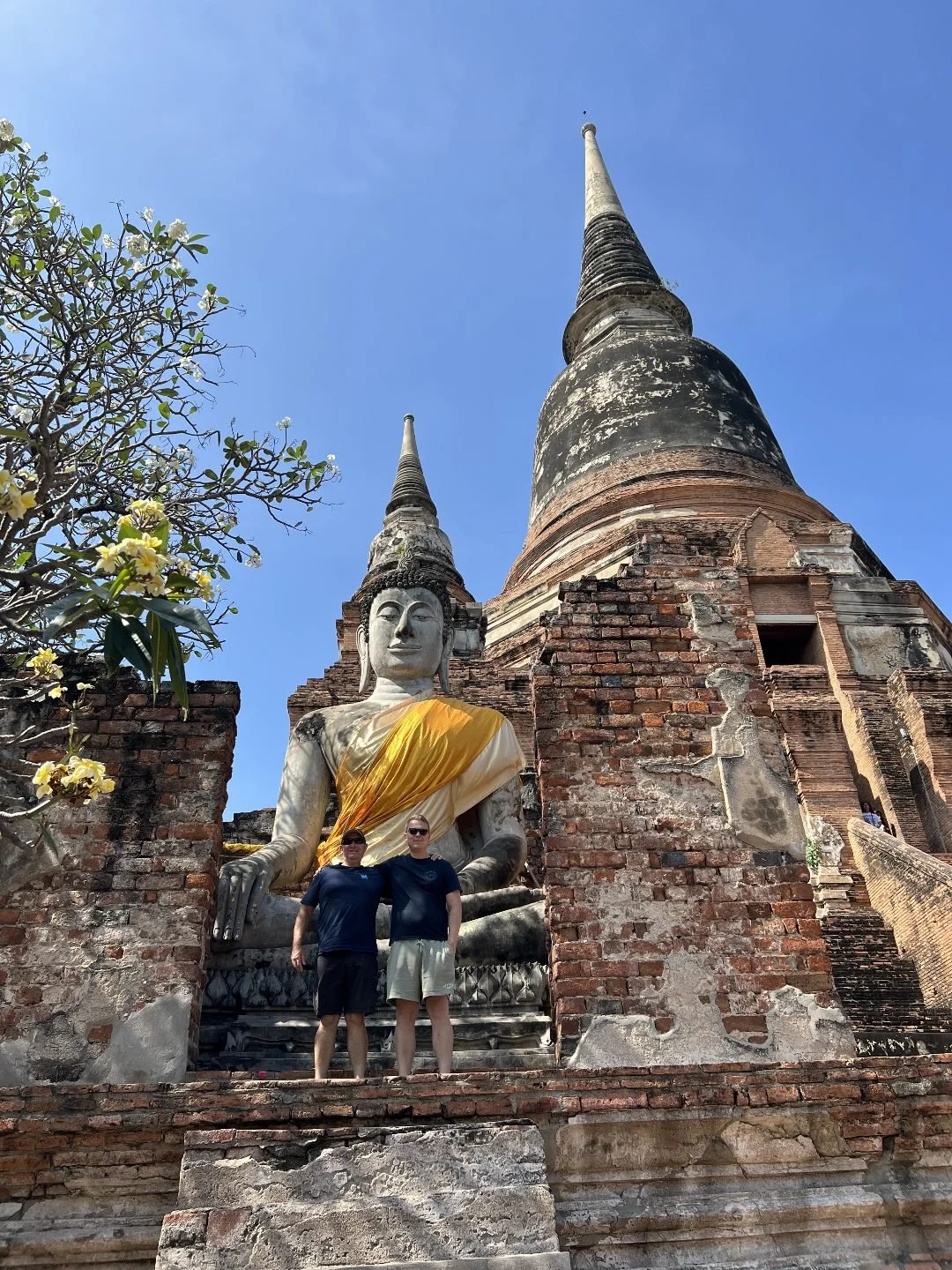
Wat Yai Chai Mongkhon is one of the best places in Ayutthaya to feel both scale and structure. It’s an active monastery and a major historical site, and it has a completeness that many other ruins no longer have.
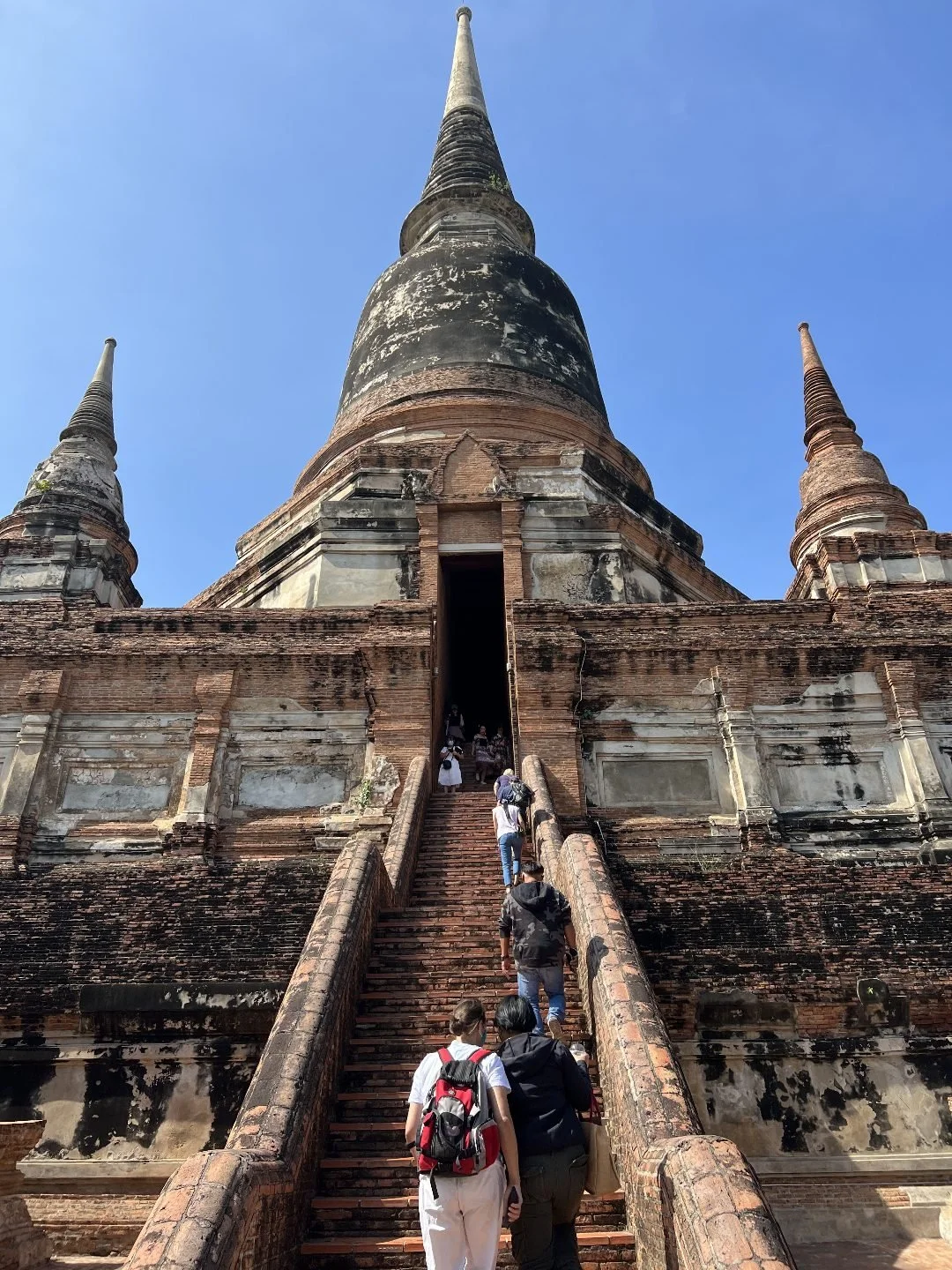
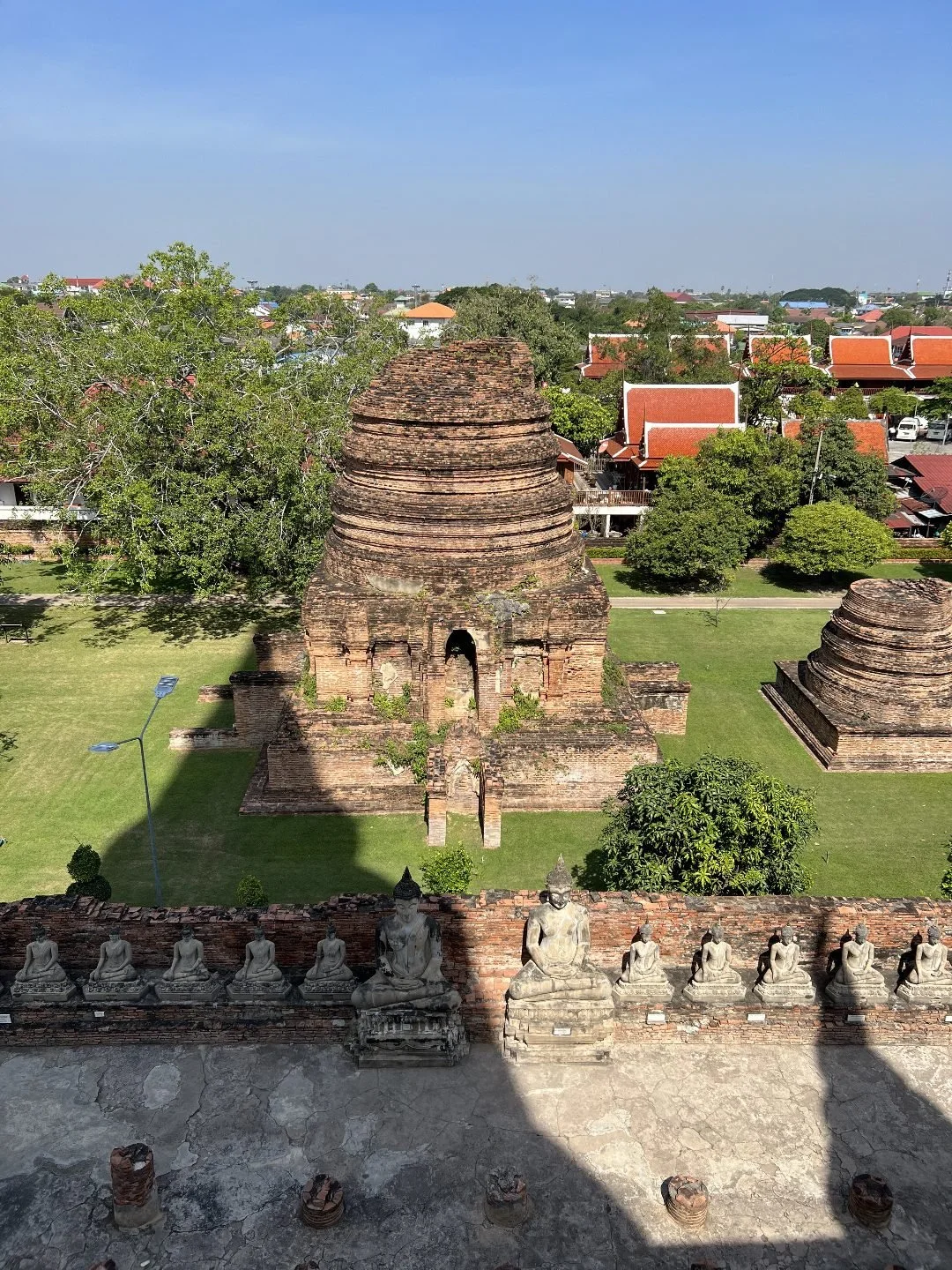
The complex is dominated by a large bell-shaped chedi that you can climb, and the reward is a wide view over the grounds and the surrounding area. From above, Ayutthaya’s flatness becomes obvious, and you can see why tall chedis and prangs used to be so important. They were not only religious structures. They were landmarks in a watery, low-lying capital.

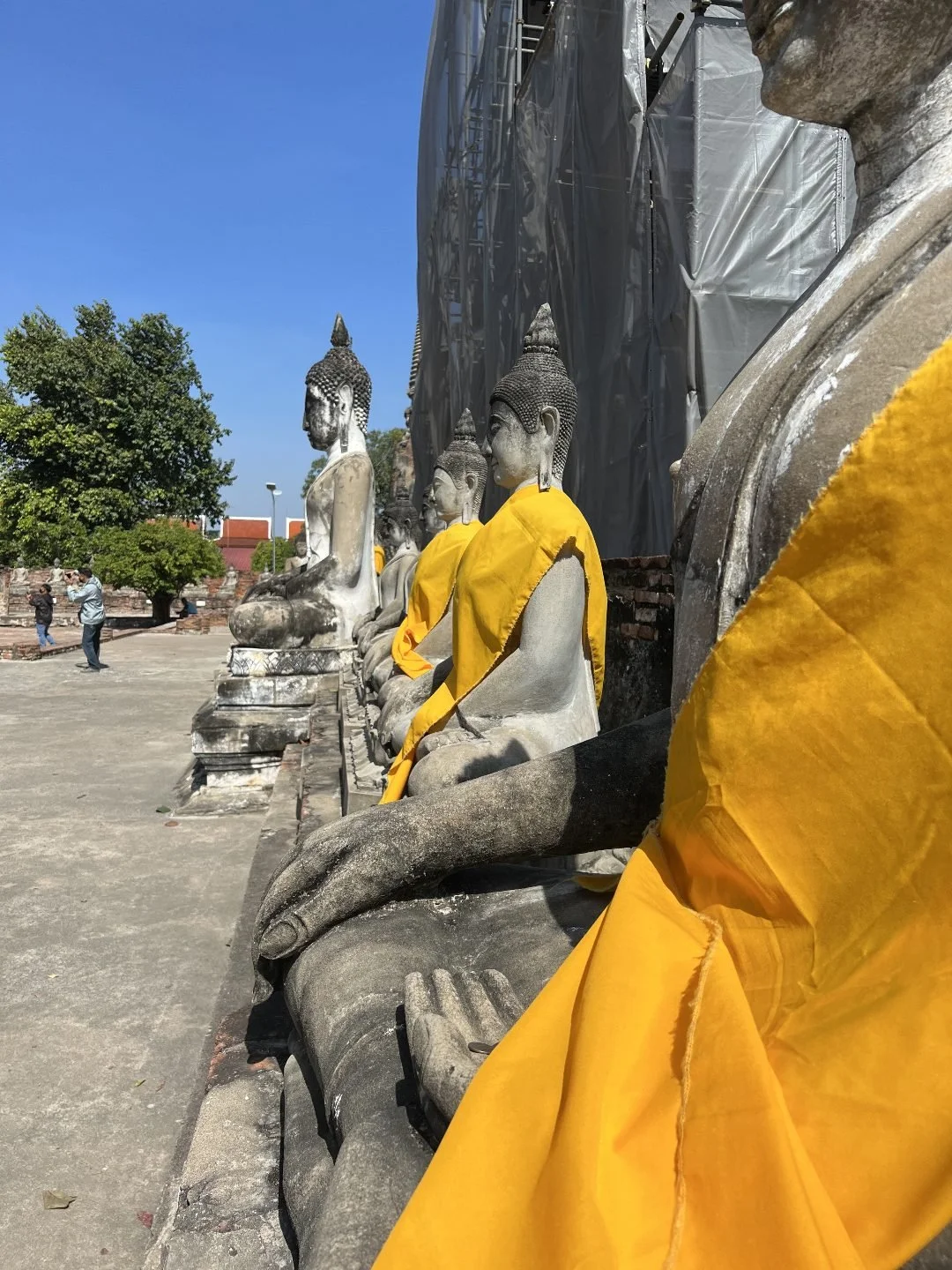
Around the chedi, a rectangular gallery forms a cloister lined with rows of stone Buddha images. Many of them are draped in saffron cloth, and the long rows of figures makes for a powerful visual impression.

The grounds also include an ordination hall, monuments, and monastic living quarters, and you can feel the site functioning as more than a ruin. Monks live here, visitors come to pray, and daily life continues in the shadow of history.

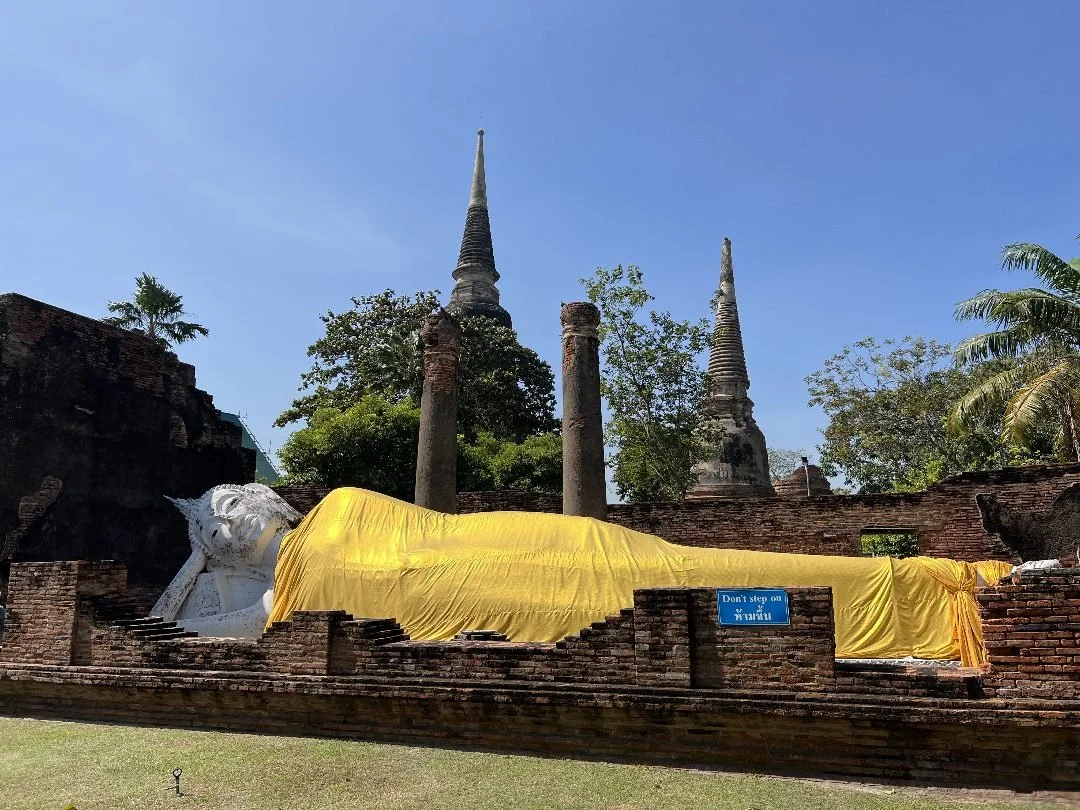
Wat Yai Chai Mongkhon also houses a reclining Buddha in the ruins of an assembly hall. It’s not as famous as the reclining Buddhas in other parts of Thailand, but it feels well placed here, surrounded by the texture of brick and the quiet openness of the site.

Wat Yai Chai Mongkhon

Wat Yai Chai Mongkhon
Wat Yai Chai Mongkhon

Wat Yai Chai Mongkhon

Wat Yai Chai Mongkhon

Wat Yai Chai Mongkhon

Wat Yai Chai Mongkhon

Wat Yai Chai Mongkhon

Reclining Buddha, Wat Yai Chai Mongkhon

Reclining Buddha, Wat Yai Chai Mongkhon

1:00pm: Wat Mahathat

No Ayutthaya day trip is complete without visiting Wat Mahathat, and not only because of the famous Buddha head in tree roots. Wat Mahathat is one of the sites where you most strongly sense the violence of Ayutthaya’s fall and the scale of what was lost.

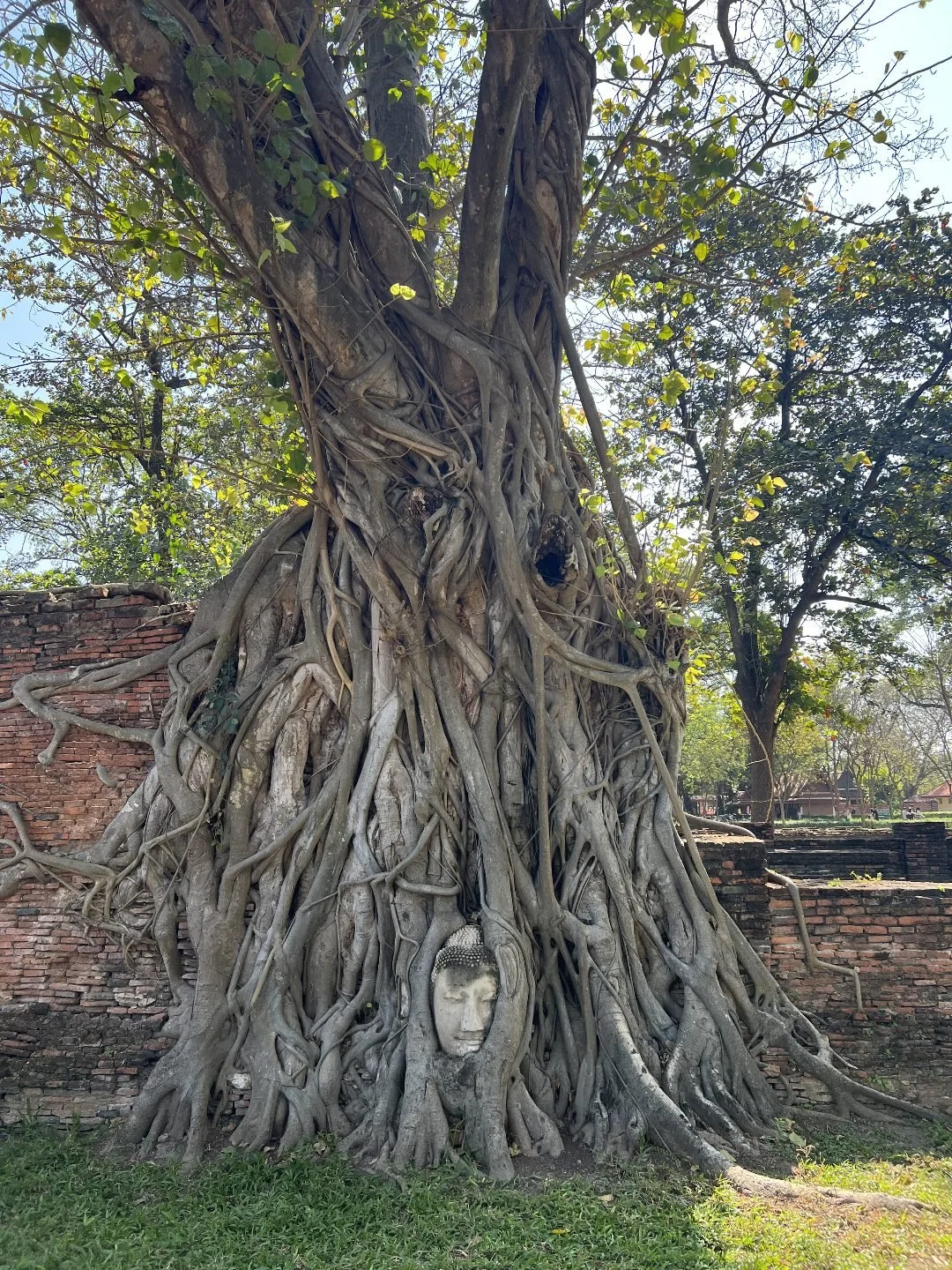
The Buddha head entwined in banyan roots sits near one of the outer walls in the southeast corner of the complex. The image is iconic, but it doesn’t feel manufactured. It feels accidental in the way history often is. A statue was damaged, a head fell, a temple collapsed, and time did what time does. Roots grew slowly around stone, holding it in place like a natural shrine.

When you arrive, it’s worth slowing down rather than reaching straight for your camera. Visitors are expected to show respect by keeping a lower posture and avoiding standing above the Buddha head, a small gesture that changes the tone of the encounter and encourages a quieter, more reflective visit.

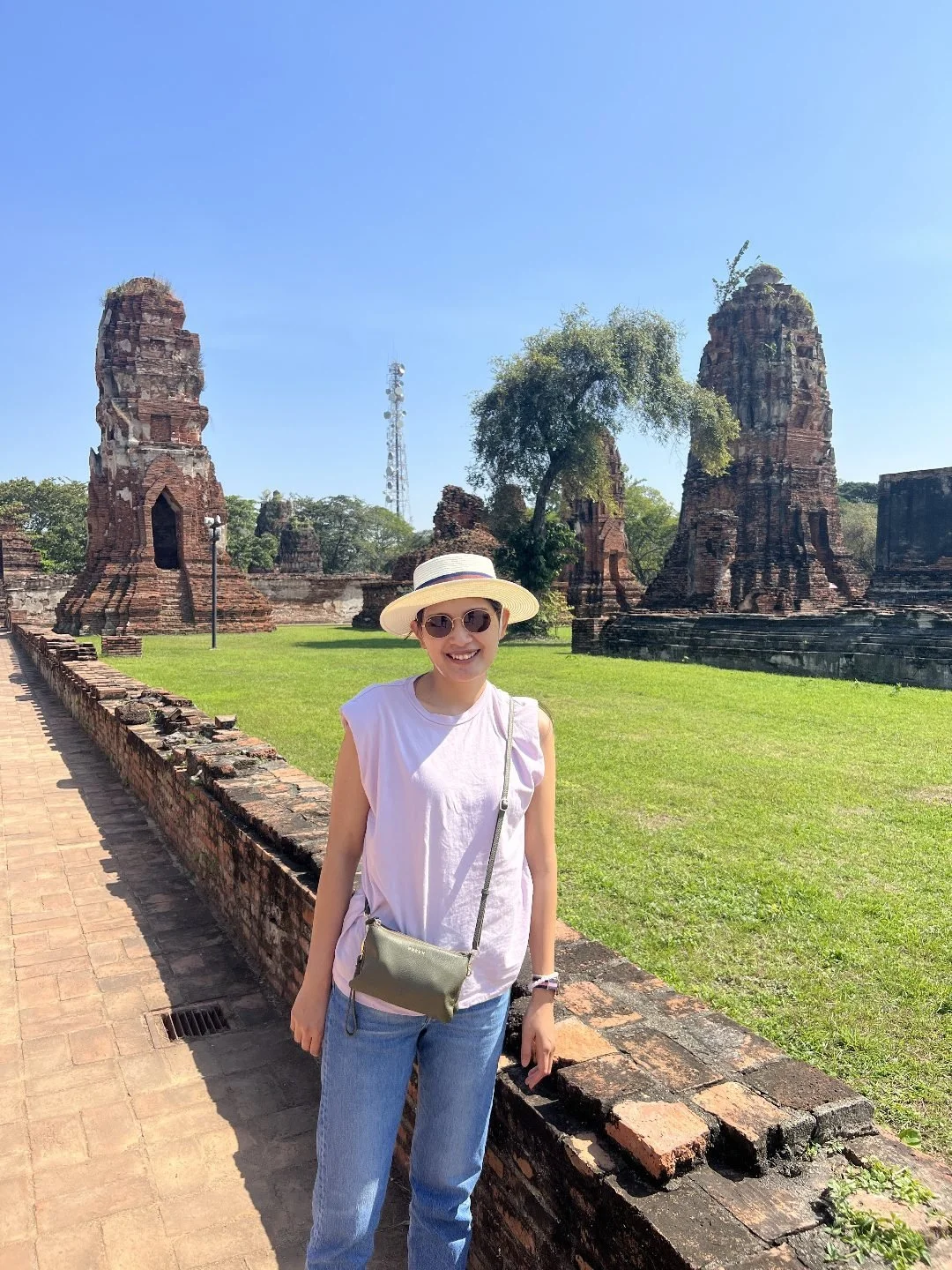
Beyond the tree, Wat Mahathat opens into a broader ruin field with broken towers, brick foundations, and corridors that hint at the temple’s former glory. It’s the kind of site where you can begin to imagine crowds of monks, students, and pilgrims moving through the space centuries ago.

Wat Mahathat

Wat Mahathat

Ayutthaya - Day Trip from Bangkok

Wat Mahathat

Wat Mahathat

Wat Mahathat

2:00pm: Giant River Prawns for Lunch

After boat noodles and a few temple visits, the heat usually starts to build, particularly in the warmer months. This is a good point in the day to slow down, take a break, and head to the river for lunch.

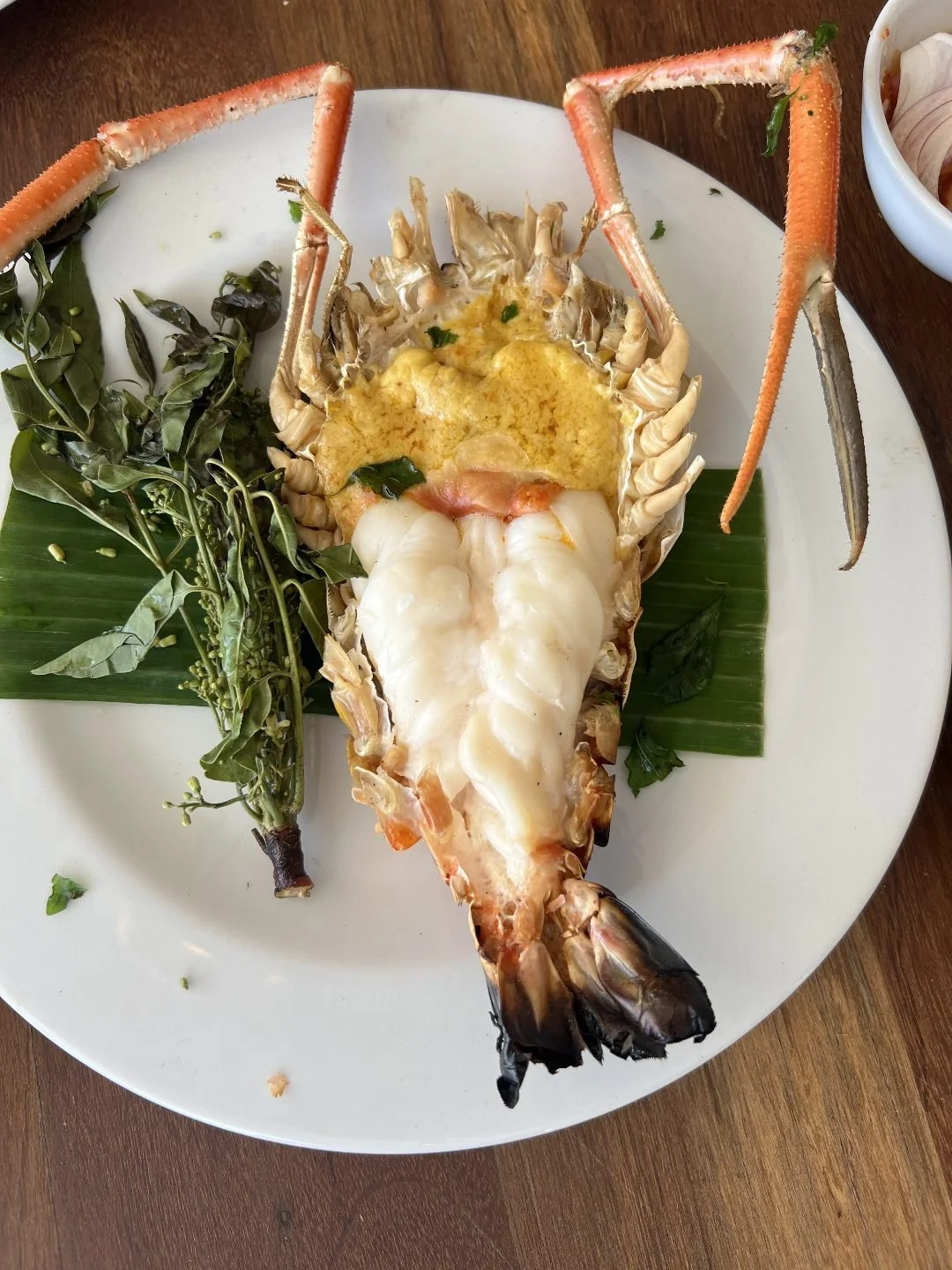
Ayutthaya’s riverfront is lined with some fantastic seafood restaurants. Places like Baan Mai Rim Num AYUTTHAYA and Grand Chaopraya are well-known options for sitting near the water and ordering one of the city’s most famous dishes: the giant river prawn.

As the name suggests, giant river prawns are not small. They arrive large, grilled, and usually served with seafood sauce. The meat is sweet and firm, and when cooked well, the head fat becomes rich and almost buttery.

The best part of lunch here is not just the food, but the pause it creates. Sitting by the river, watching boats drift past, and enjoying a slight breeze helps you reset and gives you more energy to continue your temple hopping experience.

Ayutthaya - Seafood Restaurant

Giant river prawn

3:00pm: Wat Ratchaburana

After lunch, Wat Ratchaburana is an ideal next stop because it changes the experience. It’s located near Wat Mahathat, but it feels different, more architectural and vertical.

The central prang is relatively well preserved, and it gives the temple a strong silhouette. Unlike some ruins that feel like scattered remnants, Wat Ratchaburana feels like a structure that still holds its form.

One of the most compelling parts of the visit is the opportunity to explore into the prang and descend toward the crypt area, where ancient murals can be seen. Even if you are not an art historian, stepping inside the structure rather than simply walking around it gives you a clearer sense of how the temple was built and used.

Wat Ratchaburana

Wat Ratchaburana

4:00pm: Wat Phra Si Sanphet

If Wat Mahathat feels like the heart of Ayutthaya’s religious ruin landscape, Wat Phra Si Sanphet feels like the symbol of royal Ayutthaya. This was the holiest and largest royal temple of the kingdom, and it was closely tied to the royal palace complex. It was not built as a public monastery in the same way other temples were. It was a royal space, connected to ceremonies and state power.

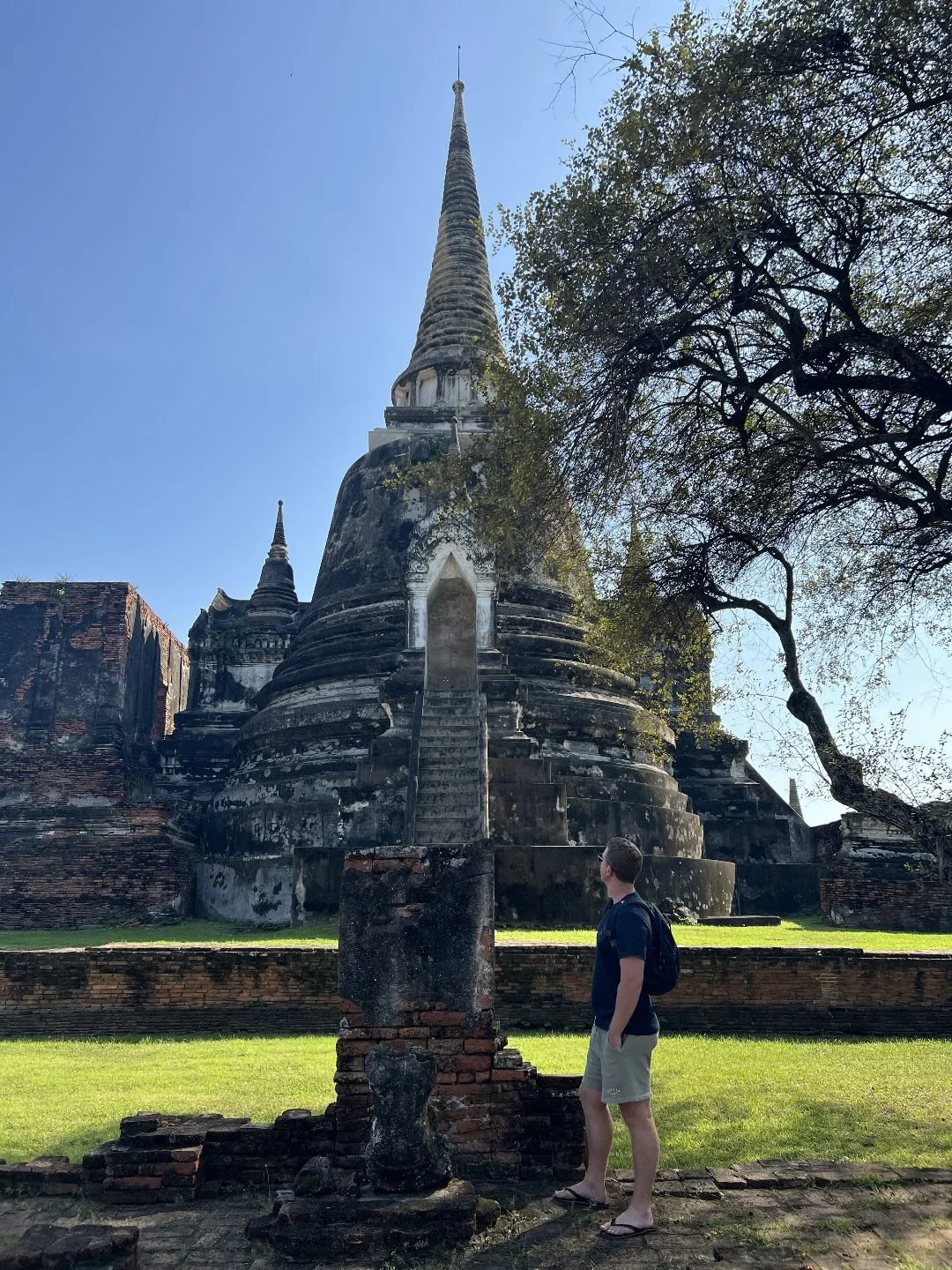
The temple is famous for its three bell-shaped chedis standing in a line. They are simple, symmetrical, and instantly recognisable, and they once housed the ashes of kings. After this stop, it makes sense to have your tuk tuk driver take you back to Ayutthaya Railway Station for the return train to Bangkok. 

Wat Phra Si Sanphet

Wat Phra Si Sanphet

Wat Phra Si Sanphet

Is Ayutthaya Worth Visiting from Bangkok?

Absolutely. Ayutthaya delivers an ideal day out from Bangkok, offering impressive temples, rich history, and smooth logistics that make the trip feel effortless.

It’s also a day trip that adapts to different travel styles. History buffs can move slowly, noticing architectural details and imagining the city’s former scale. Casual travelers can focus on the most visually impressive temples and still feel satisfied. Couples often find the day surprisingly romantic, not because it’s a “romantic destination,” but because the setting is atmospheric. And families benefit from the ease of tuk tuk transport, which removes stress and keeps children from burning out in the heat.

The local train adds another layer. Watching Bangkok shift into the countryside makes the day feel like a journey rather than a taxi ride. When you combine that train experience with the freedom of a tuk tuk loop, you get a day trip that feels both local and effortless.

Ayutthaya is also a destination where the food is part of the identity. Boat noodles and giant river prawns aren’t generic Thai dishes you can eat anywhere. They are tied to Ayutthaya’s waterways and history, and that makes the day feel more complete.

If you want a day outside of Bangkok that feels meaningful, visually impressive, and genuinely Thai, Ayutthaya is hard to beat.

Ayutthaya - Ancient Historical Park

Ayutthaya

Best Time to Visit Ayutthaya

The best time to visit Ayutthaya is during Thailand’s cooler season, usually from November to February. In these months, the heat is more manageable, the humidity is lower, and walking through open ruins becomes enjoyable rather than exhausting.

This is important to note because Ayutthaya is largely outdoors. Many temple complexes offer little shade, and the midday sun can be intense. When the weather is comfortable, you spend longer at each site, you explore more hidden gems, and you come away with stronger impressions.

March to May is the hottest period, and while Ayutthaya is still possible, it requires a different approach. You need an early start, a slower pace, and a willingness to take longer breaks, especially around midday. The tuk tuk becomes even more valuable during this season because it reduces unnecessary walking and allows you to move between shaded areas more efficiently.

June to October is the rainy season. Rain can cool the air and soften the landscape, making the ruins feel greener and more dramatic, and crowds can be lower. However, downpours can be sudden, and wet conditions can make some paths muddy. If you visit in the rainy months, it helps to stay flexible and treat rain as part of the experience rather than an interruption.

Ayutthaya - Visiting Temples

Ayutthaya

Tips for an Ayutthaya Day Trip from Bangkok

Bringing cash is important because tuk tuk drivers, small eateries, and some local services don’t always accept cards, and you don’t want your day to stall because you need to hunt for an ATM.

Ayutthaya’s ruined temples can feel casual, but active temples remain sacred spaces, and dressing respectfully makes entry easier and avoids awkwardness. Lightweight, breathable clothing that covers shoulders and thighs is usually the simplest choice, especially in hot weather.

Sun protection is essential because Ayutthaya is an open-air destination. Many sites have limited shade, and you can spend hours outside without realising how much sun you are absorbing. A hat, sunscreen, sunglasses, and regular water breaks make the day far more comfortable and help you stay attentive at the temples.

Learning even a small amount of history before you go can transform the visit. When you understand that Ayutthaya was a royal capital, a major trade city, and a kingdom that ended violently in 1767, the ruins stop feeling like random brick piles and start to make sense within a wider story. You begin to recognise why temples were built where they were, why some structures are missing, and why certain sites feel more significant than others.

Finally, it helps to bring a good camera. Ayutthaya is incredibly photogenic, not only in the obvious iconic spots, but in the smaller moments: the way brick catches late light, the way trees frame prangs, and the way modern life moves quietly around ancient ruins.

Ayutthaya - Red Brick Architecture

Ayutthaya

FAQ: Ayutthaya Day Trip from Bangkok

Is Ayutthaya worth visiting from Bangkok for one day?

Yes, Ayutthaya is one of the best day trips from Bangkok because you can see a UNESCO World Heritage former capital, visit genuinely impressive temples, and return to the city the same day without complicated logistics.

How far is Ayutthaya from Bangkok?

Ayutthaya is roughly 80 kilometres north of Bangkok, which makes it close enough for a day trip while still feeling like a real change of pace and scenery.

How long does the train from Bangkok to Ayutthaya take?

The local Ordinary train from Hua Lamphong typically takes close to two hours, and while it is slower than other options, it is also the cheapest and one of the most local, memorable ways to travel to Ayutthaya from Bangkok.

Do I need a tour guide in Ayutthaya?

You do not need a formal tour guide to enjoy Ayutthaya, especially if you are using a tuk tuk driver who knows the common temple route and can help you structure the day smoothly.

What is the best way to get around Ayutthaya on a day trip?

A tuk tuk is usually the easiest and most efficient option for an Ayutthaya day trip because the temples are spread out and the driver can wait at each stop and take you between the key sites without stress.

Can you visit Ayutthaya by bicycle in one day?

Yes, cycling is a popular way to explore Ayutthaya in a day, but it is best in cooler months because the heat and distances can make it tiring, especially if you are trying to fit multiple major temples into one day.

What are the best temples to see in Ayutthaya in one day?

For a one-day visit, the most rewarding temples are Wat Phanan Choeng Worawihan, Wat Yai Chai Mongkhon, Wat Mahathat, Wat Ratchaburana, and Wat Phra Si Sanphet because they give you a strong mix of living worship, iconic ruins, and royal Ayutthaya history.

Ayutthaya - Praying

Ayutthaya

Kat & Cam

Kat & Cam are the Thai & Kiwi couple behind Thailand Wanderlust.

Previous
Previous

Ko Panyi (Koh Panyee): How to Visit Thailand’s Iconic Floating Village

Next
Next

How to Visit Nang Yuan Island: Beaches, Viewpoints & Tour