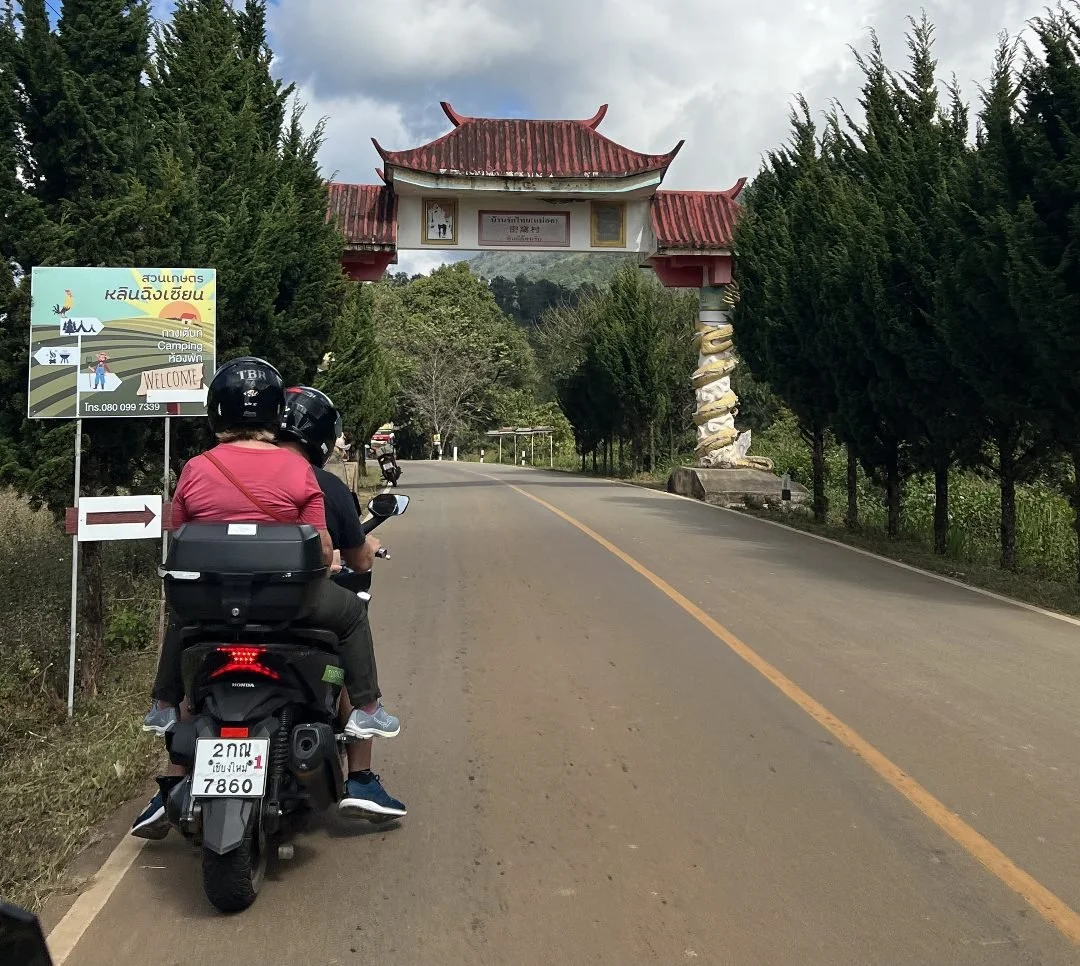
Ban Rak Thai: Thailand’s Misty Village of Tea & Tradition

Tucked deep into the mountains of Northern Thailand, just a stone’s throw from the Myanmar border, Ban Rak Thai feels like a place suspended between countries, cultures, and centuries. This small village sits high above sea level in Mae Hong Son Province, surrounded by rolling hills, emerald tea plantations, and a calm reservoir that mirrors the clouds drifting overhead.

Ban Rak Thai is one of those places that immediately slows you down. The road winds tighter as you approach, mobile reception fades, and suddenly the pace of modern Thailand disappears. Instead, you’re greeted by wooden Yunnanese-style houses with tiled roofs, red lanterns hanging over doorways, and the unmistakable aroma of Chinese tea drifting through the cool mountain air.

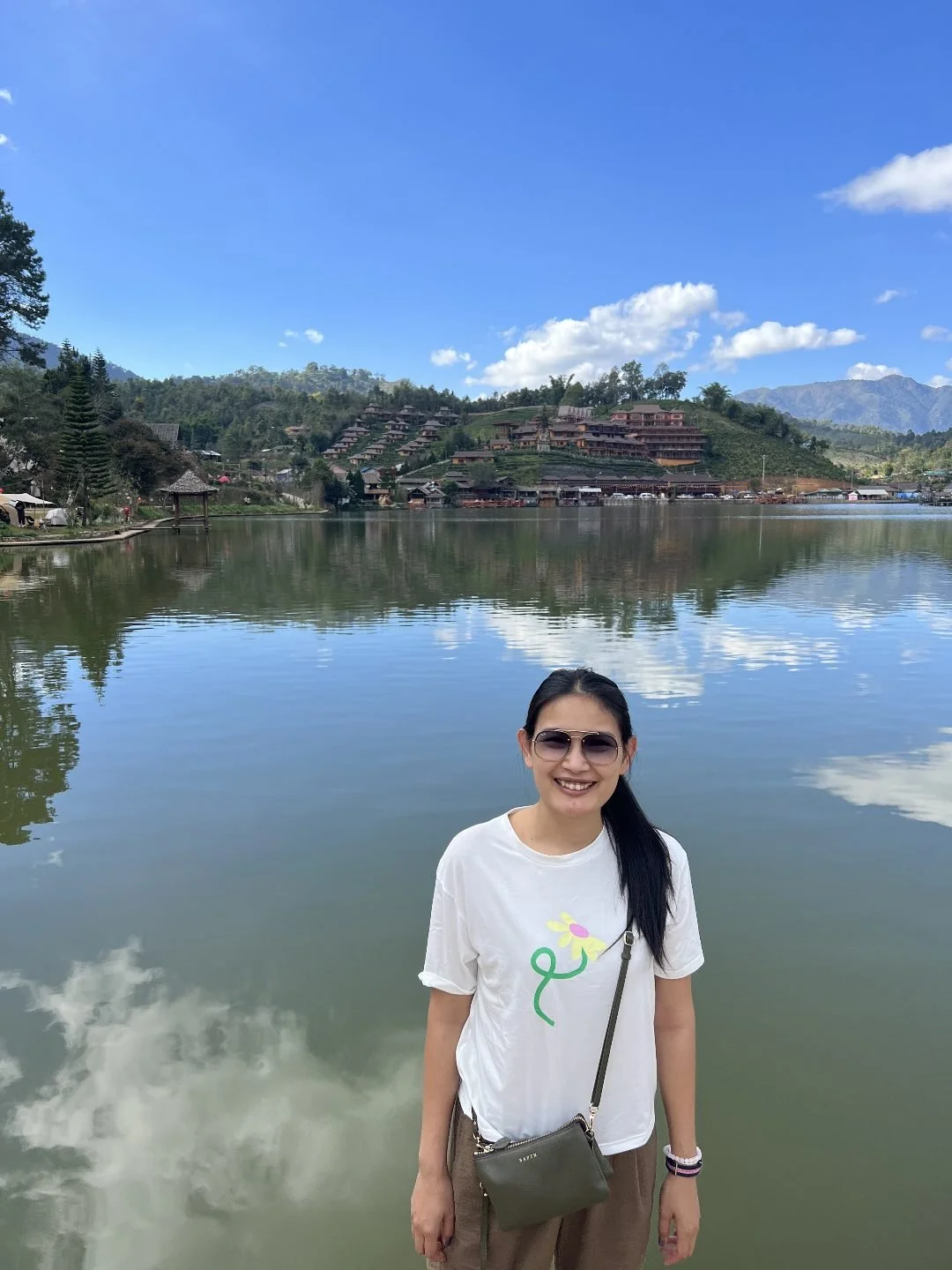
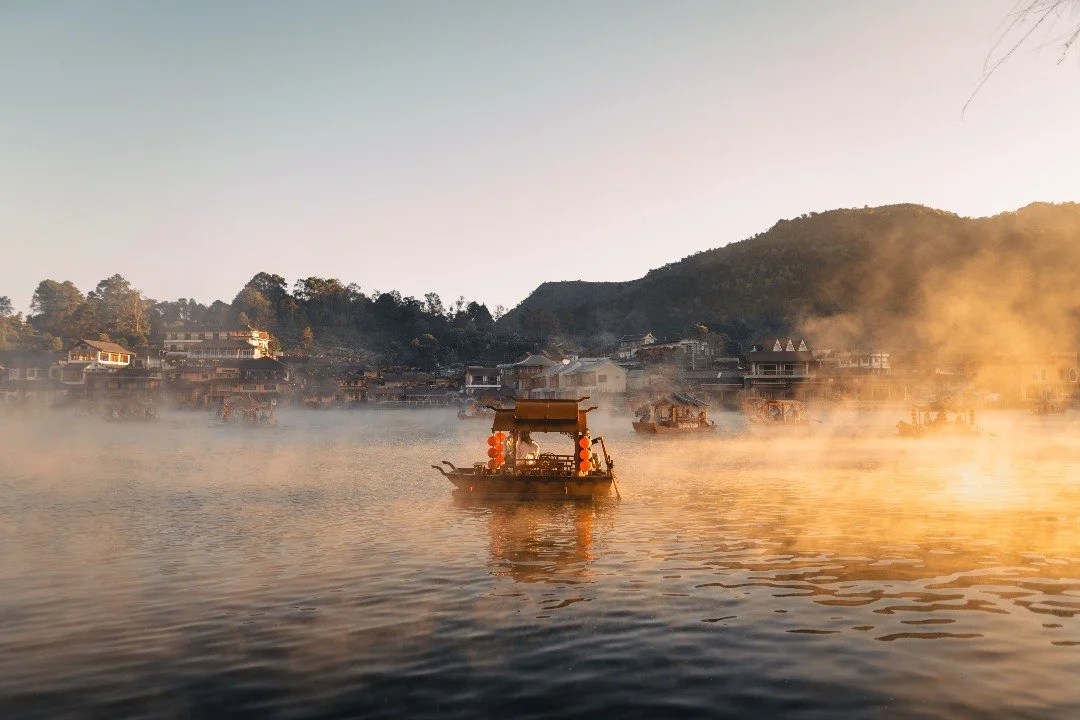
The village is set around a picturesque lake reservoir, with homes and guesthouses wrapping gently around its edge. Early mornings bring fog that hovers low over the water, creating a dreamlike scene that feels more like rural China than Thailand. Tea plantations rise up behind the village in neat rows, reinforcing the sense that you’ve stumbled somewhere truly unique.

Lee Wine Rak Thai Resort - Ban Rak Thai

Ban Rak Thai

Ban Rak Thai - Chinese Village

Ban Rak Thai

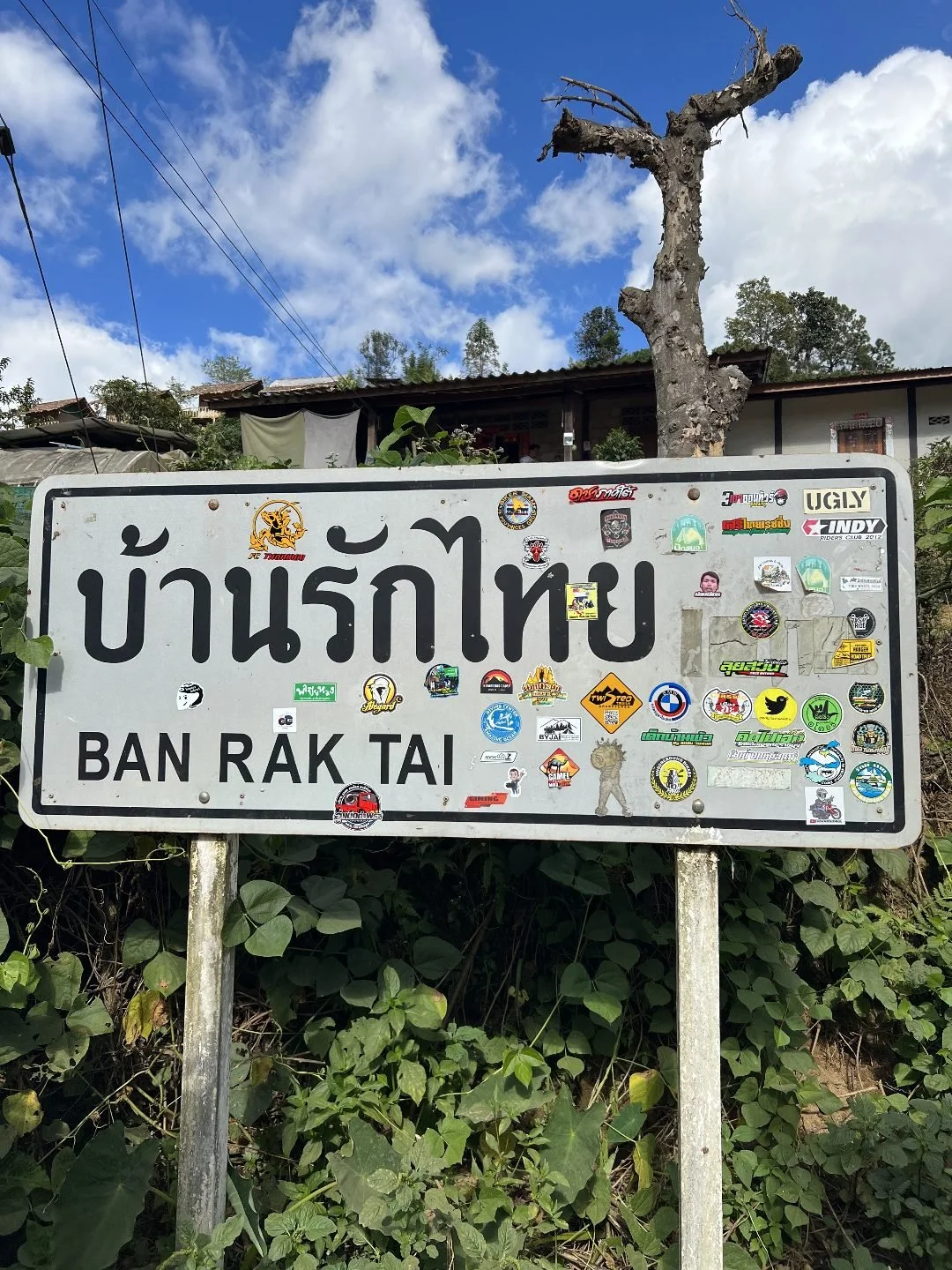
Ban Rak Thai - Sign

Ban Rak Thai

The History Behind Ban Rak Thai

Ban Rak Thai’s story is deeply tied to one of the most turbulent periods in Chinese history. The village was founded by Chinese Nationalist (Kuomintang) soldiers and civilians from Yunnan Province who fled China following the communist takeover in the mid-20th century. Seeking refuge, they crossed borders and eventually settled in the remote mountains of Northern Thailand.

Thailand allowed these refugees to stay, and over time they built a permanent community while retaining much of their cultural identity. That legacy remains strong today. The architecture, food, language, and customs in Ban Rak Thai are distinctly Yunnanese, preserving a snapshot of “old China” that has largely disappeared elsewhere.

The name Ban Rak Thai translates to “Thai-loving village.” It reflects the refugees’ gratitude toward Thailand for offering them safety and a new home. While deeply connected to their Chinese roots, the community has integrated respectfully into Thai society, resulting in a fascinating cultural blend that travelers can still experience today.

Ban Rak Thai - Lakefront

Ban Rak Thai

Ban Rak Thai - Boats

Ban Rak Thai

What Ban Rak Thai Offers Travelers

Ban Rak Thai isn’t a place you rush through. It’s not about ticking off attractions or chasing adrenaline. Instead, it offers something rarer: atmosphere.

Travelers come here for misty mornings, lakeside walks, slow meals, strong tea, and quiet reflection. It’s a place to disconnect, breathe mountain air, and experience a corner of Thailand that feels worlds away from beaches and backpacker routes. Whether you’re riding the Mae Hong Son Loop, seeking hidden gems in Northern Thailand, or simply craving somewhere peaceful, Ban Rak Thai delivers in a way that feels deeply authentic.

Ban Rak Thai - Traditional Yunnan Houses

Ban Rak Thai

Ban Rak Thai - Lake

Ban Rak Thai

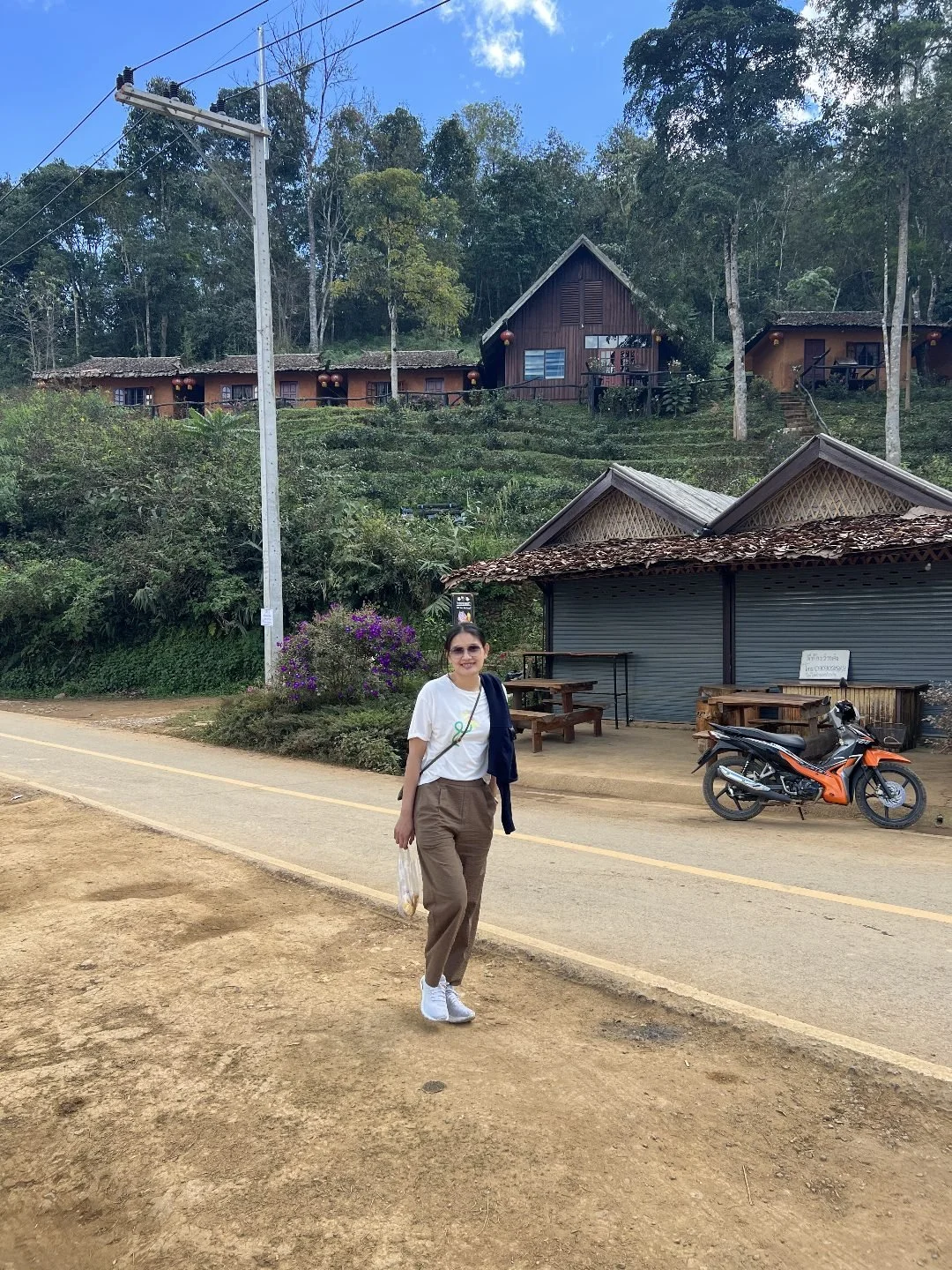
Ban Rak Thai - Exploring the Village

Ban Rak Thai

6 Best Things to Do in Ban Rak Thai

Despite its small size, Ban Rak Thai offers plenty to fill a relaxed day, or even a couple of nights, if you’re willing to slow down and lean into the village’s rhythm.

1. Eat at a Traditional Yunnanese Restaurant

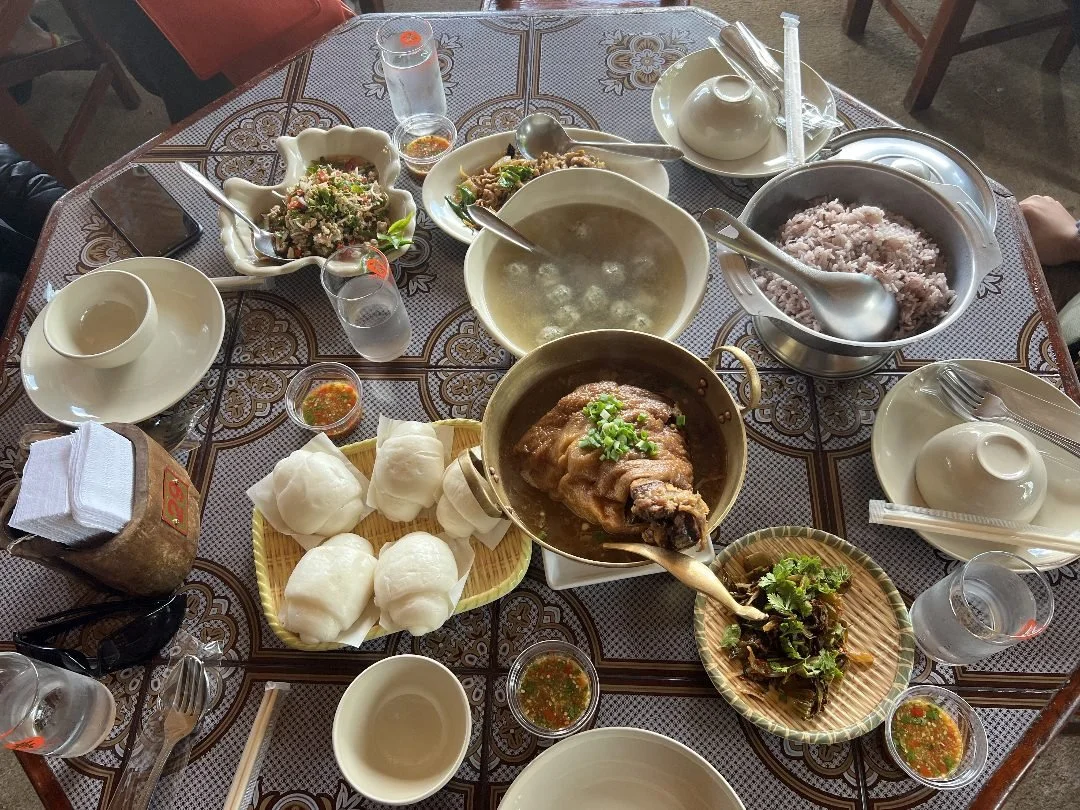
After arriving in Ban Rak Thai, many visitors quickly realise how much appetite the mountain journey builds. Hours spent navigating winding roads through Northern Thailand naturally lead to a hunger that only a proper local meal can satisfy.

Restaurants around the village serve traditional Yunnanese set menus, often found near landmarks such as Leewine Coffee. Ordering a set meal is a great way to sample a wide range of regional dishes without needing to know what to choose. Plates arrive steadily at the table: rich, aromatic broths, stir-fried seasonal vegetables, pickled accompaniments, and slow-cooked meats prepared using time-honoured techniques.

One dish that consistently stands out is the braised pork leg. Cooked until the meat is impossibly tender, it falls away from the bone with minimal effort, soaking in a deeply savoury broth that is both comforting and intensely flavourful.

Yunnanese cuisine is hearty and warming, making it perfectly suited to Ban Rak Thai’s cooler mountain climate. Meals are typically shared, encouraging guests to slow down, linger over tea, and fully appreciate the village’s relaxed pace rather than rushing on to the next stop.

Yunnanese cuisine

2. Enjoy Lakeside Coffee at Leewine Coffee

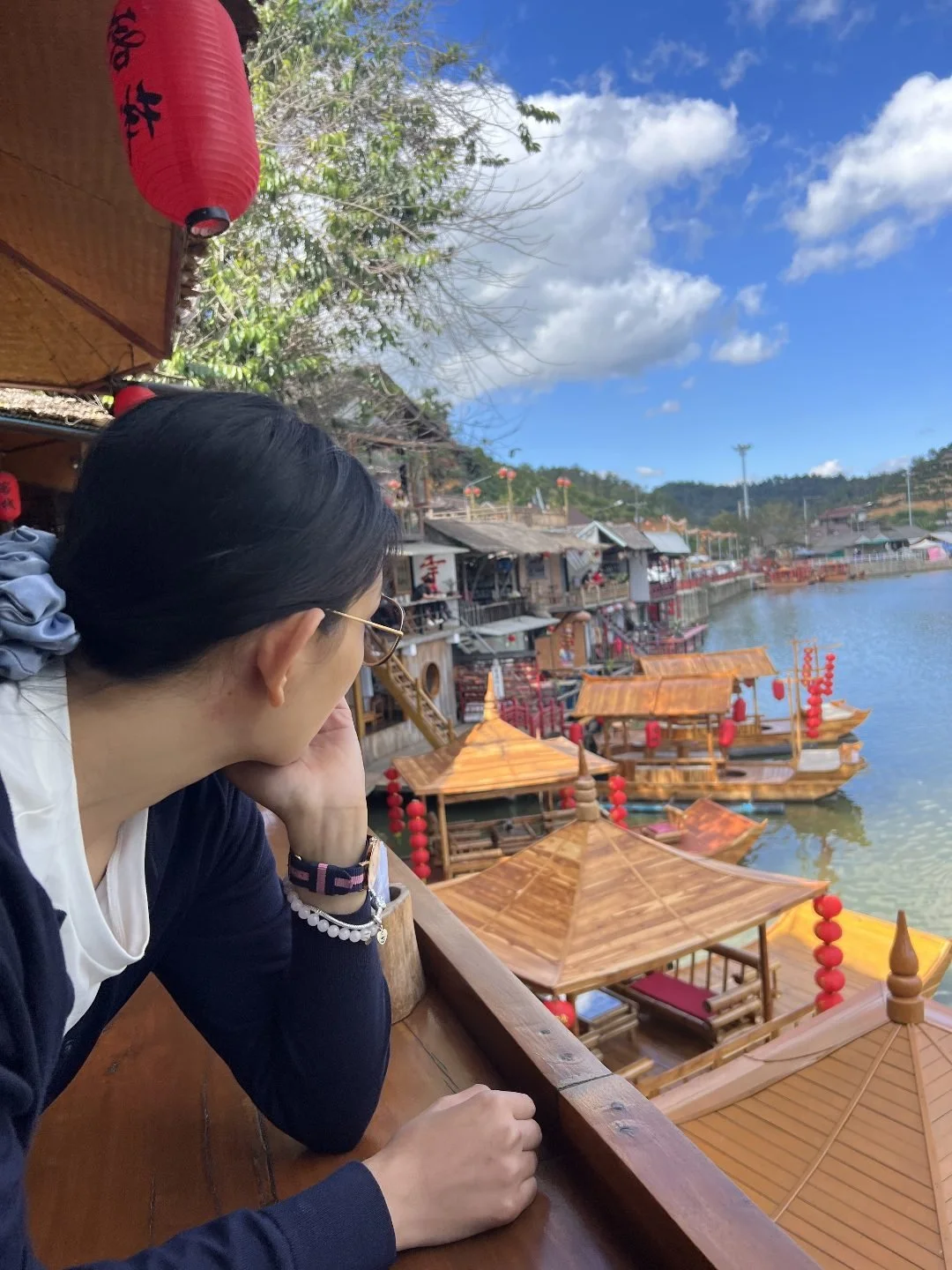
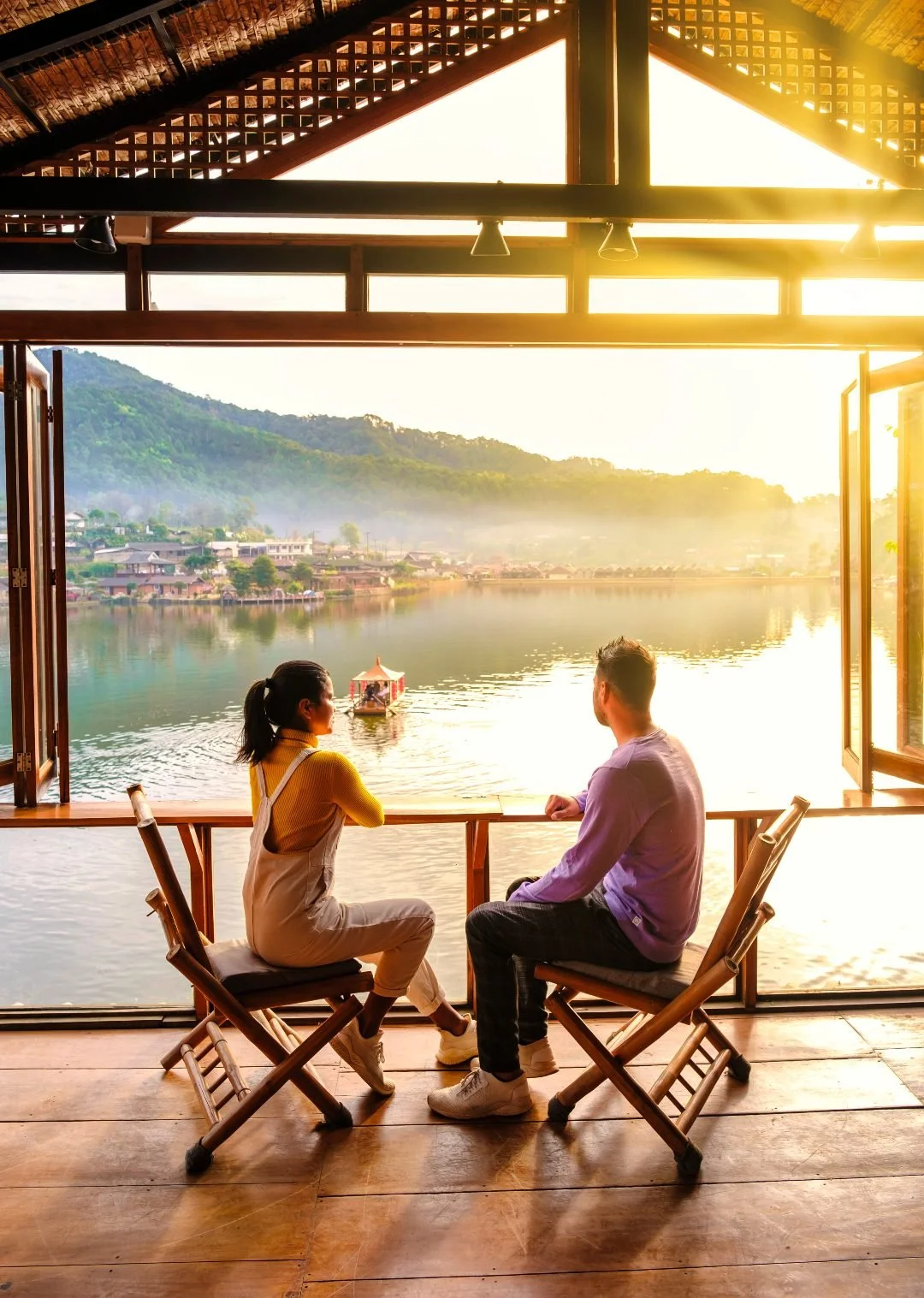
One of the most iconic and Instagrammable spots in Ban Rak Thai is Leewine Coffee, perched above the lake with sweeping views across the reservoir. The cafe offers both indoor and outdoor seating, but the real magic happens when you grab a table overlooking the water.

Below the cafe, small Chinese-style wooden boats are docked along the shore, adding layers of character to an already photogenic scene. Come early in the morning and you’ll often find fog rolling across the lake, softening the outlines of the mountains and creating a cinematic atmosphere. Later in the day, golden hour transforms the water into a glowing mirror, reflecting the changing colours of the sky.

Coffee here is good, but the setting is what makes it memorable. It’s the kind of place where you sit longer than planned, watching the light shift and the village slowly wake up - or wind down.

Ban Rak Thai - Leewine Coffee Views

Leewine Coffee

3. Stroll Around Ban Rak Thai’s Scenic Lake

One of the simplest and most rewarding things to do in Ban Rak Thai is walking a full loop around the lake reservoir. The path takes you past lakeside homes, guesthouses, cafes, and pockets of greenery, offering constantly changing perspectives of the village and surrounding hills.

As you circle the lake, you’ll notice how deeply traditional the architecture remains. Many of the wooden houses are built in classic Yunnanese style, with tiled roofs and balconies overlooking the water. Some of these houses are available as accommodation, though the most popular ones tend to get booked out months in advance.

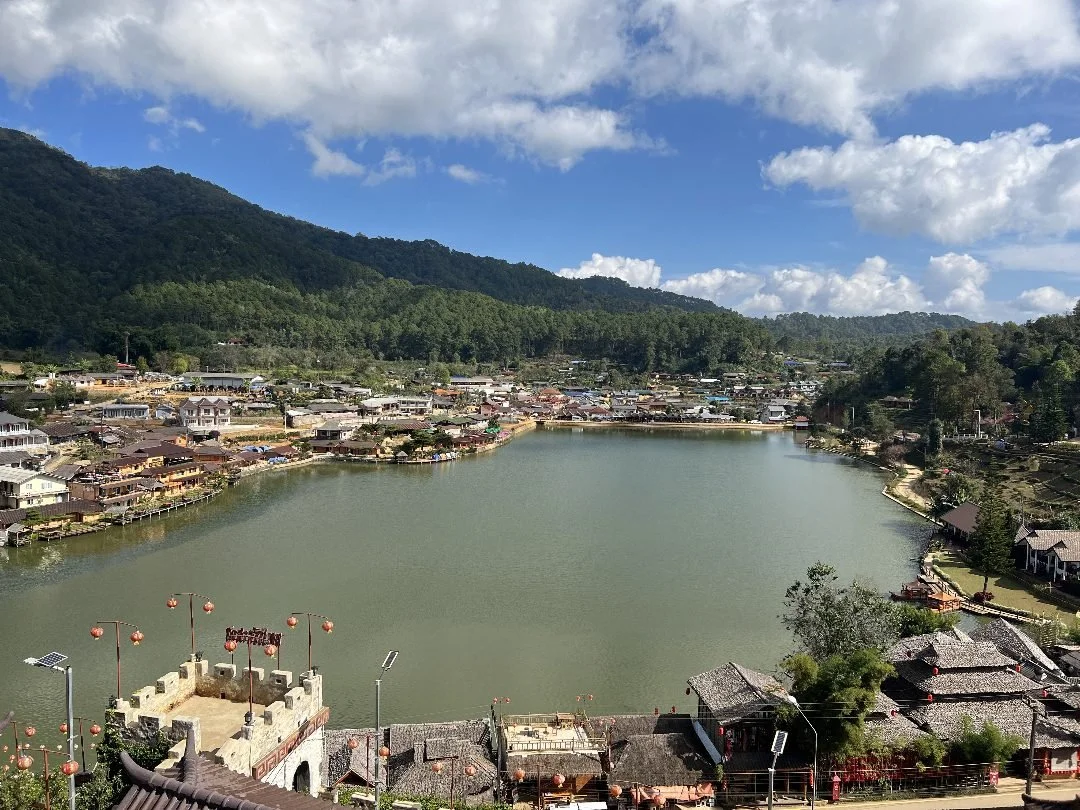
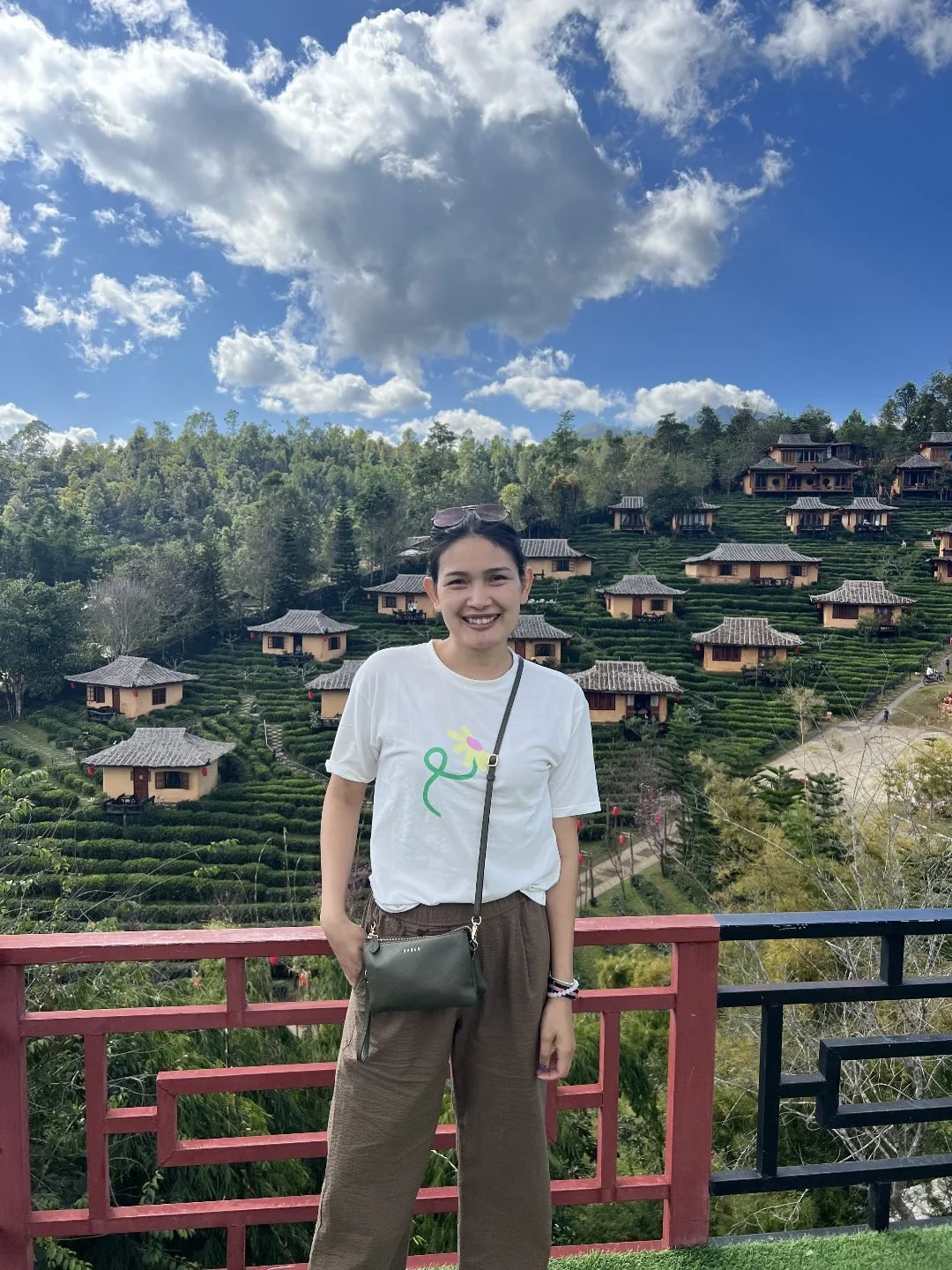
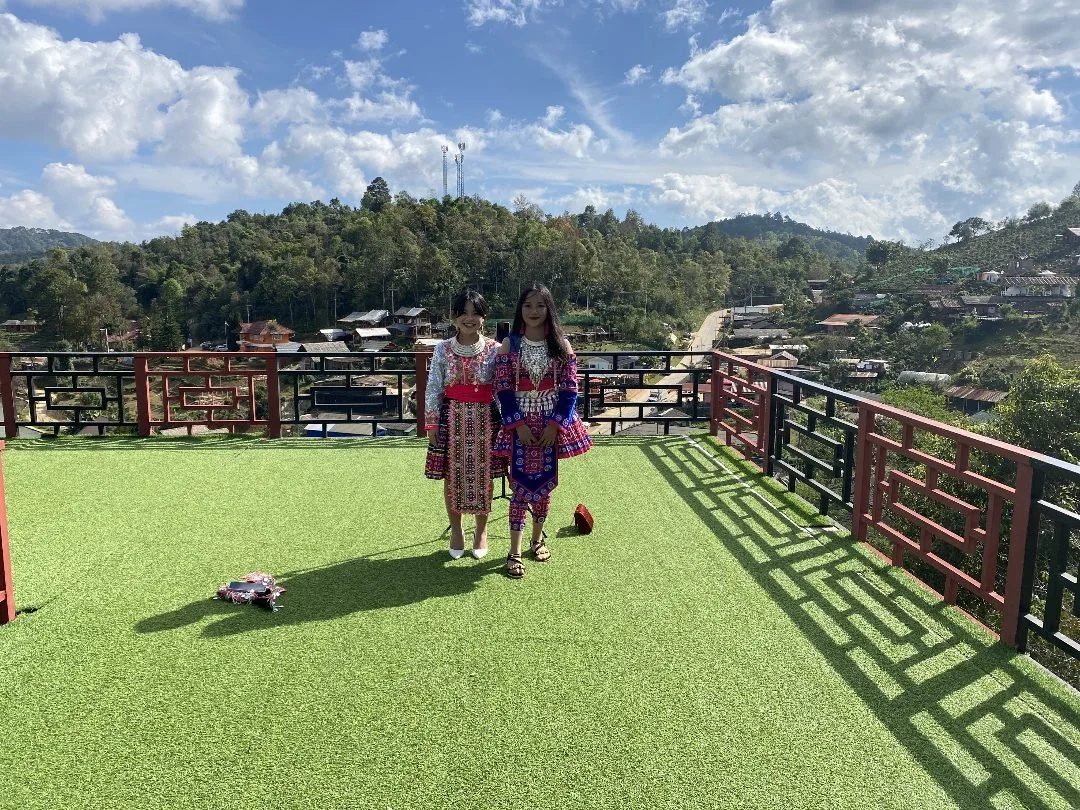
Partway around the lake, be sure to head up to the famous lookout platform. From here, you get an unobstructed view of Ban Rak Thai below: tea plantations climbing the hillsides, traditional houses clustered near the water, and mountains fading into the distance. It’s easily one of the best viewpoints in Mae Hong Son Province.

Lake walks

Ban Rak Thai - Viewpoint

Lookout platform

Ban Rak Thai - Chinese Houses

Lookout platform

4. Take a Sunrise Boat Ride on the Lake

If you’re staying overnight, waking up early is absolutely worth it. At sunrise, local boat operators offer short rides across the reservoir, gliding quietly through the mist that floats over the lake’s surface.

As the sun rises, the fog slowly lifts, revealing reflections of houses, trees, and hills in the still water. It’s peaceful, almost meditative, and offers a completely different perspective of Ban Rak Thai compared to walking around the lake.

Ban Rak Thai - Sunrise Boat Ride

Sunrise boat ride

Ban Rak Thai - Boat Ride

Boat ride

5. Wander Through the Tea Plantations at Lee Wine Rak Thai

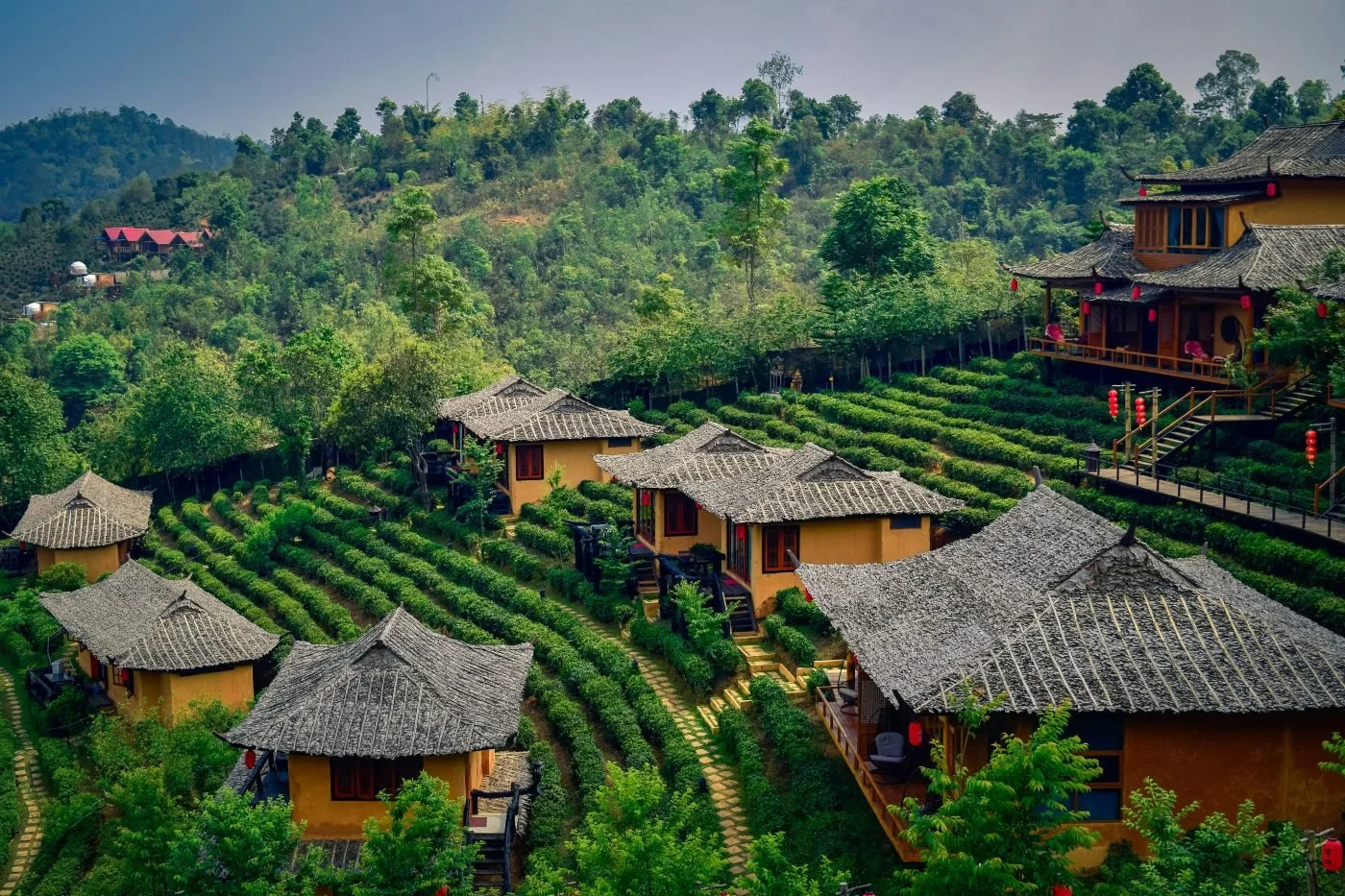
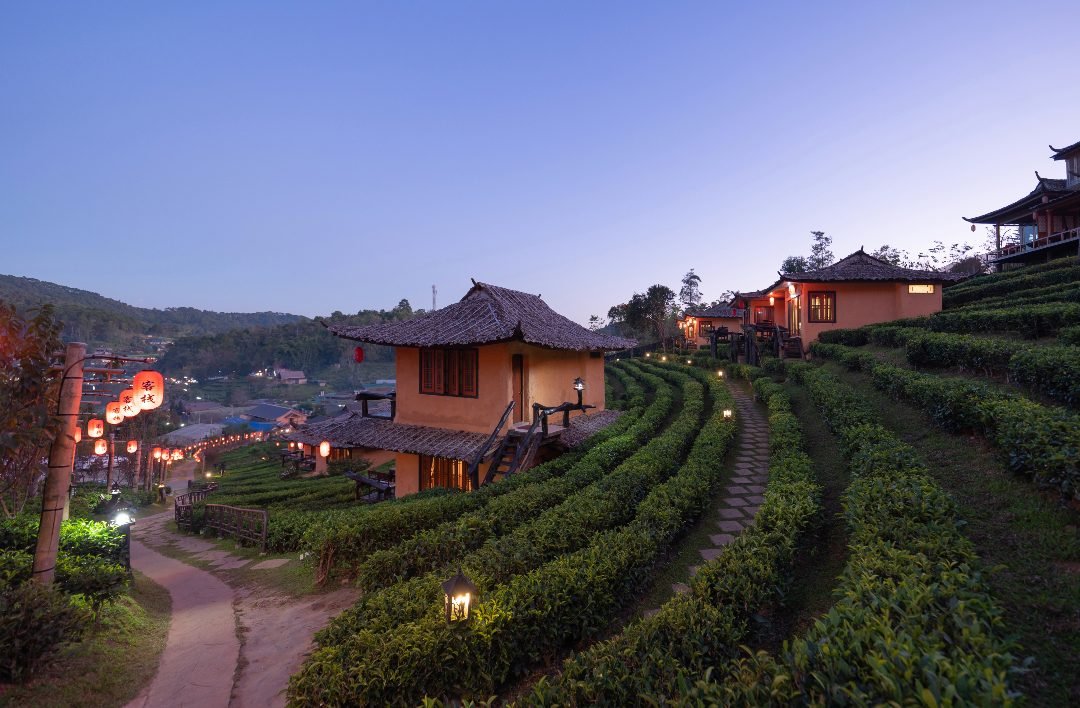
Tea is at the heart of Ban Rak Thai’s identity, and one of the best places to experience this is at Lee Wine Rak Thai Resort. Even if you’re not staying overnight, visitors are welcome to explore the tea plantations for a small entrance fee of around 50 THB.

Wandering through the neatly lined tea bushes, you’ll gain a real appreciation for the village’s agricultural roots. The plantations stretch across rolling hills, with panoramic views back over the village and reservoir. Early morning and late afternoon are especially beautiful, when the light softens and the air cools.

Views of Lee Wine Rak Thai Resort

Ban Rak Thai - Lee Wine Rak Thai Resort Tea Plantations

Lee Wine Rak Thai Resort

Ban Rak Thai - Lee Wine Rak Thai Resort

Lee Wine Rak Thai Resort

6. Join a Traditional Tea Tasting in Ban Rak Thai

You can sample tea almost anywhere in Ban Rak Thai, but Lee Wine Restaurant stands out as one of the best places for a proper tasting. The teas here are rich, aromatic, and deeply connected to Yunnanese tradition.

From earthy oolong to fragrant green teas, tastings are unpretentious and relaxed. There’s no rush, no sales pressure - just time to sit, sip, and learn. It’s another reminder that Ban Rak Thai is a place best enjoyed slowly.

Where to Stay in Ban Rak Thai

Accommodation in Ban Rak Thai ranges from simple guesthouses to more atmospheric lakeside stays. Availability is limited, especially in peak season, so booking ahead is strongly recommended.

Budget Accommodation

  • Longlai Kezhan: A popular budget option offering traditional-style rooms, friendly hosts, and a peaceful location close to the lake.

  • Wojia Resort: A simple, welcoming stay with a homely Yunnanese feel, featuring unique rounded glass windows overlooking the lake.

  • Tai Cheng RakThai: A peaceful holiday home with garden surroundings and comfortable rooms, offering lake and mountain views. Just a two-minute walk from the lake, it’s well located for exploring Ban Rak Thai on foot.

Mid-Range/High-End Accommodation

  • Lee Wine Rak Thai Resort: One of the most well-known places to stay, offering traditional architecture, access to tea plantations, and beautiful views.

  • Hedreung BanRakThai Homestay & Camping: A cosy, recently renovated homestay perched on a hill above the village, offering some of the best views in Ban Rak Thai. Guests can enjoy scenic terraces, a peaceful garden, and fresh farm-to-table breakfasts, all hosted by a welcoming local owner.

  • Sang Poy Cottage: A peaceful countryside retreat set among rice fields and mountains located 30 kilometers outside of Ban Rak Thai. Known for its friendly hosts, scenic restaurant views, and traditional teak cottages, it’s an ideal stay for travelers visiting Ban Rak Thai or riding the Mae Hong Son Loop.

Ban Rak Thai - Sang Poy Cottage Reception

Sang Poy Cottage

Sang Poy Cottage

How to Reach Ban Rak Thai

There are several ways to reach Ban Rak Thai, depending on where you’re coming from and how adventurous you feel.

From Pai

From Pai, reaching Ban Rak Thai takes around 2.5 hours by car or around 3 hours by motorbike, making it a great option for travelers planning to stay overnight. The route follows Highway 1095 west before turning north onto Route 4001, a narrower mountain road that winds through forested hills and tea-growing country. While the final stretch is more remote, it’s well within the abilities of confident riders and drivers.

Ban Rak Thai - Pai Smilehouse

Pai

Ban Rak Thai - Pai Walking Street

Pai

Ban Rak Thai - Pai Waterfall Hike

Pai

From Mae Hong Son Town

For travelers riding the Mae Hong Son Loop, Ban Rak Thai is easily reached from Mae Hong Son Town in around one hour. The route heads north on Route 108 before connecting with Highway 1095, followed by the turn-off onto Route 4001 for the final mountain stretch into the village.

Pai is the more popular place to stay along the loop, with its lively atmosphere and wide range of accommodation. However, Mae Hong Son Town offers a different appeal. It’s quieter and more local in character, with lakeside temples, traditional markets, and a handful of lesser-known spots that reward those who spend a little time there.

Ban Rak Thai - Entering the Town

Entering Ban Rak Thai

Ban Rak Thai - Motorbike Trip

Entering Ban Rak Thai

Staying Nearby

Rather than traveling directly to Ban Rak Thai, an alternative is to stay in the surrounding countryside and make the journey the following morning. This approach works especially well for travelers completing the Mae Hong Son Loop, breaking up the ride while allowing for an early, unhurried arrival.

One such option is Sang Poy Cottage, located around 40 minutes away by motorbike. Set among open fields and mountain scenery, it offers a peaceful overnight stop with comfortable rooms, fair pricing, and a welcoming atmosphere. After long hours on the road, it’s an easy place to unwind before continuing on to Ban Rak Thai the next day.

Booking a Tour or Coming from Chiang Mai

Tours to Ban Rak Thai can be booked from Pai or Mae Hong Son City. While it’s possible to travel from Chiang Mai, it’s not suitable for a day trip. The 240-kilometre journey takes around five hours via winding mountain roads. If you plan to come from Chiang Mai, staying overnight in Ban Rak Thai or nearby is essential.

Recommended Route

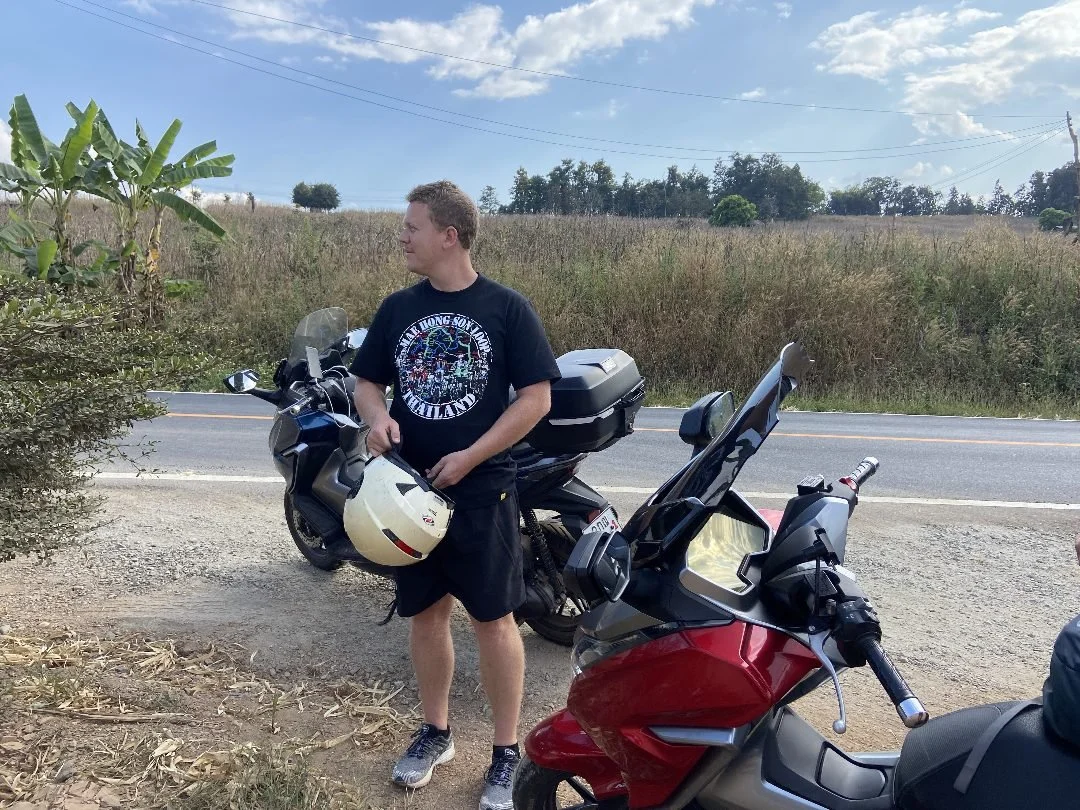
One of the most rewarding ways to visit Ban Rak Thai is by including it as part of the Mae Hong Son Loop, a scenic circuit through Northern Thailand known for its mountain roads and dramatic landscapes. Travelers commonly complete the loop clockwise but going anti-clockwise, traveling from Chiang Mai to Pai, continuing through the countryside near Ban Rak Thai, before crossing toward Mae Chaem and returning via Doi Inthanon National Park, is a truly special experience.

This route allows Ban Rak Thai to fit naturally into the journey rather than feeling like a detour. With its countless hair-pin turns, sweeping viewpoints, and ever-changing scenery, the Mae Hong Son Loop highlights the remarkable diversity of Northern Thailand and makes reaching Ban Rak Thai part of the adventure itself.

Read more: Mae Hong Son Loop: The Ultimate 5-Day Motorbike Itinerary
Ban Rak Thai - Chiang Mai to Pai Road

Mae Hong Son Loop

Ban Rak Thai - Highway 1095

Mae Hong Son Loop

Ban Rak Thai - Mae Hong Son Loop

Mae Hong Son Loop

Best Time to Visit Ban Rak Thai

The best time to visit Ban Rak Thai, and Northern Thailand more broadly, is from November to March, during the dry season. Locals often refer to this period as winter. Days are generally warm and clear, while mornings and evenings can feel noticeably cooler, especially at higher elevations.

Conditions during December/January are often ideal for exploring the region. Sunshine is common in destinations such as Chiang Mai and Pai, while temperatures drop slightly further north, bringing crisp mountain air to places like Ban Rak Thai and Doi Inthanon National Park. When the sun is out, light clothing is usually comfortable, and the cooler temperatures make lakeside walks and outdoor exploration especially pleasant.

Tips for Visiting Ban Rak Thai

When planning a visit to Ban Rak Thai, timing is especially important. Travel is best arranged before April, as seasonal agricultural burning across Northern Thailand in February/March can lead to hazy conditions and reduced air quality. Visiting earlier, December or January, helps ensure clear views and a more enjoyable experience in the mountains.

Beyond seasonal considerations, Ban Rak Thai stands out as a quietly rewarding destination. Whether visited for a few hours or as an overnight stay, the village offers a calm, atmospheric setting shaped by its cultural heritage and natural surroundings. Its slower pace, lakeside scenery, and Yunnanese influence make it feel distinctly different from much of Thailand.

For travelers drawn to thoughtful, relaxed journeys, Ban Rak Thai leaves a lasting impression - one defined by stillness, tradition, and the mountain landscapes that frame the village.

Kat & Cam

Kat & Cam are the Thai & Kiwi couple behind Thailand Wanderlust.

Previous
Previous

How to Visit Nang Yuan Island: Beaches, Viewpoints & Tour

Next
Next

Mae Hong Son Loop: The Ultimate 5-Day Motorbike Guide