
How to Visit the Grand Palace in Bangkok: A Detailed Guide
We’ve been to a few Bangkok temples in our time and none quite compare architecturally to the Grand Palace. This sprawling complex, built way back in 1782, is home to detailed mosaics, glittering spires, royal halls, golden chedis and one of the most revered Buddha statues in the world. The only downside to such an incredible place is that it gets busy and we mean super busy: the Grand Palace is the most visited attraction in Bangkok, with crowds that start pouring in from mid-morning onwards.
Going into our visit, we didn’t quite understand this and thought arriving at the leisurely hour of 10:00 AM would be fine. By that time, the queues were long and we had to wade through a sea of tourists to see the different sites. It didn’t take anything away from the experience though - far from it. If you’re wondering whether the Grand Palace is worth visiting, the answer is an emphatic yes - it’s one of the best temples in Thailand. But, like all hotspots, it requires a bit of strategy to make the most of your visit.
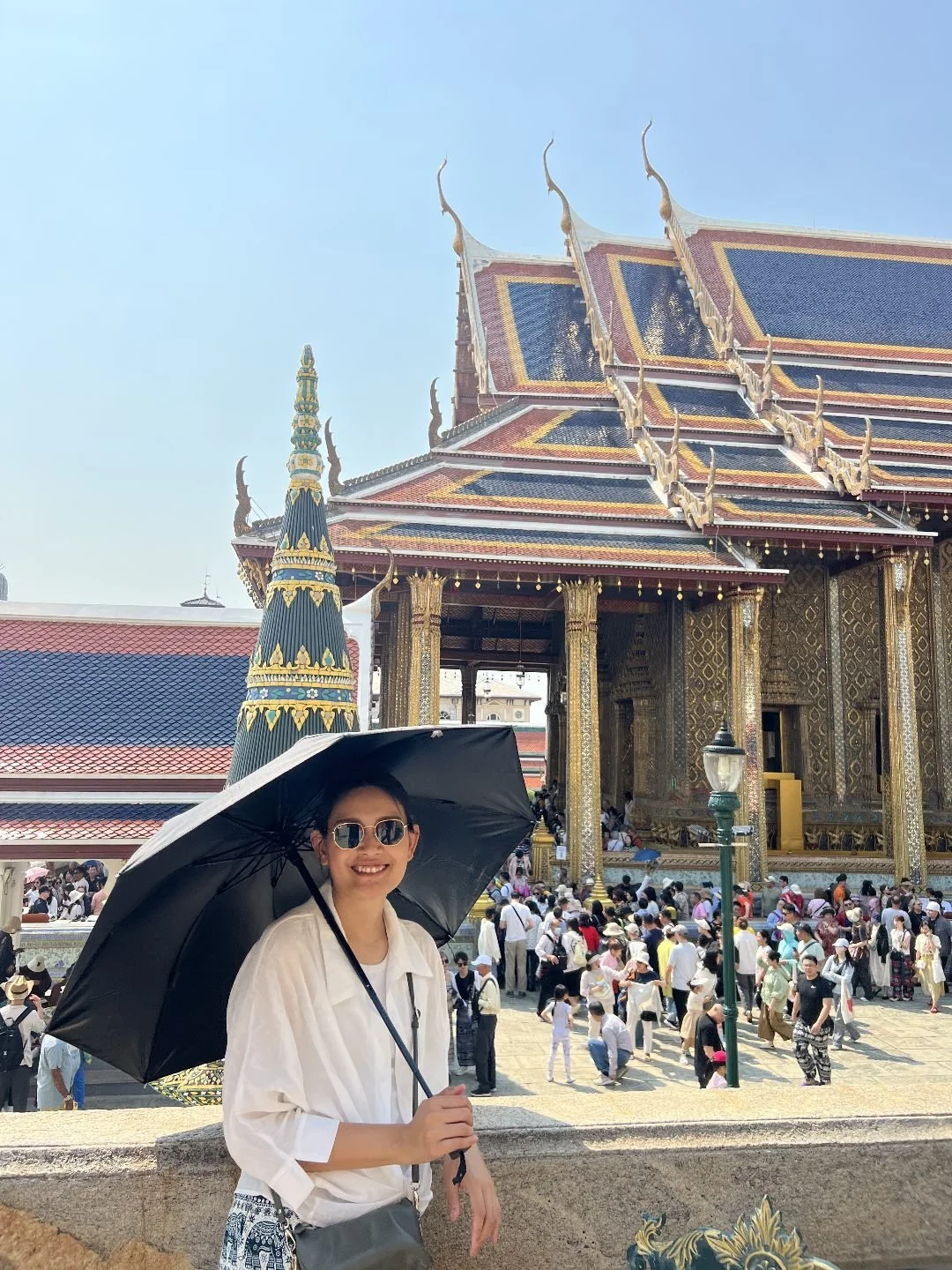
The Grand Palace
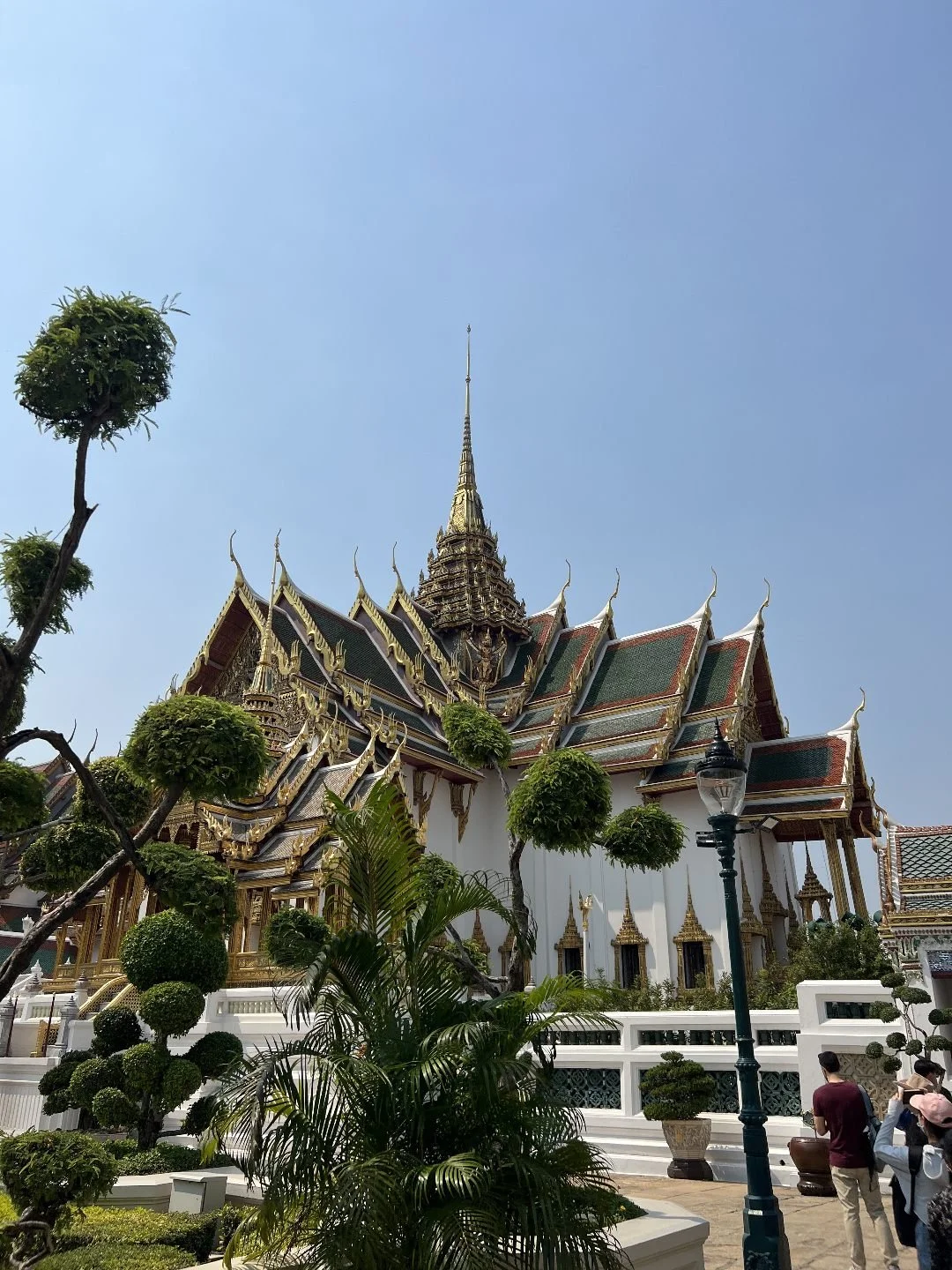
The Grand Palace
An Introduction to the Grand Palace
The history and prestige of the Grand Palace can be felt everywhere you look. It was the official royal residence and political heart of Siam for the good part of 150 years, after King Rama I made Bangkok the new capital. Its location, in the middle of the Old Town, makes it easy to pair with Wat Pho (home to The Reclining Buddha) and Wat Arun on the other side of the river. Unlike most of Bangkok, this area is highly walkable with fantastic street food options and cute little boutiques waiting around every corner.
The star of the show is, of course, the Temple of the Emerald Buddha (Wat Phra Kaew) where a small but culturally significant Buddha statue sits, carved from a single block of jade and dressed in gold cloth. Beyond that, visiting the Grand Palace gives you the chance to walk through courtyards where kings once stood, marvel at stupas covered in thousands of gold tiles, and follow mythological stories on the mural paintings that wrap around the inner cloister. If things like Buddhism, art and architecture appeal to you, then you’ll have a great time at the Grand Palace.
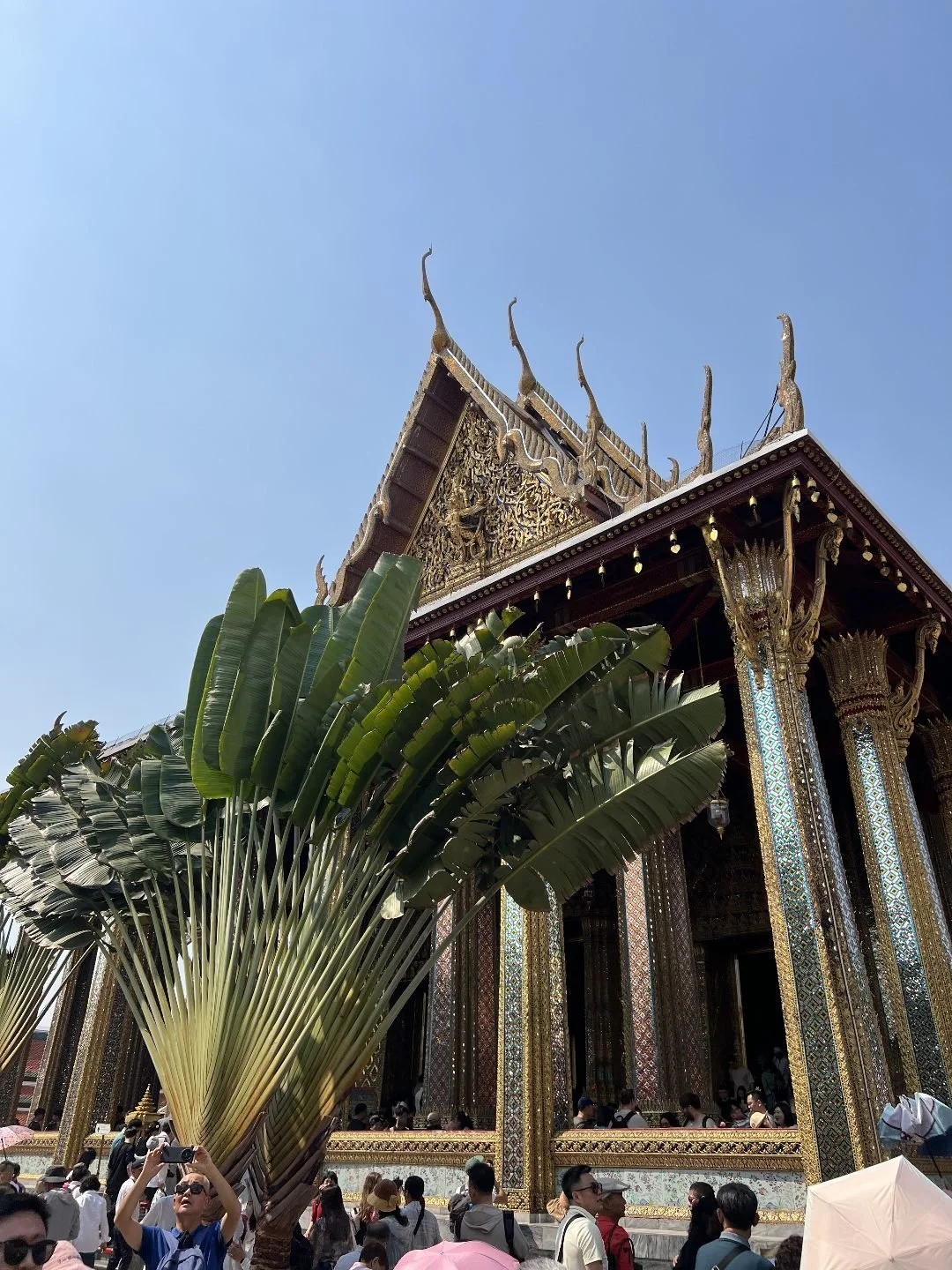
The Grand Palace
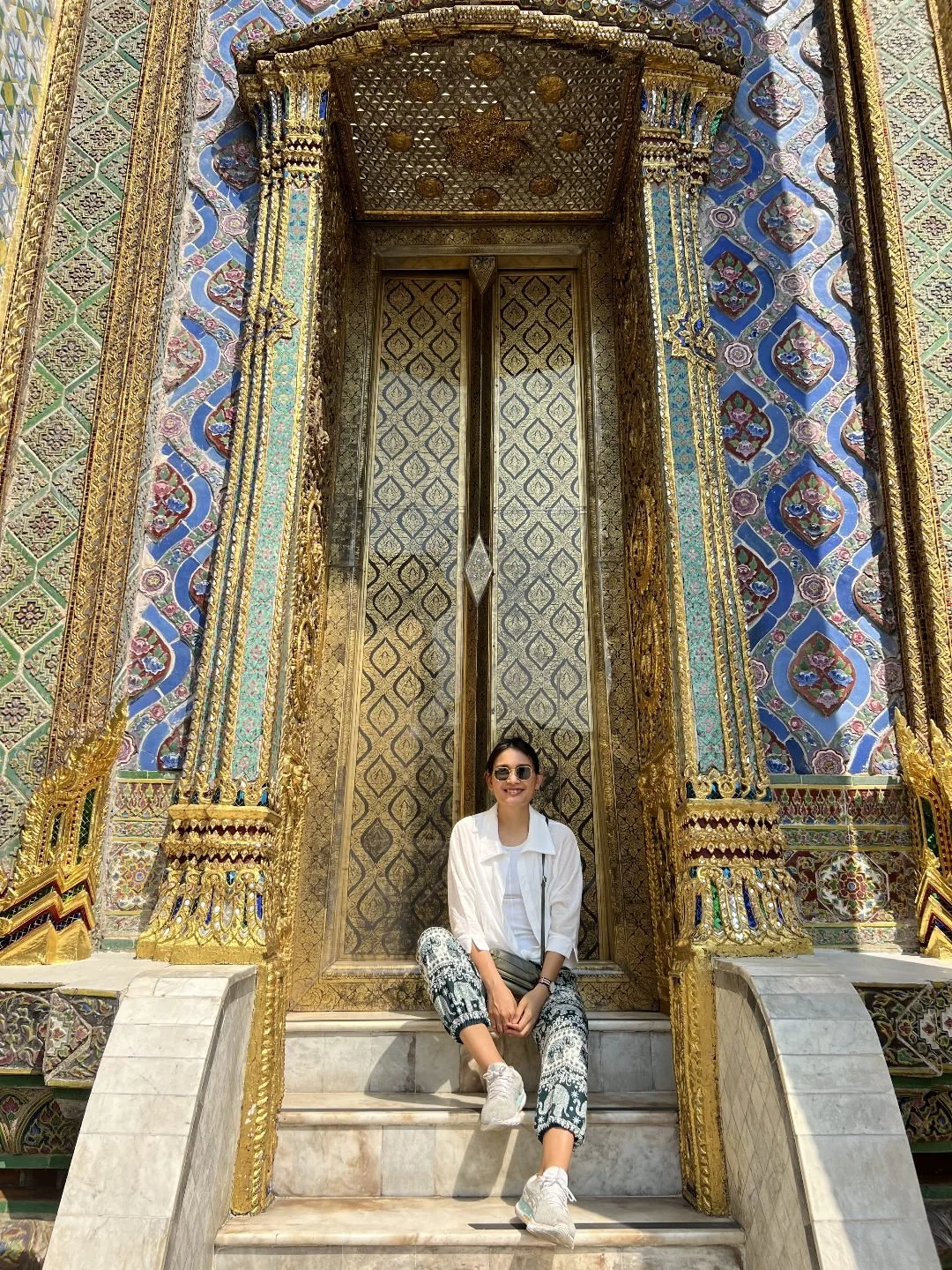
The Grand Palace
What to See at the Grand Palace
Ramakien Gallery
When we finally got our tickets, we were led through the Ramakien Gallery at first - a continuous mural that stretches for over 2 kilometers along the inner cloister (considered the longest of its kind in the world). Although we didn’t understand the full details of the “Ramakien Epic”, which is adapted from India’s Ramayana, we were still blown away by the detail and artistry of the paintings. There are 178 different panels to observe here, all telling stories of heroic figures, fierce battles and little glimpses of everyday life. It turned out to be Cam’s favorite part of the entire complex.
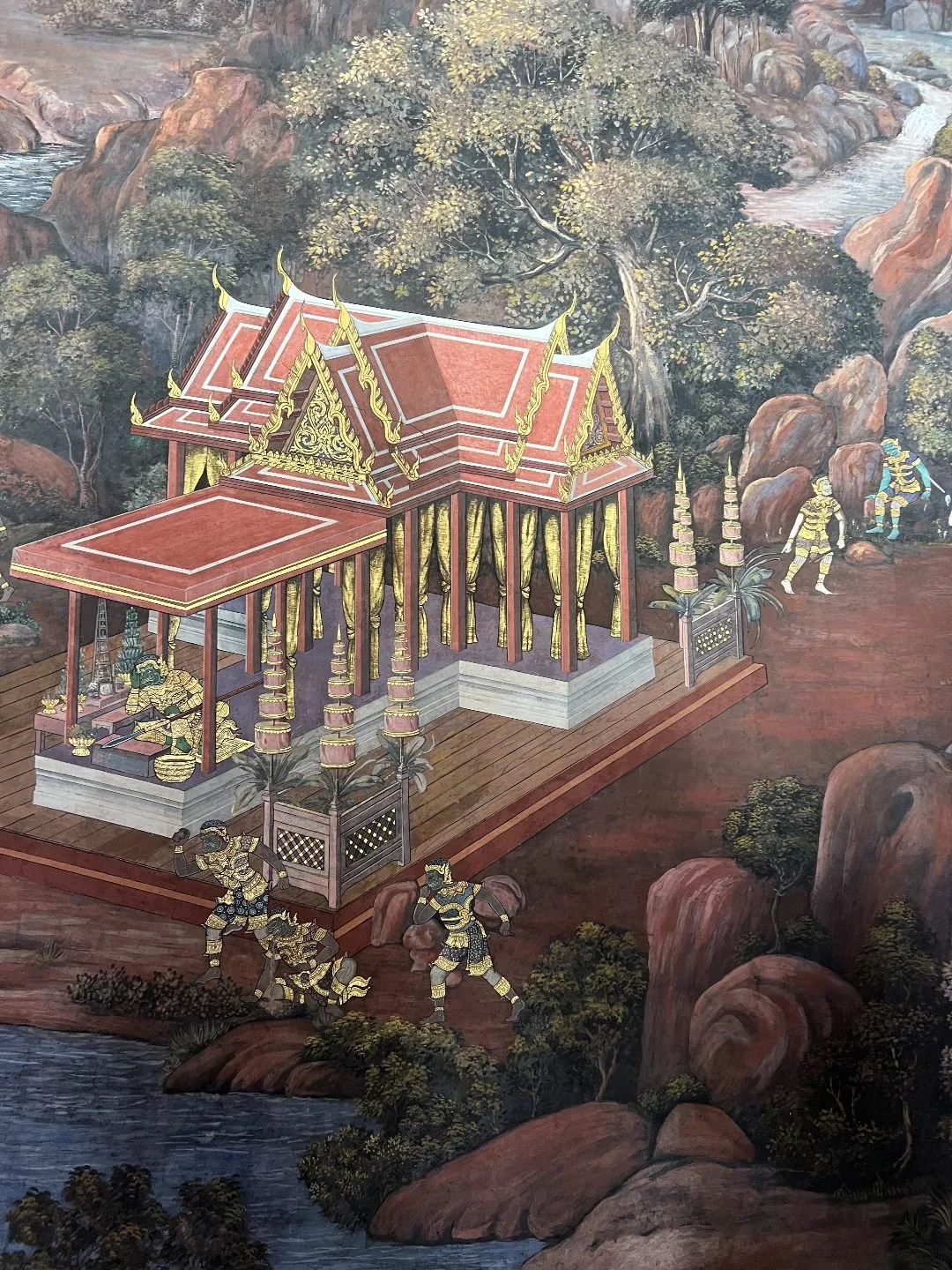
Ramakien Gallery
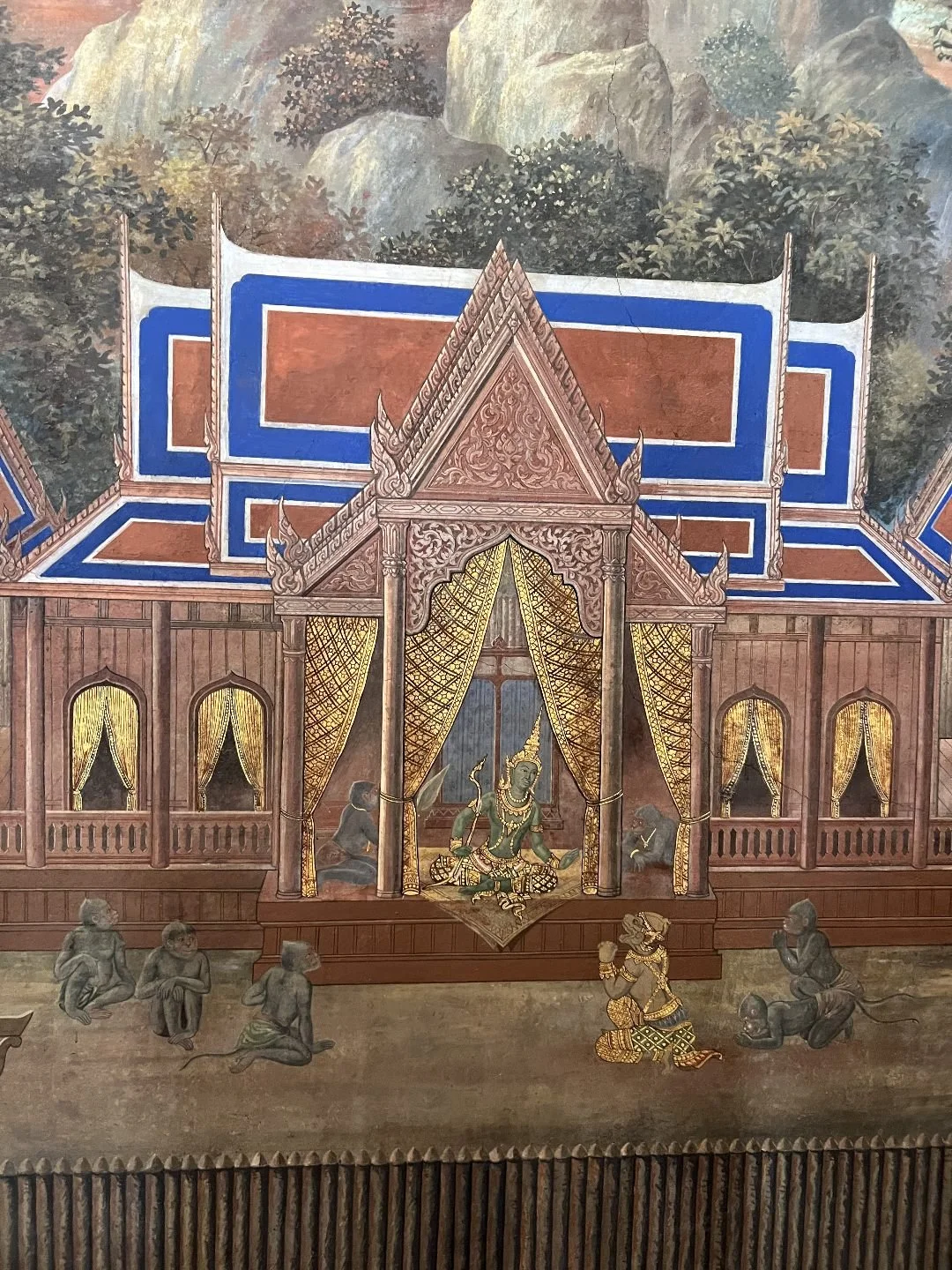
Ramakien Gallery
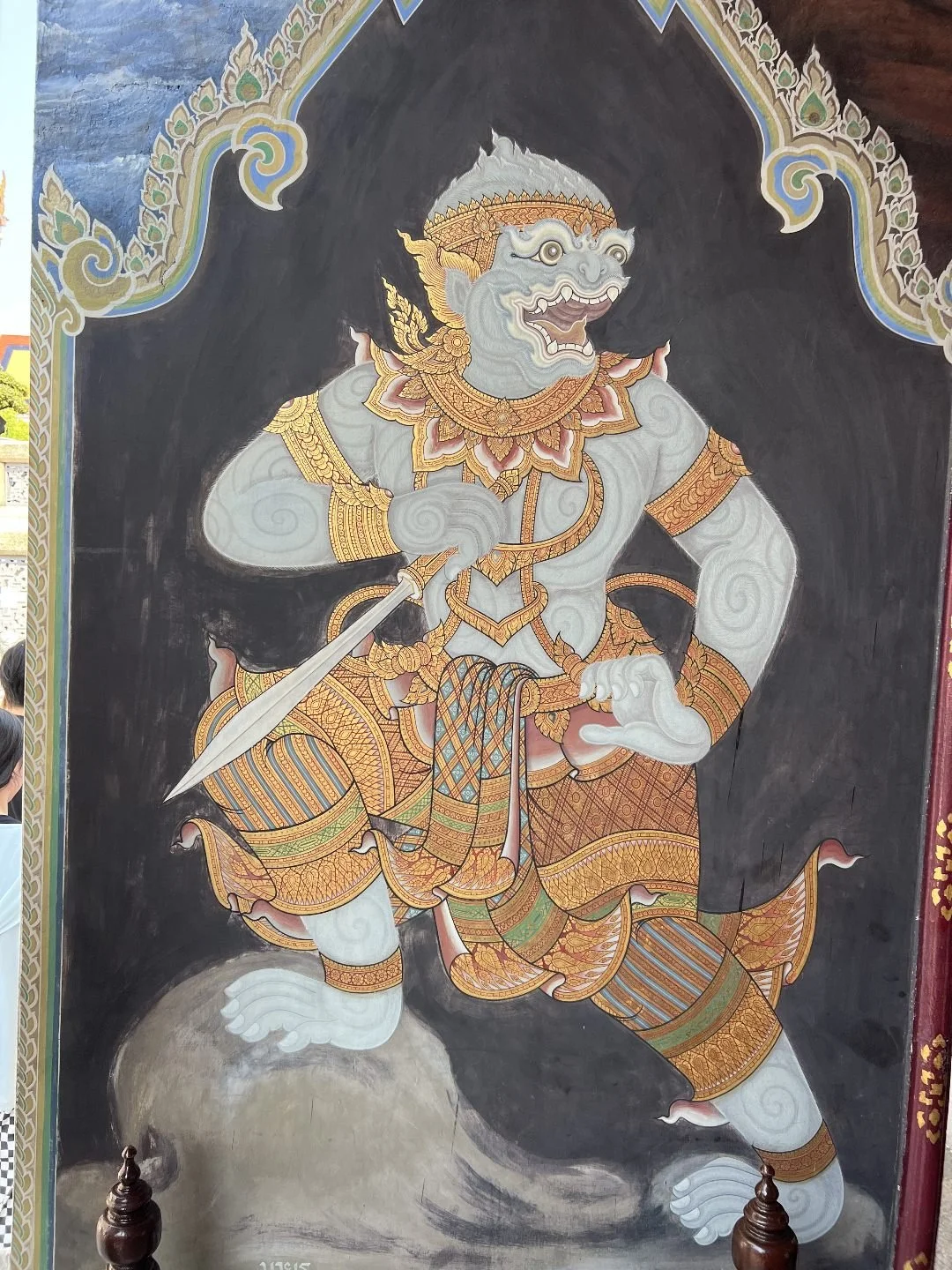
Ramakien Gallery
The Temple of the Emerald Buddha (Wat Phra Kaew)
Upon leaving the gallery, and stepping out into the open courtyard, you’re greeted by Wat Phra Kaew which houses the famous Emerald Buddha. This tiny statue might not look impressive, as it’s only 66 centimeters tall and isn’t even made of emerald, but it still symbolizes royal authority and is believed to have powers that bless the nation. Only the King is allowed to touch it, and three times a year he changes its robes to mark the change of the seasons. The exterior of the main chapel (Phra Ubosot) is dazzling with multi-tiered roofs, glass decorations, and gilded window frames on display.
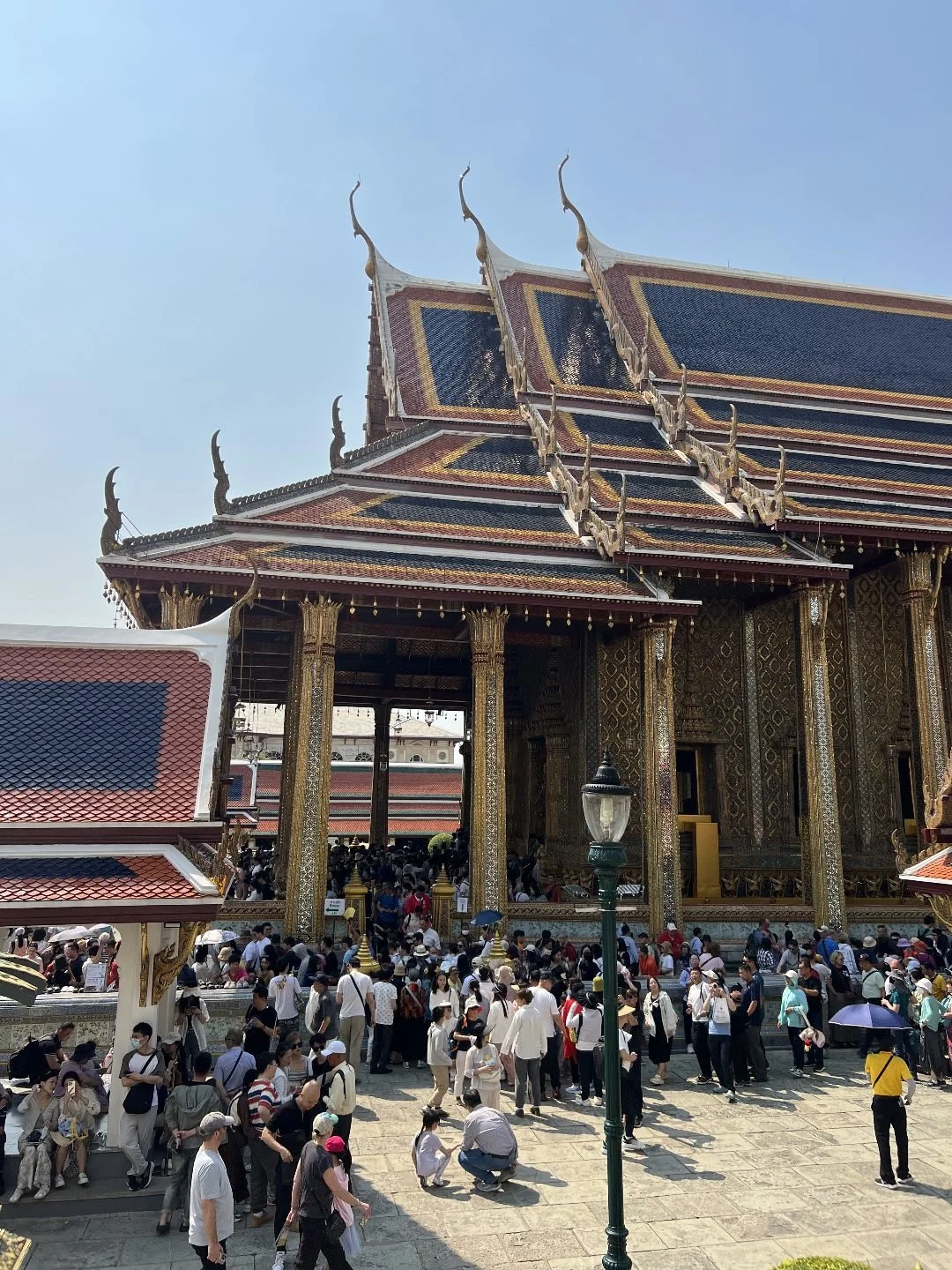
The Temple of the Emerald Buddha
Yaksha Guardian Statues
Yaksha statues are colorful, mythological figures that stem from the Ramakien Epic. These giants stand at about 5 meters high and are dressed in beautiful armor, acting as guardians of the Emerald Buddha. They’re one of the most photographed features of the Grand Palace, and we couldn’t help but take dozens of photos of them ourselves. You’ll see the Yaksha statues at the Suvarnabhumi Airport as well - symbolically guarding travelers upon departure and keeping bad luck away from the airport.
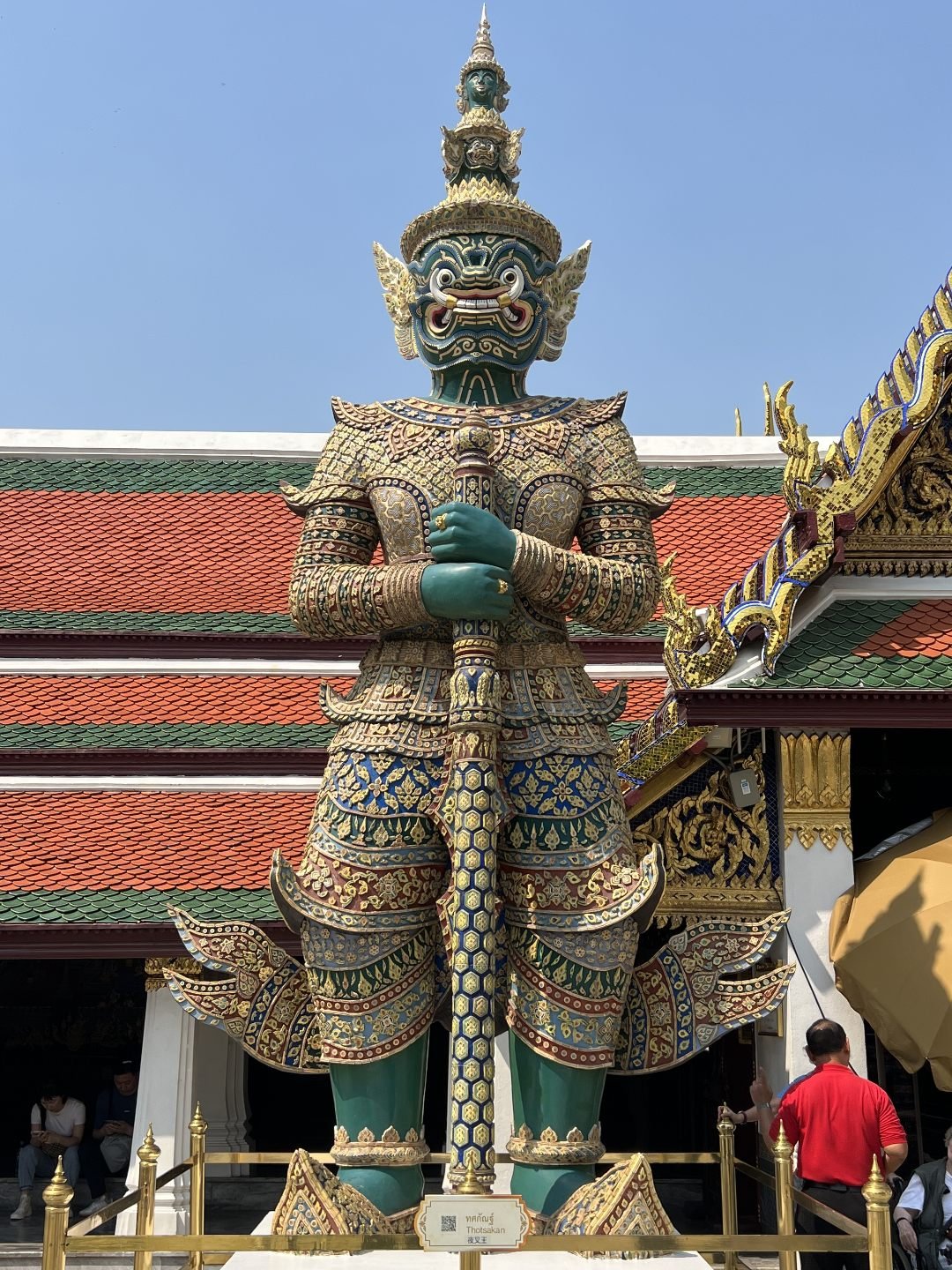
Yaksha statue
The Royal Pantheon & Library
Both the Royal Pantheon and the Library (Phra Mondop) are situated on the upper terrace - one of the most visually stunning parts of the Grand Palace. The Royal Pantheon boasts blue walls, golden accents and gilded doors, while similarly the Library shines in green and gold mosaics, and has doors inlaid with mother-of-pearl. This was Kat’s favorite area to take photos, as the imposing golden doors created “Instagram-worthy” shots.
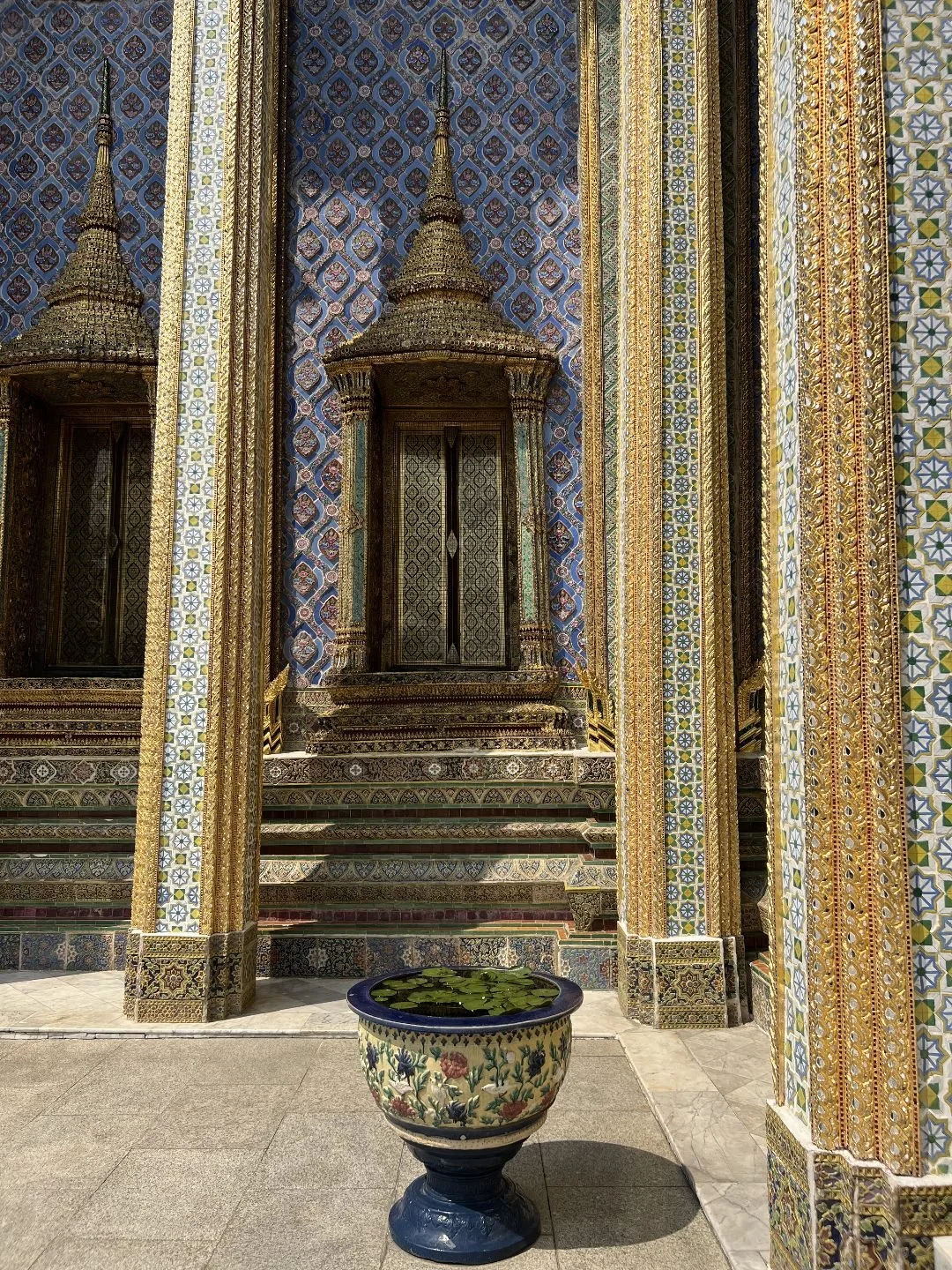
The Royal Pantheon & Library
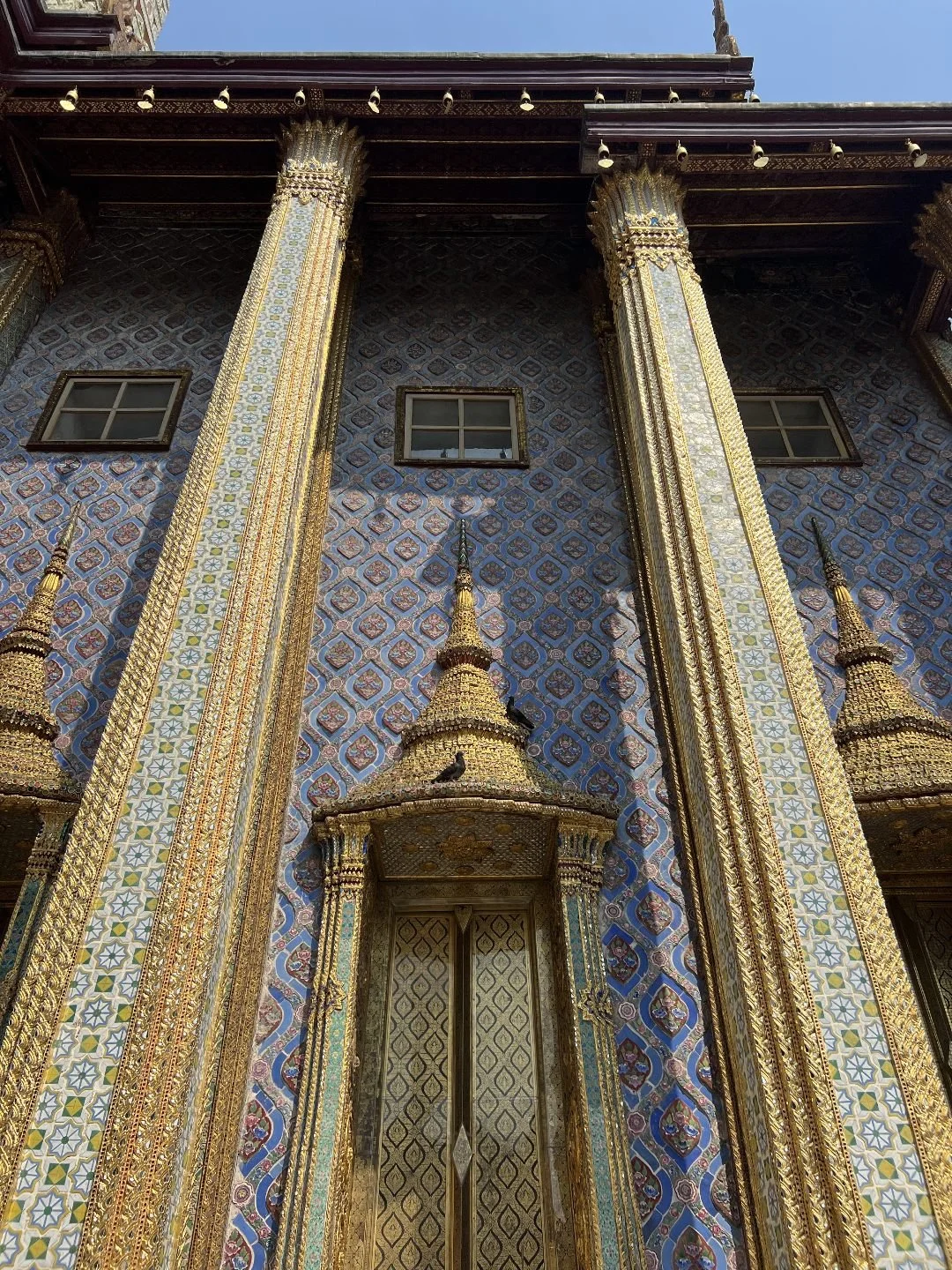
The Royal Pantheon & Library
Phra Sri Rattana Chedi
You won’t be able to miss the Phra Sri Rattana Chedi, as its large bell-shape dominates the upper terrace. The style is modeled on the historic stupas of the old capital of Ayutthaya which, in turn, were inspired by Ceylon (Sri Lankan) Buddhist architecture. The craftsmanship again is on another level: thousands of gold mosaic tiles cover the chedi and make it shimmer in the sun. The Phra Sri Rattana Chedi is definitely worth stopping by for a photo or two before moving on to other sites in the Grand Palace.
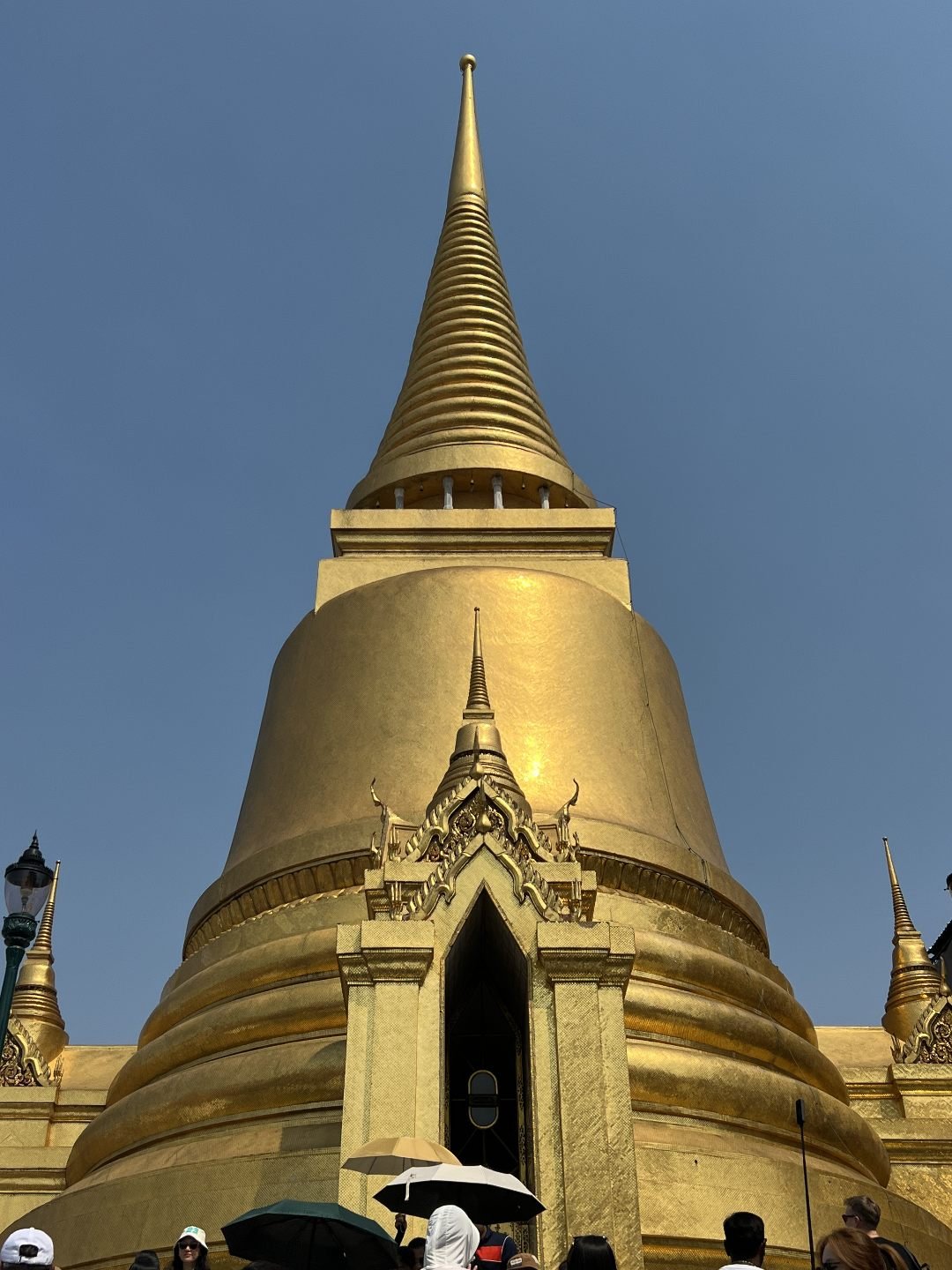
Phra Sri Rattana Chedi
Phra Suwannachedi
Some of the coolest structures we saw inside the Grand Palace were the two identical Phra Suwannachedi stupas that sit close to the Phra Sri Rattana Chedi, instantly recognisable by the figures supporting their bases. The chedis are held up by 16 Yaksha statues and 4 monkey warriors that are posed as if physically lifting the structures themselves. They were fascinating to look up at close, and even more fun to photograph.
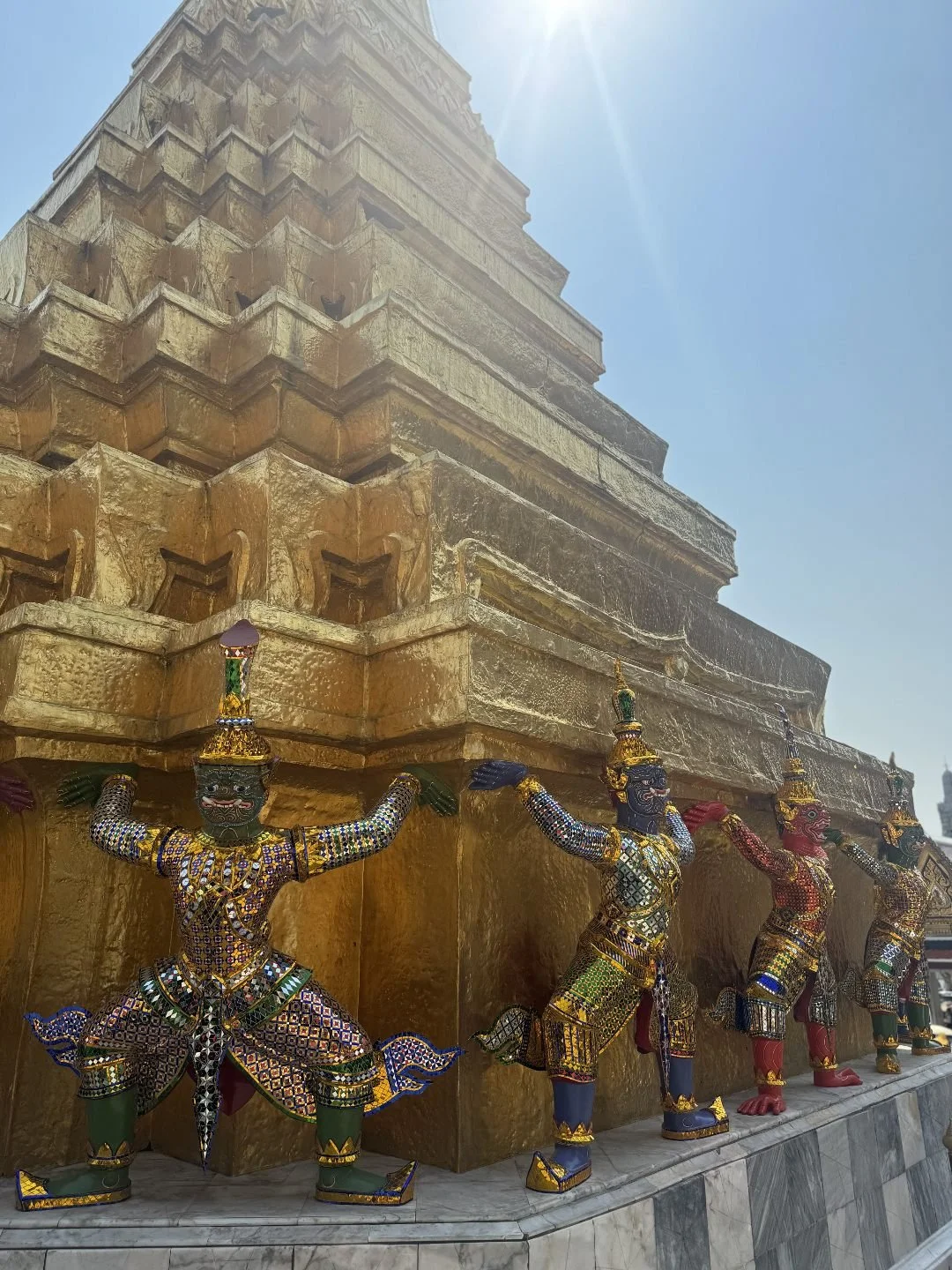
Phra Suwannachedi
How to Get to the Grand Palace
By MRT (Subway)
To reach the Grand Palace conveniently and cheaply, riding the MRT to Sanam Chai Station is without doubt the best option. This station is one of the most beautiful we’ve seen in Thailand - boasting gold and white pillars, marble floors, and ceiling medallions that makes it feel like you’re entering a palace of sorts before you even arrive at the real one. From here, it’s a 10-15 minute stroll to the Grand Palace by taking Exit 1 on your way out.
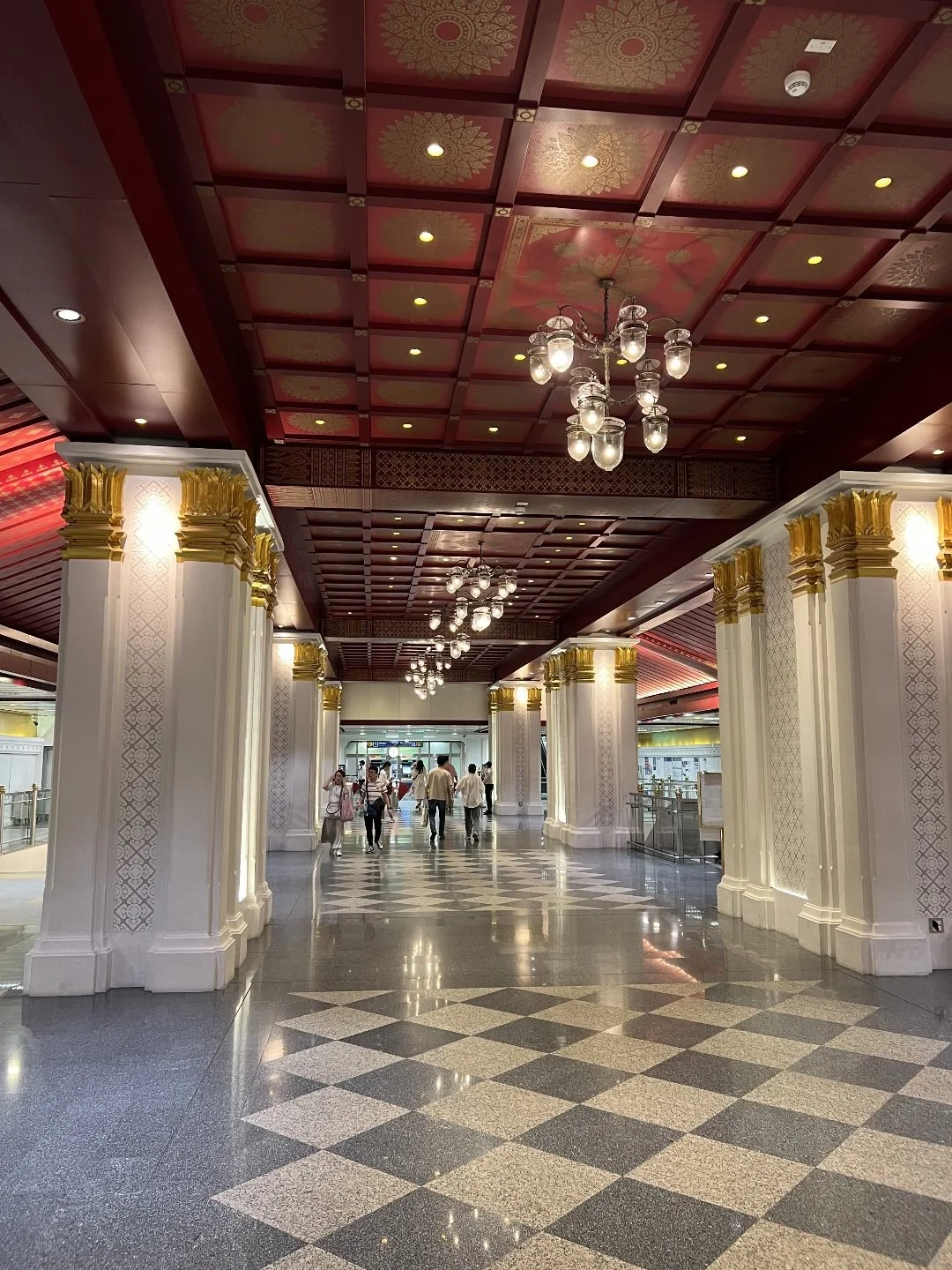
Sanam Chai Station
By BTS Skytrain and Ferry
Perhaps the most scenic route to get to the Grand Palace is taking the BTS Skytrain to Saphan Taksin Station, and then walking to Sathorn Pier and jumping on a ferry headed north to Tha Chang Pier (right on the Grand Palace’s doorstep). This journey along the Chao Phraya River provides a relaxing way to beat the traffic, and see a few sights along the river too.
Other Ways to Reach the Grand Palace
Staying by Khao San Road or in the wider Rattanakosin area, means you should be within walking distance to the Grand Palace. Going in the early morning, obviously, makes more sense to beat the heat. Another option is a short tuk-tuk ride (which is always a hoot). But just make sure you agree on a fair price before you hop in and don’t fall for any scams - such as “the palace is closed today” scam. This is basically never true, unless there’s a major public holiday, special state visit or large ceremony taking place.
FAQs for Visiting the Grand Palace
When should I arrive at the Grand Palace?
The Grand Palace opens at 8:30 AM every day, so you’ll want to be there as soon as the gates open. Even visiting an hour after opening time can mean long queues, large crowds and the heat starting to bake in. There’ll still be a few visitors and tour groups at 8:30 AM sharp but it won’t be anywhere near as hectic as the mid-day crowds. We recommend mapping out how you’ll get there the night before and setting an early alarm to seize the day.
How much does a ticket cost for the Grand Palace?
The dual pricing of 500 THB for foreigners and free for Thai citizens applies at the Grand Palace. This is much higher than most temple entry fees in Bangkok, for example the Golden Mount (Wat Saket) costs 100 THB and the giant Buddha at Wat Paknam is free. In our opinion, it’s worth paying the extra money to see the Grand Palace - especially if you go early and have a peaceful experience. You can buy tickets at the gate, or do something different like book a private guided tour to Bangkok’s big three all within close vicinity: the Grand Palace, Wat Arun and Wat Pho.
What is the dress code for the Grand Palace?
The dress code at the Grand Palace is one of the more strict in Bangkok. Both men and women need to cover their shoulders as well as their knees - and for the guys out there this means you’ll need to swap your shorts for some long pants. On our visit, we both bought a pair of those famous elephant pants that you see everyone wear. It was tacky and touristy but we didn’t care: we were too busy admiring the architecture. For more fun activities in Bangkok, check out our article below.
Read more: 30 Best Things To Do in Bangkok: Skip the Tourist Traps
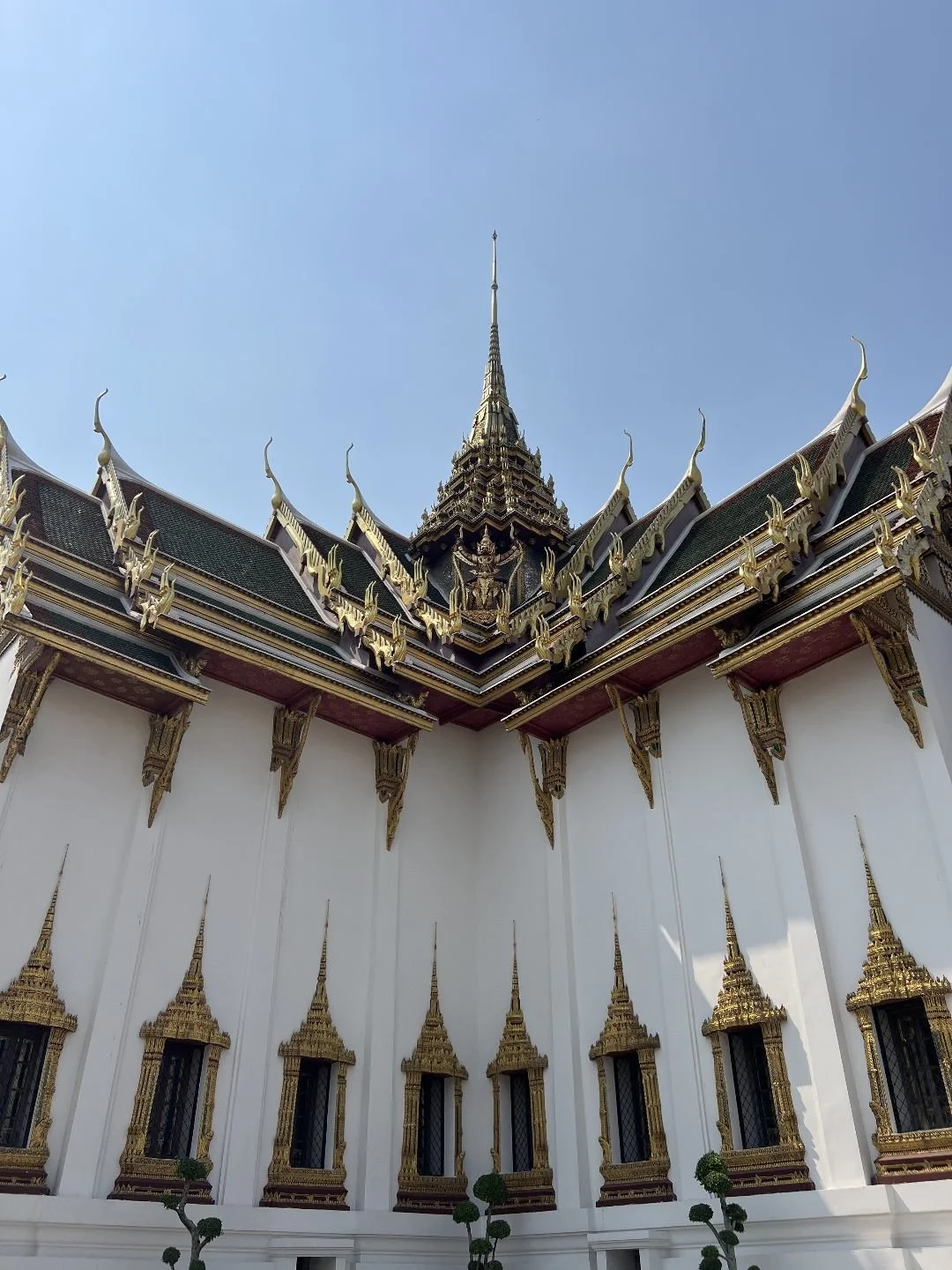
The Grand Palace
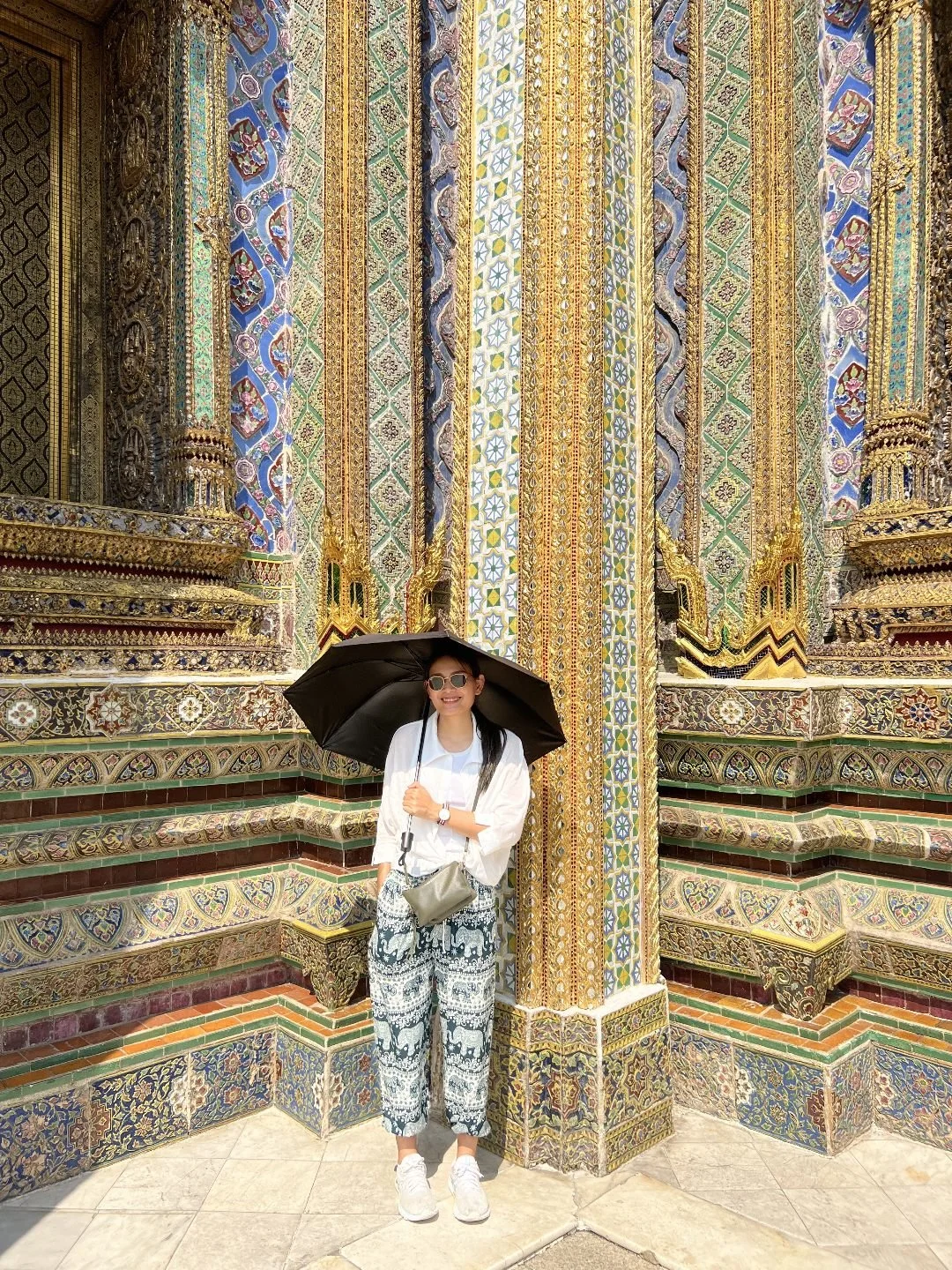
The Grand Palace
