
10 Best Things To Do in Kanchanaburi: The Ultimate Guide
The term “hidden gem” gets thrown around way too often in travel circles these days, but in the case of Kanchanaburi we believe it to be genuinely true. This province in western Thailand is mainly known for its tragic history during Japanese occupation and for the construction of the River Kwai Bridge, but dig a little deeper and you’ll discover one of the most beautiful and down-to-earth parts of Thailand.
After spending 3 days in Bangkok, and having a few too many late nights, we decided that we needed a change of pace. Looking on a map, we could see that Kanchanaburi was less than three hours drive away - offering what seemed like a wonderful little escape from the city. So we booked two-nights accommodation, jumped on the Kanchanaburi Express Bus, and headed west. However, things didn’t exactly go according to plan.
About halfway there, the air-con stopped working and for some strange reason all the windows were locked shut. It was so hot and stuffy that we literally couldn’t breathe! Of course, the driver had to pull over and organise a replacement bus. That was the good news. The bad news was that we would have to wait between 1-2 hours. Since we were short on time, and didn’t want to wait on the side of the motorway, Kat ordered us a Grab taxi for the final stretch.
We eventually made it to our hotel in Kanchanaburi, a lovely boutique called Inchantreedoopool. Once we dropped our bags off, the first item on our agenda was renting a motorbike so we could freely explore the area. A hotel porter picked us up in a little rickshaw and zoomed us around the corner to a motorbike rental shop, where we paid 400 THB per day for a 150cc auto.
We were then set for a few days of adventure. Whether it was riding around the tranquil riverside streets, learning about the heart-breaking history of POWs in WWII, or walking up seven levels of waterfalls at Erawan National Park - we absolutely enjoyed every moment here. Kanchanaburi really stole our hearts and the only regret we have was not staying longer!
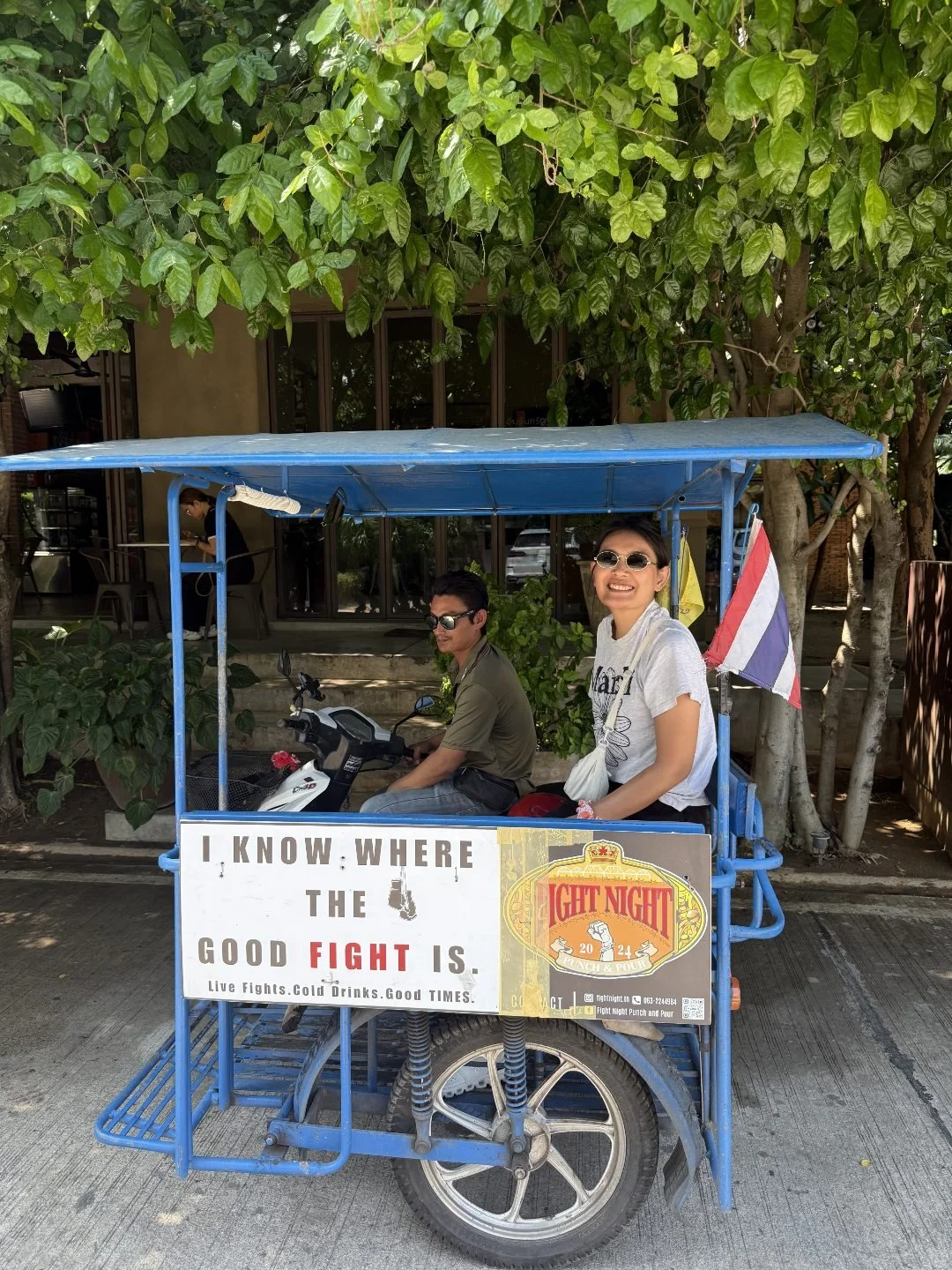
Rickshaw ride
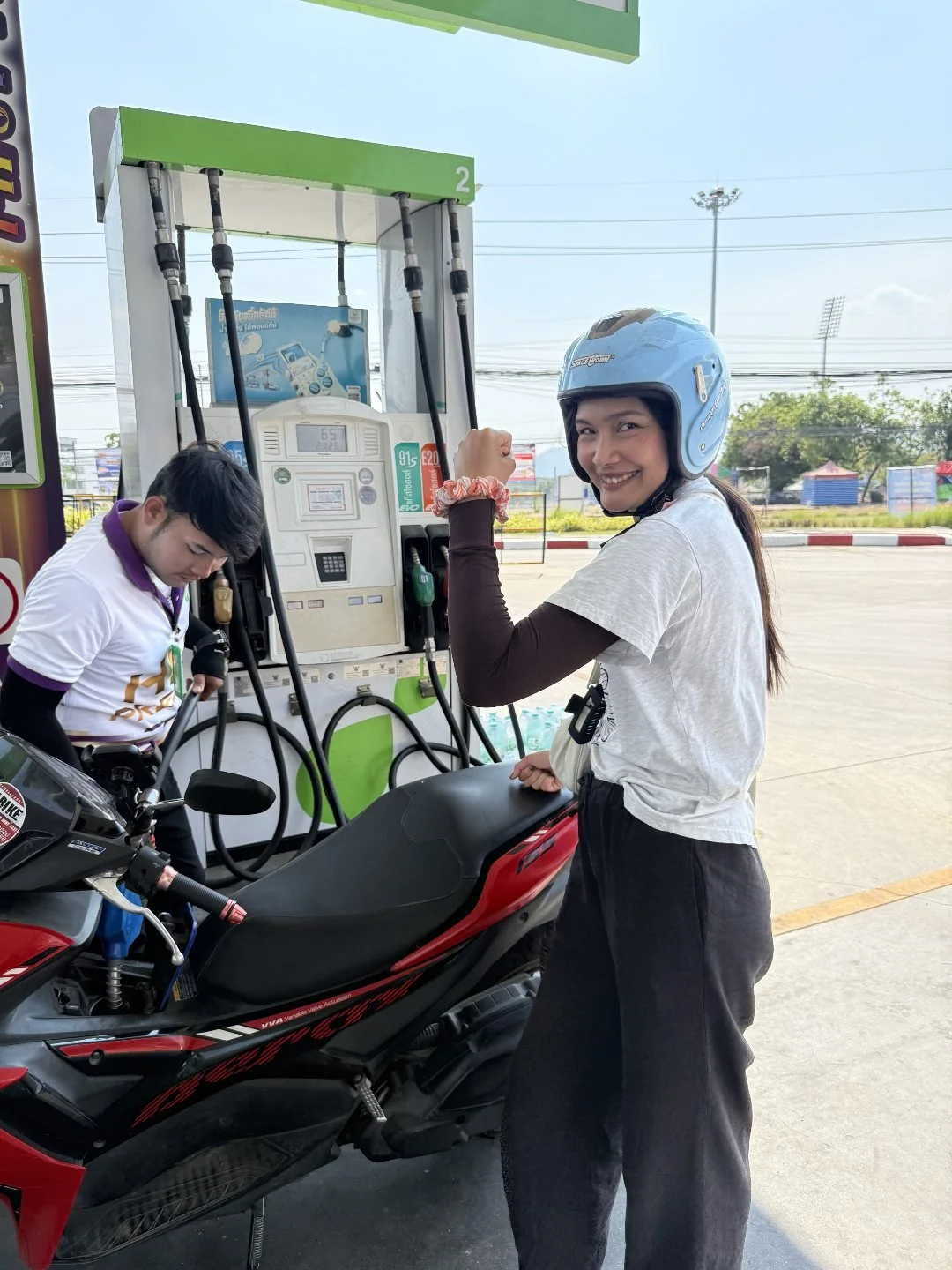
Fuelling up
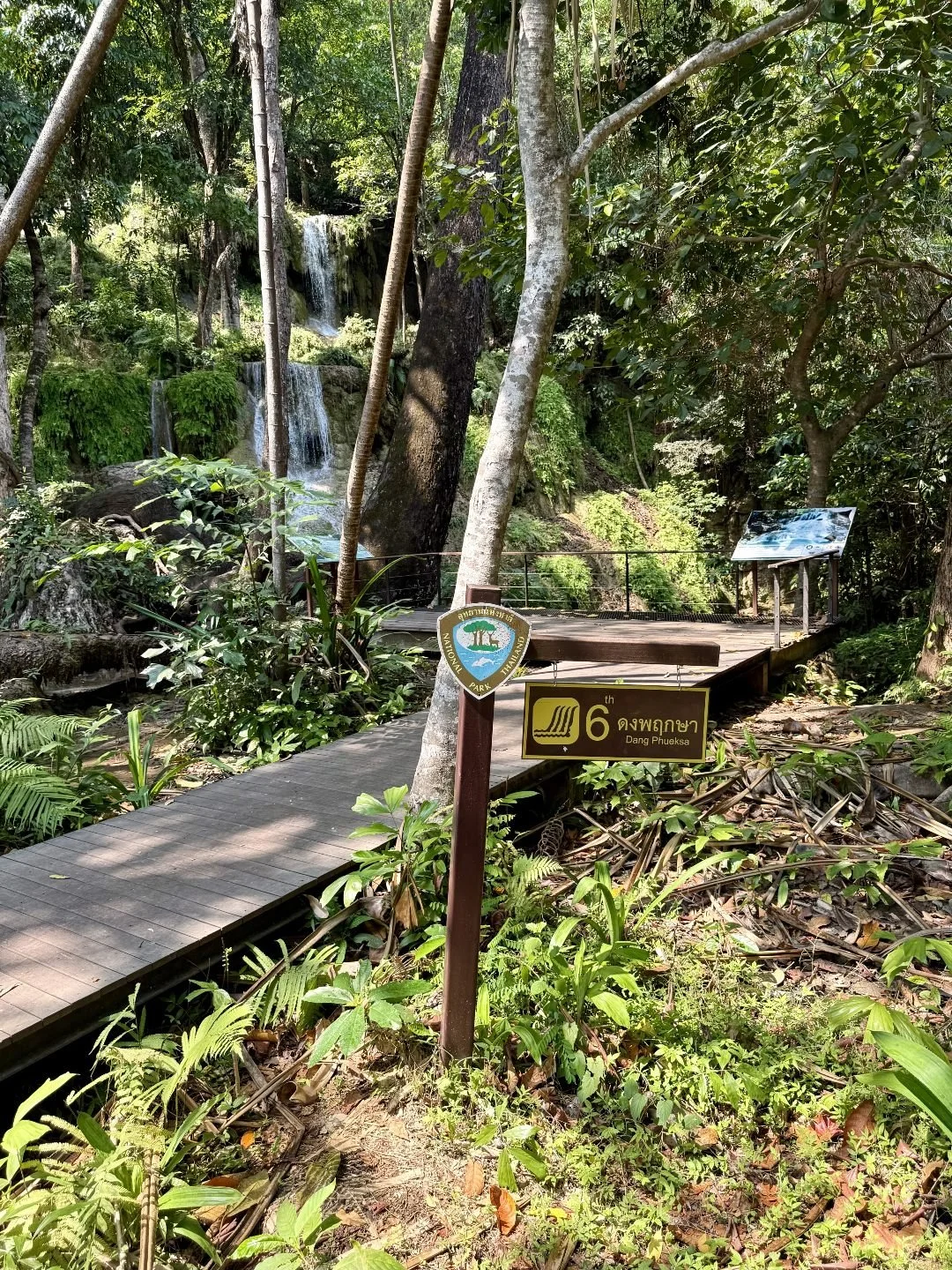
Erawan National Park
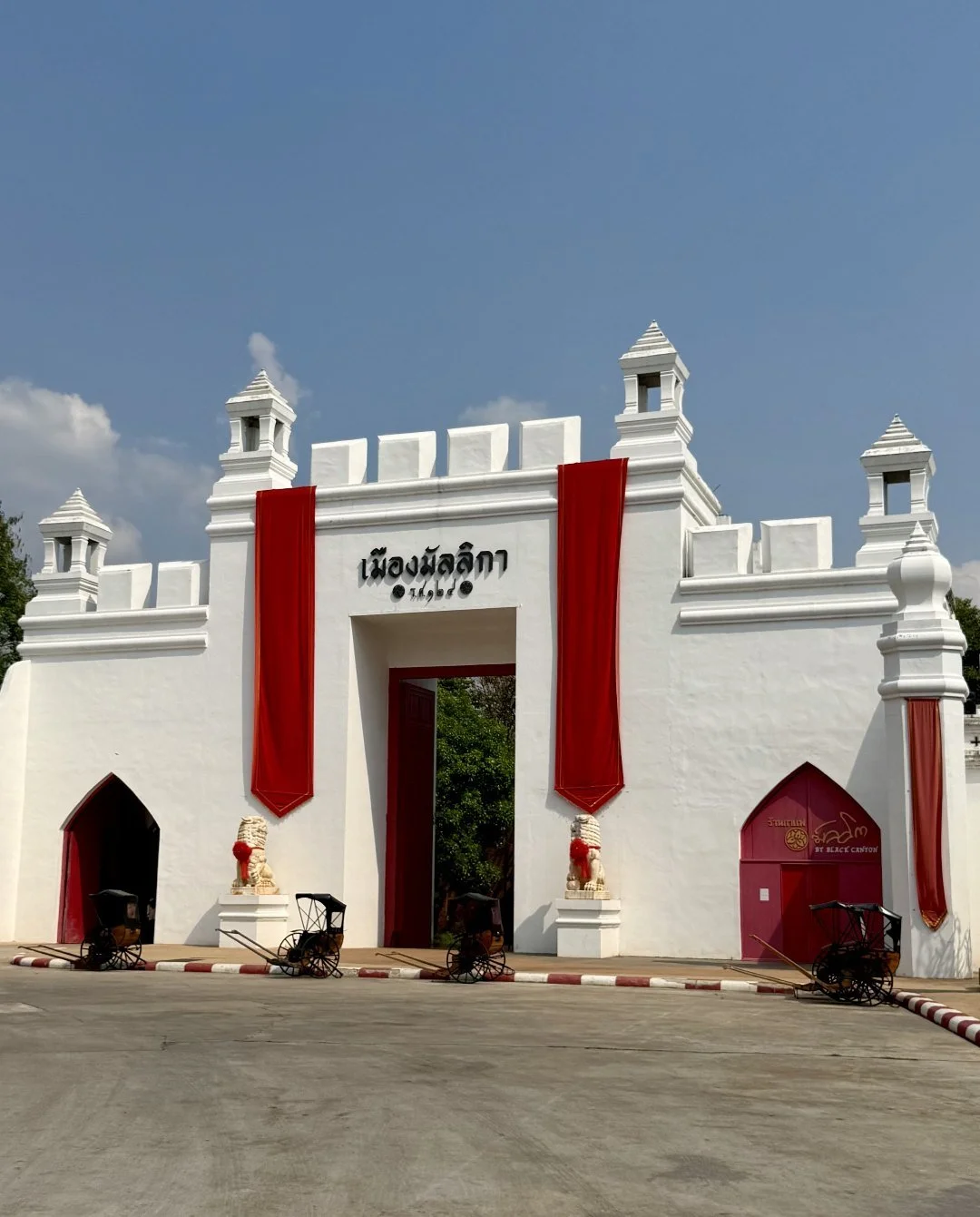
Mallika City
Mallika City
10 Best Things To Do in Kanchanaburi
1. Admire the Historic River Kwai Bridge
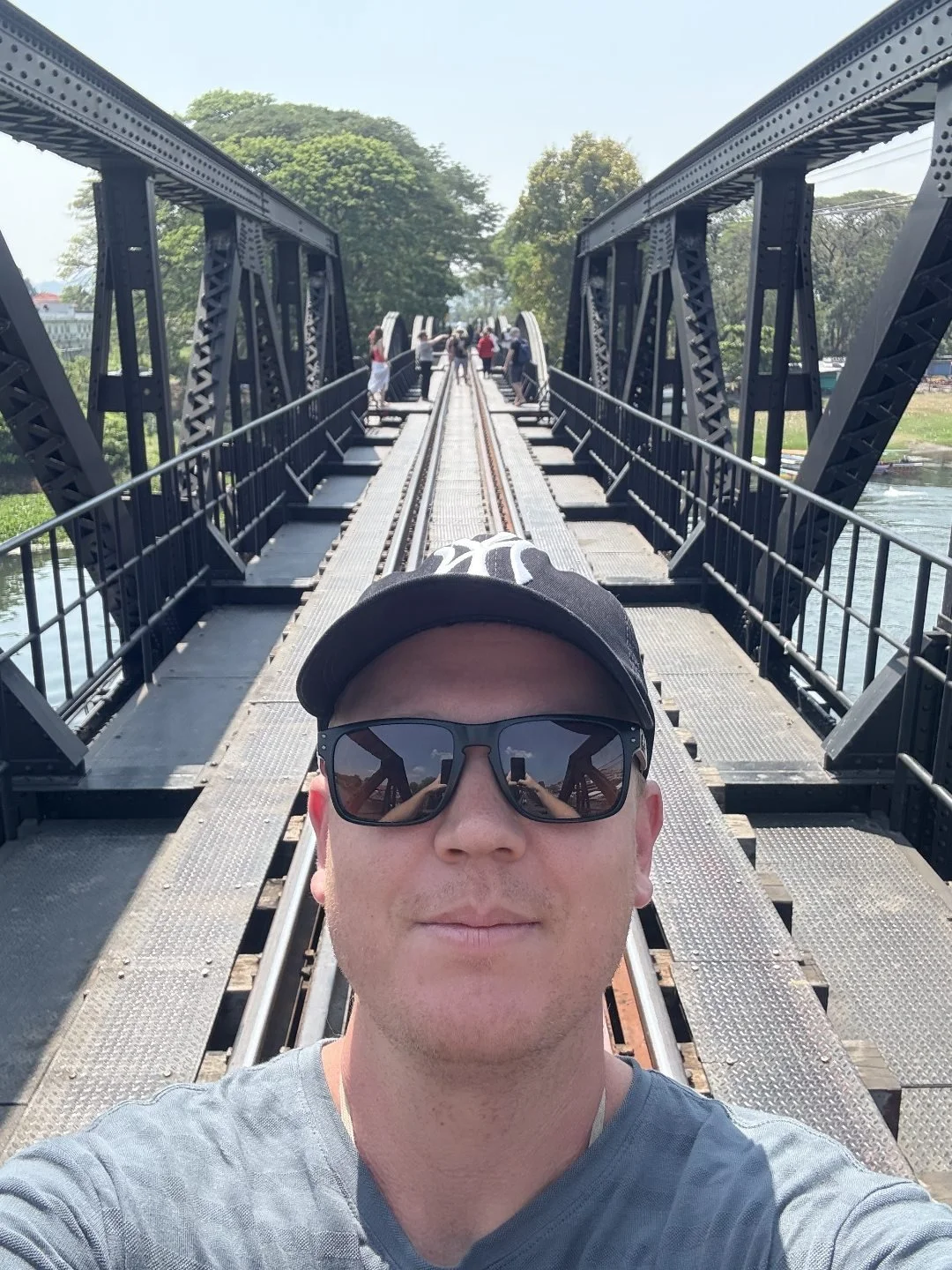
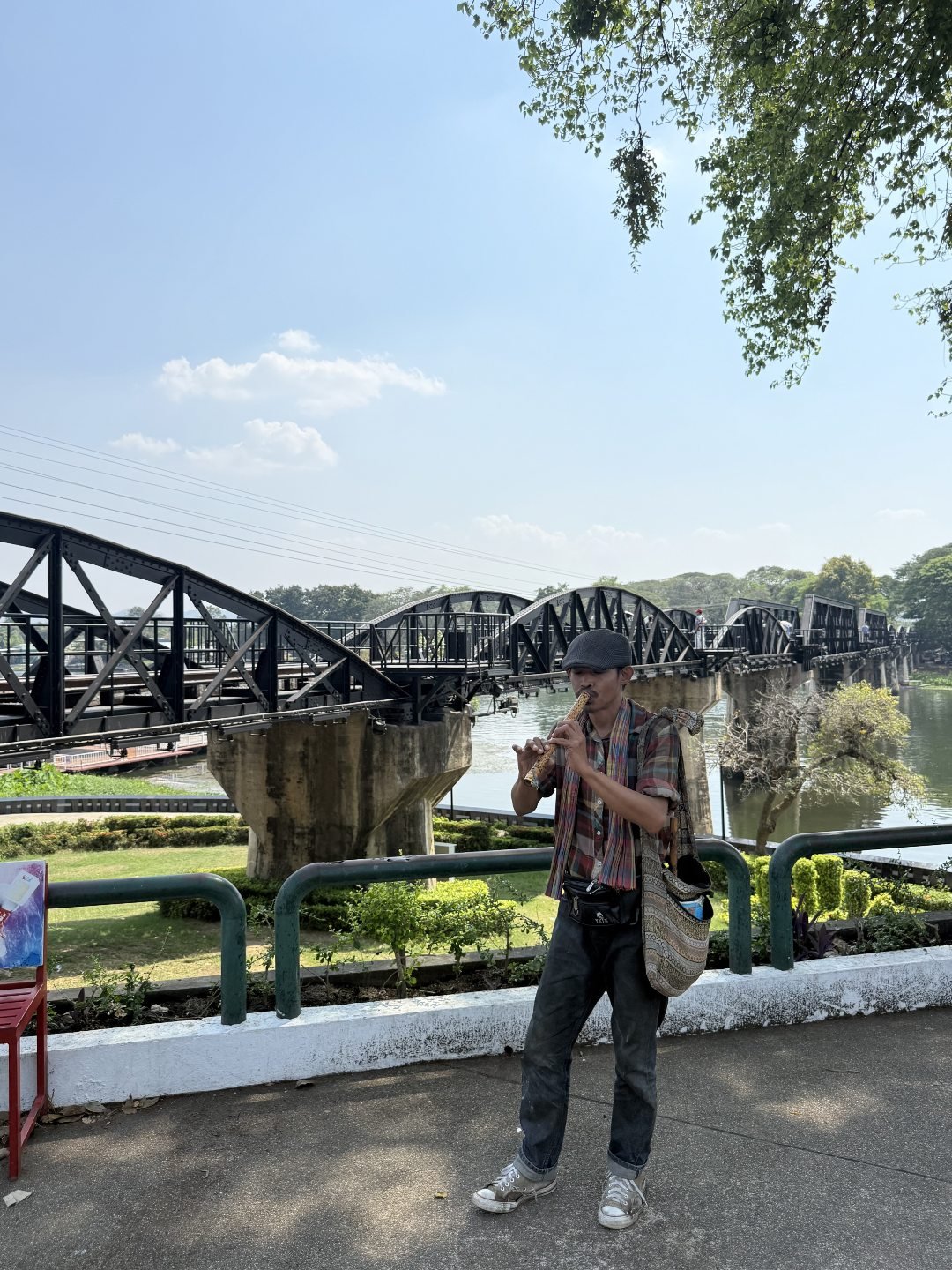
The River Kwai Bridge is the centrepiece of not only the city but of the region’s modern history. It was built by Allied POWs and Asian labourers under Japanese rule, in an attempt to build an overland supply route for the Japanese war effort in Myanmar. Today, the bridge serves as a WWII monument which you can walk across, take photos or just admire the views over the river. We recommend coming at night if you want to avoid the mid-day heat and see the bridge illuminated in colorful lights.
River Kwai Bridge
River Kwai Bridge
2. Visit the Death Railway Museum and Research Centre
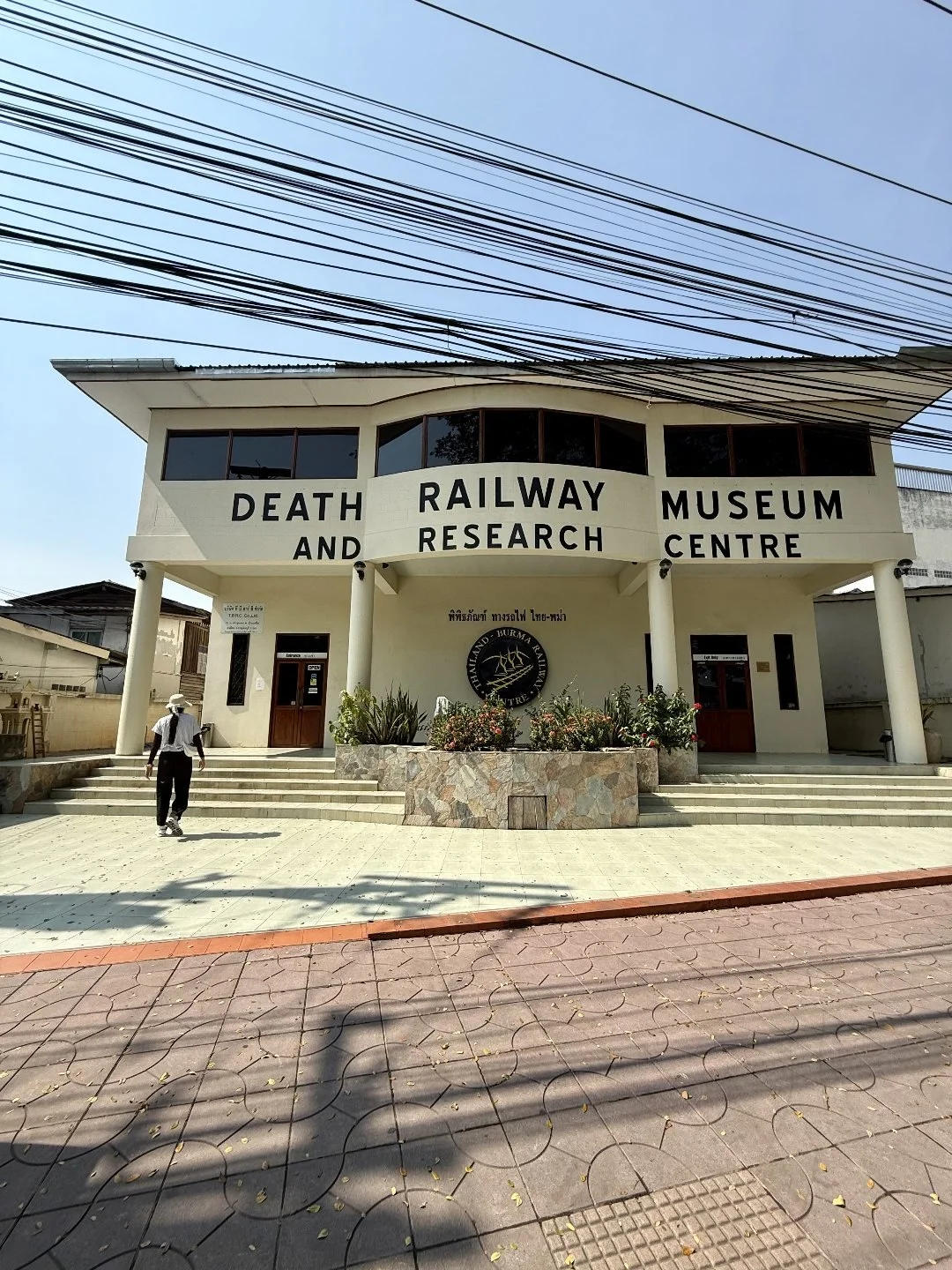
Visiting the Death Railway Museum and Research Centre was both a sobering and fascinating experience. Exhibits here showcase how the Thailand-Burma Railway was built and the harrowing human cost it entailed: over 300,000 people were forced to work on its construction (about 60,000 Allied POWs and 250,000 Asian labourers) and over 100,000 people died including roughly 40,000 Malays, 40,000 Burmese, 6,000 British, 3,000 Dutch and 2,000 Australians.
Out of all this darkness came stories of hope though. We loved learning about Boonpong Sirivejjabhandu, a Thai civilian and businessman, who risked his life to help the POWs. “Boon Pong” used his Japanese contract for supplies to smuggle important medicines, food and radio parts into the labour camps. He worked with a secret network of Thai civilians and Allied officers to funnel funds and smuggled goods to prisoners. He was credited with saving hundreds, if not thousands, of lives and even relayed intelligence to the Allies which aided in the bombing of the River Kwai Bridge - an inspiring story that left us all choked up!
Death Railway Museum and Research Centre
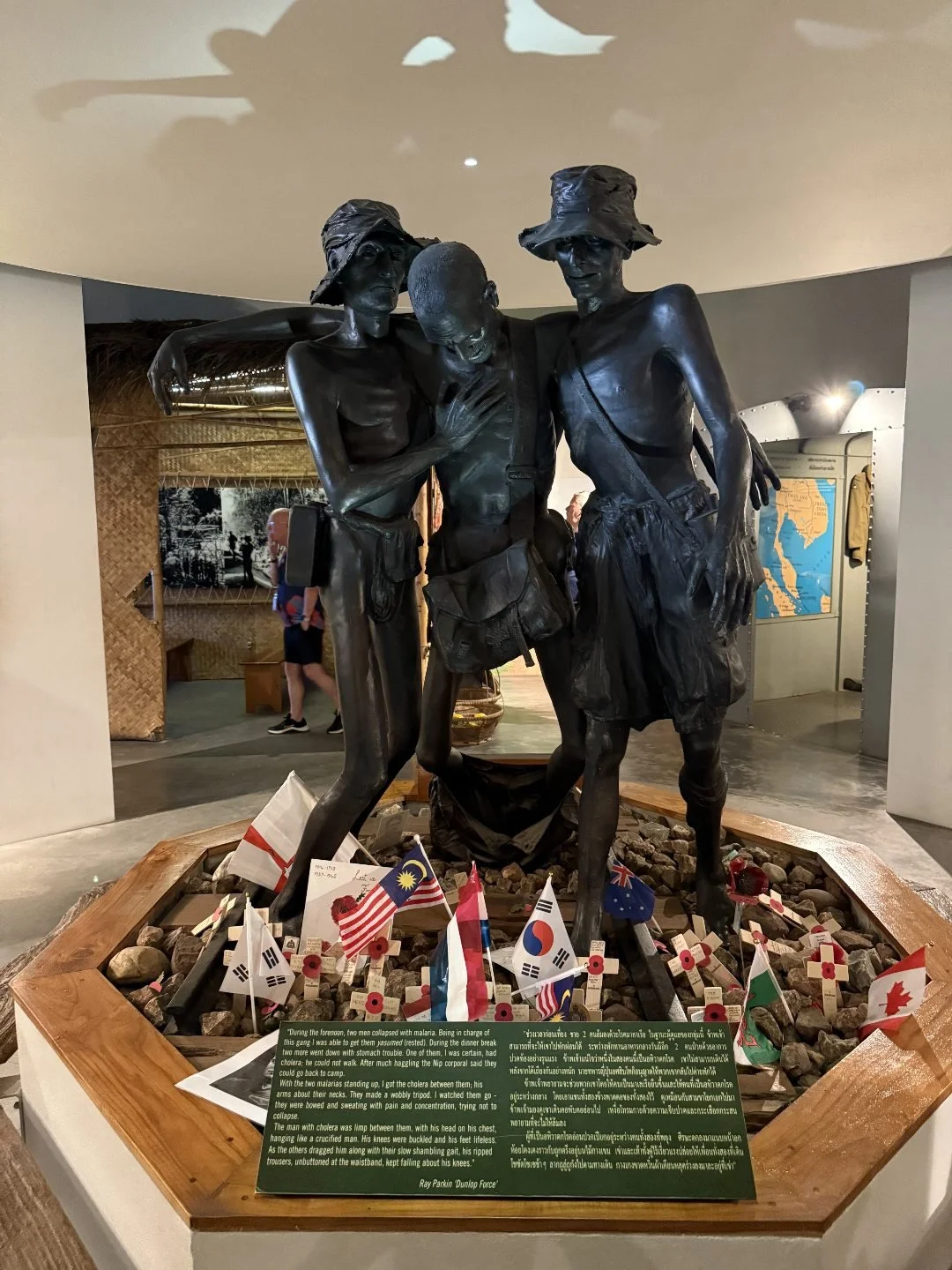
Death Railway Museum and Research Centre
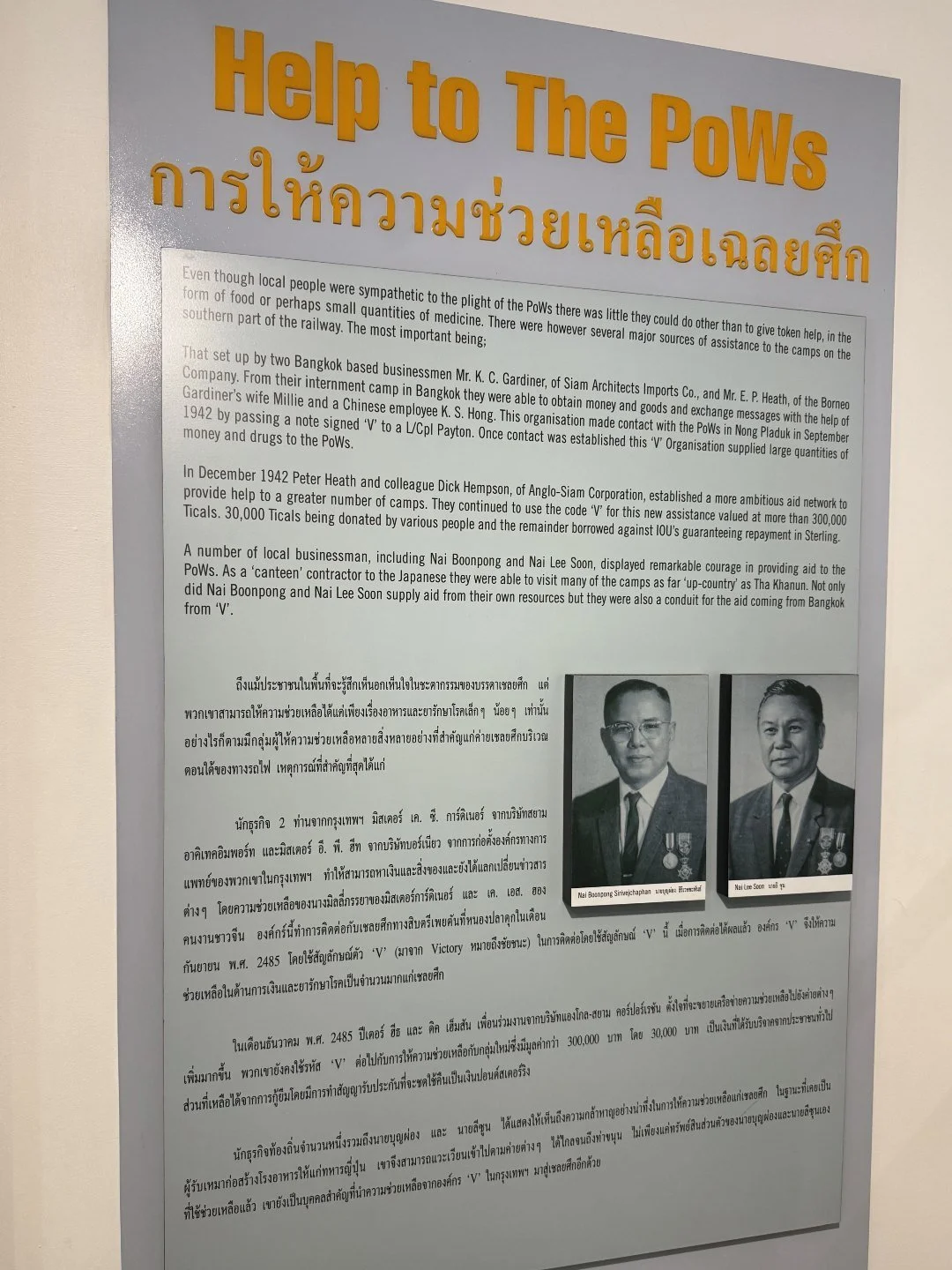
Death Railway Museum and Research Centre
3. Pay Your Respects at the Kanchanaburi War Cemetery (DonRak)
Across the road from the Death Railway Museum and Research Centre lies the Kanchanaburi War Cemetery - containing the graves of nearly 7,000 Allied POWs - primarily British, Dutch and Australian soldiers. The cemetery is well cared for with manicured lawns and beautiful flowers set between the graves. Visitors can walk along the grass, see the endless rows of headstones, and pay respects to the many poor souls who lost their lives during WWII.
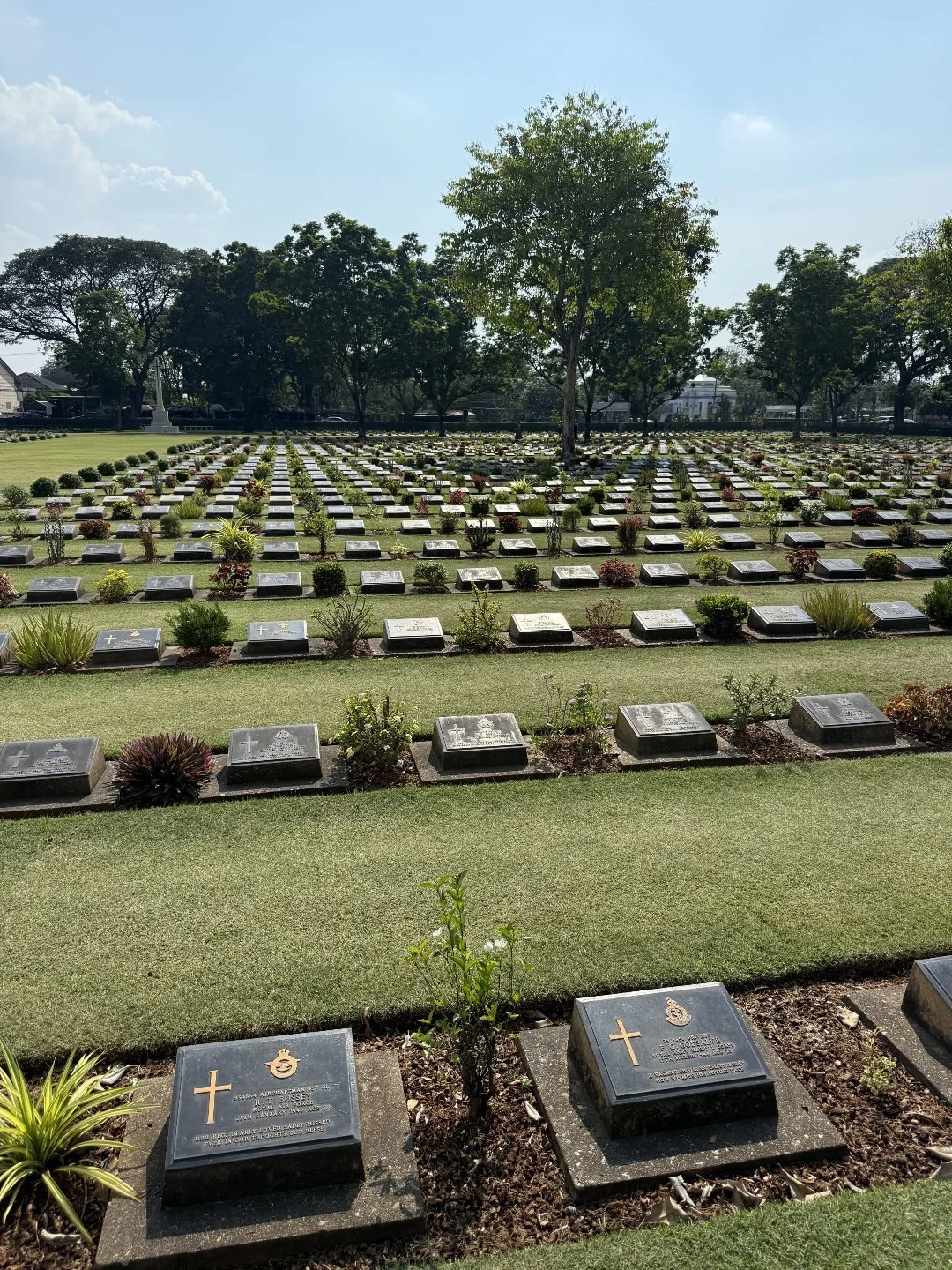
Kanchanaburi War Cemetery (DonRak)
4. See all Seven Waterfalls at Erawan National Park
We didn’t have huge expectations for Erawan National Park, since we were visiting in the dry season, but it totally blew us away. We rode our motorbike here, passing dams and rivers along the way, and arrived at the national park entry point at around 10:00 AM. Cam had to pay 300 THB and Kat entered for 60 THB (the perks of being Thai)! Then we parked our bike, took a golf cart to Level 1 and began our journey on foot up all seven tiers.
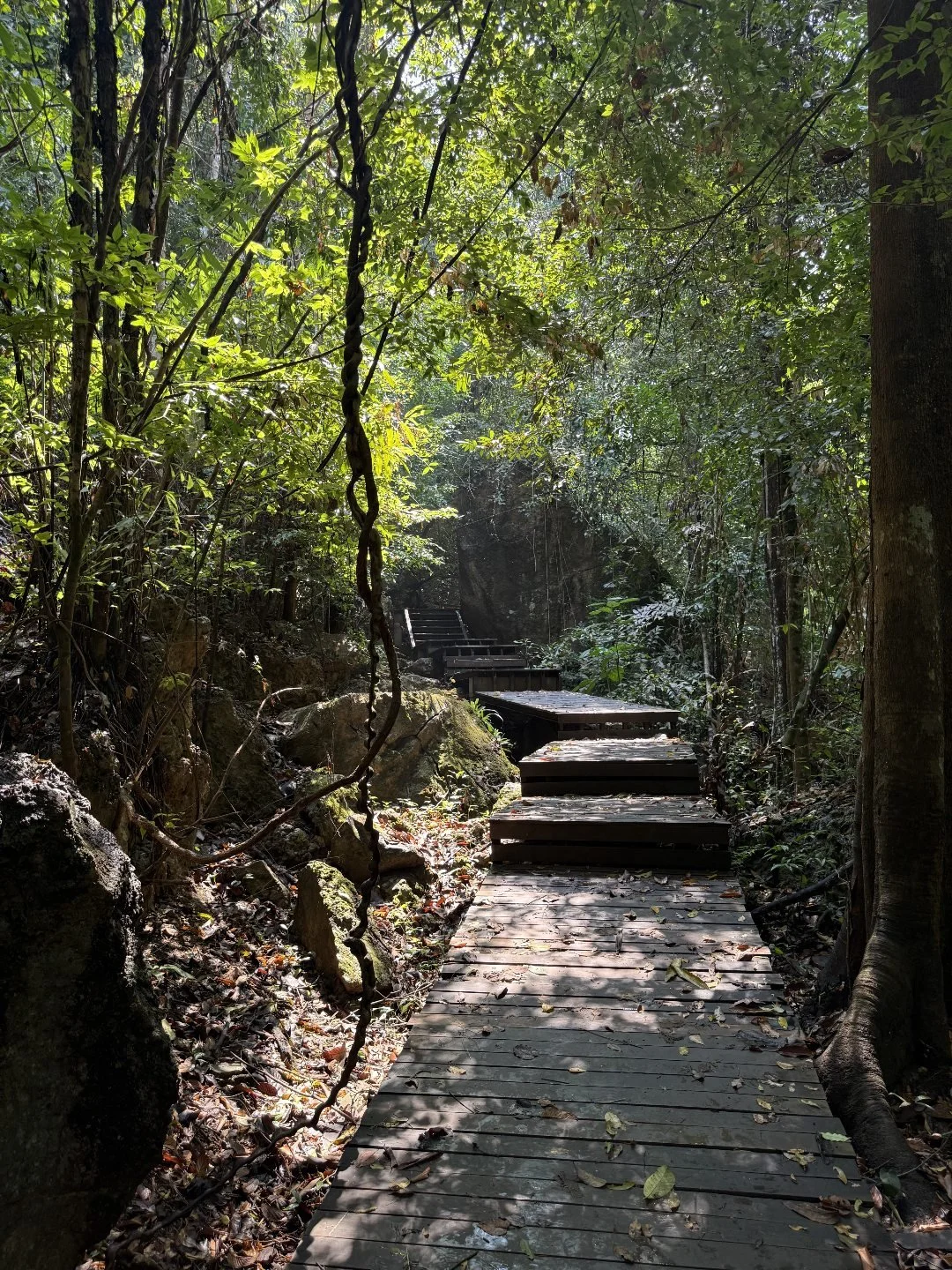
The waterfalls were incredibly beautiful, photos simply don’t do this place justice! In fact, the entire hike was amazing: we walked over little wooden bridges, past trickling streams, over twisting roots, through lush tree canopies, and after each stage were greeted by one unique waterfall after another. It was like Thailand’s version of the “Garden of Eden”.
We found the most beautiful waterfalls to be at Level 4, 5 and 6. Some were a bit dry, which was expected for the month of February when we went, but others still had large pools of water perfect for swimming. The great thing about Erawan National Park is the water is refreshing, clean and pure. We saw lots of families with young kids swimming at Level 5 and it looked like the young ones were having the time of their lives!
It takes about an hour to walk from Level 1 to Level 7, but plan for 2-3 hours if you want to stop, swim and actually enjoy each waterfall. Park rangers say the best time to visit is November and December, to see the most water with the best weather conditions. But they also say it’s worth visiting all year round, and to be honest, we found it magical in the dry season as well.
Read more: Erawan National Park: A Guide to the 7-Tier Waterfall Hike
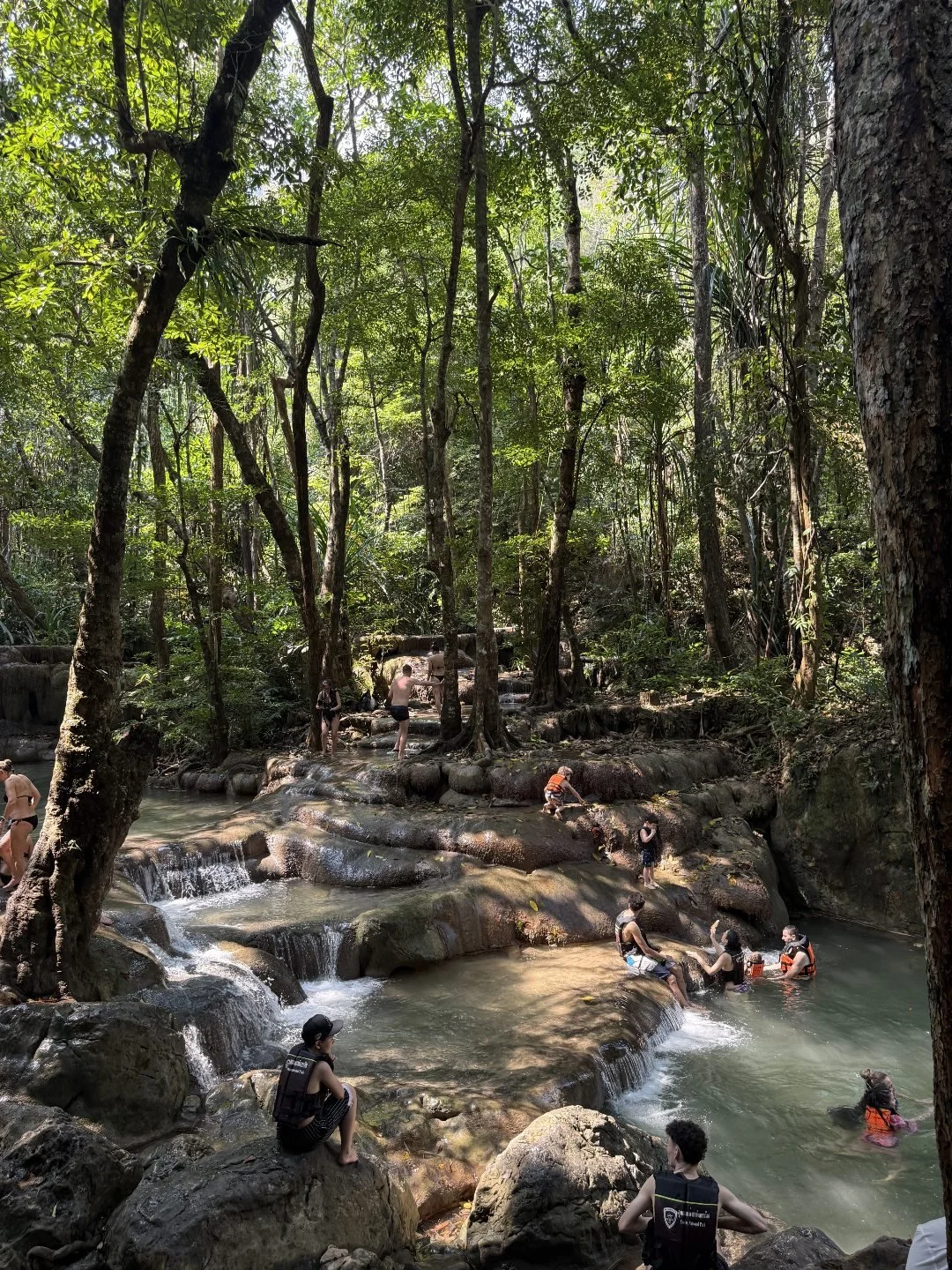
Erawan National Park
Erawan National Park
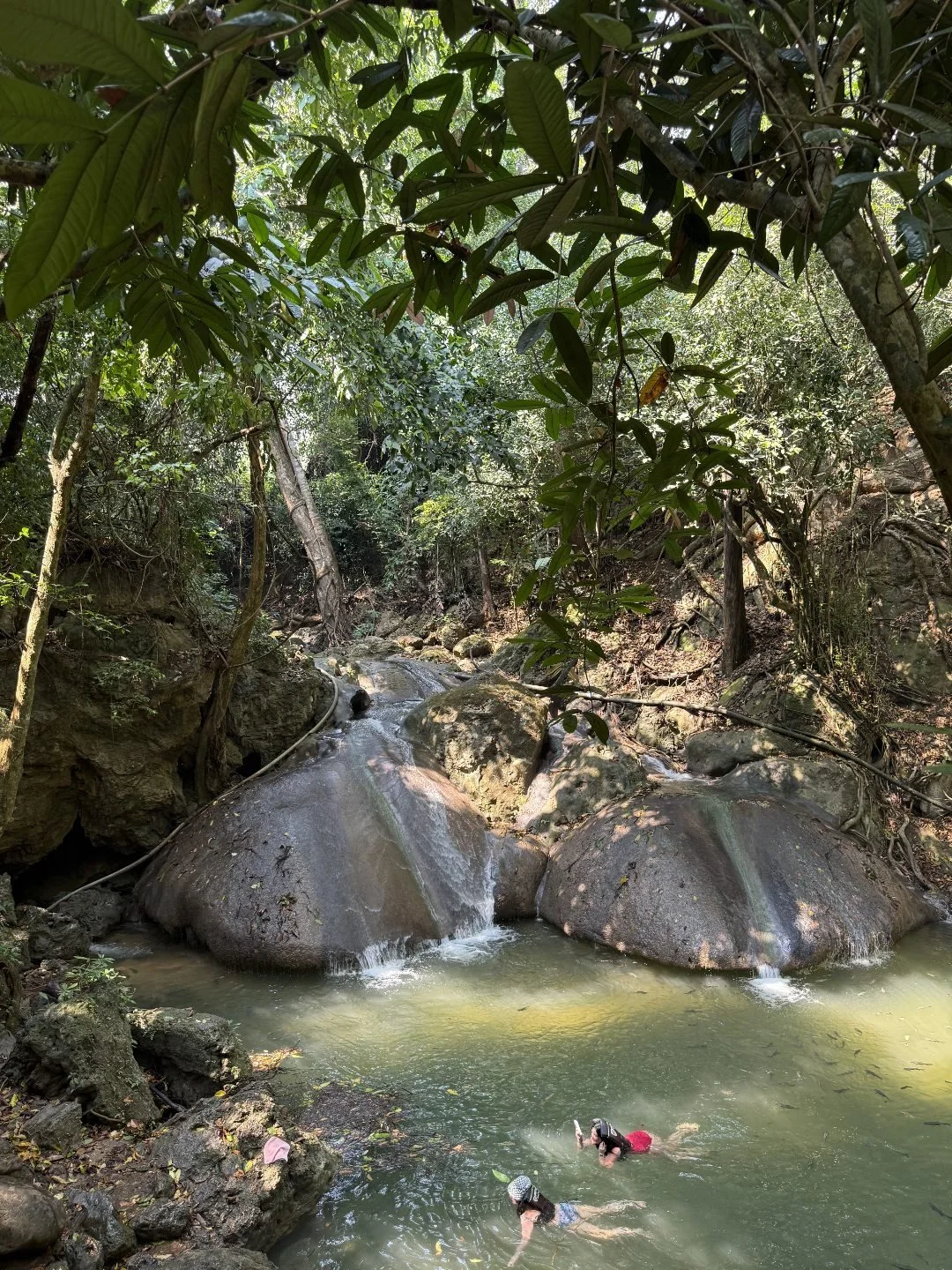
Erawan National Park
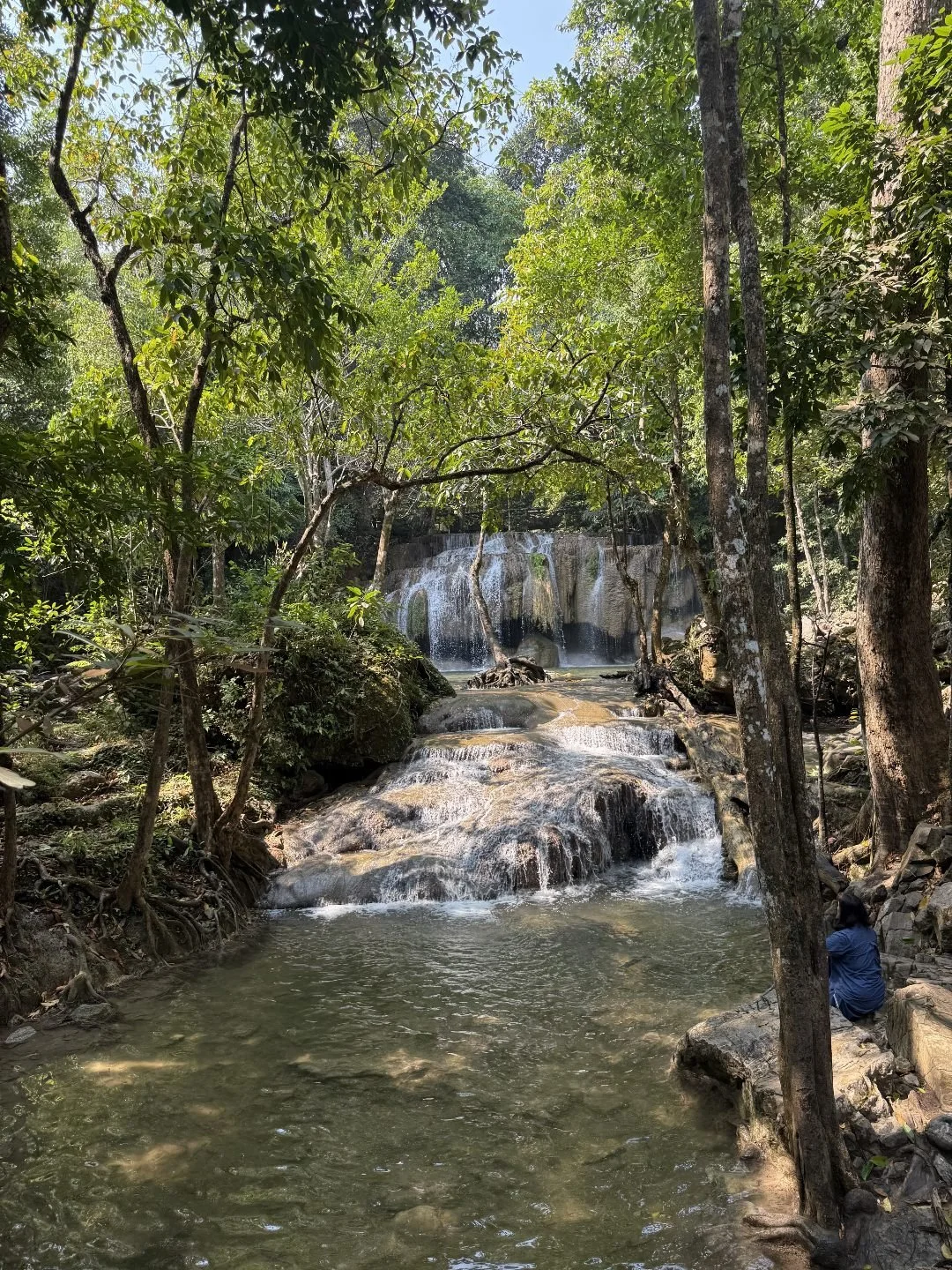
Erawan National Park
5. Explore Mallika City, a Living Heritage Village
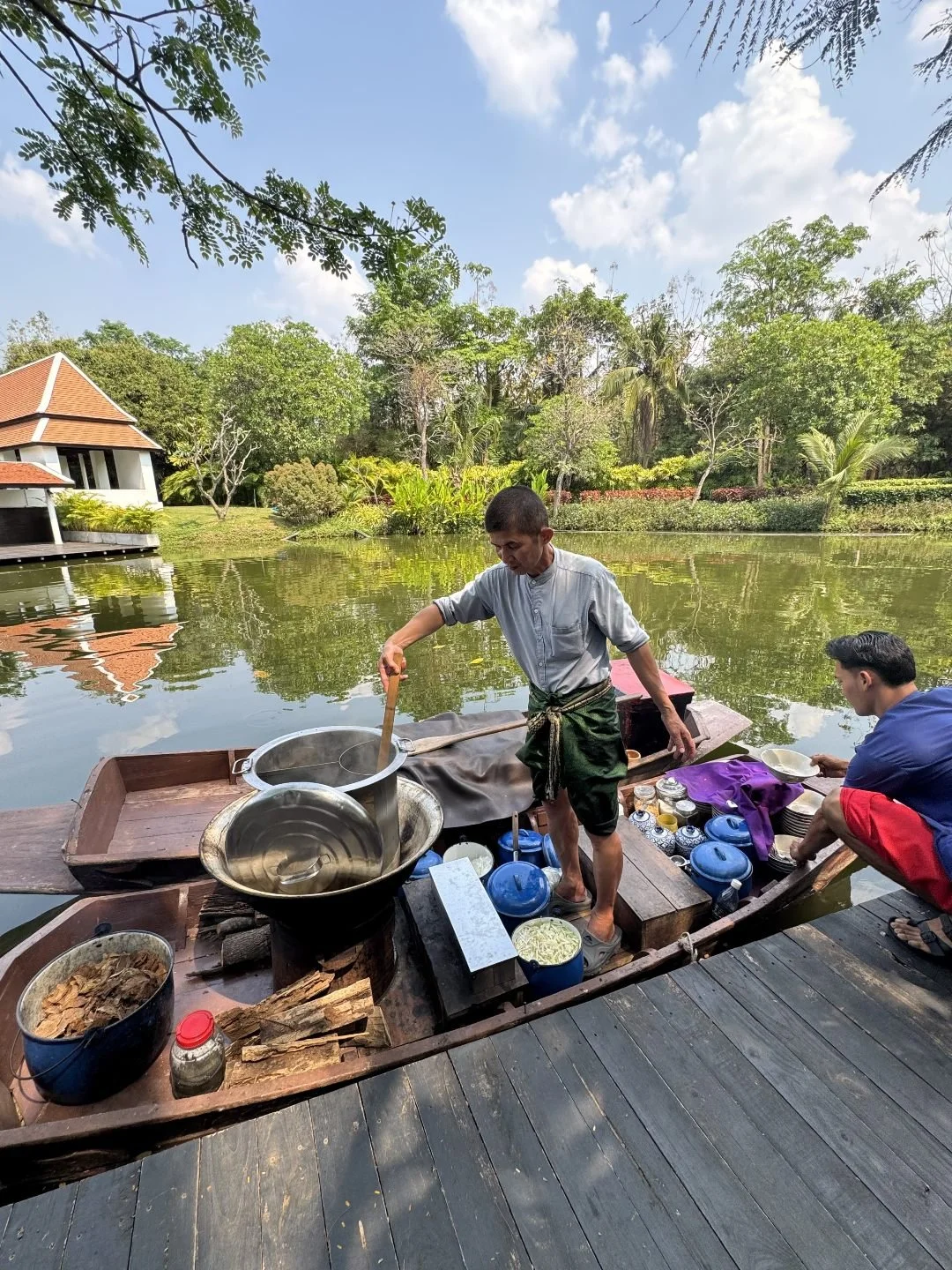
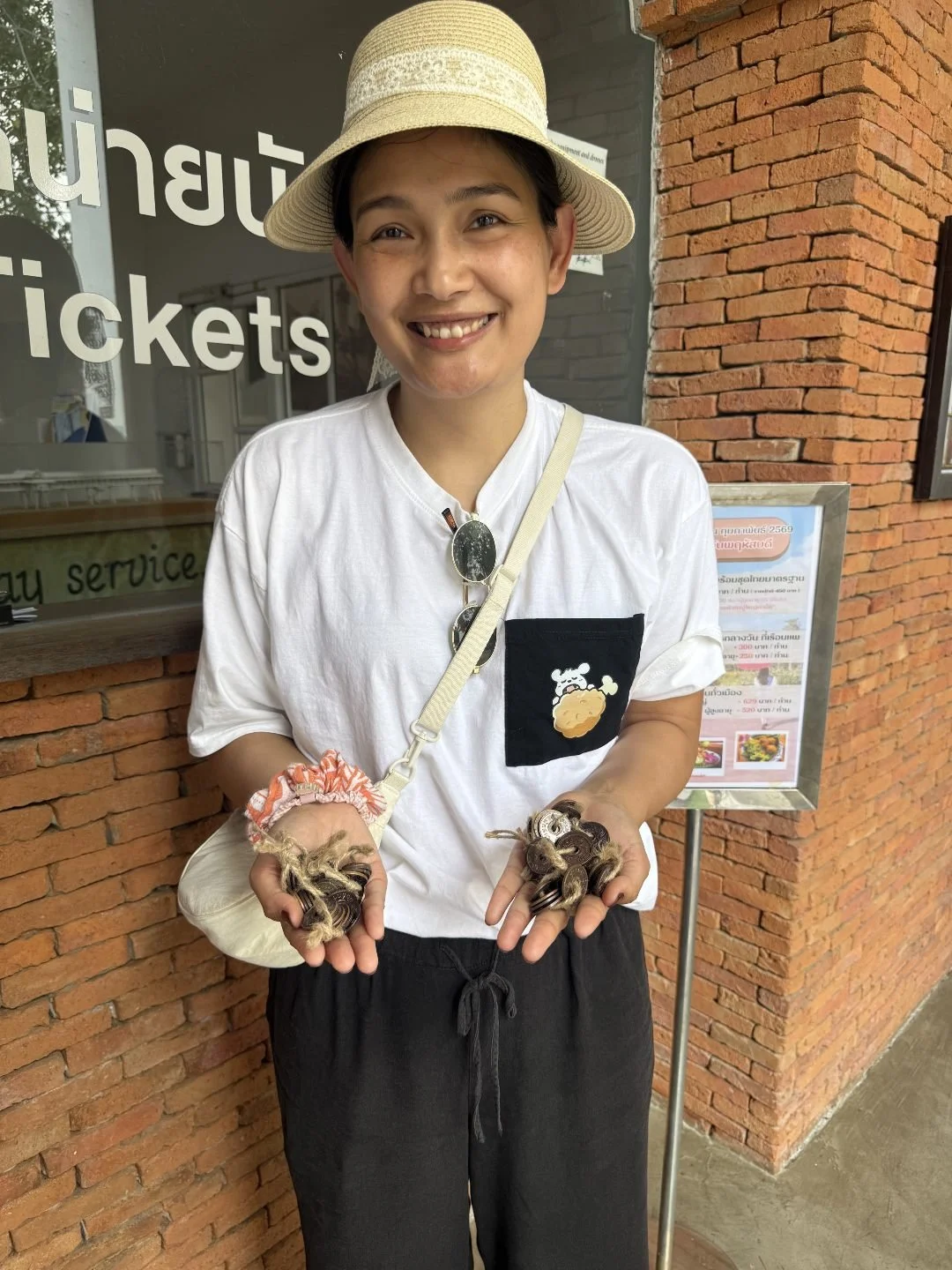
Mallika City is a recreation of an old Siamese city, complete with floating houses, wooden stalls, beautiful gardens and a striking red gate that welcomes you in through the white city walls. The most unique aspect though is the use of the ancient currency system: you convert your Thai Baht to coins (“Satang”) at the entrance and spend as you please.
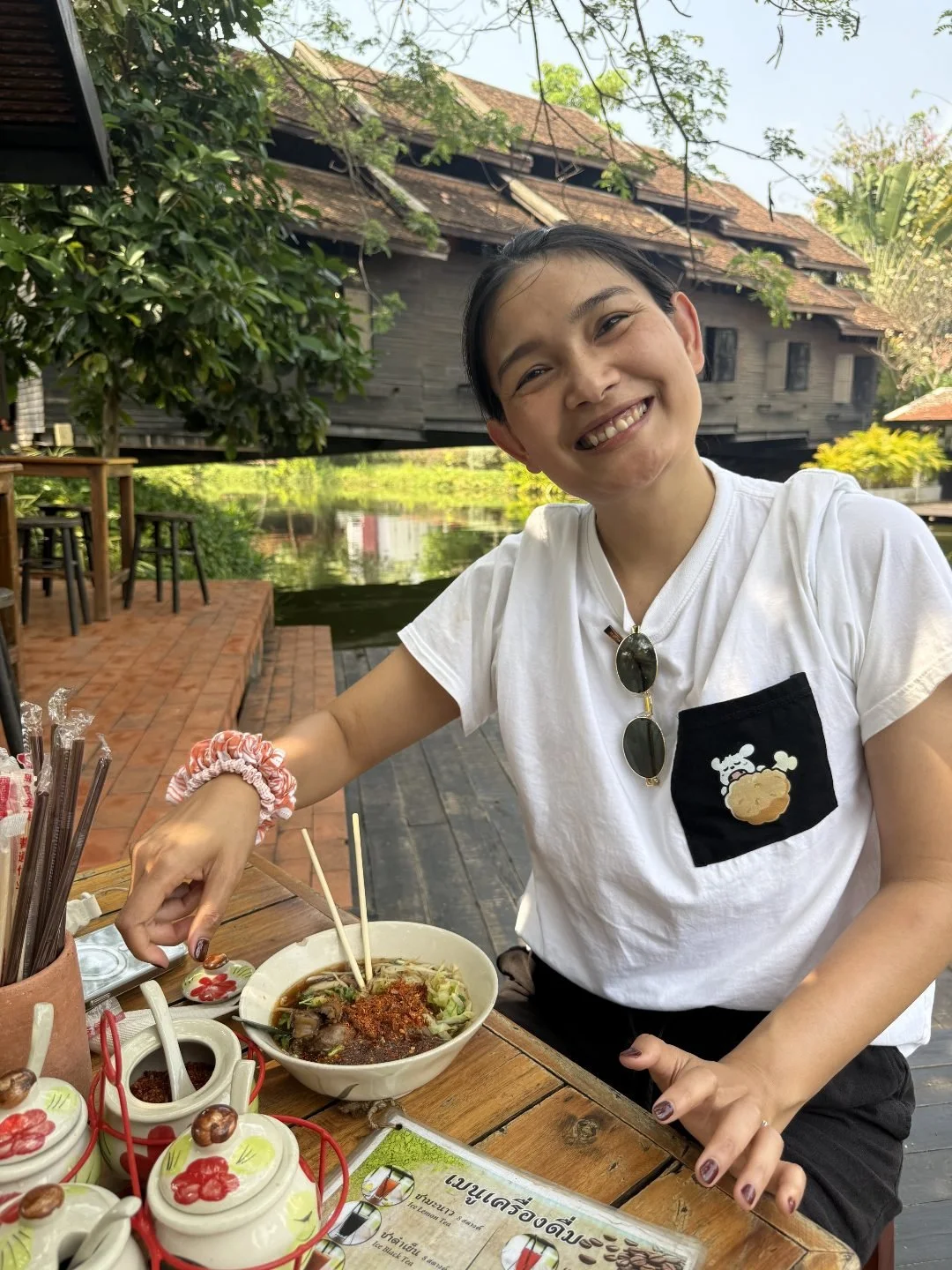
Staff wear period costumes and speak in old-fashioned dialects, which might seem tacky or touristy at first, but Kat found it to be pretty cool as a Thai person. We spent about 1,000 THB in total, which went towards some snacks, souvenirs and a lovely lunch by the water: Pad Thai for Cam and noodle soup for Kat. This was, hands down, the most delicious Pad Thai Cam has ever tried - fresh ingredients, and a smoky flavor from the wok and fire!
Read more: 10 Best Things To Do in Mallika City, Kanchanaburi
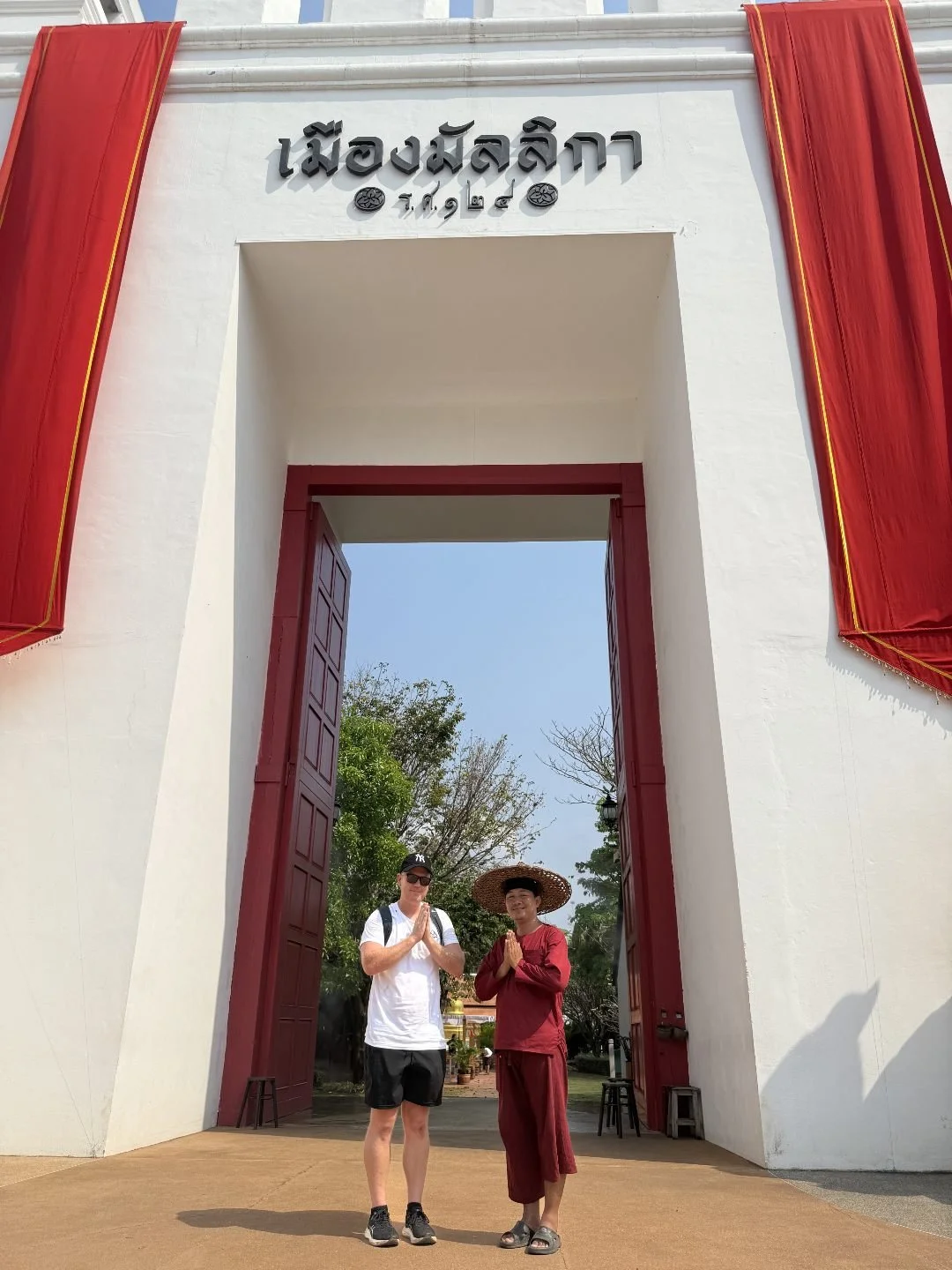
Mallika City
Mallika City
Mallika City
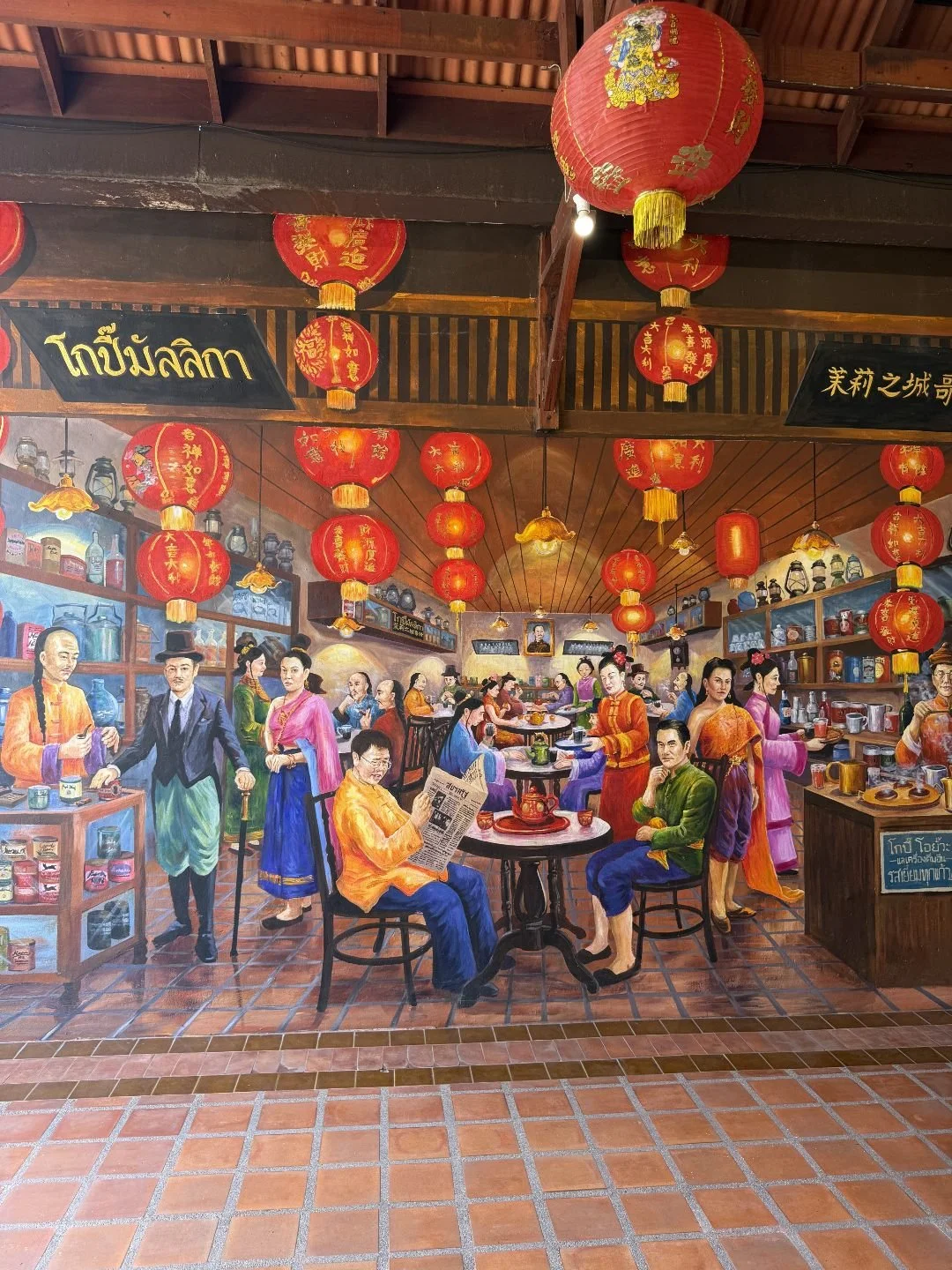
Mallika City
6. Discover Wat Tham Suea (Tiger Cave Temple)
A 30-minute motorbike ride from the city takes you to Wat Tham Suea, otherwise known as “Tiger Cave Temple”, one of the most visually stunning temples in Kanchanaburi. The highlight is the Chin Prathan Porn (Big Buddha) statue, an 18-meter seated Buddha covered in gold mosaics housed in a unique shell structure. Getting to the temple platform is no easy task though, especially when the cable car isn’t available. You have to walk up 157 steps to the top, but the views of the Mae Klong River and surrounding countryside make it well worth the effort!
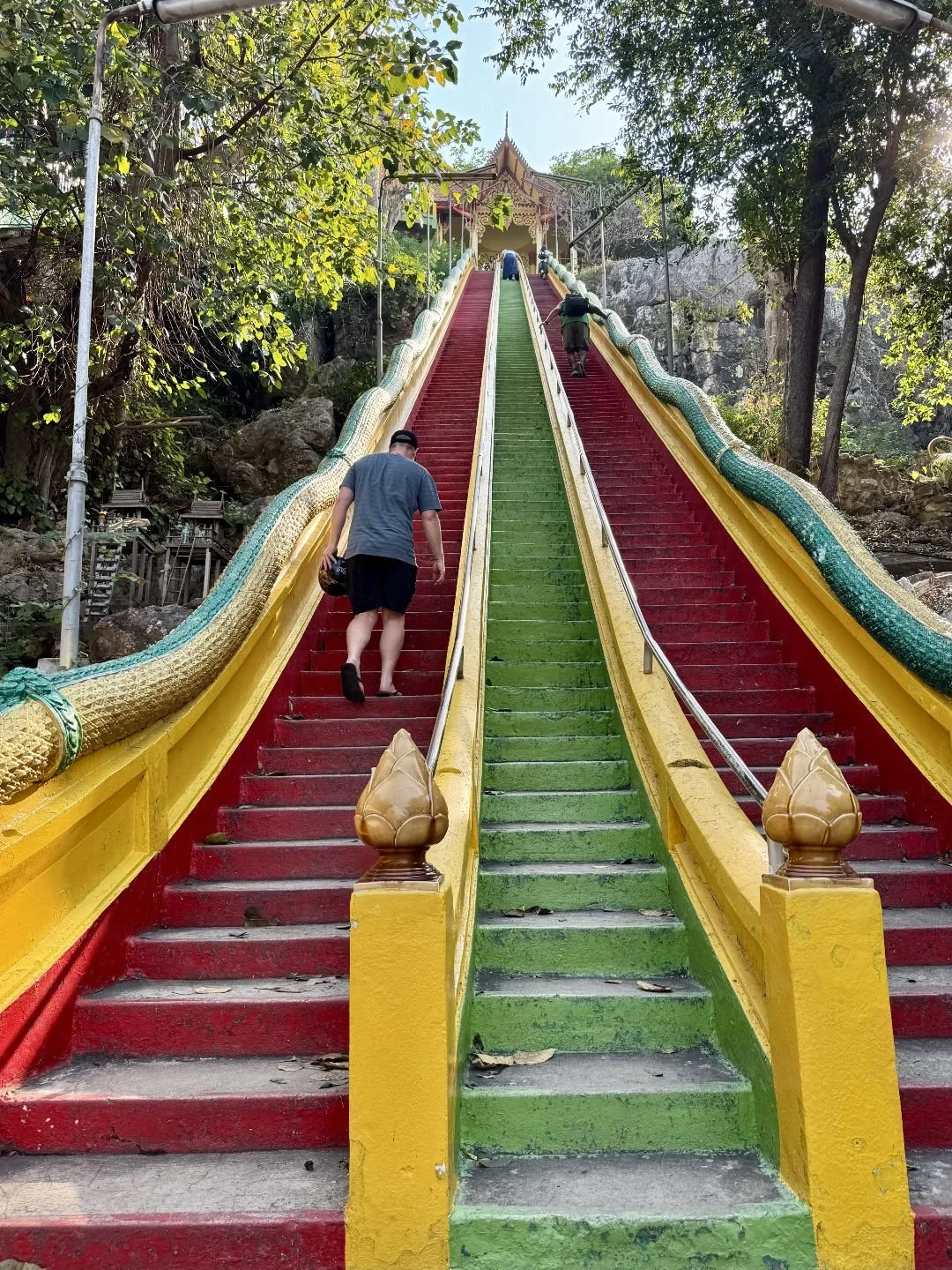
Wat Tham Suea
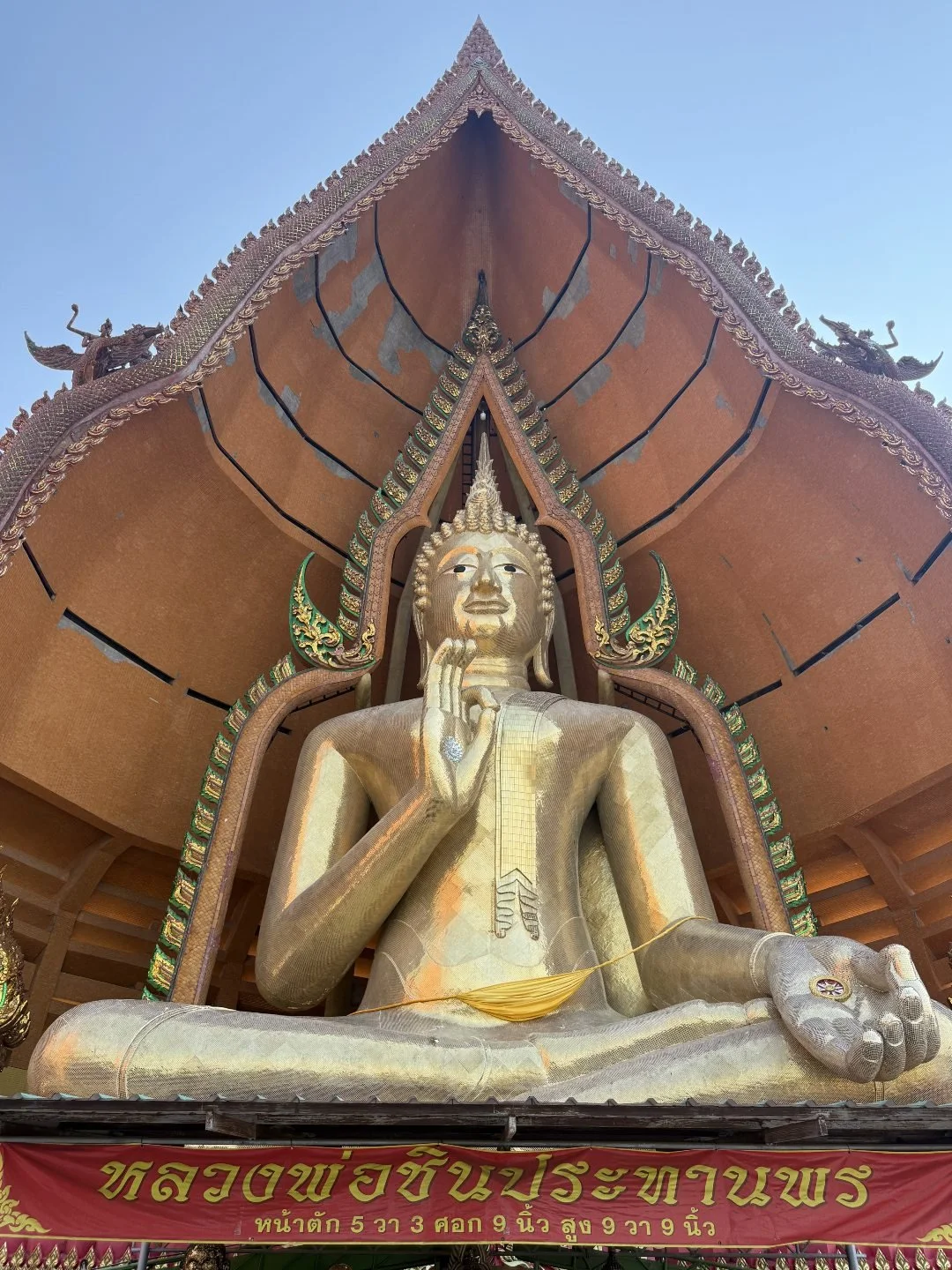
Wat Tham Suea
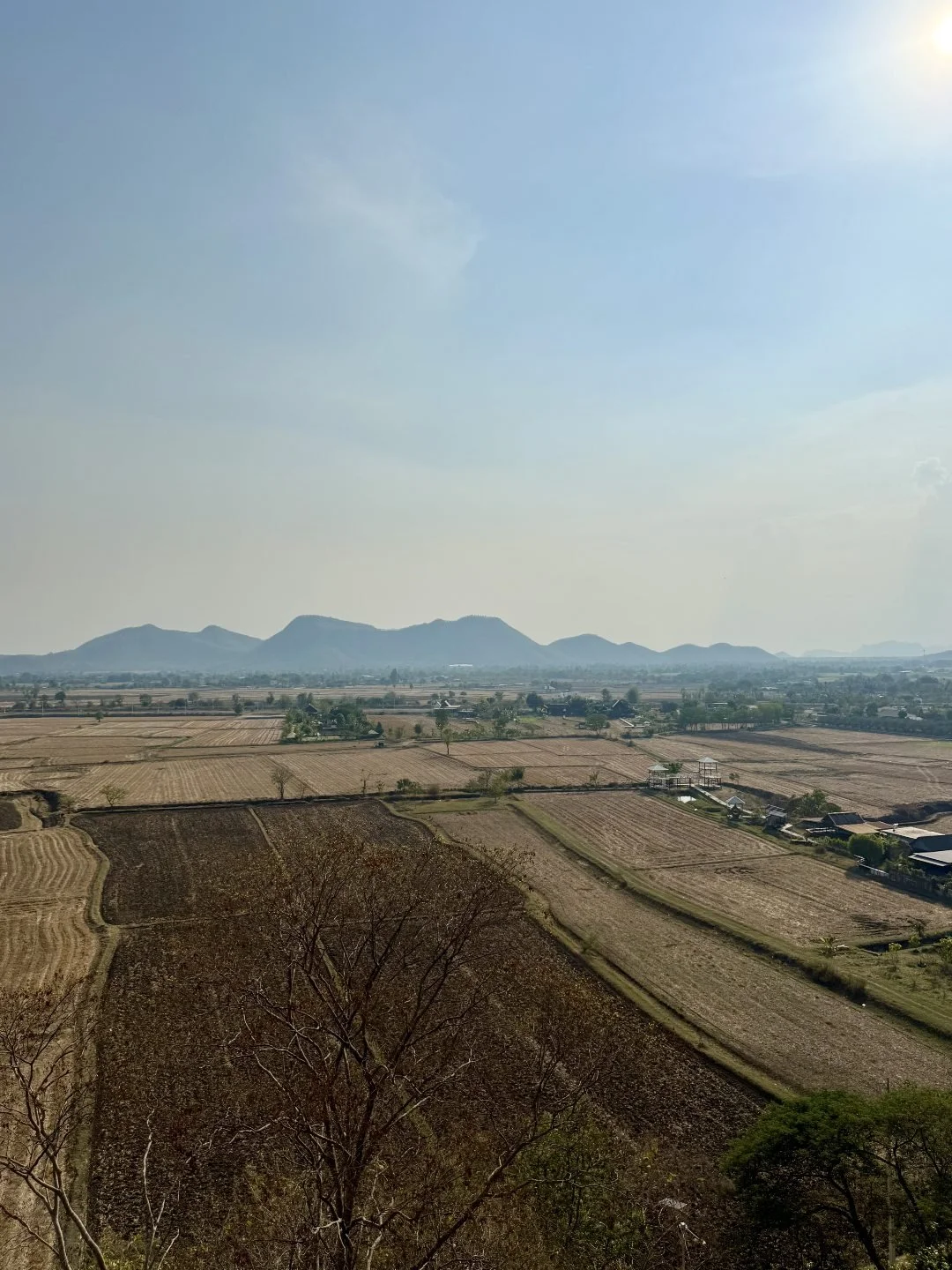
Views from Wat Tham Suea
7. Watch the Train at Tham Krasae Death Railway Bridge
Tham Krasae Death Railway Bridge is a famous section of the railway that wraps around a curve in the hillside, right by the idyllic Khwae Noi River. After train-spotting or riding the train yourself, you can also walk along the wooden railway bridge and head inside Krasae Cave, which is home to a small Buddhist shrine - the perfect place to reflect on the dark history of WWII.
8. Walk the Trails at Hellfire Pass Interpretive Centre
Another top museum to check out in Kanchanaburi, actually run by the Australian Government, is the Hellfire Pass Interpretive Centre. The site pays tribute to all who died building the “Death Railway” and even provides free audio guides telling stories from survivors. The highlight is walking the trails that were hand-cut by POWs and Asian labourers. There’s two trails to choose from: a short 1km track leading to the Konyu Cutting and another longer 5km track extending all the way to the Compressor Cutting.
9. Get a Massage at Thai Thai Relax
After a few days of heart-wrenching museum visits, tough temple climbs and deep waterfall explorations, a massage was definitely on the cards for us. On our last night in Kanchanaburi, we came across a sleek and modern massage shop on the outskirts of town called “Thai Thai Relax Massage”. We both chose the deep tissue massage and while it was strong and slightly painful in the moment, we walked away feeling refreshed and ready to head back for more Bangkok adventures.
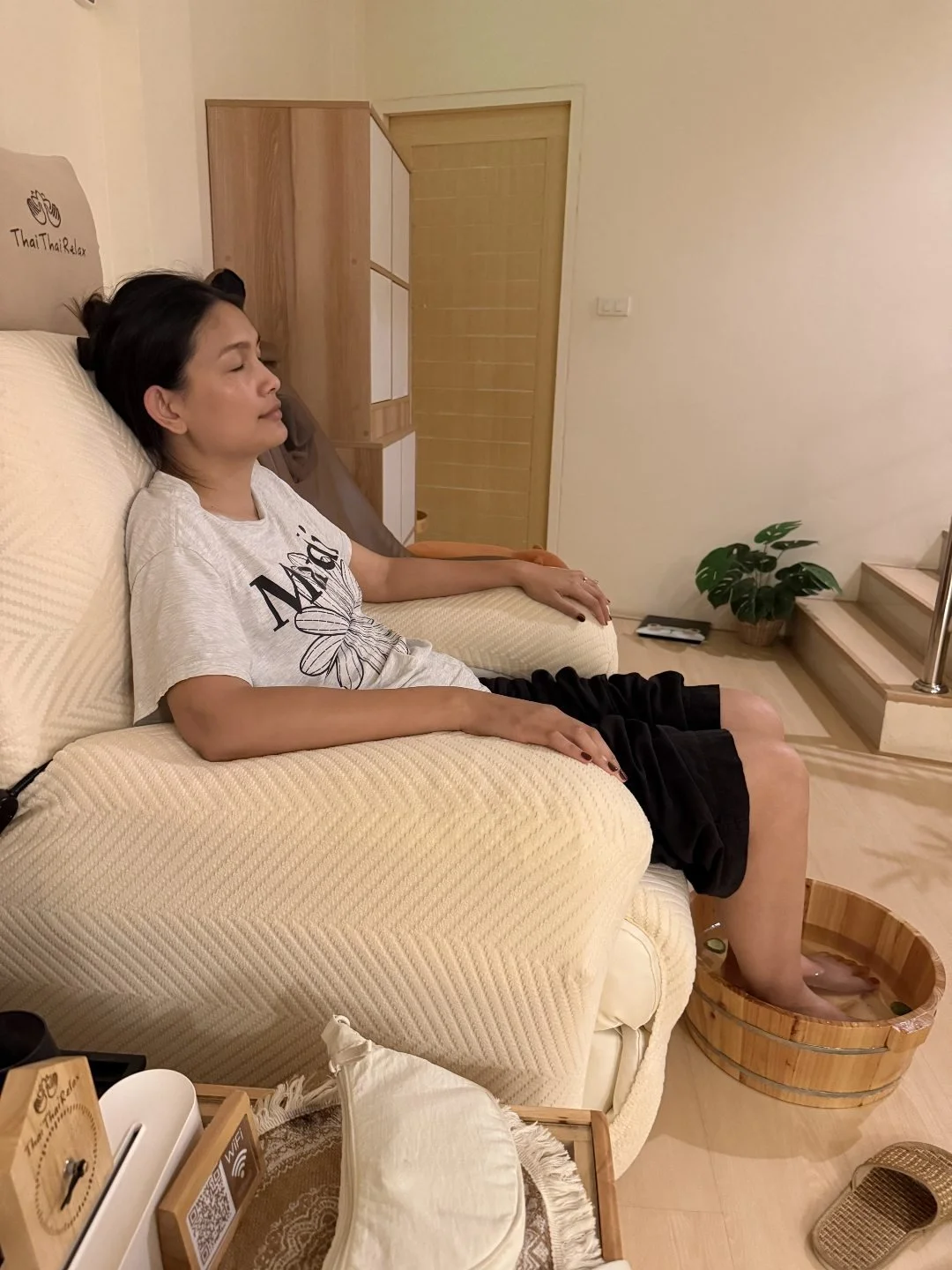
Thai Thai Relax Massage
10. Make the Journey Out to Sangkhla Buri District
If you’re planning an extended stay in Kanchanaburi, we’ve heard some amazing things about another nearby district, namely: Sangkhla Buri. This mountain town by the Myanmar border is home to the Mon Bridge - the longest wooden bridge in Thailand - where you can see locals carrying goods on their heads, children in traditional dress and monks participating in Almsgiving. The road to Sangkhla Buri is beautiful but a real challenge, so only go if you really love venturing “off the beaten path”.
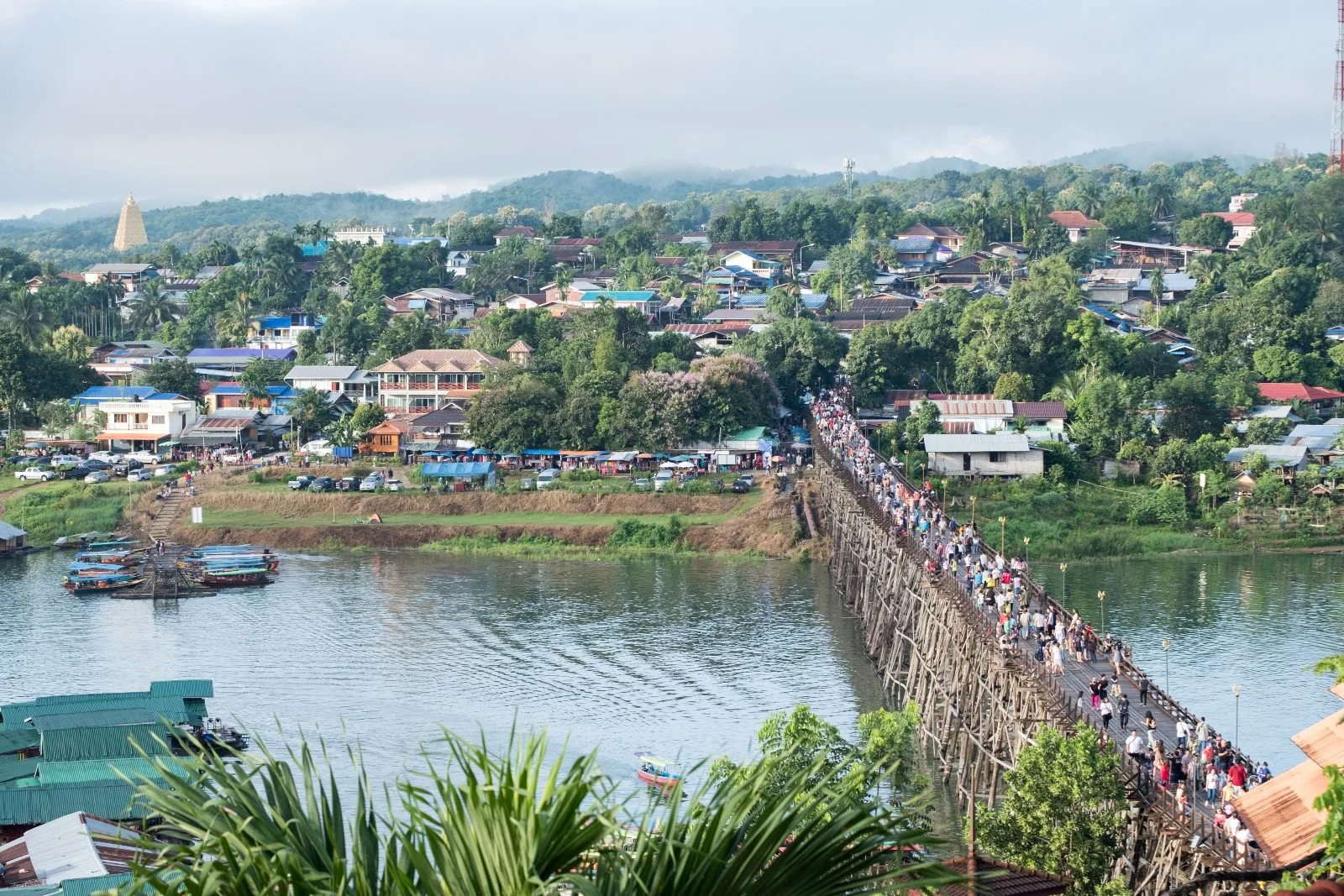
Mon Bridge, Sangkhla Buri District
Tips for Visiting Kanchanaburi
Kanchanaburi is Hot, So Plan Your Days Accordingly: We couldn’t believe how hot Kanchanaburi felt compared to Bangkok. This is especially true from March to May (the peak hot season) where temperatures can easily become 5°C hotter than the capital. Only spend time in the sun in the early morning or late afternoon, and plan your mid-day activities with a good dose of shade and relaxation. You’ll thank us later!
Stay at Inchantreedoopool: For those who appreciate modern, boutique, and well-located hotels, you can’t really beat Inchantreedoopool. We had a flawless stay here and highly recommend the hotel - not only for their amazing rooftop pool but also for their friendly and helpful staff, and affordable rates.
Book a Day Tour from Bangkok if You’re Short on Time: Although it’s a long day, the best way to experience Kanchanaburi in a day is to book a tour from Bangkok. There are lots of different trips to choose from - like the Erawan Park & Kanchanaburi Small Group Tour - so consider what inclusions you prefer and what’s right for you. You won’t be able to tick everything off your bucket-list in a day, but it’ll still give you a taste of what Kanchanaburi is all about!
Read more: 50 Thailand Travel Tips: What to Know Before You Go
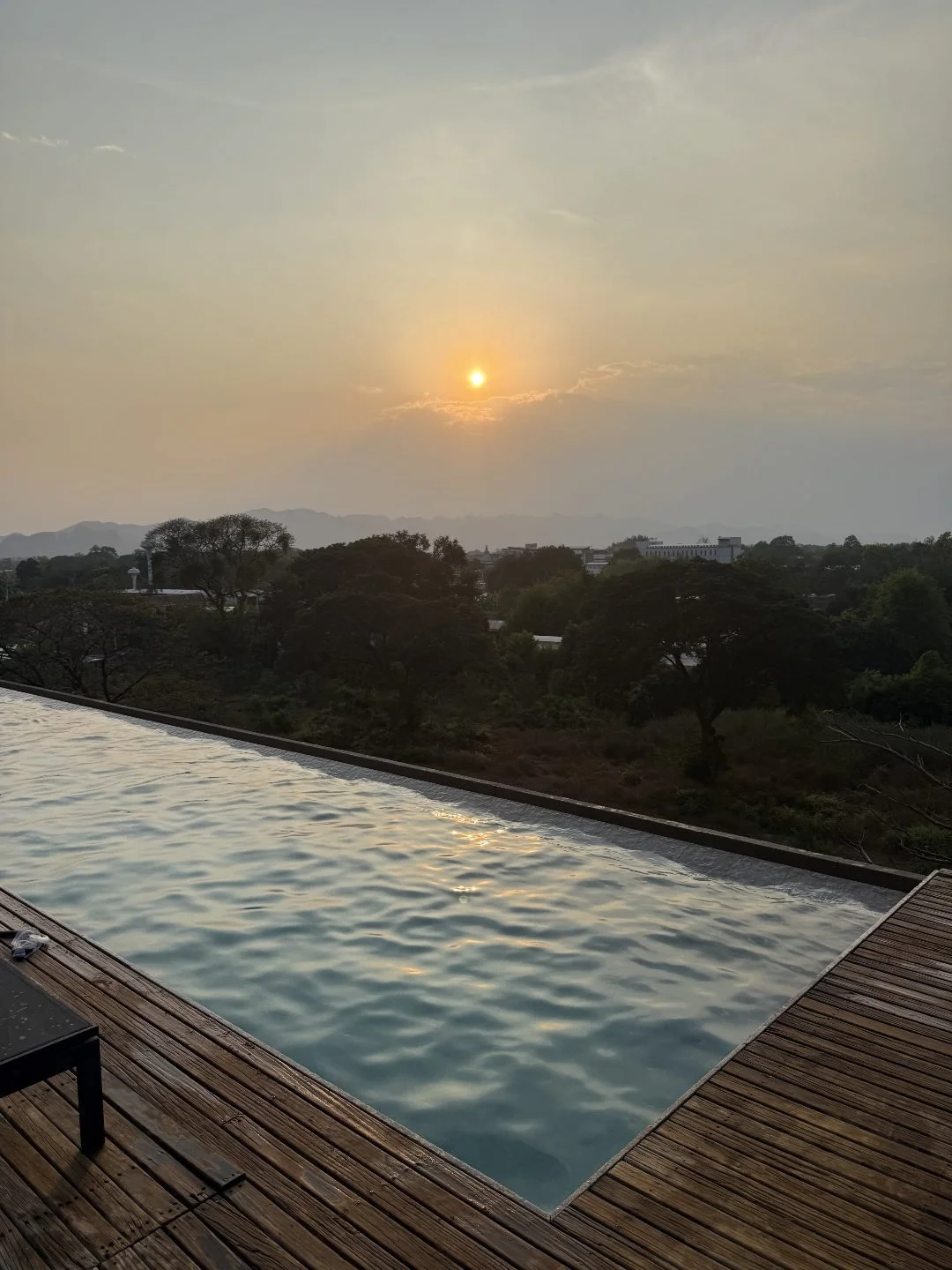
Inchantreedoopool
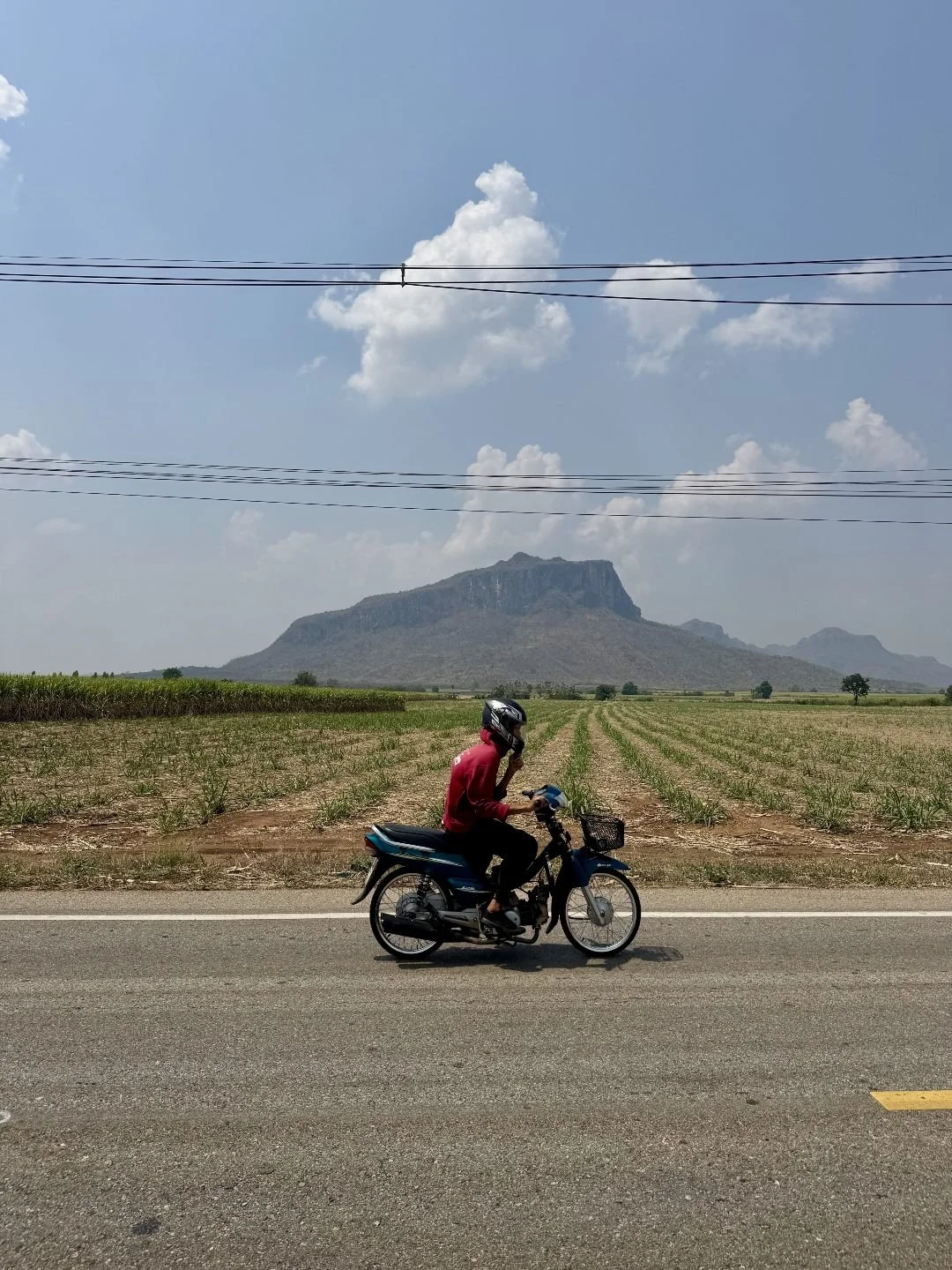
Countryside of Kanchanaburi
