
The White Temple (Chiang Rai): How to Visit Wat Rong Khun
The White Temple of Chiang Rai, otherwise known as “Wat Rong Khun”, is easily one of the most stunning temples we’ve seen in Thailand. The level of detail is extraordinary: thousands of mirrored tiles and flame-like patterns glisten in the sun. It’s not every day you come across a Thai temple that’s painted completely white, a color that was chosen by local artist Chalermchai Kositpipat to represent the purity and goodness of Buddha.
Wat Rong Khun is open daily, from 8:00 AM to 5:00 PM, and there’s a 200 THB entry fee that applies to foreigners (free for Thais). Since the White Temple is situated just south of the city, off Highway 1, we actually visited at the end of our road trip from Chiang Mai. We were blown away by what we saw and it made for the perfect introduction to Chiang Rai itself.
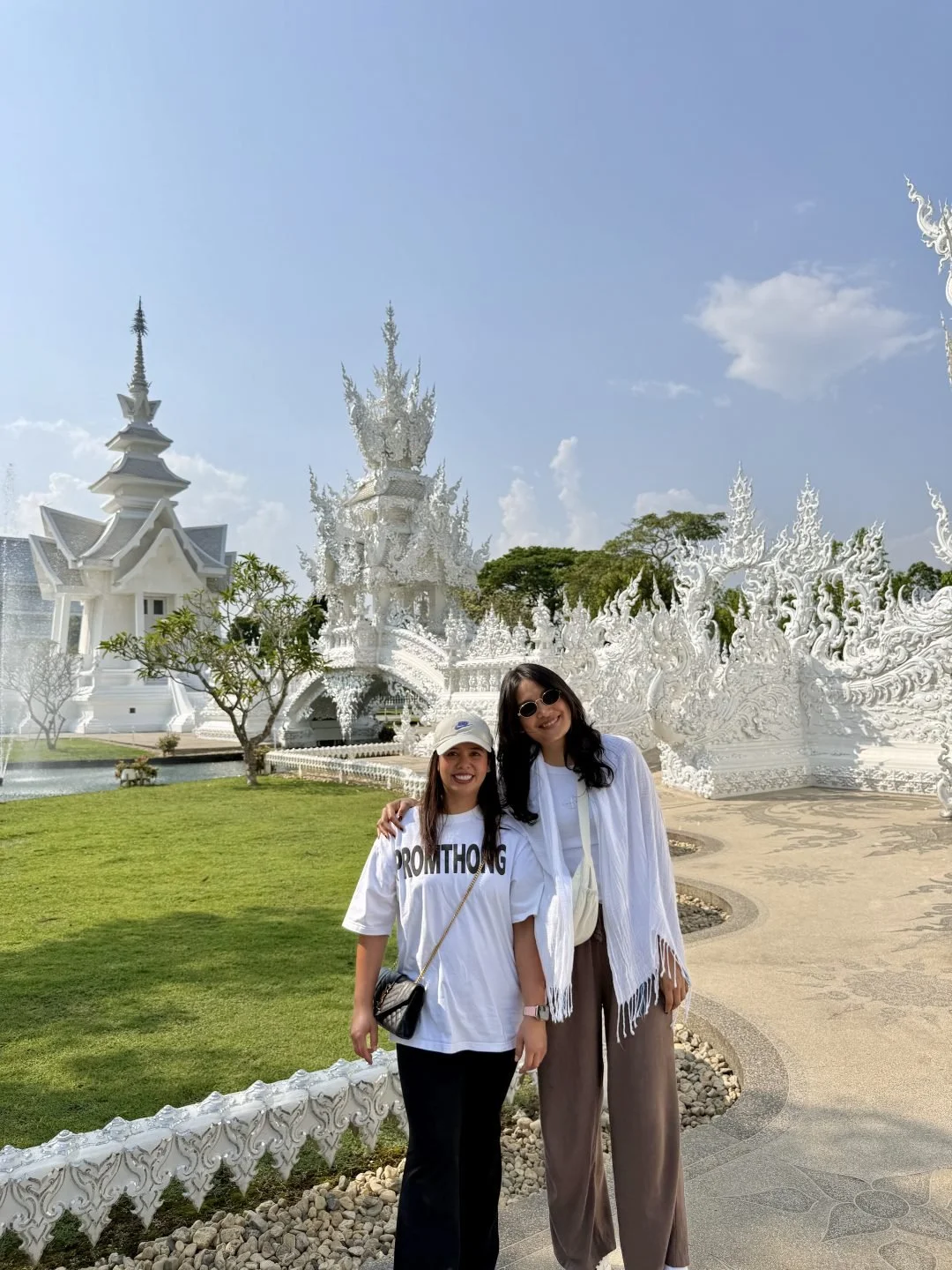
The White Temple
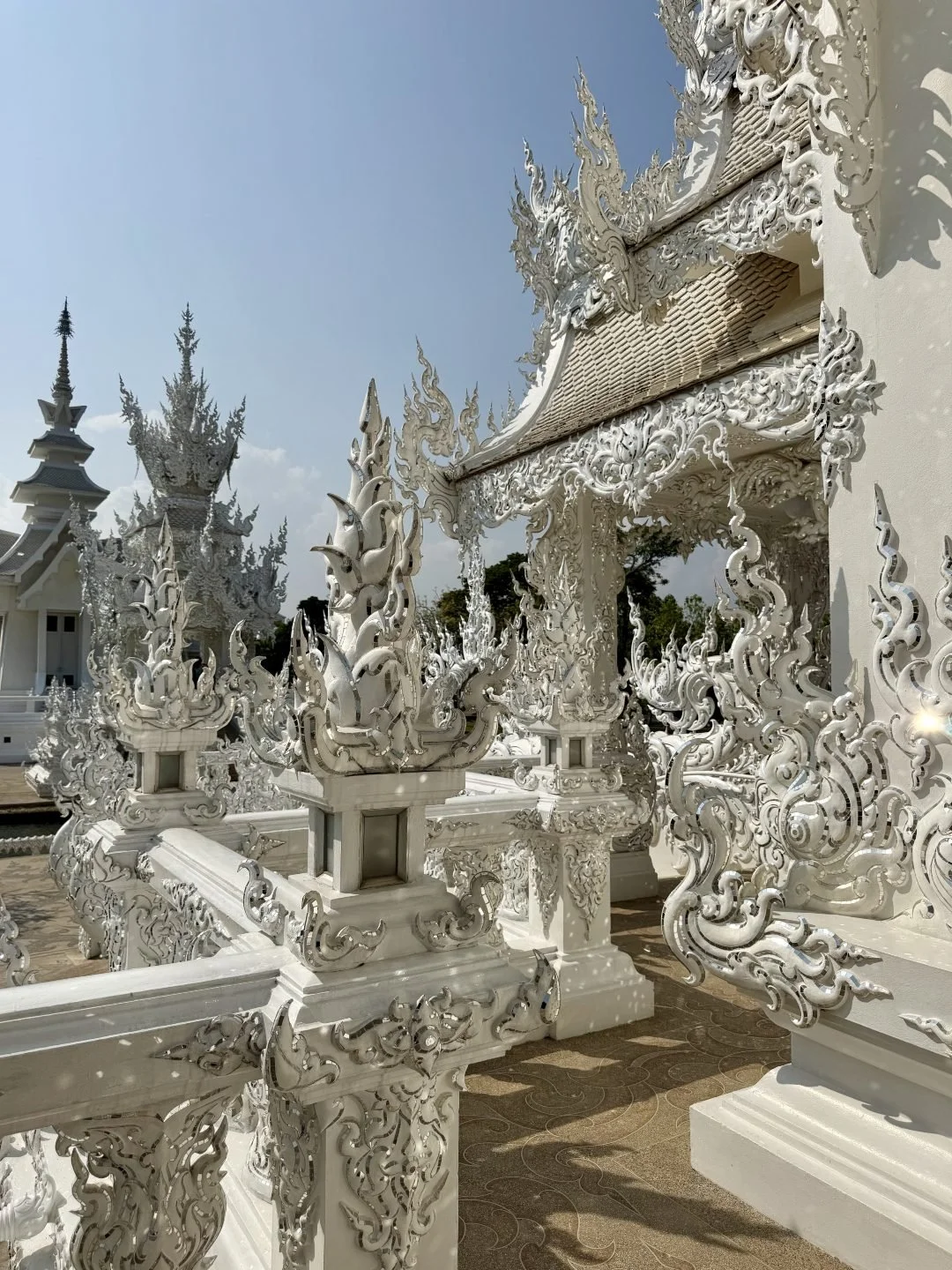
Temple gleaming in the sun
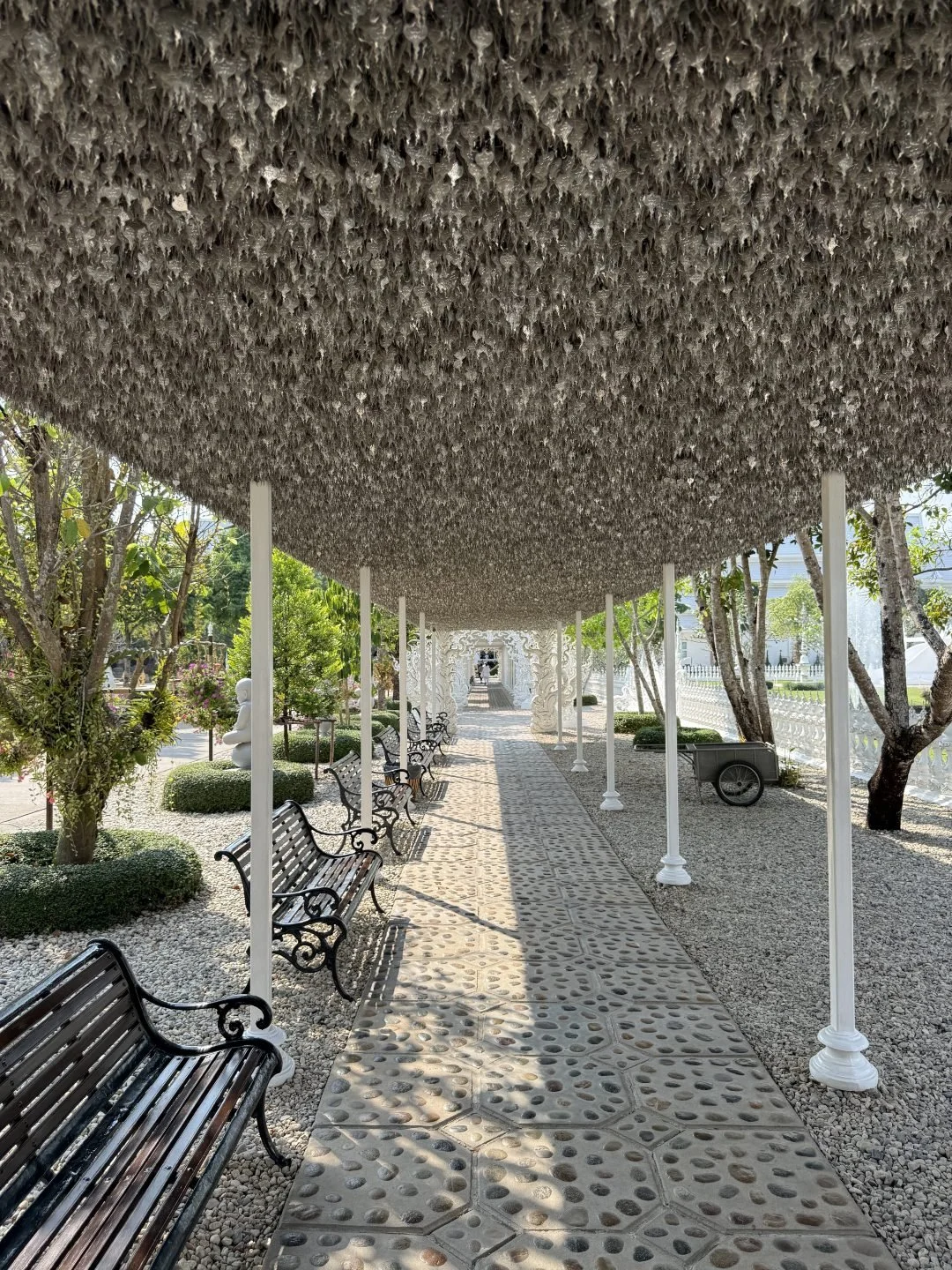
Shaded walkways
The Story Behind Chiang Rai's White Temple
The man to thank for creating the version of Wat Rong Khun you see today is Chalermchai Kositpipat, a local artist who began an ambitious rebuild back in 1997. He poured his own money into the design, and only relied on small donations to fund the project, in order to maintain full creative control. Chalermchai transformed a rundown temple into an otherworldly art installation, one that combines sacred images with pop culture.
One thing that surprised us, when we first entered, was just how massive the temple grounds are: there’s a lot to see beyond the White Temple and heaps of space for growth. This is part of Chalermchai’s grand plan, to create nine unique buildings here over the next several decades. You’ll even see a cardboard cutout of him right next to the ticket booth.
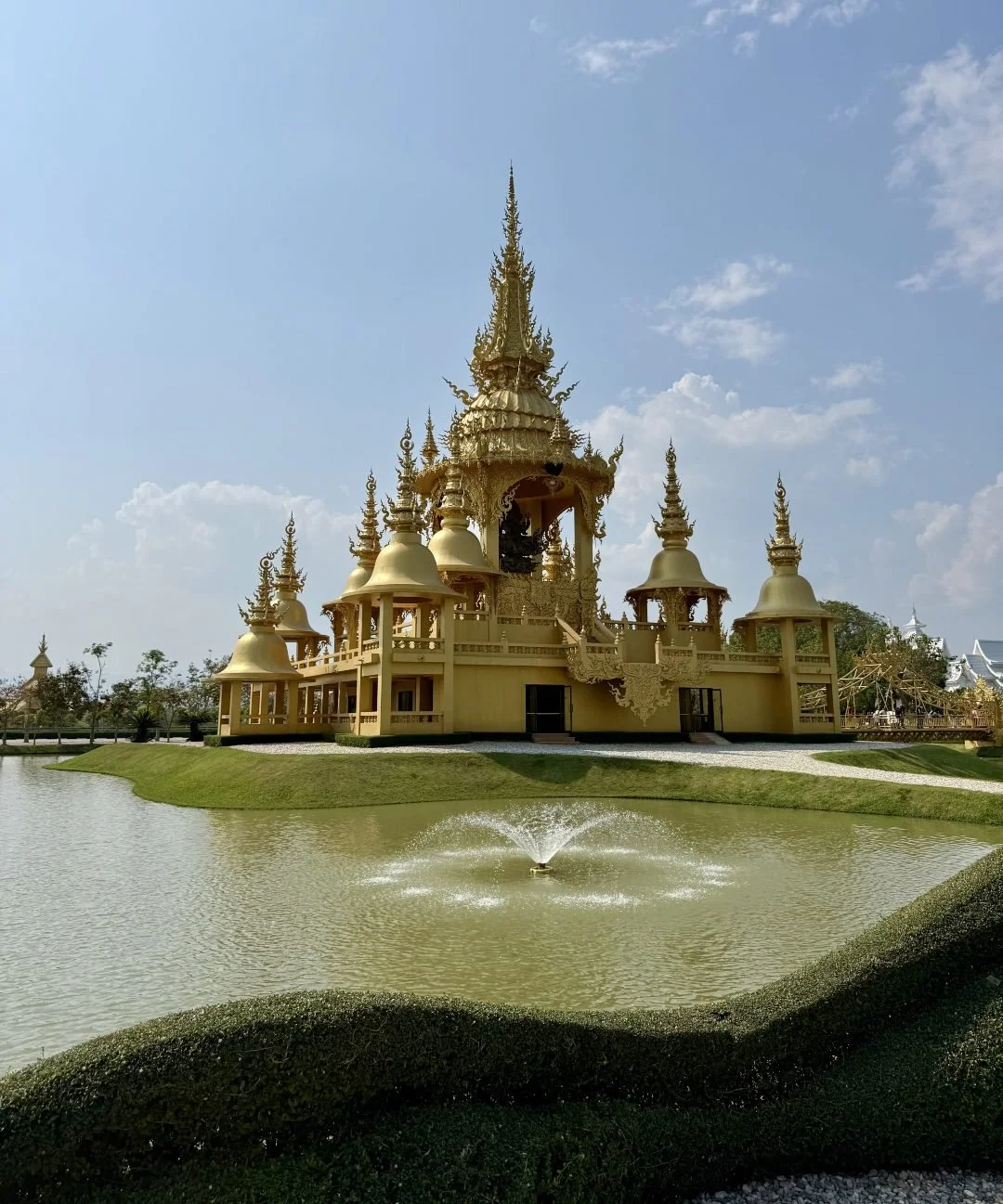
Other temples to see
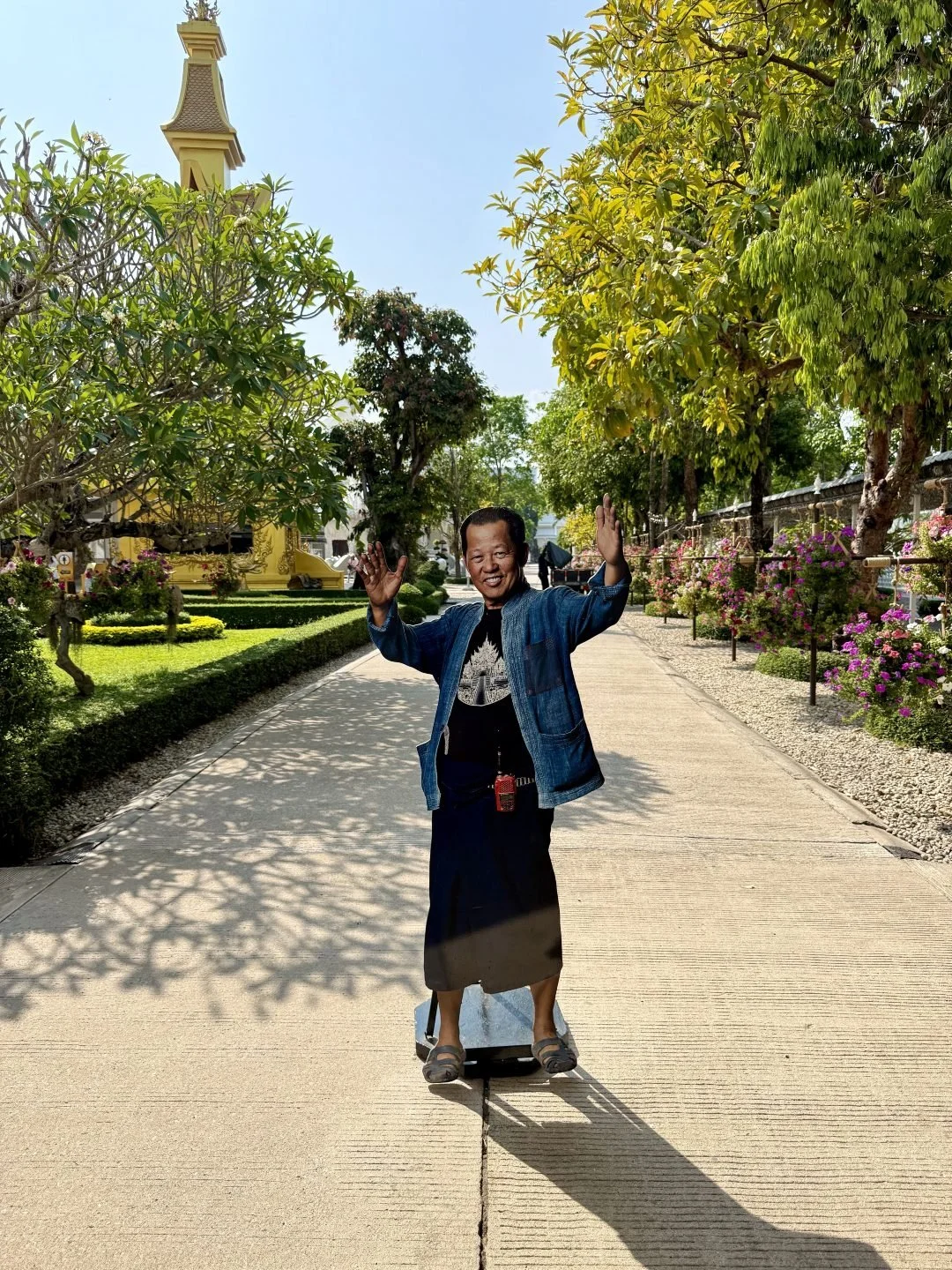
Chalermchai Kositpipat
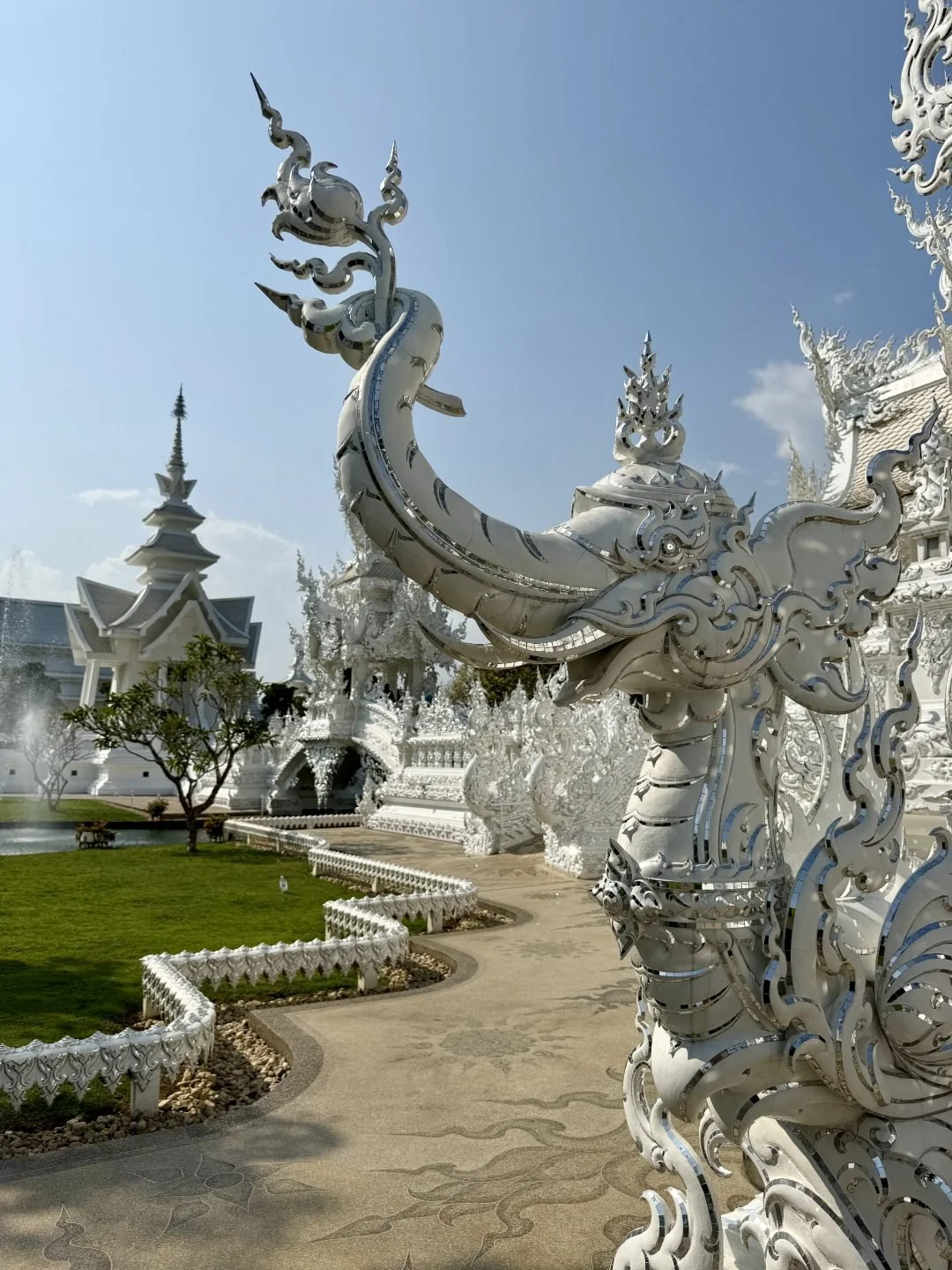
Incredible detail of Wat Rong Khun
What to See at the White Temple
The Bridge of Rebirth
The Bridge of Rebirth is where you’ll see hundreds of hands reaching out desperately as if they’re sinking or drowning. There’s even a few skulls being lifted up which makes it even more haunting. But we thought the symbolism here was extremely powerful: the hands represent hell and the cycle of suffering caused by things like greed, temptation and desire.
Buddhist philosophy is all about understanding, detaching from and ultimately transcending desire. If you’re on a bit of a spiritual journey through Thailand, you’ll definitely appreciate the wisdom of this. As you walk across the Bridge of Rebirth, you leave all vices behind and arrive at a sense of enlightenment at the inner hall. While the photo-ops are amazing, it’s the symbolism of the artwork that really captures your imagination.

The Bridge of Rebirth
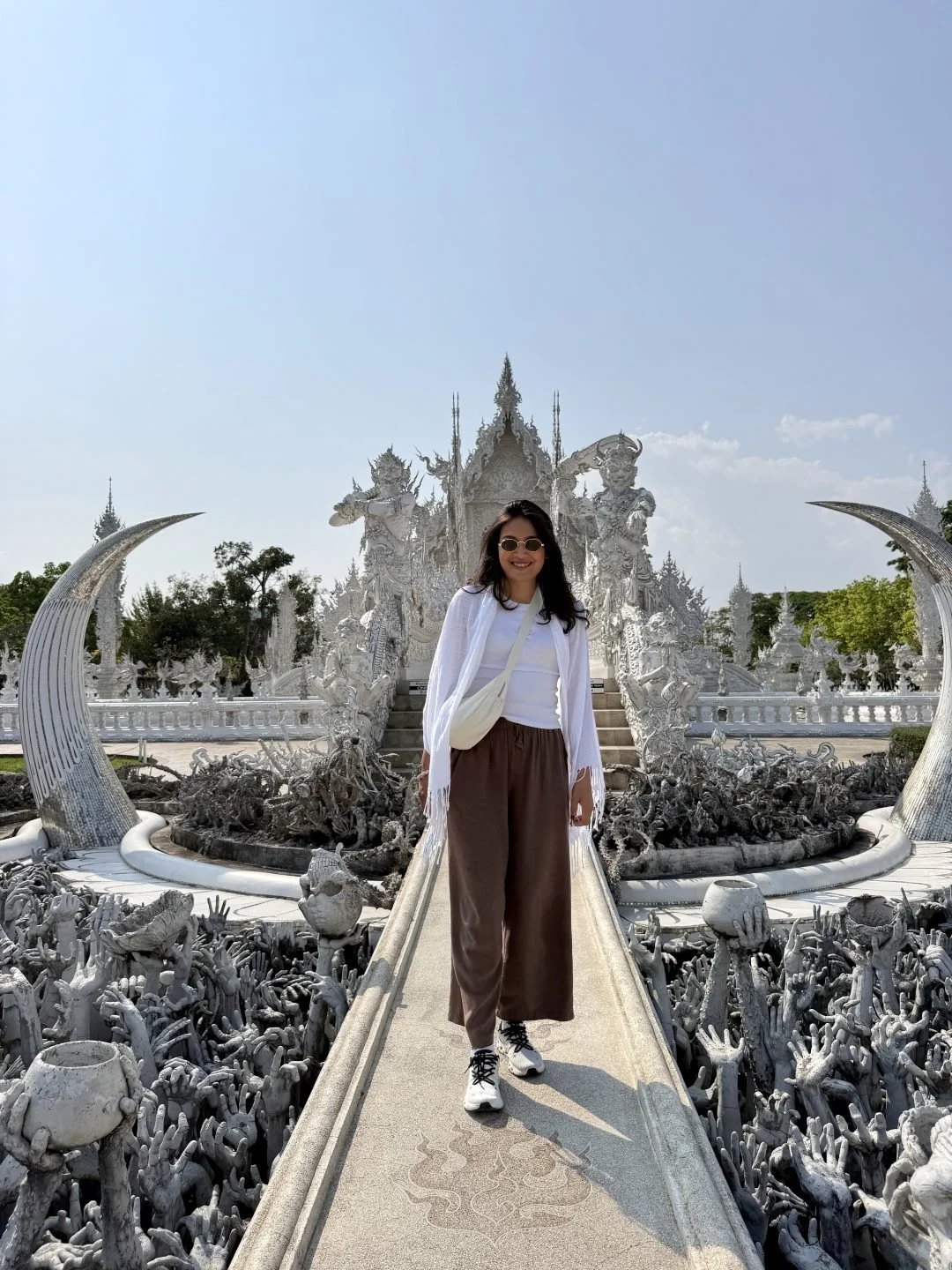
The Bridge of Rebirth
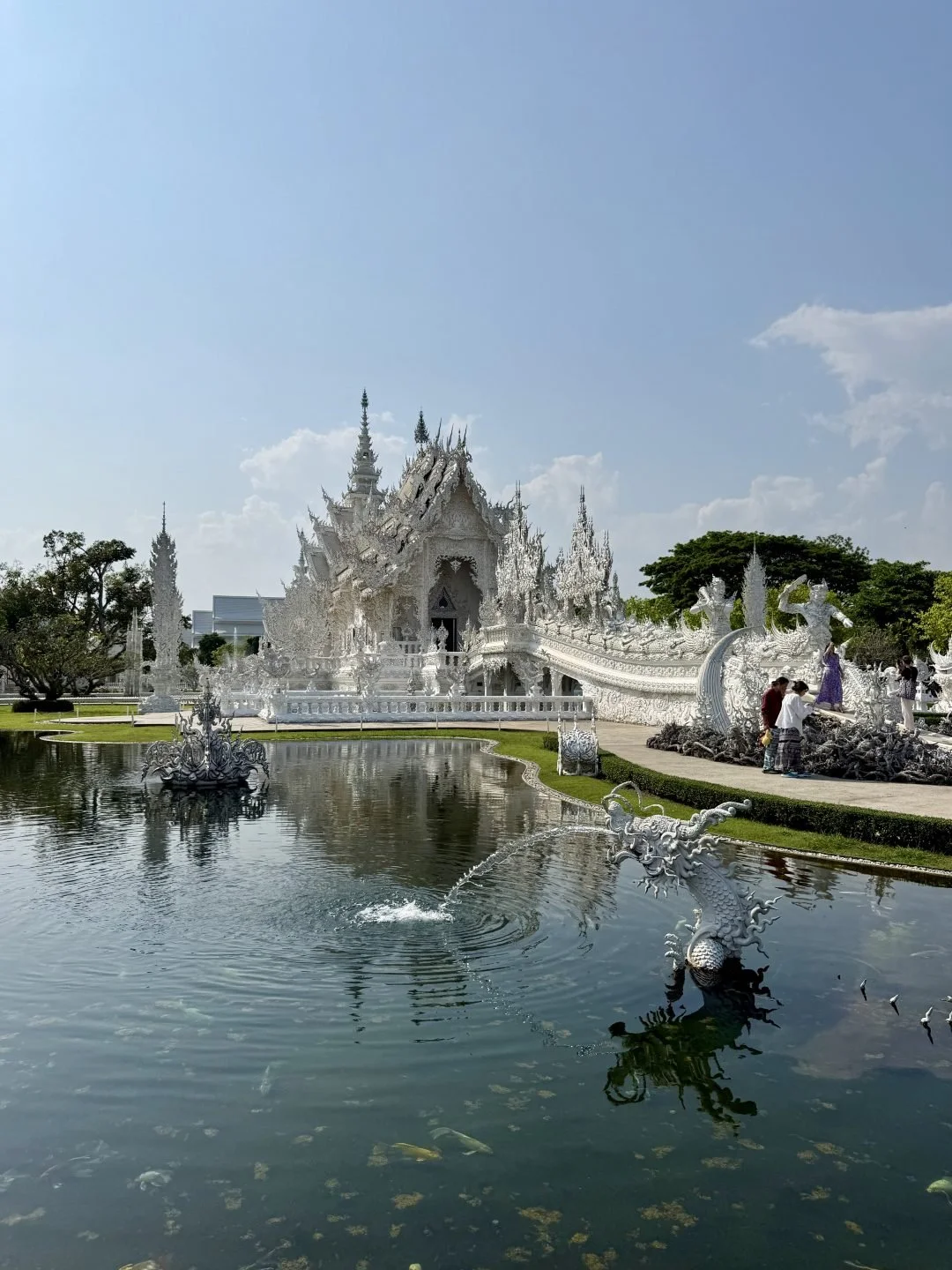
The Bridge of Rebirth
The Gate of Heaven
The next section, past the Bridge of Rebirth, is called the Gate of Heaven where two imposing statues guard the way to the inner hall. These figures act as the judge of whether or not you’ll enter heaven. Crowds tend to gather here, as it’s a nice angle to take photos of the walkway leading to the main temple. If you be too much of a photo hog though, you might trigger the security megaphone that tells you to keep on moving.
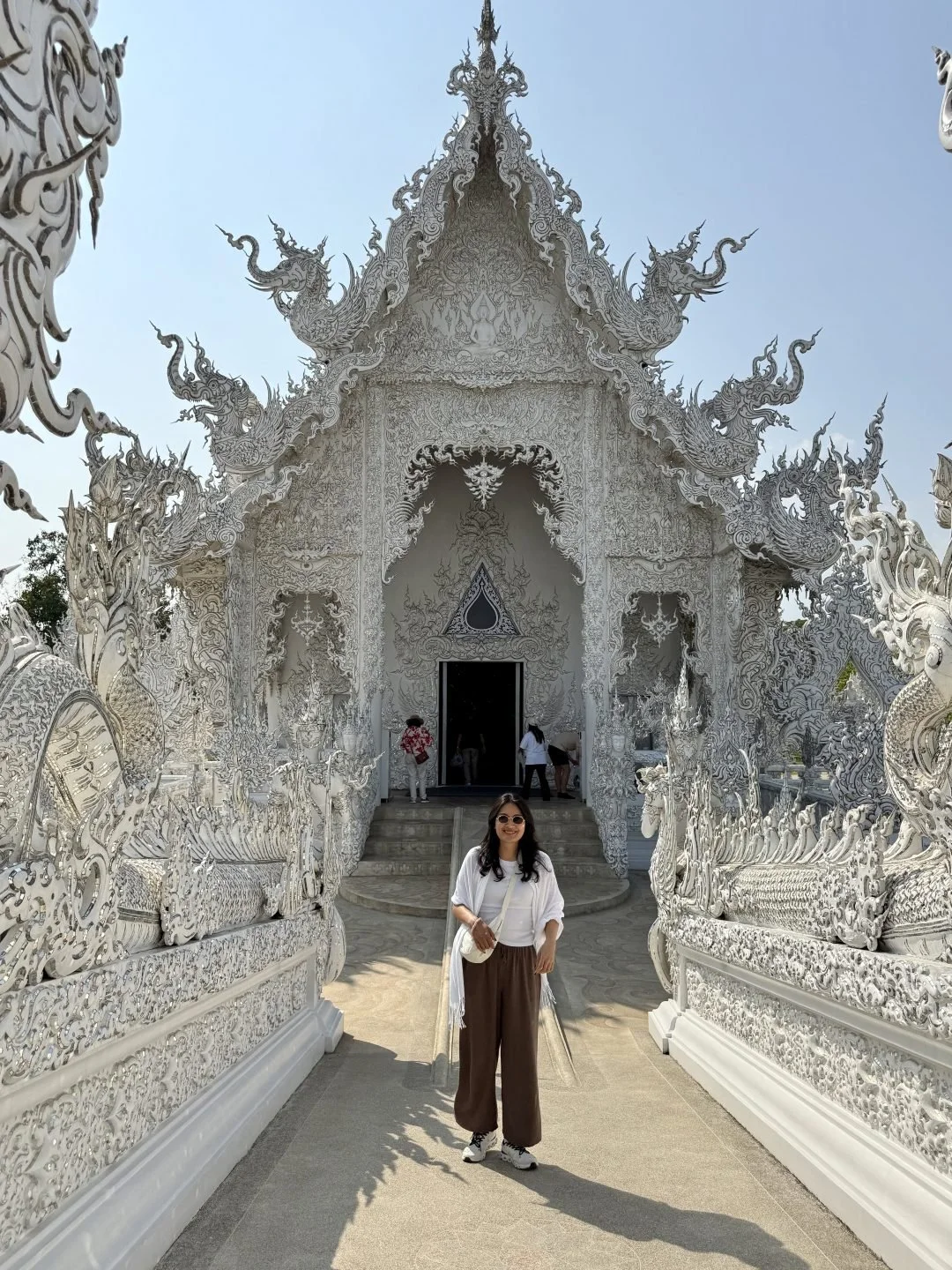
The Gate of Heaven
The Main Hall (Ubosot)
The most sacred place in a Thai temple is called the “Ubosot” or Ordination Hall, but the one at the White Temple in Chiang Rai is different to any you’ll ever see. There’s murals of Neo from the Matrix, Spiderman and even nuclear explosions painted on the walls. It seems weird at first but the spiritual meaning is brilliant: the artist used these icons to represent Samsara, the loop of suffering and rebirth that humans are stuck in.
It also represents how the modern world - with its entertainment and technology - distracts us from finding inner spiritual peace. These murals are painted close to the floor, representing the lower earthly realms. However, as you look higher and towards the back of the hall, you see a golden Buddha statue and a wax sculpture of a meditating monk.
The Golden Restrooms
When you first walk past the golden restrooms at Wat Rong Khun, you’ll probably mistake it for a temple or palace - it’s that fancy. However, the artist Chalermchai Kositpipat had a point to prove again with this site. The gold leaf and elaborate design represents wealth, greed and basic physical urges. It’s a symbol that money and material possessions are just “waste”.
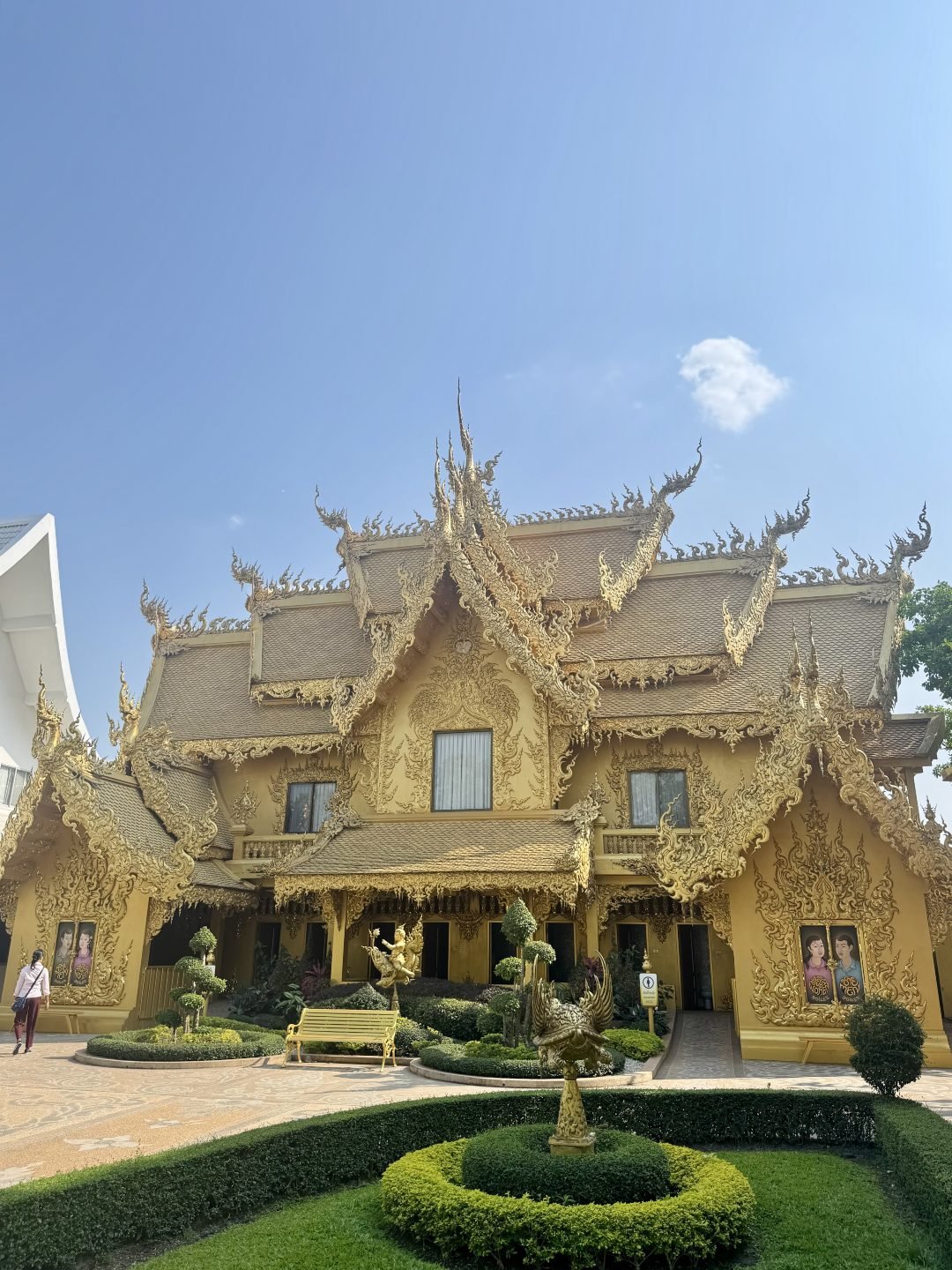
Golden Restrooms
Tickets, Dress Code & Opening Hours
The entry fee for the White Temple is 200 THB for foreigners and they only accept cash. That being said, children can enter for free. We recommend dressing in white to match the colors, perhaps a white top or bag. That’s what Kat did and she had fun picking out outfits with her friends. The dress code is strict like all Thai temples: be sure to cover knees and shoulders.
You probably want to bring some sunglasses too, as the reflection off the white glass is strong on the eyes. You’re allowed to take photos in the gardens and on the walkways, but notably you can’t inside the main hall. The only guaranteed way of avoiding the crowds is to arrive at 8:00 AM, as soon as the temple opens, or just after 4:00 PM. We visited at 3:00 PM and found the crowds to be a little annoying, especially by the Gate of Heaven.
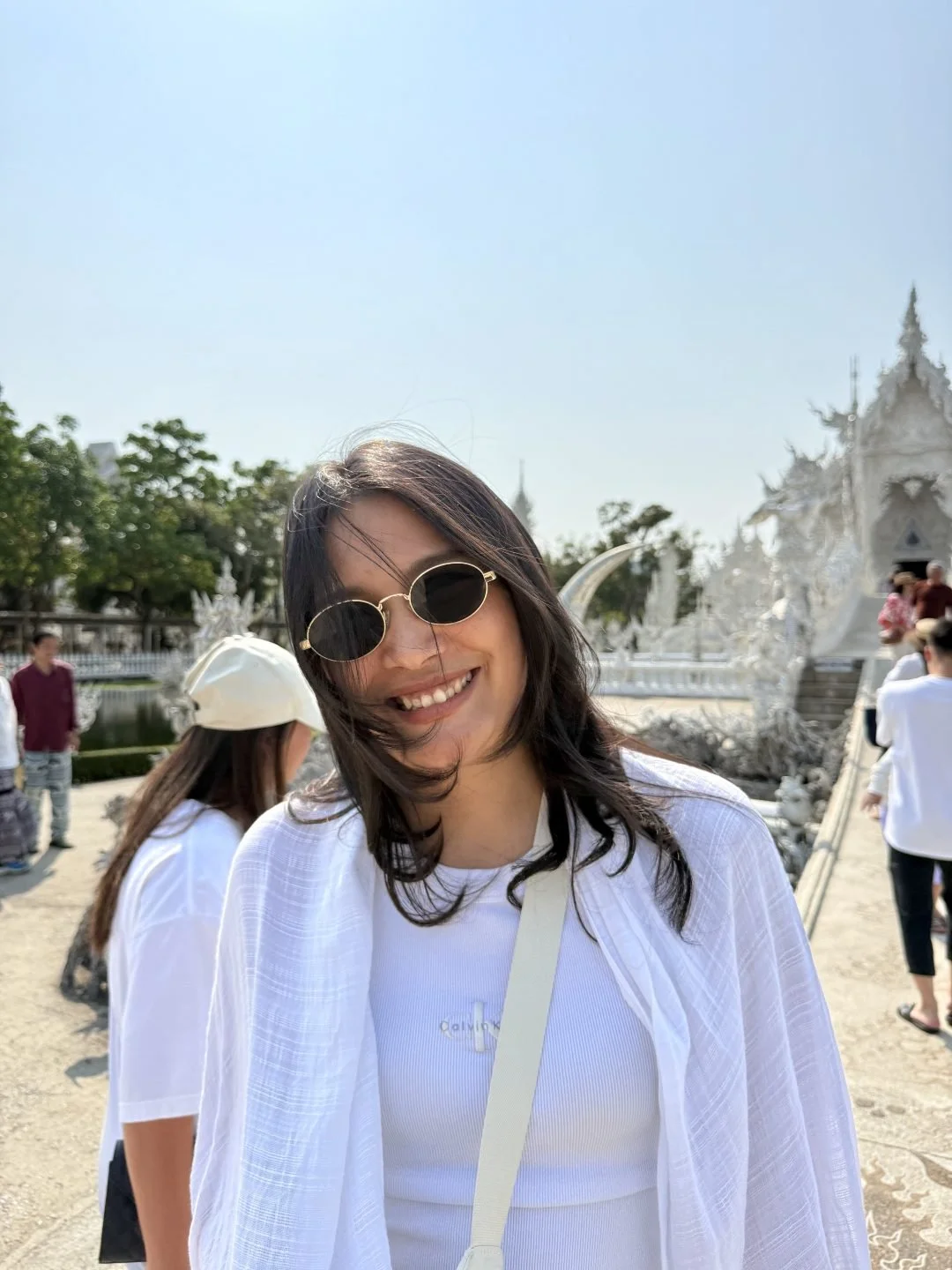
Kat wearing white
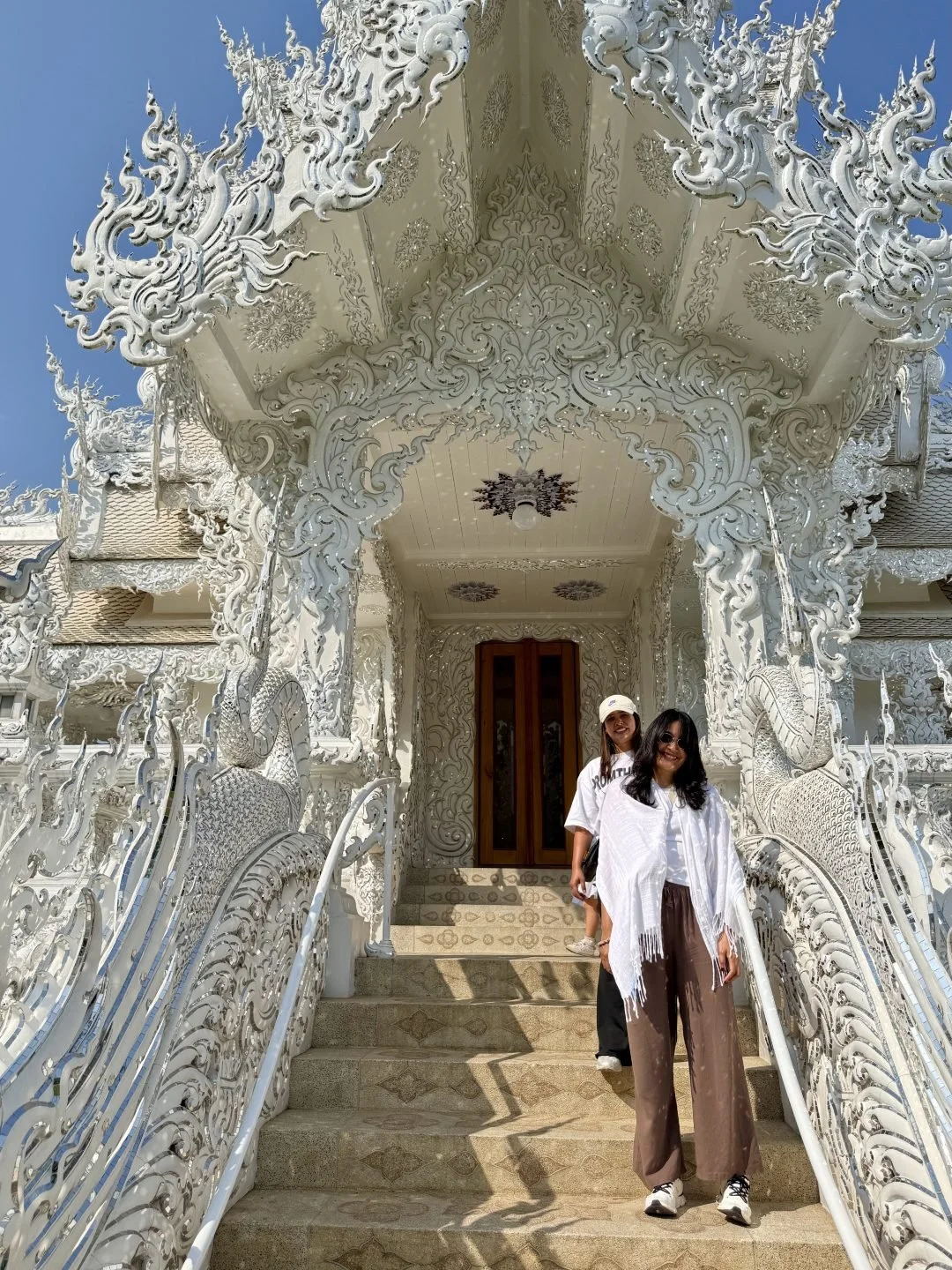
Kat with her friend
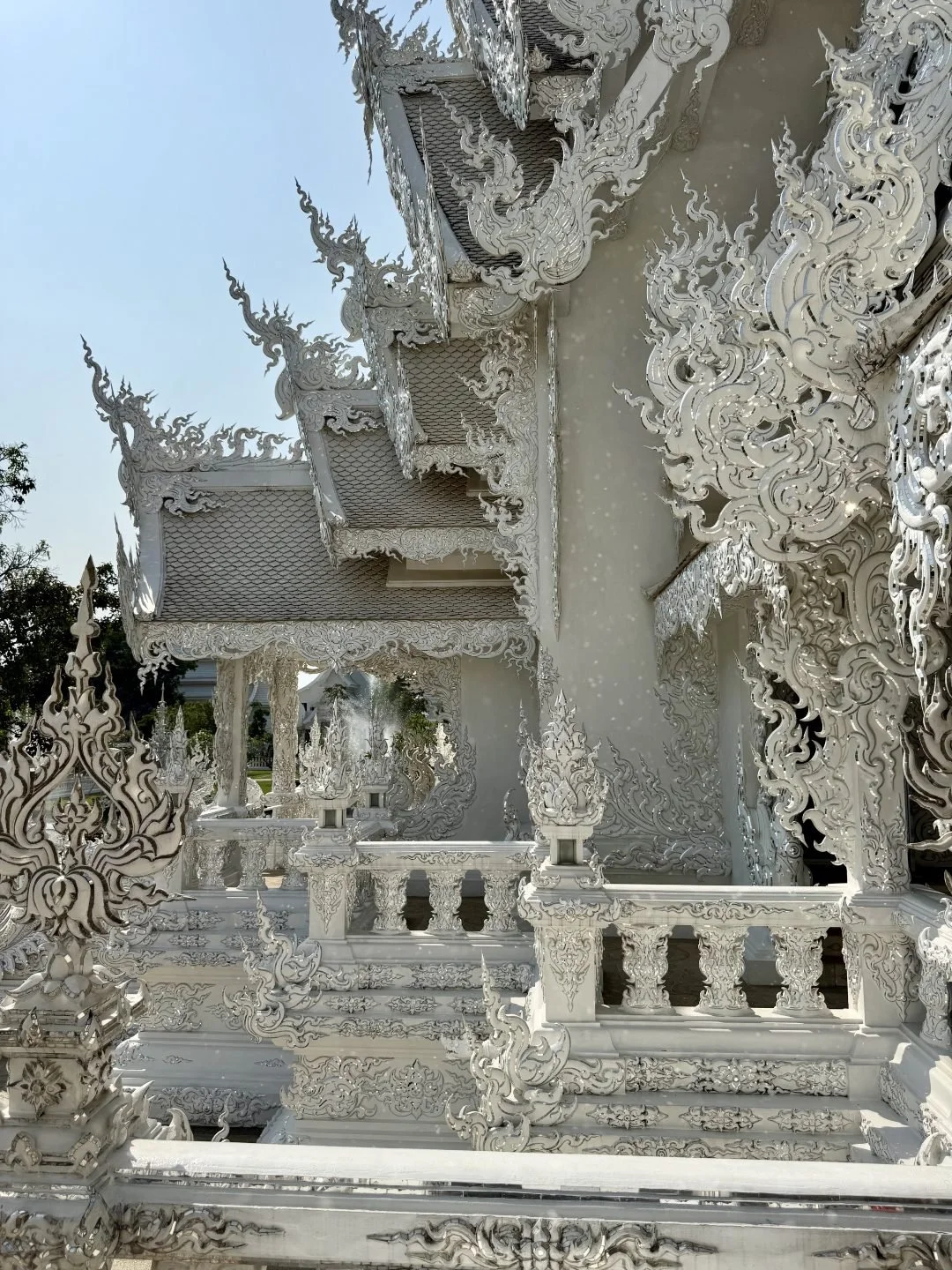
Bright reflections
How to Get to the White Temple
From Chiang Rai
It only takes 15 minutes to arrive at the White Temple from Chiang Rai - either by scooter, car rental or taxi. But perhaps the most fun, local way of getting there is to take the bus or jump in a songthaew. You can head to Chiang Rai Bus Terminal 1 and hop onboard the orange or blue public shuttle bus, or wave down a songthaew heading south on Highway 1.
Read more: 10 Unique Things To Do in Chiang Rai: A Local’s Guide
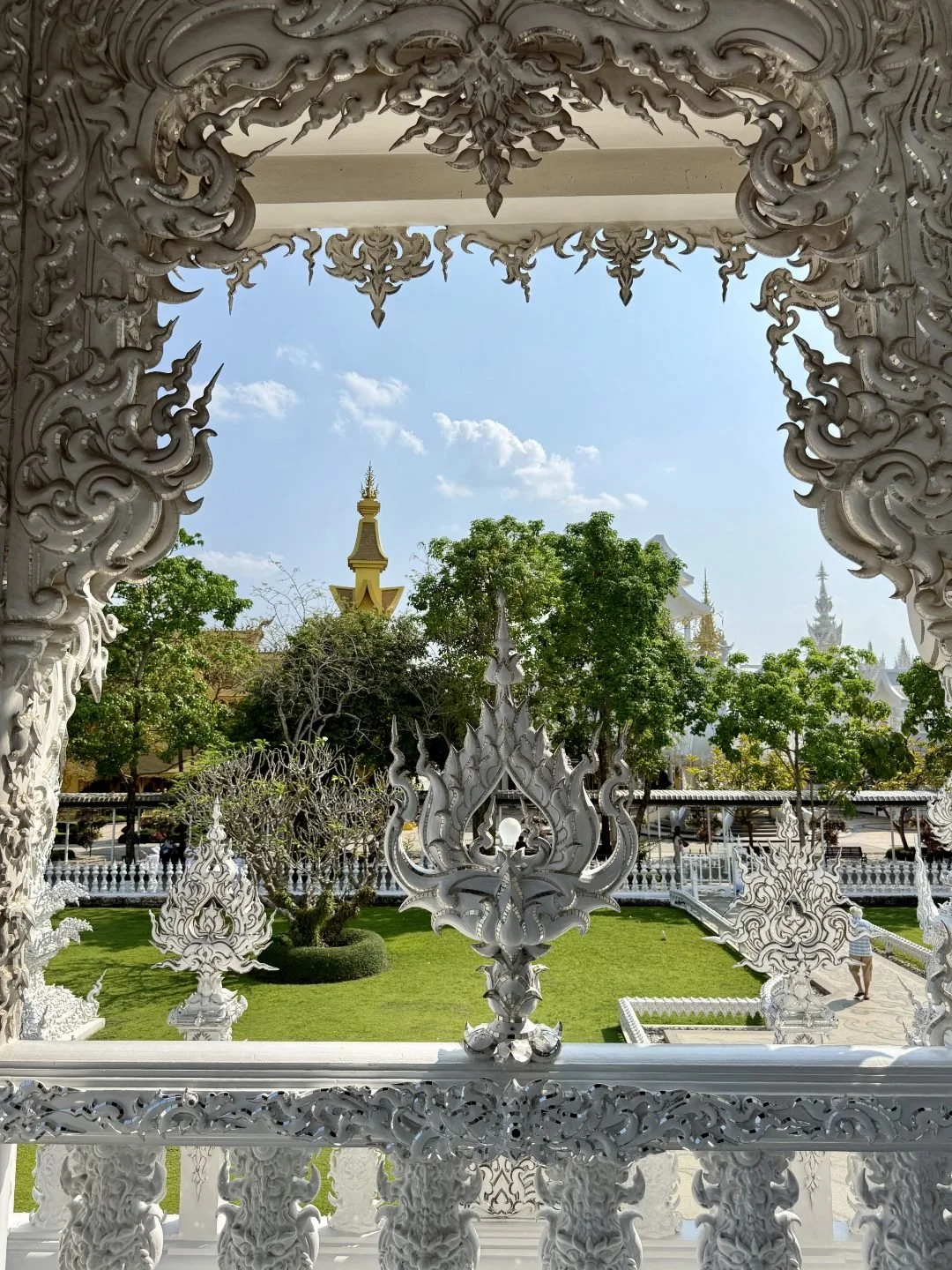
The White Temple
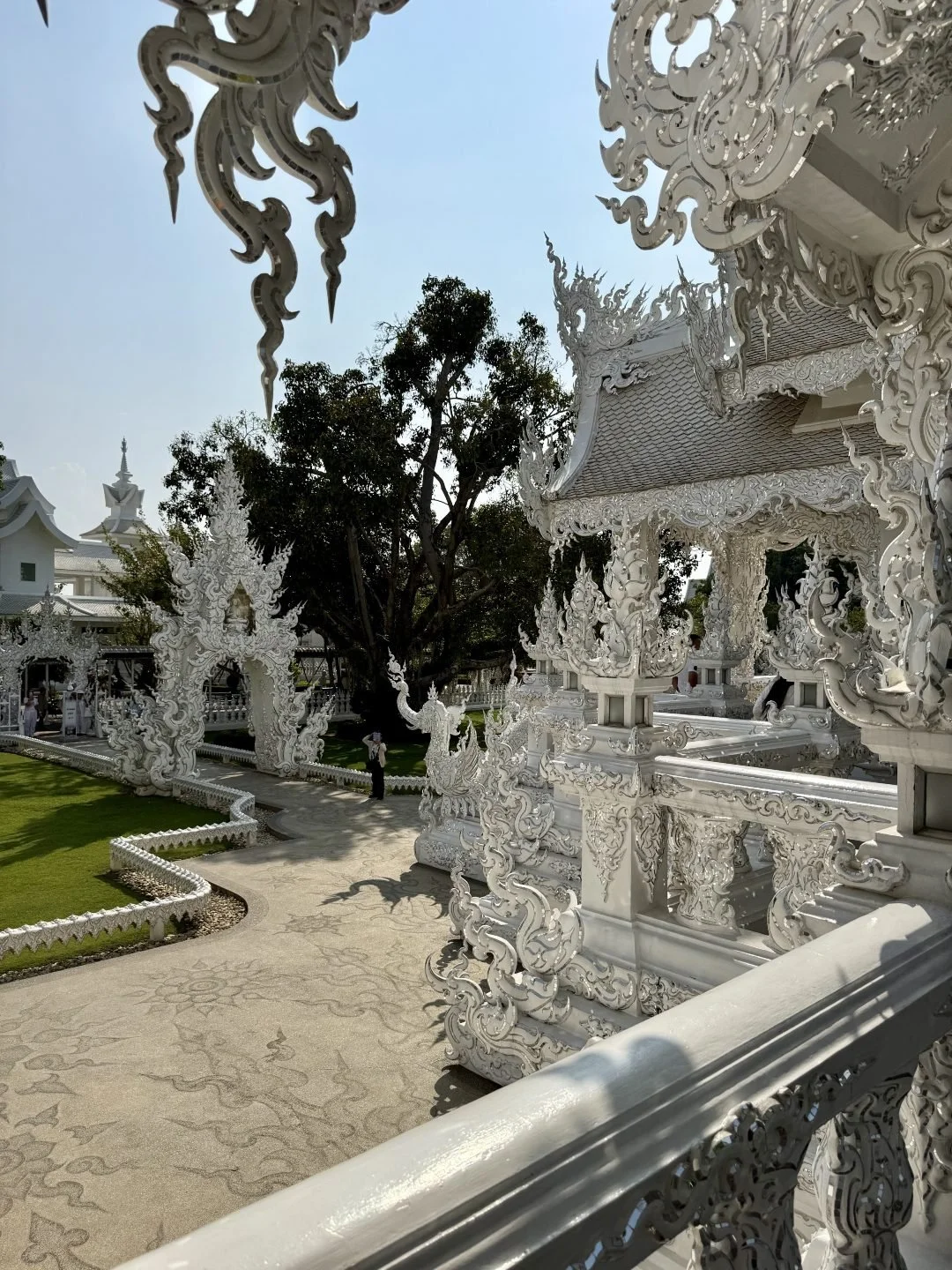
The White Temple
From Chiang Mai
It’s easy to organize a motorbike or car rental in Chiang Mai, but you should know that the drive to Chiang Rai is fairly long (over 3 hours) and there’s a ton of roadworks to navigate on Route 118. The drive isn’t as scenic as you’d expect and the roadwork interruptions require focus and careful driving, which can make it tiring. The best alternative to driving yourself is to take the GreenBus from Chiang Mai Terminal 3 or book a Guided Day Tour that includes the White, Blue and Red Temples as well as Karen Tribes.
Read more: 10 Best Things to Do in Chiang Mai: Discover Hidden Gems
More Temples to Visit in Chiang Rai
The Blue Temple (Wat Rong Suea Ten): The Blue Temple is another popular attraction of Chiang Rai, known for its stunning gold and blue exteriors as well as a beautiful white porcelain Buddha statue inside the main hall. Be sure to grab a blue coconut ice cream from one of the stalls and have lunch at the nearby Chivit Thamma Da.
The Black House (Baan Dam Museum): The Black House acts as the hellish contrast to the heavenly White Temple, with exhibits on display featuring animal skins, bones and skulls. These represent themes of human suffering, desire and mortality. There’s around 40 dark wooden structures to explore - a fascinating and eerie place.
The Red Temple (Wat Chiang Yuen): This peaceful sanctuary blends Lanna and Burmese architectural styles together, and features gorgeous red details throughout. As you walk up the staircase, past Naga serpents, and step inside the main hall you’ll see a beautiful Buddha statue that rests on a Chinese junk boat-shaped base.
The Other Red Temple (Wat Huay Pla Kang): Wat Huay Pla Kang is located just north of the city on a mountainous platform and is known as the other “red temple”, due to its Chinese pagoda with red roof tiles. The highlight, though, is the towering white statue of Guanyin which is often referred to as the “Big Buddha of Chiang Rai”.
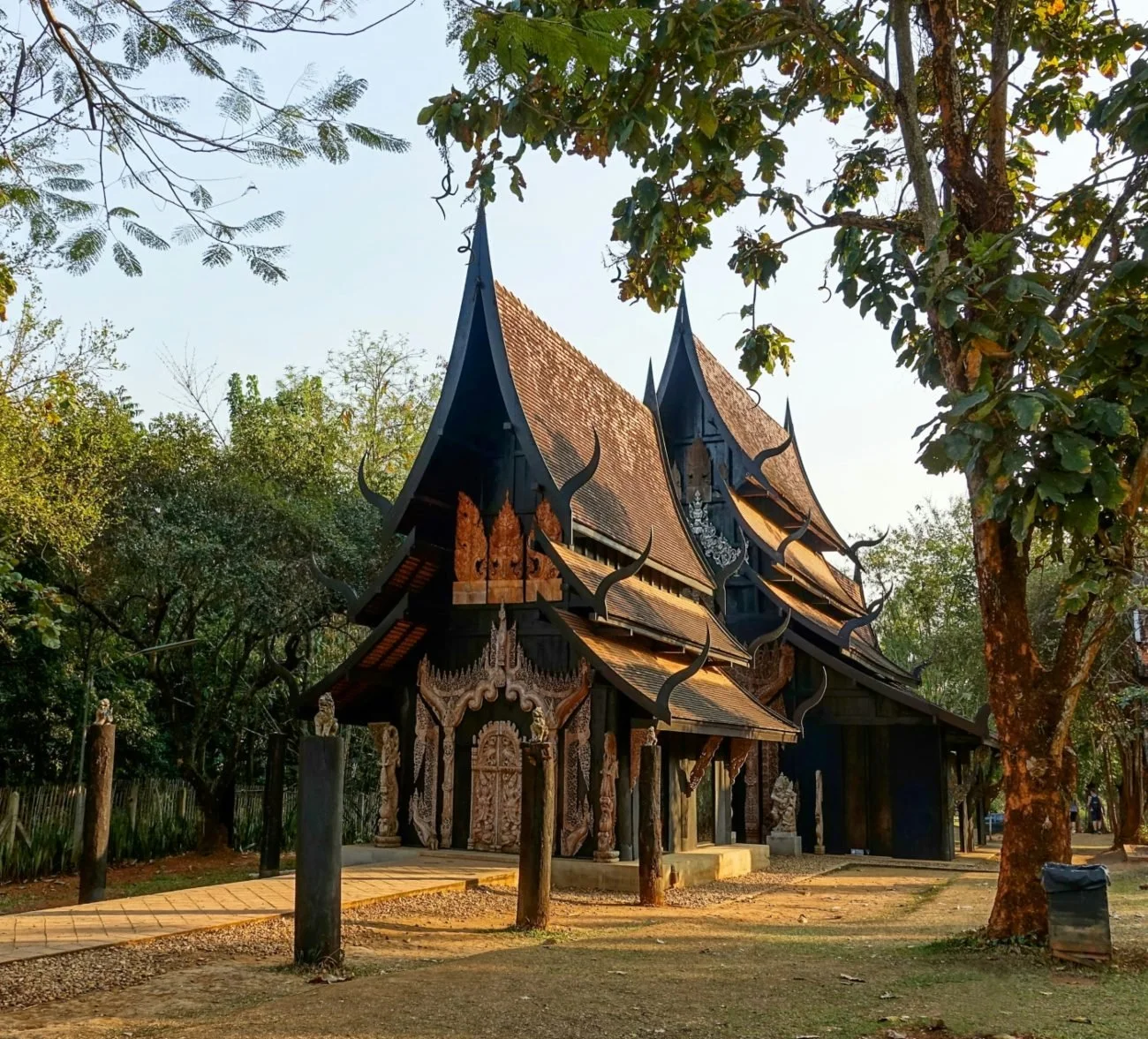
The Black House (Baan Dam Museum)
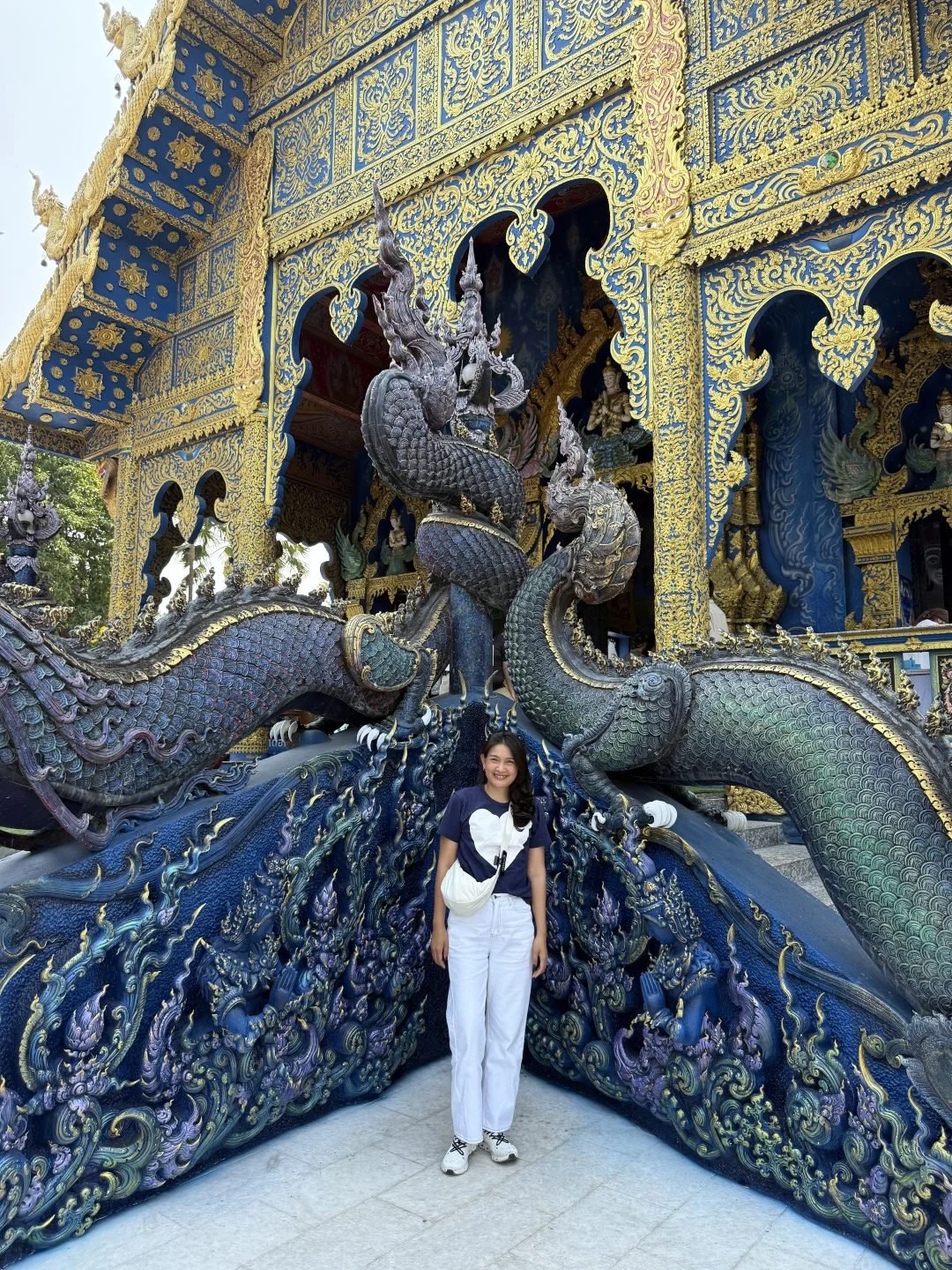
The Blue Temple (Wat Rong Suea Ten)
