
15 Best Things To Do in Chanthaburi: A Local’s Guide
Chanthaburi is like a second home to us: if we had to live anywhere in Thailand it would be here! We love how the city revolves around the daily lives of its people, rather than mass tourism, whether it be the hardworking farmers tending to their durian, traders buying and selling gemstones, or fishermen bringing back seafood bounties from the nearby coast.
Kat grew up in Chanthaburi, and her sister (Pare) is based here now, so we visit every chance we get. At first, Cam didn’t know what to expect, as it wasn’t a place he had ever heard of let alone seen promoted on social media or on travel blogs. But after enjoying several trips over the years, he can say with certainty that it’s one of his favorite places in Thailand.
It’s become personal to us due to the amazing local experiences we’ve had with both Kat’s family and Cam’s family. Chanthaburi is one of those hidden gems in Thailand that we hope more travelers will visit - not in a touristy way, to tick off a bunch of “bucket-list” activities, but in a slow and curious fashion to experience a part of Thailand that radiates authenticity.
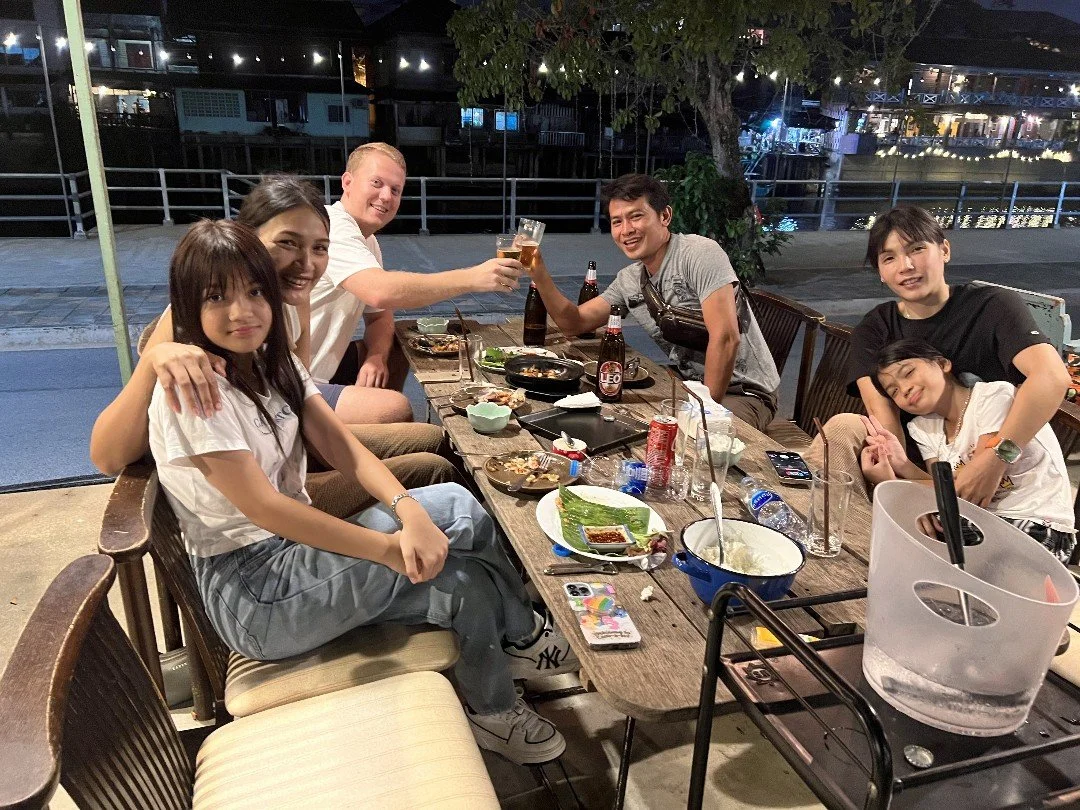
Dinner with family at the Chanthaboon Waterfront
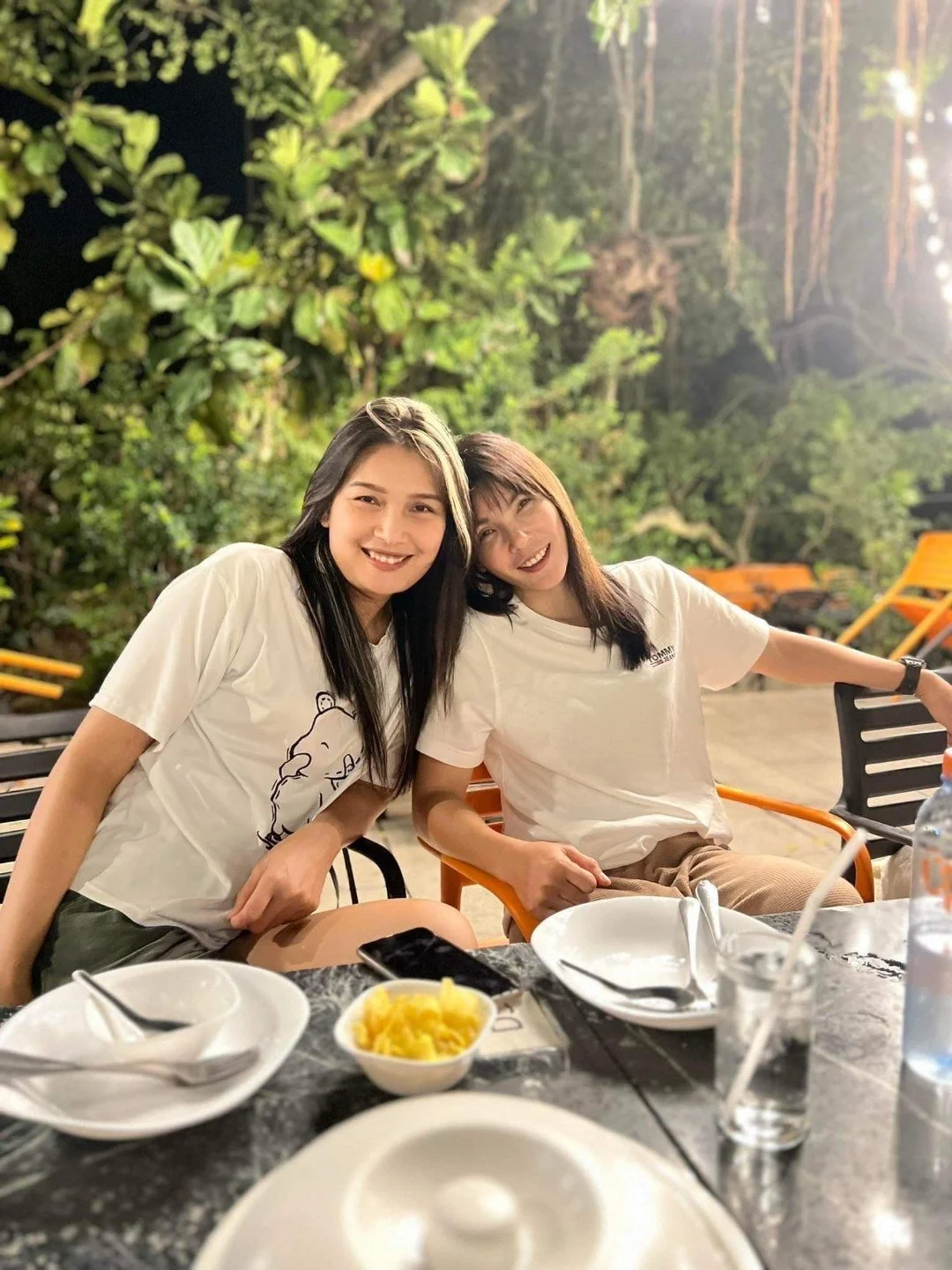
Kat with her sister Pare in Chanthaburi
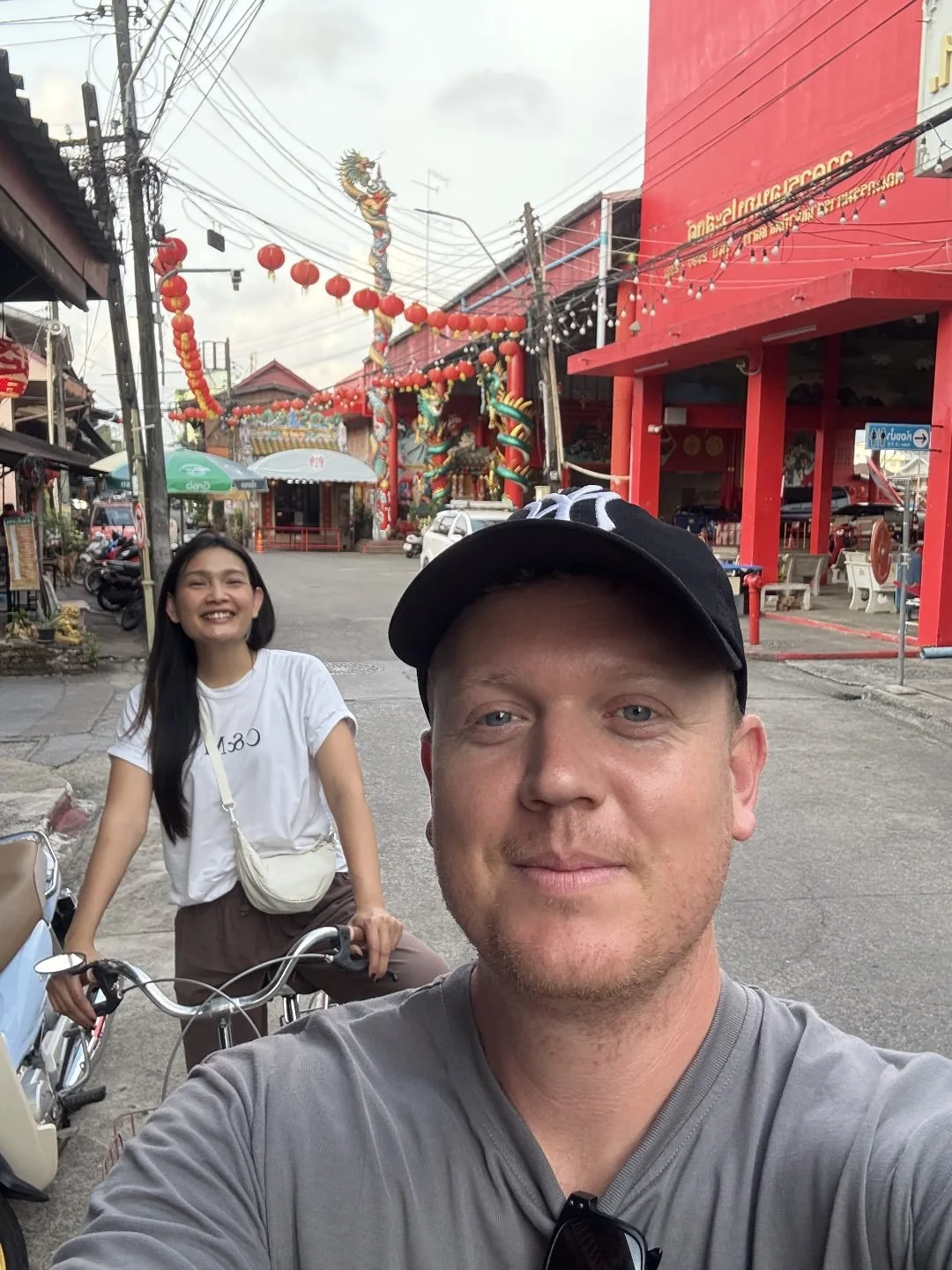
Cam and Kat exploring Chanthaburi
Our Connection to Chanthaburi
Every trip we take to Chanthaburi gives us the opportunity to reconnect with Kat’s family and friends, and slip into everyday life. We’re often taken out to restaurants no tourists would ever think to visit - hidden little spots, dimly lit, surrounded by lush greenery - where the tables are set for feasts. What we’ve noticed about eating with the locals is that they never order dishes individually, all food is to be shared in a social manner.
Seafood is the staple in Chanthaburi and it comes in all sorts of creative forms: whole fish drenched in garlic and lime, fried squid, crab curries, etc. Plates keep piling up until the table is overflowing with color and steam. Thais don’t expect you to finish everything, that’s not the point, the point is conversation, passing the dishes around, having a beer together and enjoying that sense of comradery. At some stage in the night, the Thai whisky comes out, and things can get a little blurry! But it’s all good fun.
Our days in Chanthaburi rarely feel like “tourist days” or “sightseeing”. We try to explore the way locals do - whether it be riding around the city on a Grab motorbike or cruising along the countryside roads in the back of a pickup truck. One time, our brother-in-law (Ring) let us ride in the back of his truck and a Canadian expat saw us and shouted out: “Now that’s a sight you don’t see everyday in Chanthaburi”. He had a really strong Canadian accent, which for some reason made it even more hilarious!
We’ve partied with friends at live music bars, tried every type of Durian known to man, visited the Chanthaburi Cathedral at Christmas, prayed and made merit at local Buddhist temples (like Wat Pak Nam Khem Nu), and spent many evenings soaking up the charming atmosphere along the Chanthaboon Waterfront. These have all become special memories for us.
What’s more, we’ve had the chance to explore other parts of Eastern Thailand outside of Chanthaburi, following Ring out to his durian farms in the remote Sa Kaeo and Trat provinces. He’s passionate about all things agriculture and horticulture, and loves growing different kinds of durian, fruits and plants. Visiting Ring’s farm and spending time in the surrounding villages has given us a real appreciation of rural Thailand.
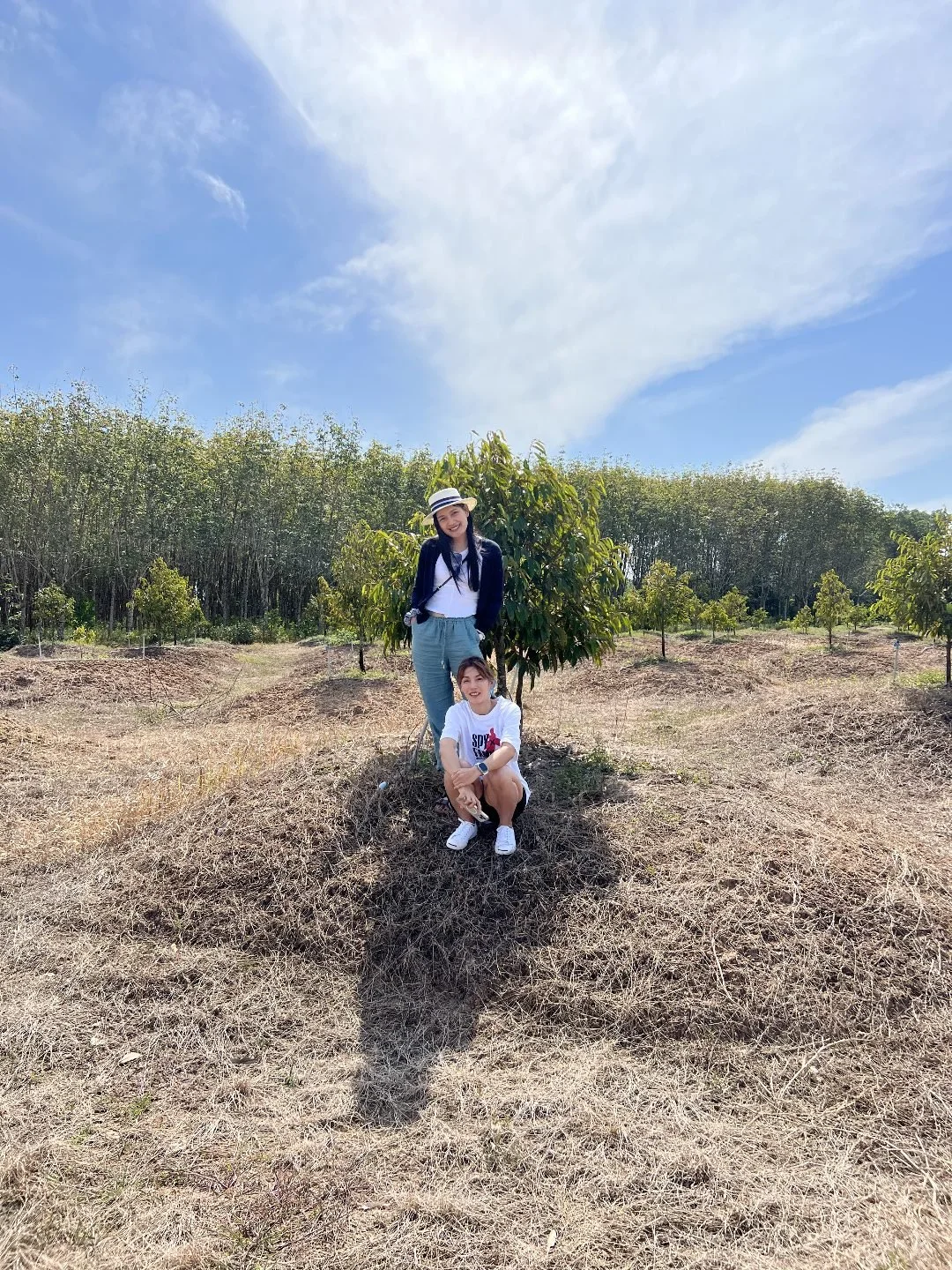
Kat and Pare on the durian farm
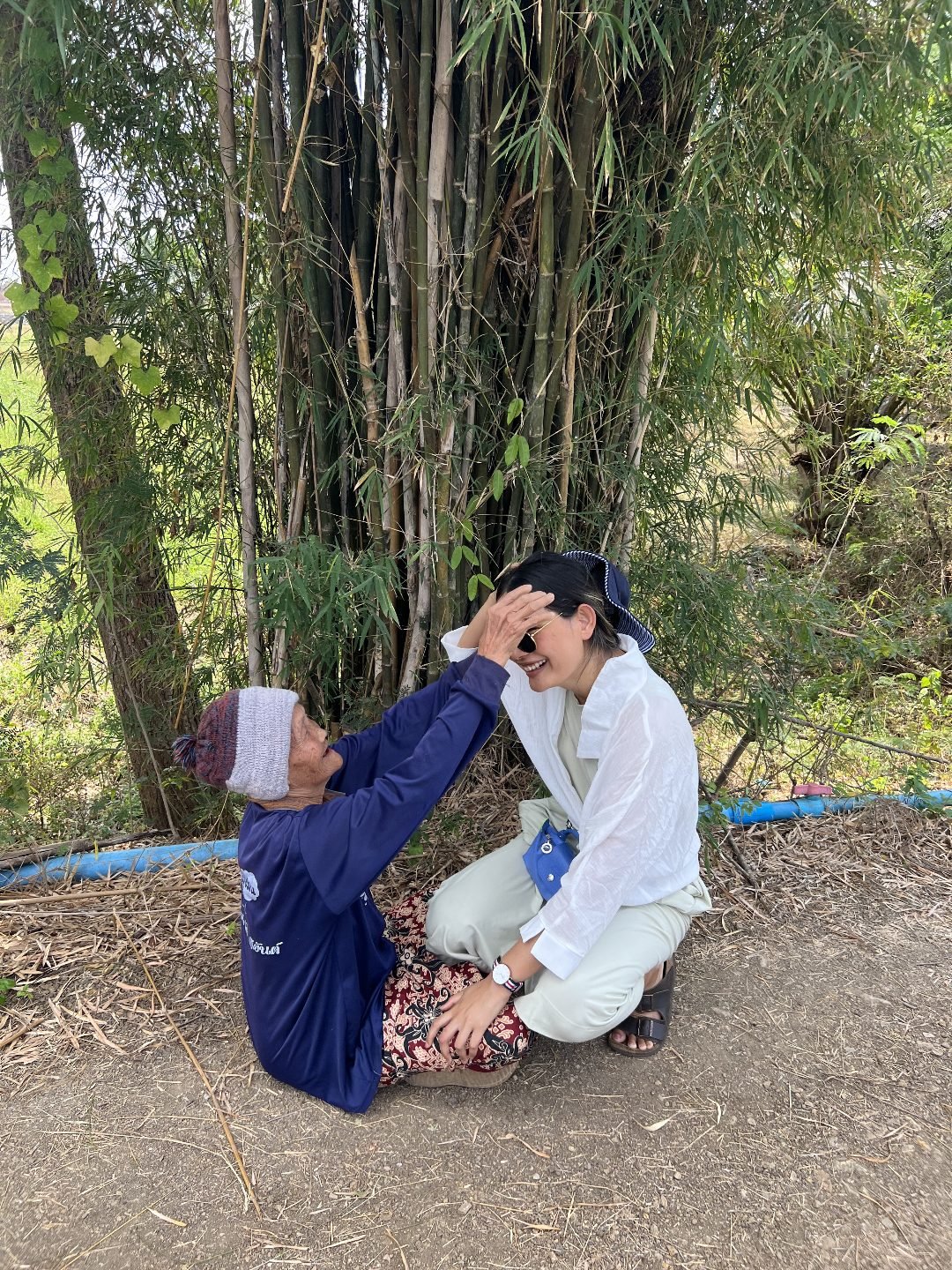
Kat catching up with the villagers in Sa Kaeo
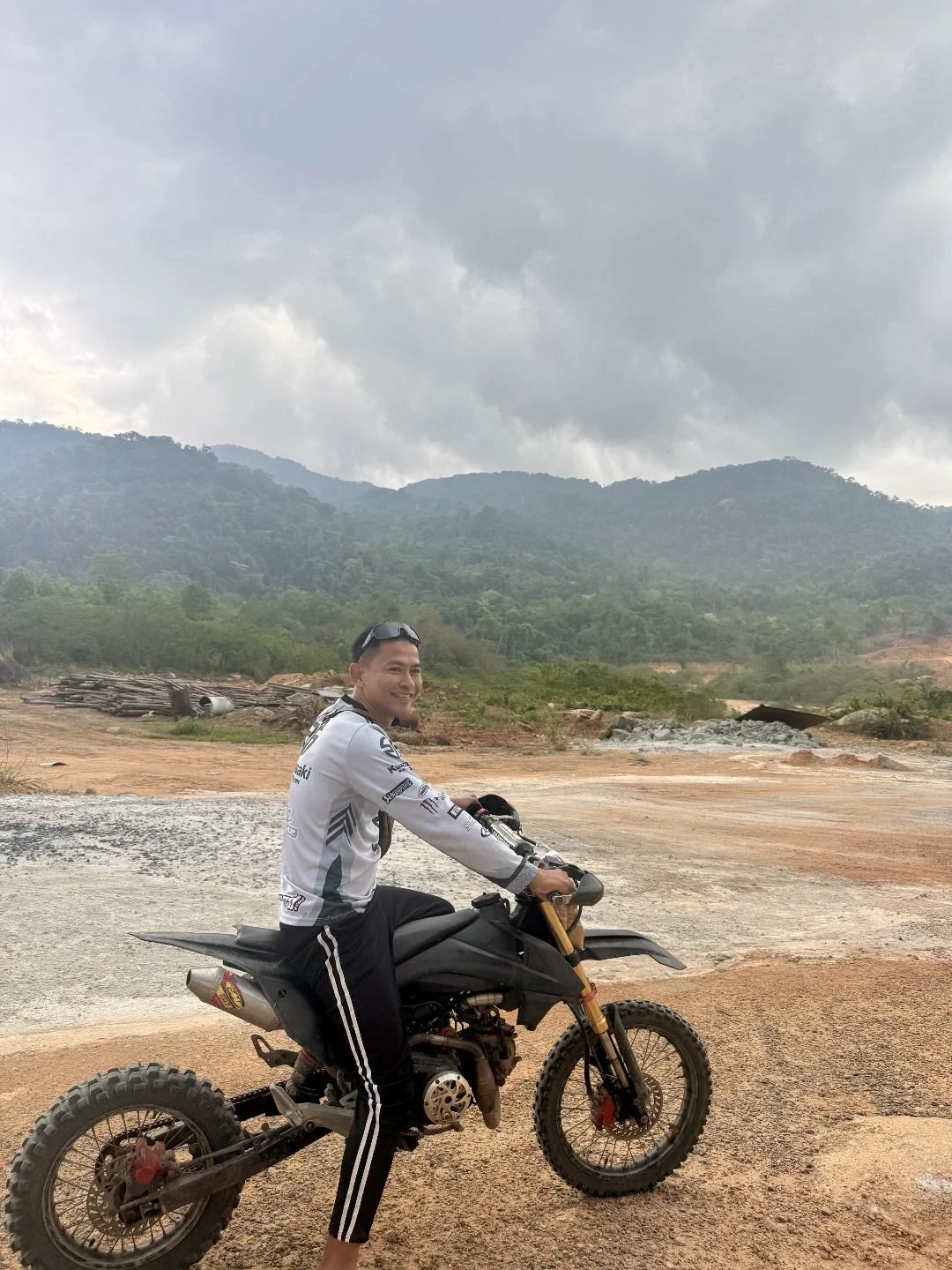
Ring riding his motorbike in the countryside
What Chanthaburi Offers Travelers
Chanthaburi sits strategically between Bangkok and the Koh Chang Islands, in the east of Thailand, making it a handy stopover point. Most people view it as a means to an end: a place to rest your head for the night before heading to the islands. But that’s a mistake in our opinion. Try to stay for a few days and you’ll be pleasantly surprised by what it offers.
Known as the “Fruit Bowl of Thailand”, Chanthaburi is a region bursting with rich soil, orchards, and some of the best durian, mangosteen, longan and rambutan in the world. Fruit farming can be a lucrative business here, with the Chinese market in particular buying tons of durian every year. If you visit between April and July, you’ll get to see fruit festivals, tasting tables, orchard tours and trucks overflowing with produce.
But there’s more to Chanthaburi than just fruit. It’s also one of the world’s historic centres for gem cutting and trading. Traders have been coming here since the 17th century, in search of sapphires and rubies. The gem district is still a hive of activity today. Combine that with beautiful temples, delicious seafood, coastal views, waterfalls and charming riverfront areas, and it’s easy to see why the few travelers who make it here fall in love.
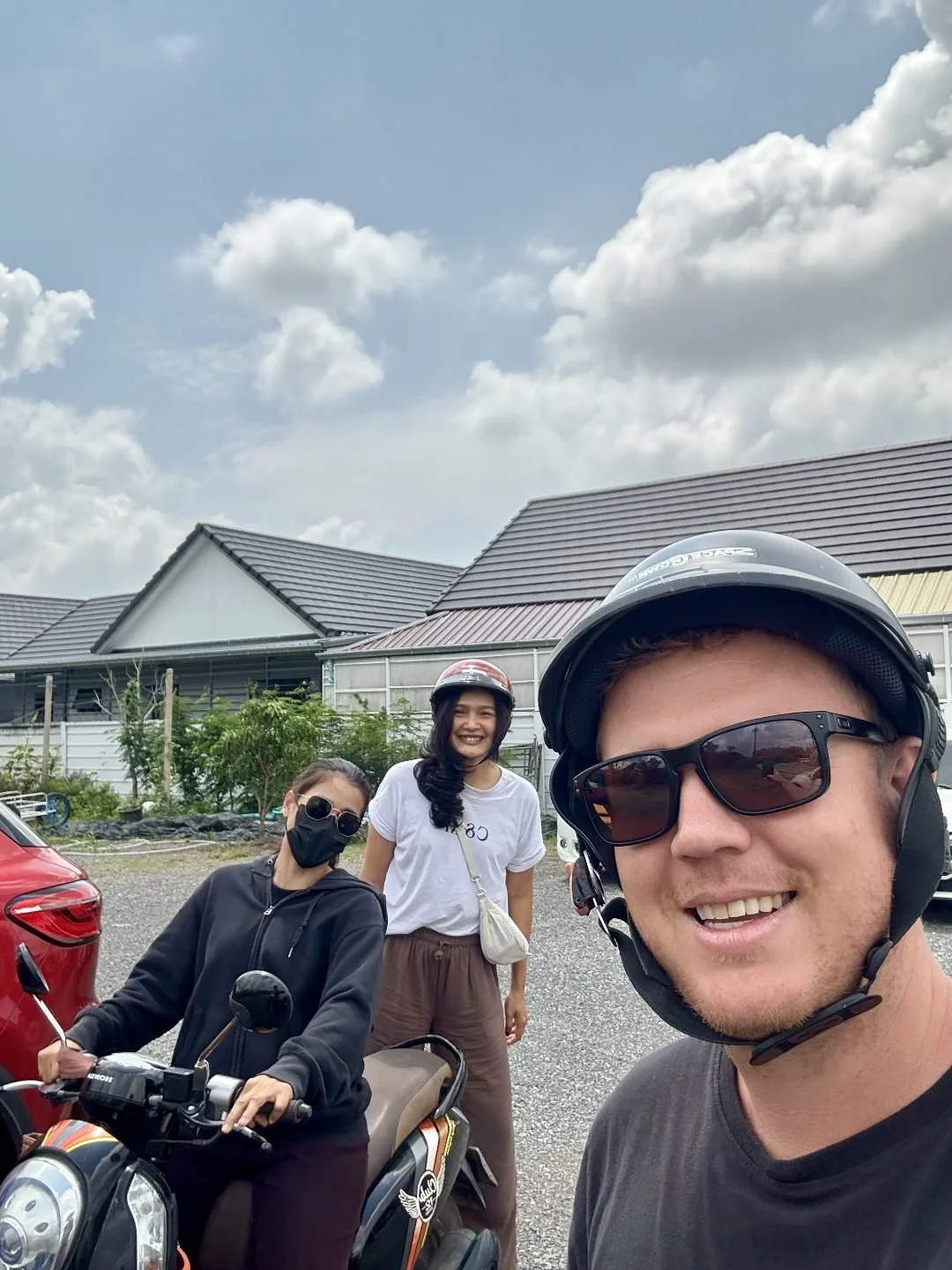
Cam, Kat and Pare in Chanthaburi
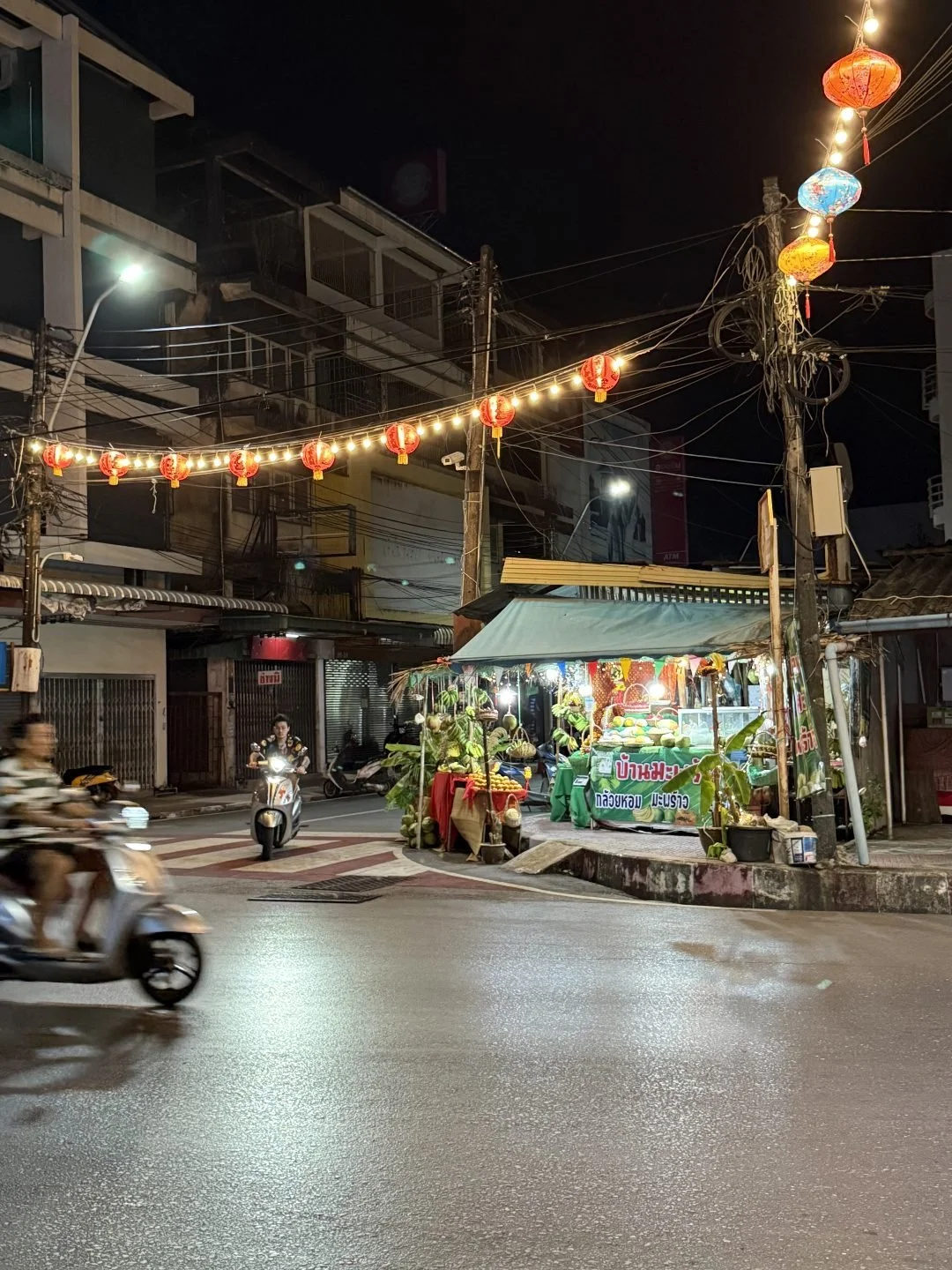
Chanthaburi at night
15 Best Things To Do in Chanthaburi
1. Dine Along the Chanthaboon Waterfront
The Chanthaboon Waterfront Community is the most atmospheric and charming part of the city, especially in the evening when the shophouses and restaurants are lit up with fairy lights. We’ve spent many nights here with friends and family, and as you’d expect food and beer always plays a major role. This is where you can find signature recipes that originate from Chanthaburi itself, for example: Sen Chan Pad Pu (stir-fried noodles with crab) and Moo Cha-Muang (pork belly curry with Cowa leaves).
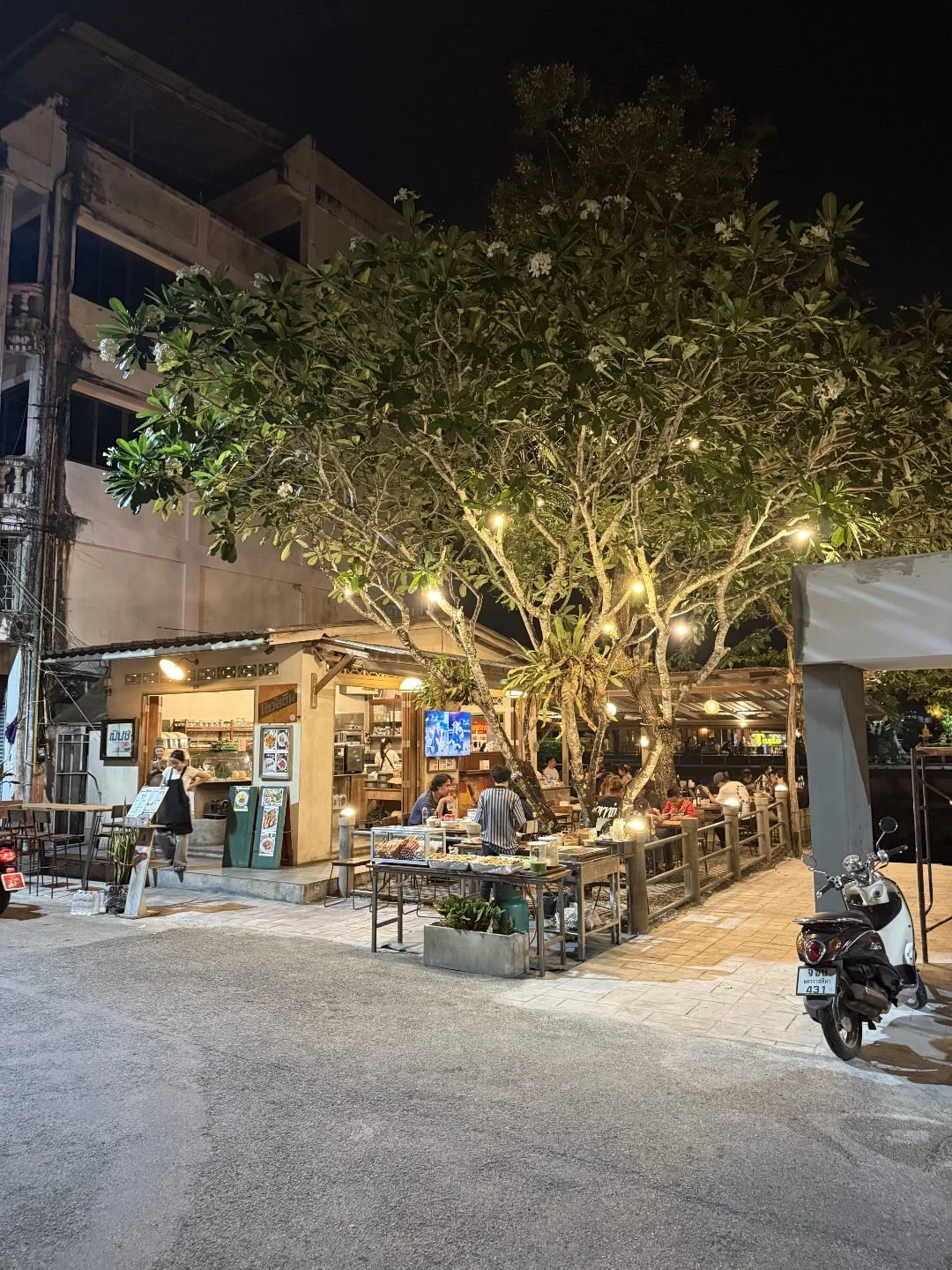
Restaurants on the Chanthaboon Waterfront
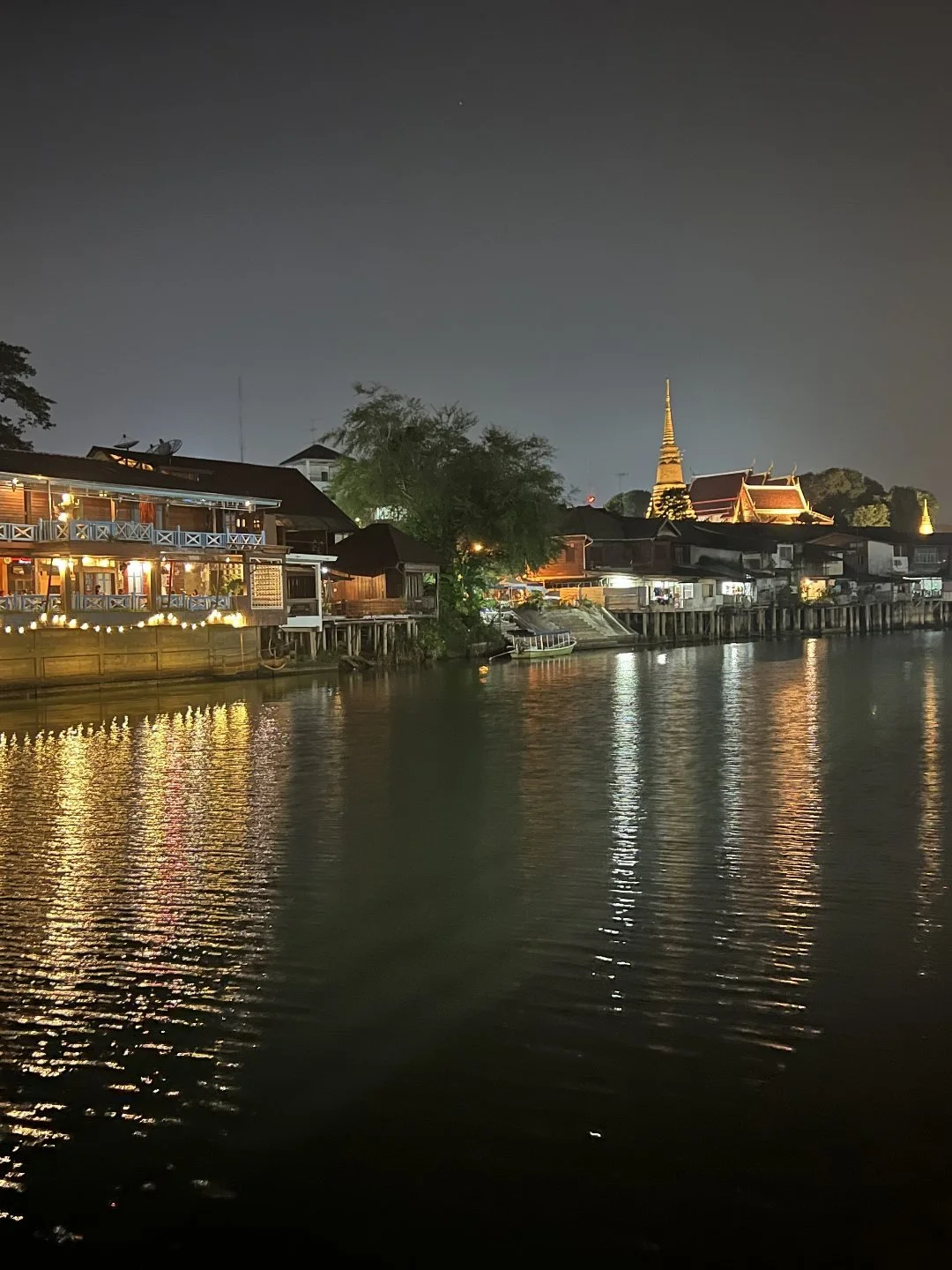
Chanthaboon Waterfront Community
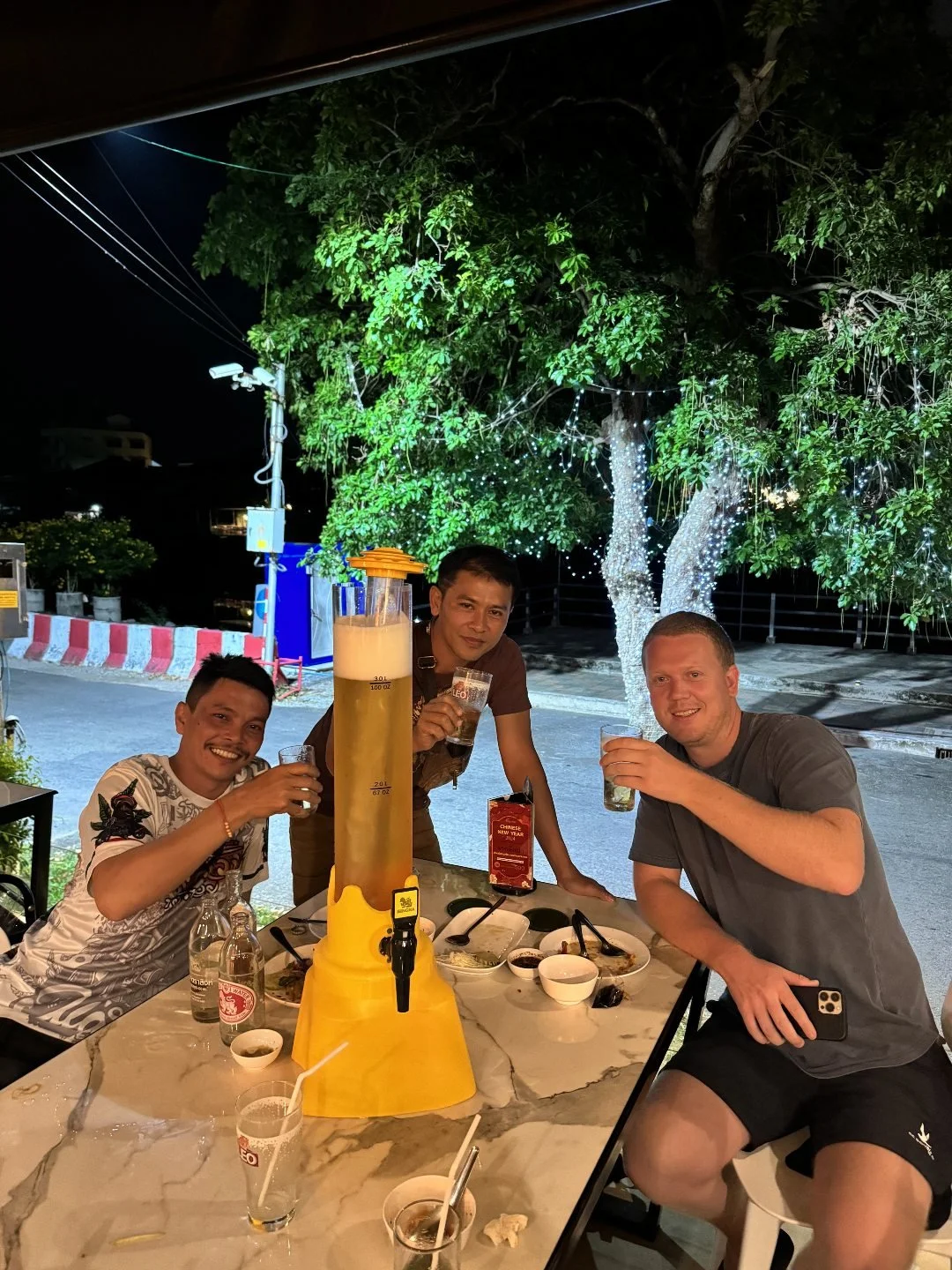
Dinner with Ring and friends
2. Stay at Punyashthiti Villa (Historic Inn)
On our most recent trip, we decided to stay at one of the historic inns along the Chanthaboon Waterfront and it was an absolute delight! We chose Punyashthiti Villa, and booked a cozy little room with a balcony overlooking the river. The inn came equipped with a cafe, a museum on levels 2 and 3, and bicycles which we could use to explore the streets. It was so much fun riding around the little alleyways, and checking out the street art, coffee shops, bakeries, boutique jewellery stores, and Chinese temples.
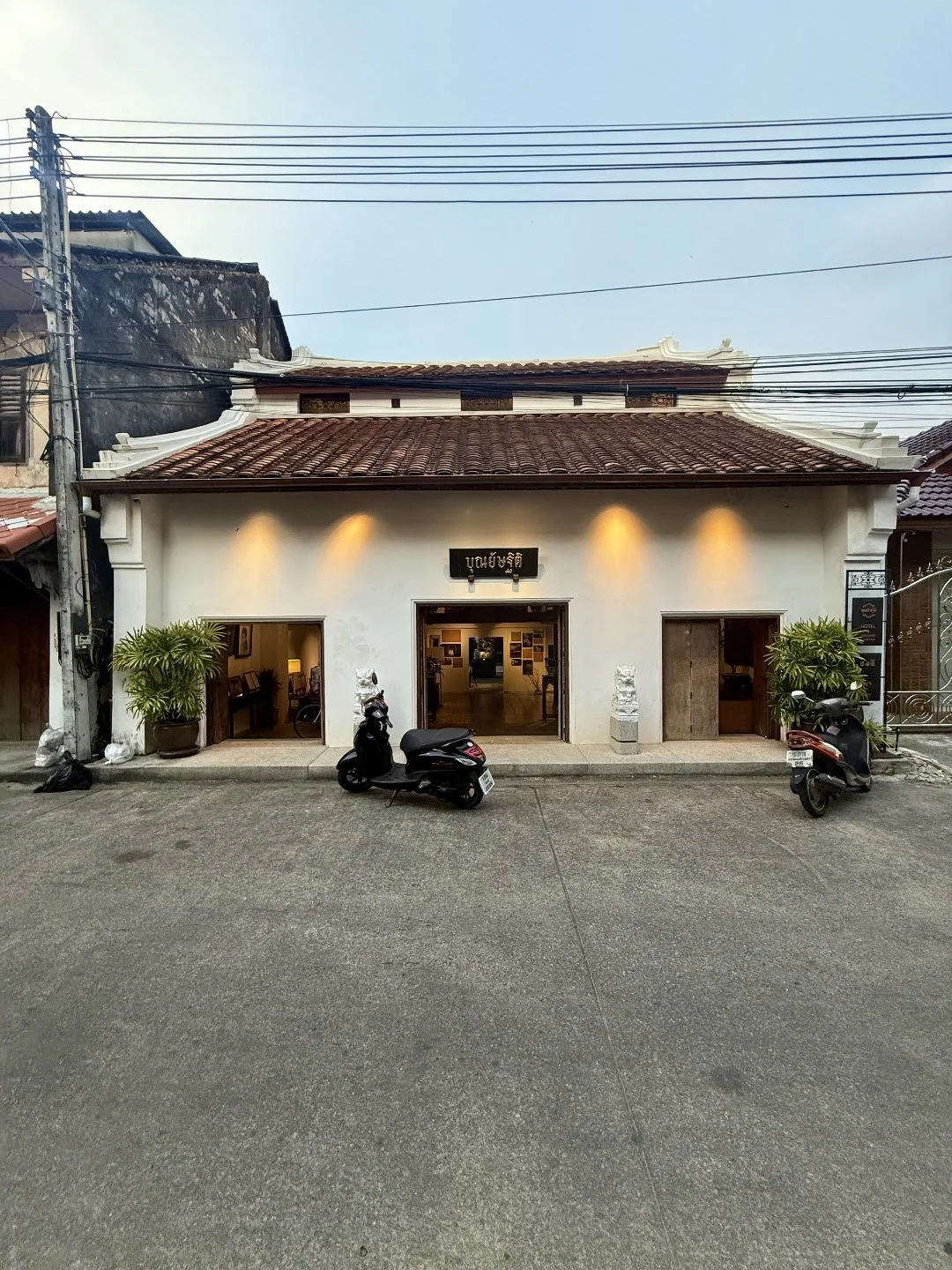
Punyashthiti Villa
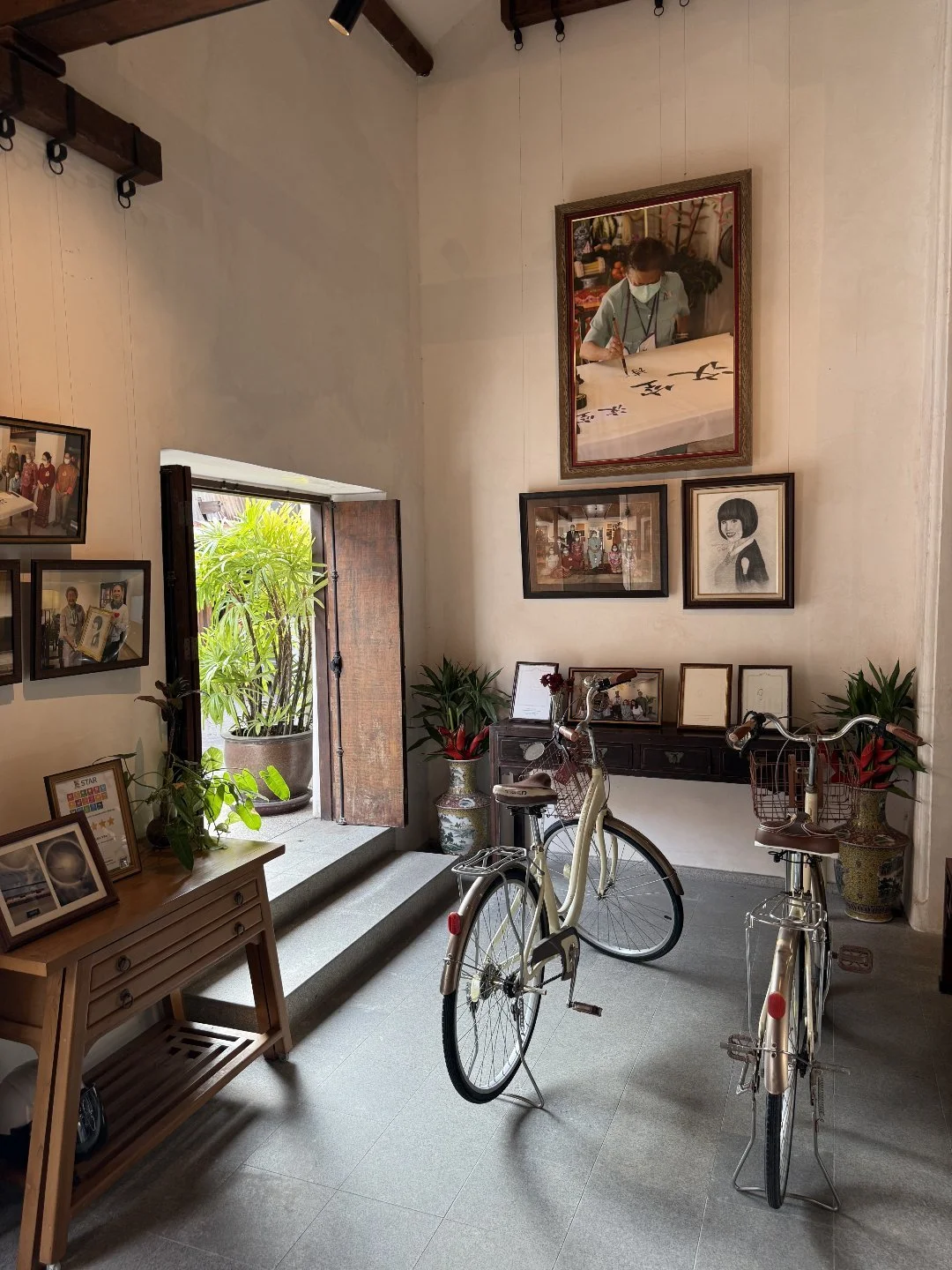
Punyashthiti Villa
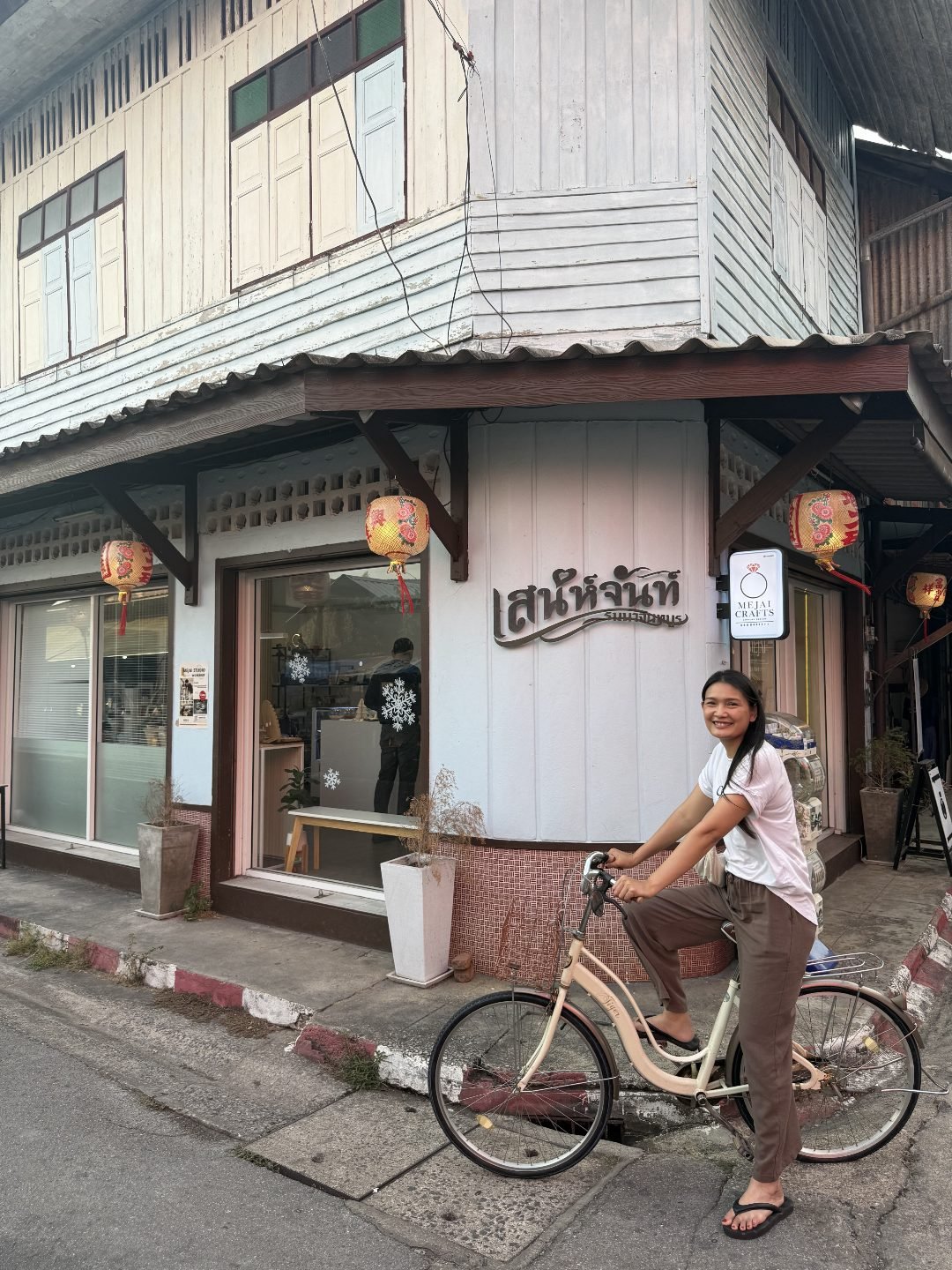
Exploring around Punyashthiti Villa
3. Enjoy Chanthaburi’s Legendary Seafood
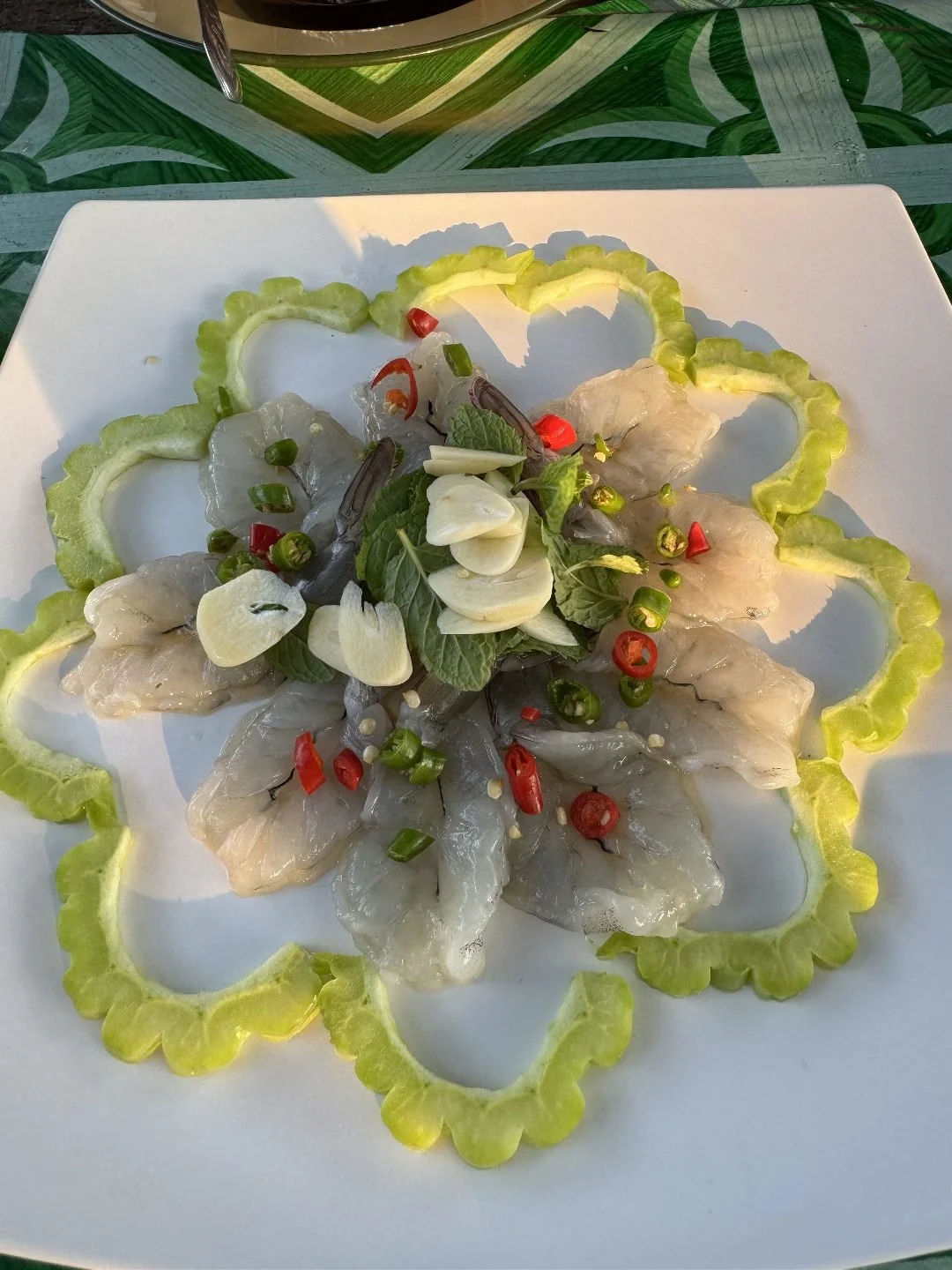
Seafood is almost a religion in Chanthaburi but it’s definitely not the touristy kind. When we go out with friends and family, the table overflows with fresh crab, grilled fish, oysters and spicy salads. There are many fantastic restaurants to choose from, be it in the city or by the coast, so just follow your nose and you’ll be guaranteed a good meal. Look out for regional Thai classics like Pu Ja (deep fried crab meat), Kaeng Som (sour fish soup) and one of our favorites: Spicy Papaya Salad with Raw Blue Crab.
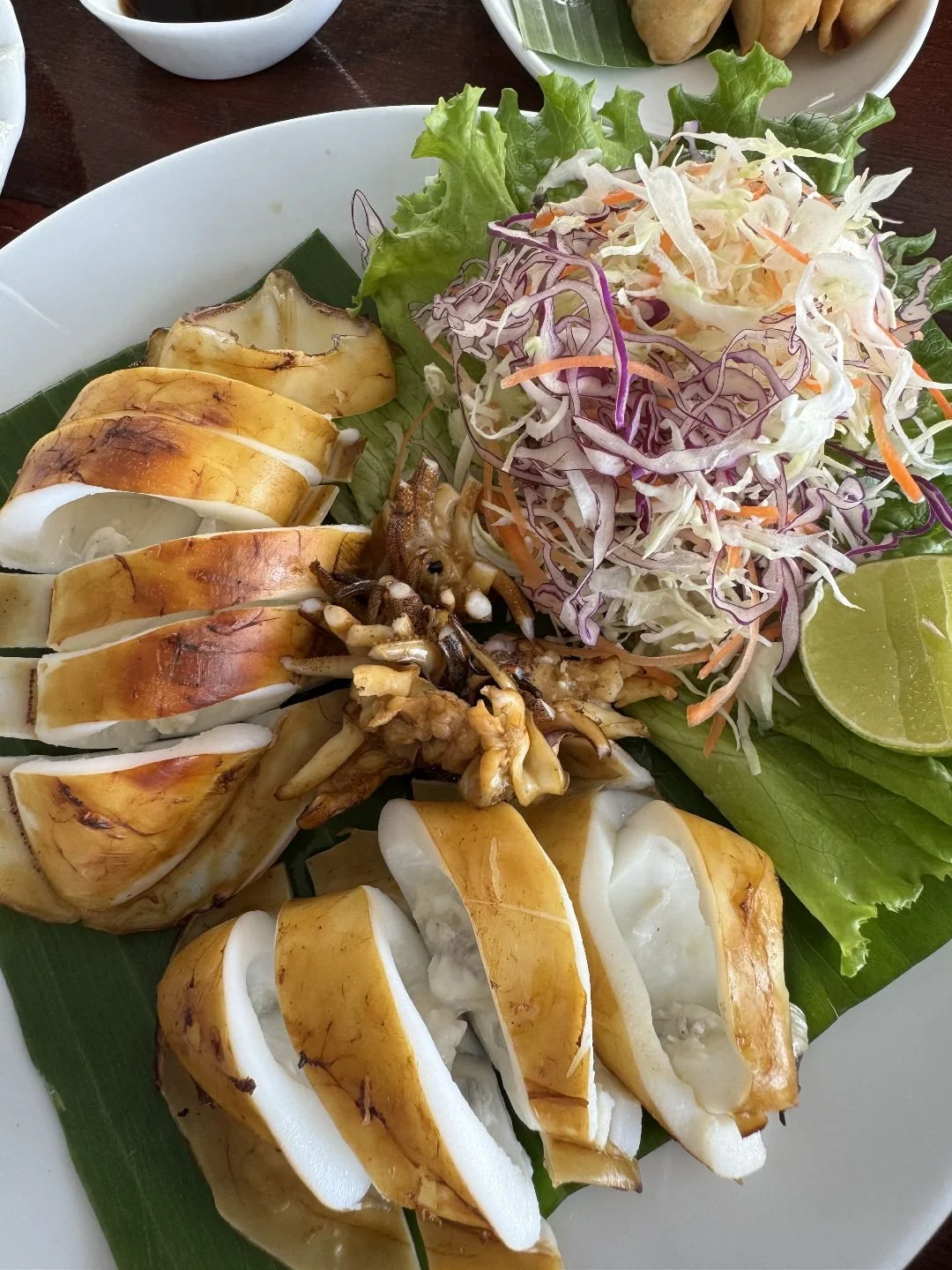
Seafood in Chanthaburi
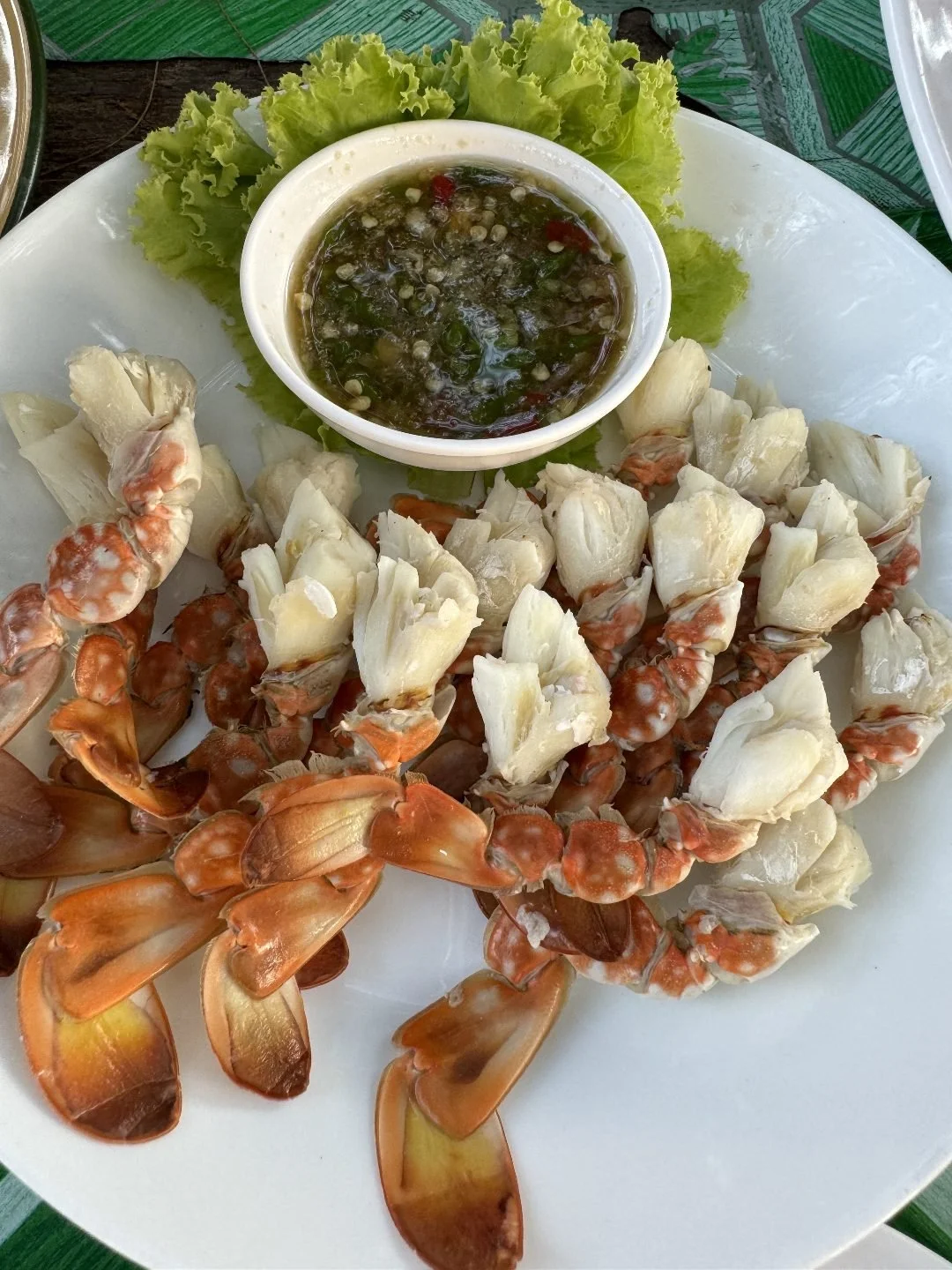
Seafood in Chanthaburi
Seafood in Chanthaburi
4. Admire the Chanthaburi Cathedral
The Cathedral of the Immaculate Conception is one of the most impressive buildings in Thailand. It rises over the river with a striking neo-Gothic design, and grey and white exterior. Head inside and you can see a gem-encrusted statue of the Virgin Mary adorned with hundreds of thousands of sapphires and rubies, many donated by local traders.

Chanthaburi Cathedral
5. Visit the Blue Temple (Wat Pak Nam Khem Nu)
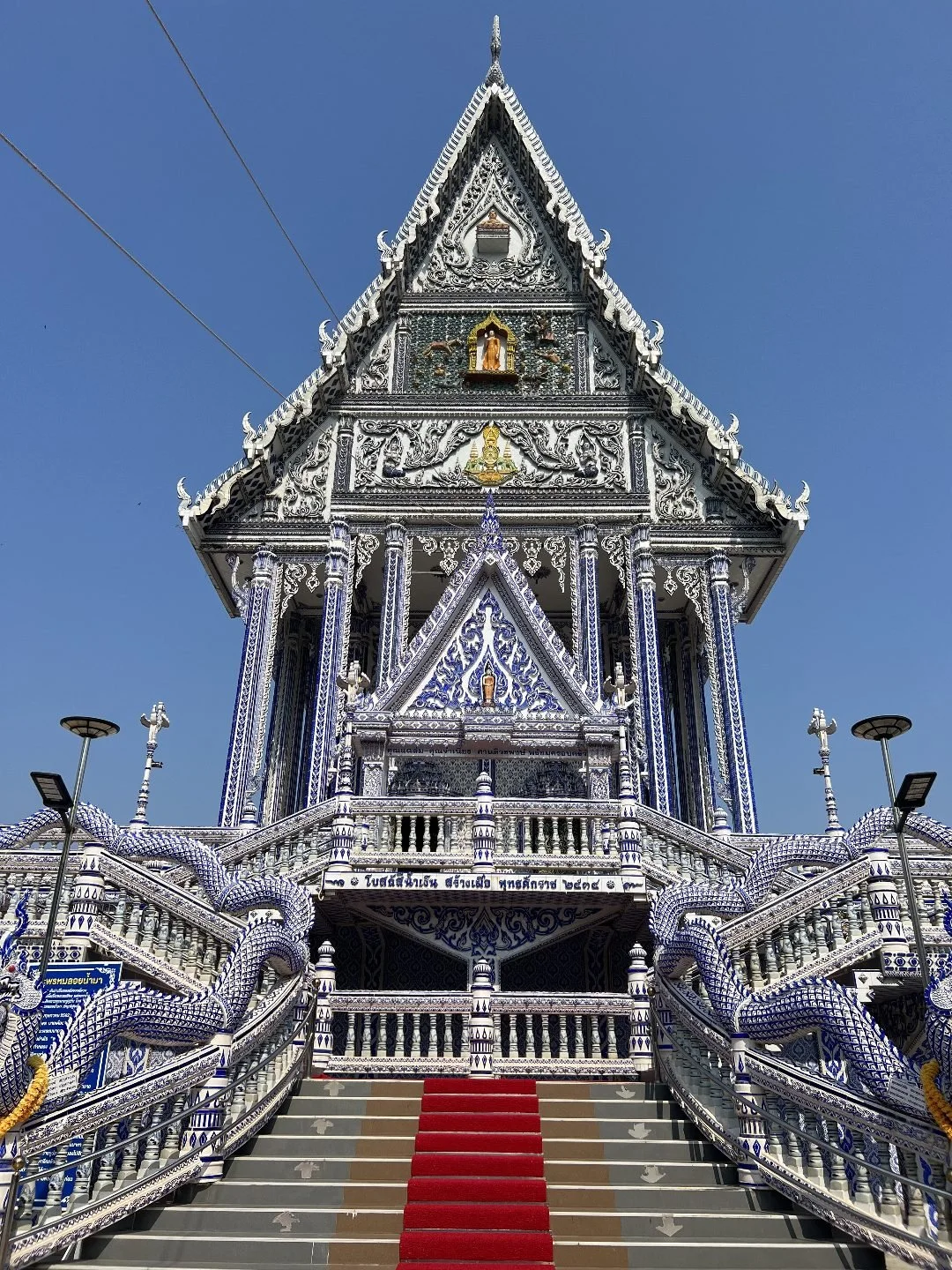
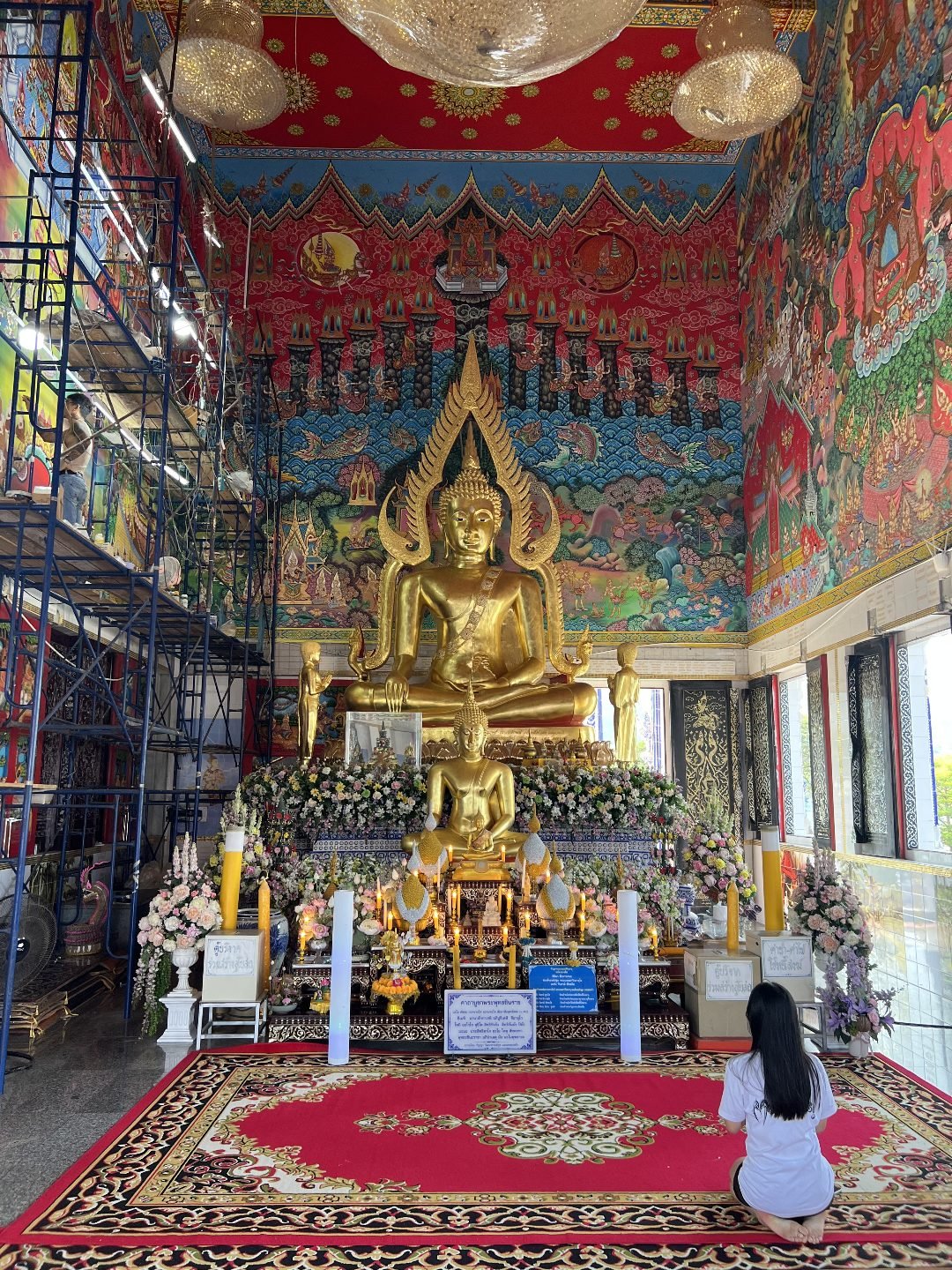
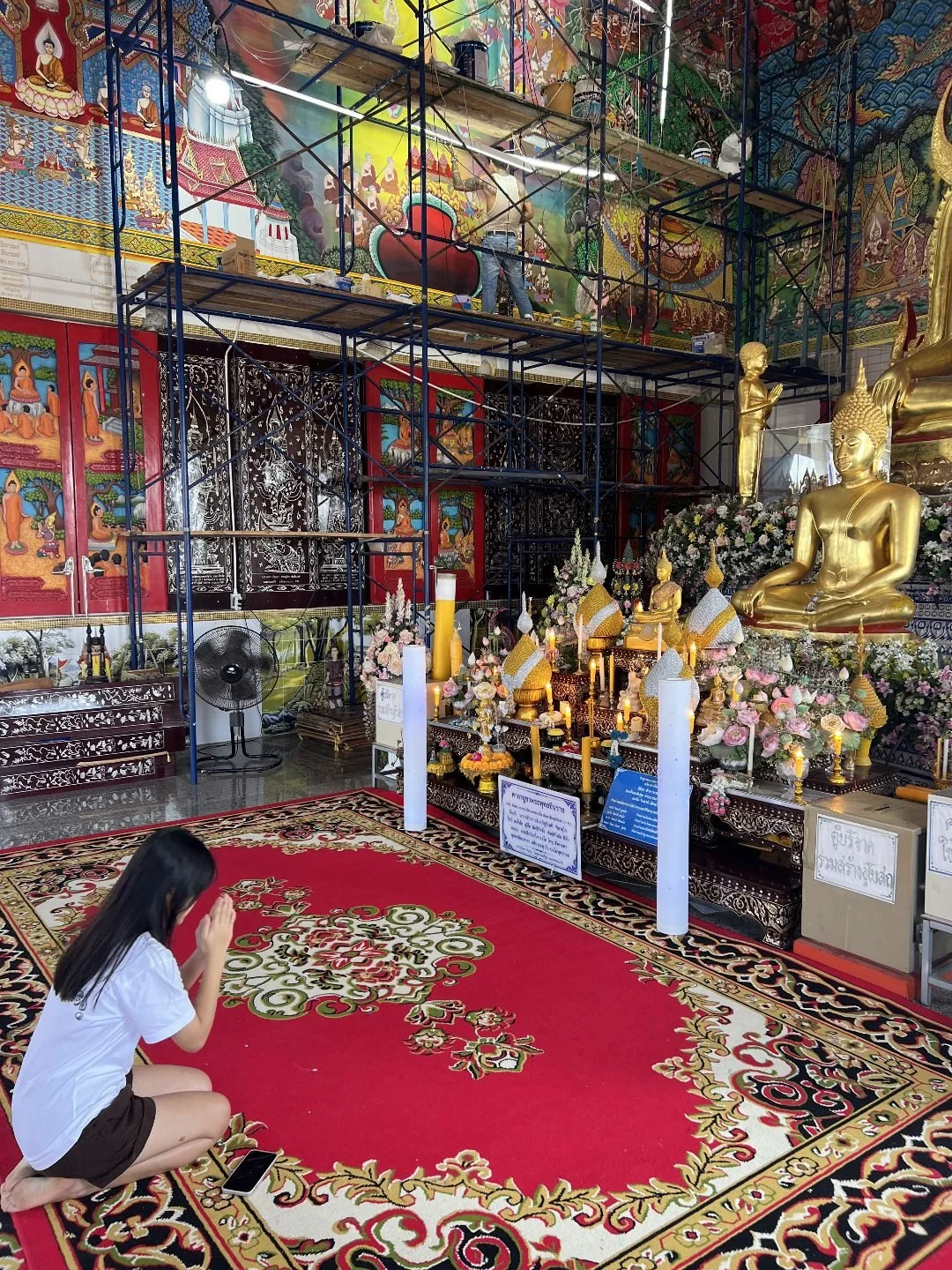
Wat Pak Nam Khem Nu, otherwise known as the Blue Temple, is one of the most visually stunning temples in Thailand. Every pillar, stairway and rooftop detail is decorated with intricate blue and white ceramics, which shine brightly under the mid-day sun. Head inside to see the revered Buddha image called Phra Phuttha Chinnarat, as well as colorful murals depicting important Buddhist stories. On our visit, we saw an artist finishing up some of the murals and the level of detail was astonishing!
Blue Temple
Blue Temple
Blue Temple
6. Explore Namtok Phlio National Park
Namtok Phlio is just a short drive away from the city (20 minutes) where you’ll find a powerful waterfall crashing into emerald pools, surrounded by smooth boulders and lush rainforest. The most fun part, especially for kids, is the “fish spa” pool experience. The water here is full of Soro Brook Carp and you can sit on the rocks as the fish nibble at your feet, or you can feed them with long beans. Unlike many Thai waterfalls, Namtok Phlio flows year-round, although the water is at its strongest in the rainy season.
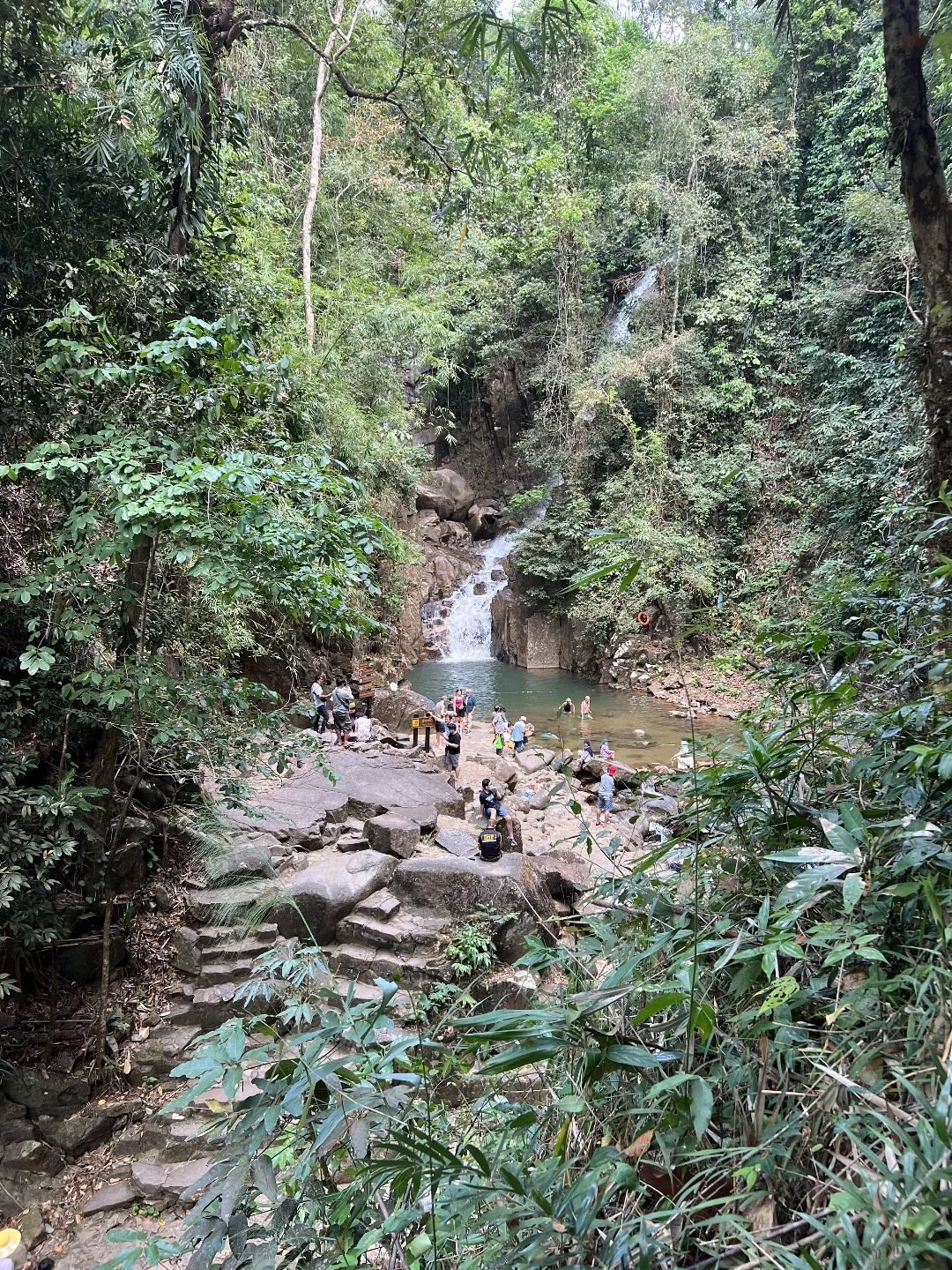
Namtok Phlio National Park
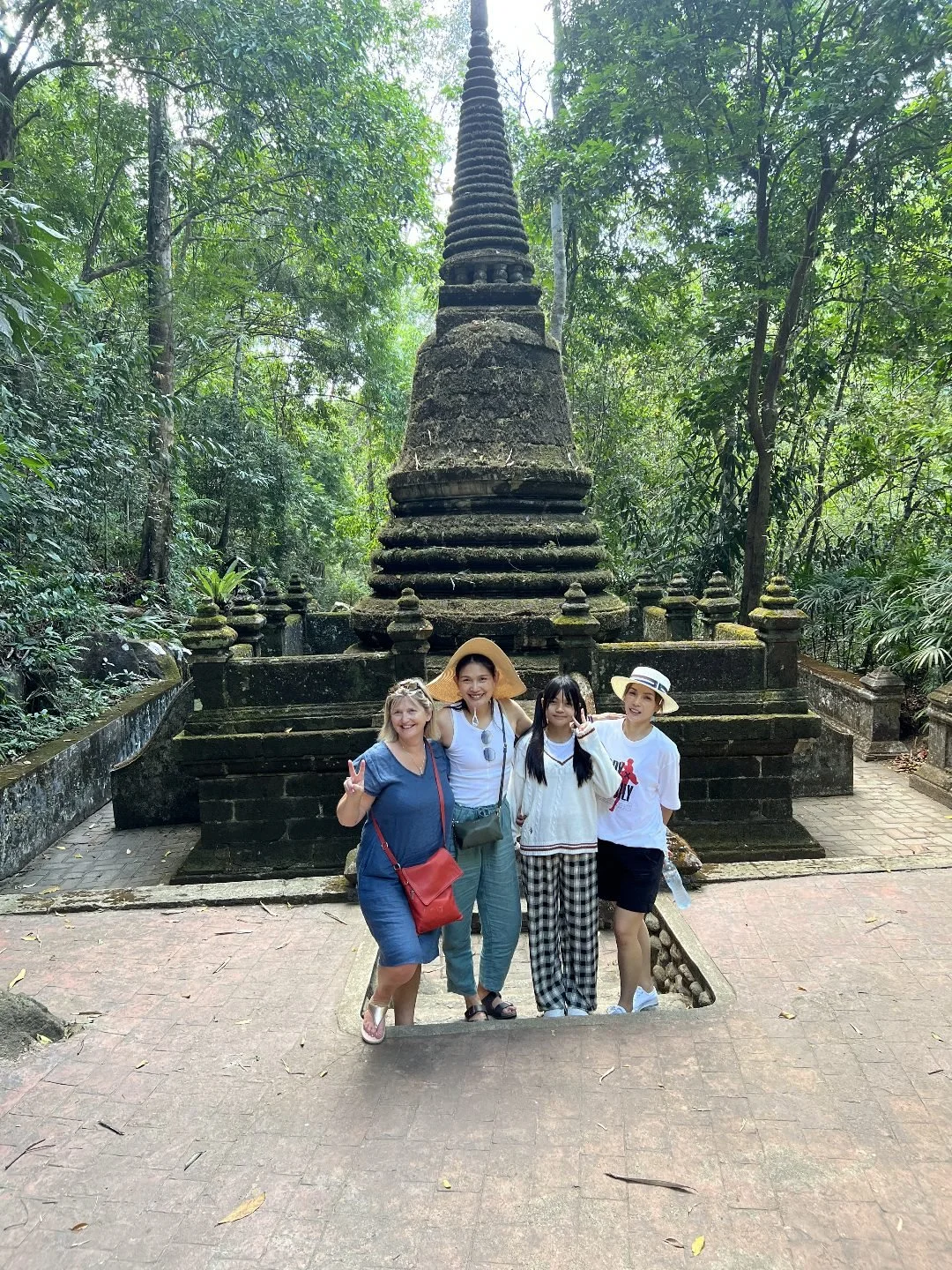
With family at Namtok Phlio National Park
7. Experience the International Gems Market
The International Gems Market is located just around the corner from Chanthaboon, and is busiest from Friday to Sunday. Traders from around the world come here for sapphires, rubies and more. Buyers sit at tables while sellers negotiate prices over calculators and weighing scales. Just remember that this is a wholesale market, so it’s best to shop at reputable retailers if you’re looking to buy gems. That being said, when we visited, we still picked up some bracelets, trinkets and enjoyed a spot of street food.
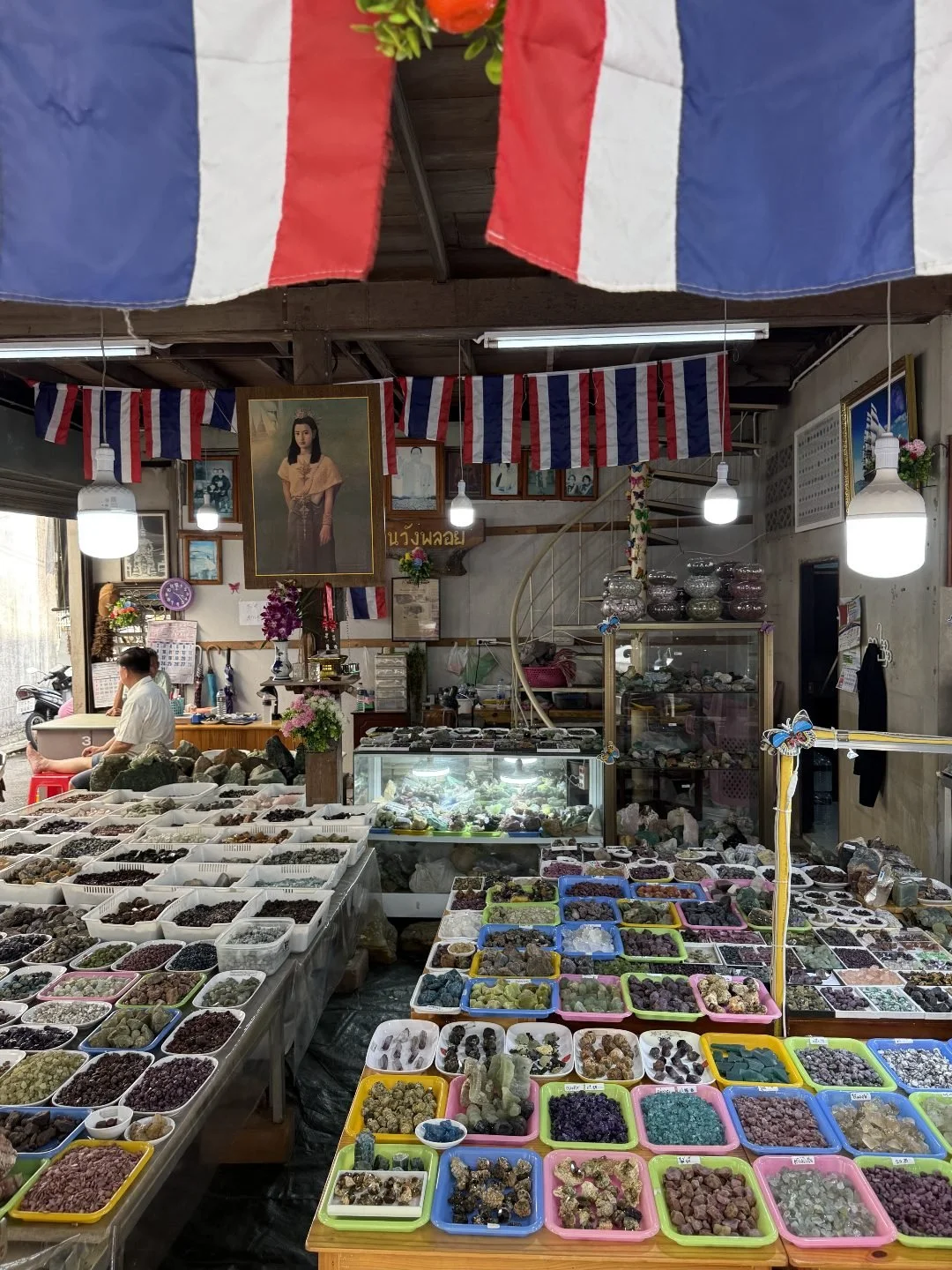
International Gems Market
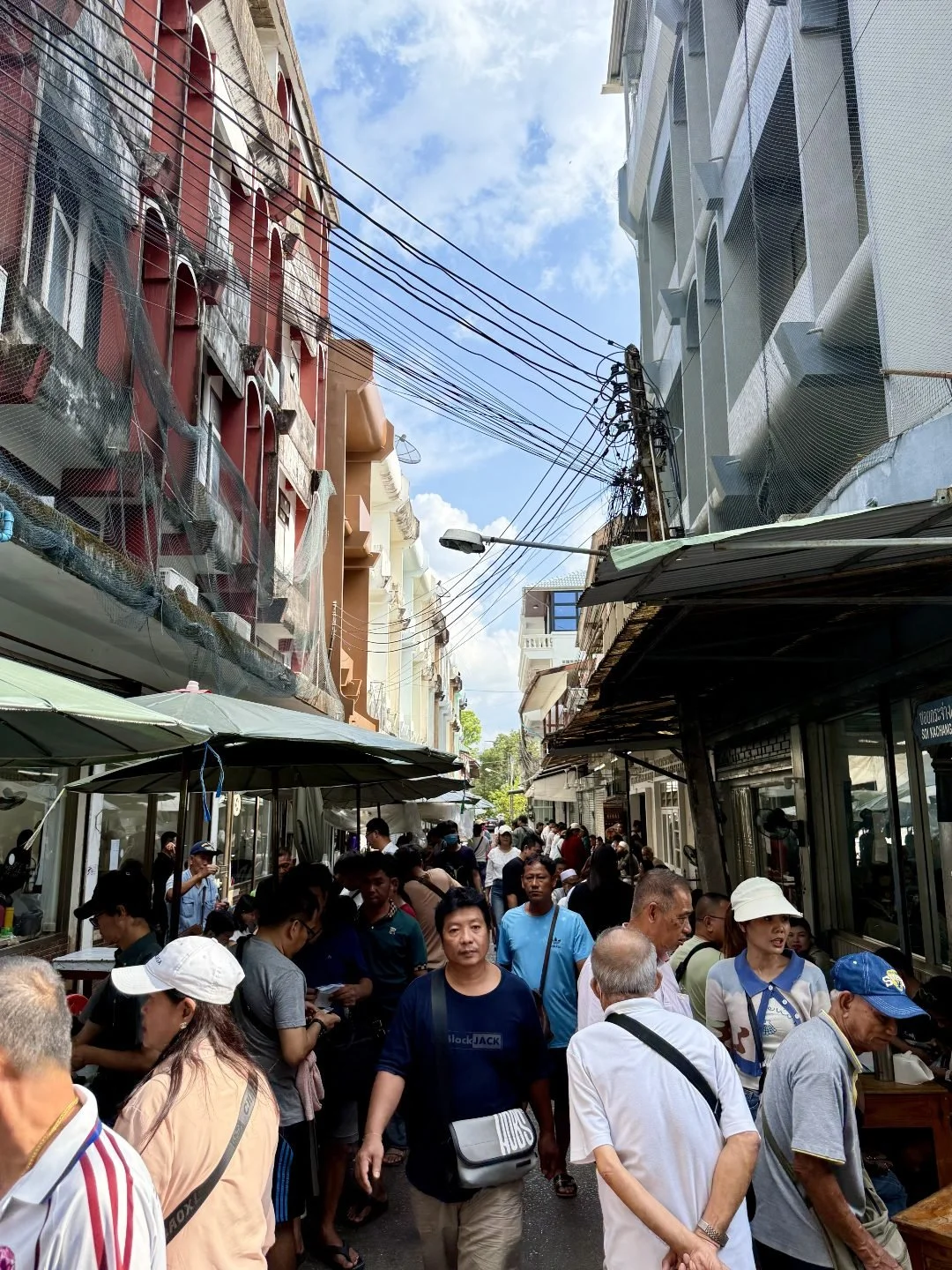
International Gems Market
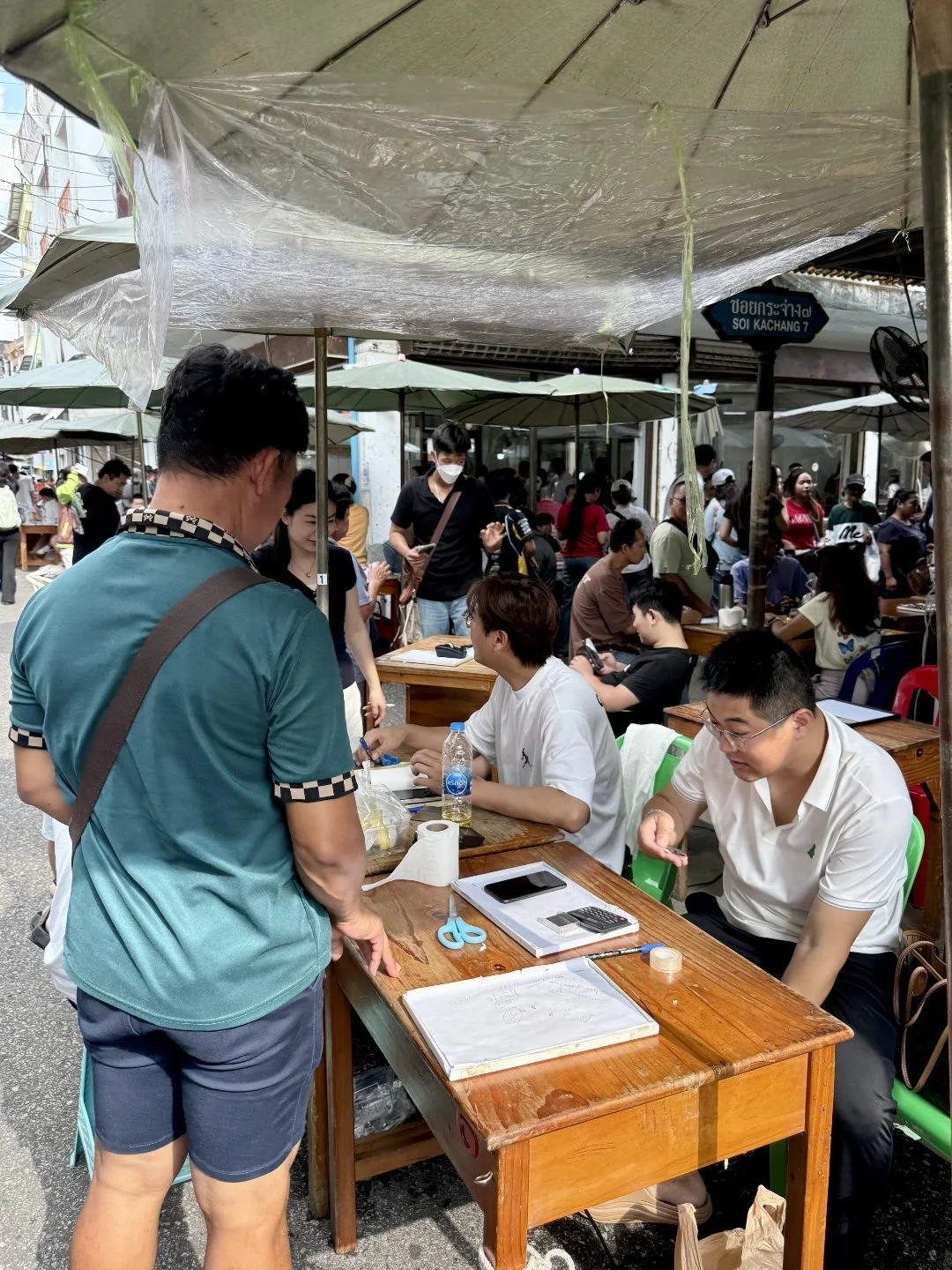
International Gems Market
8. Shop & Eat at Central Chanthaburi Mall
We normally wouldn’t recommend visiting a shopping mall, but Central Chanthaburi is somehow different. If we’re hungry and want to escape the heat, we often come here to have some Thai food in the comfort of air-conditioning. We actually prefer to shop here than in Bangkok, just because it’s smaller, calmer and easier to get around. Sometimes there’s fruit-themed events, gemstone exhibitions or weekend shows taking place in the Chanthaburi Hall as well, which can be quite interesting.
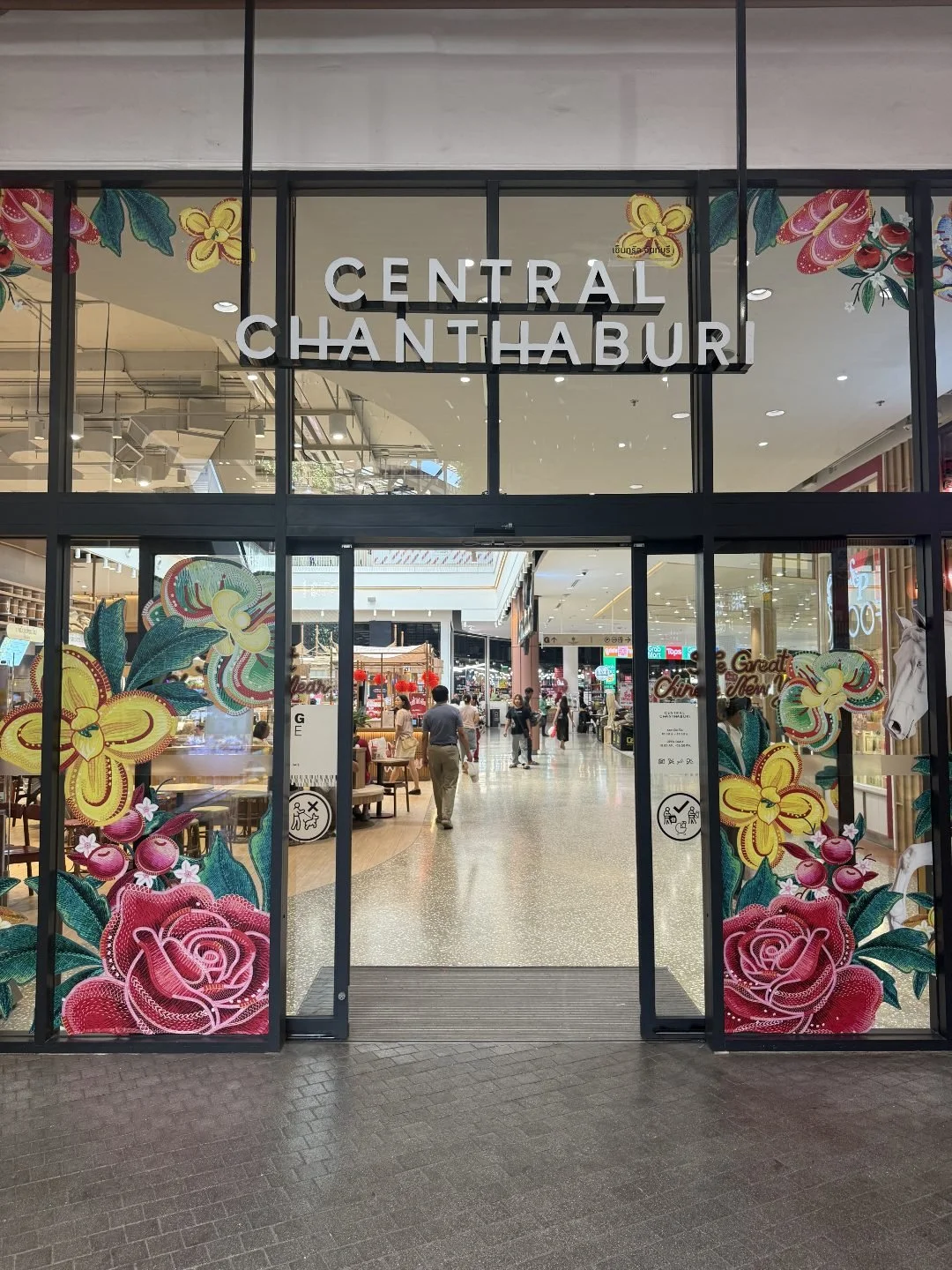
Central Chanthaburi
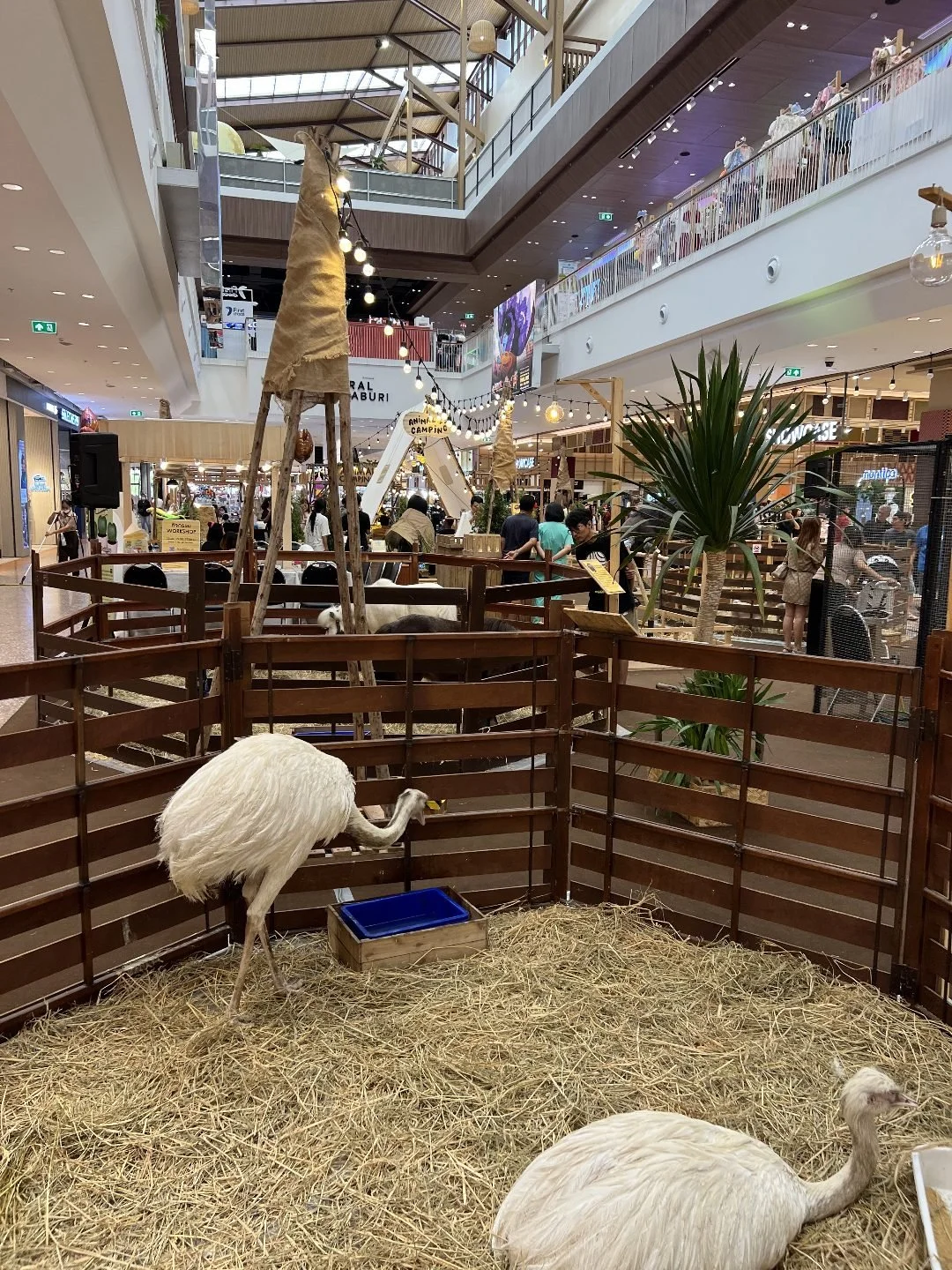
Animal exhibitions at Central Chanthaburi
9. Get Lost in the Local Streets on Scooters
Hooning around the weathered streets of Chanthaburi is such a thrill - especially around the edges of the Gems Market and Chanthaboon Waterfront area. It feels like you’re traveling somewhere totally unknown and off-the-beaten-path. Pare is always taking us to somewhere new around town - whether to a noodle restaurant by the river or a hidden temple in the outskirts. One time, we needed to go to 7-Eleven to pick up some things and we passed a stunning gold and green temple out of nowhere! You just never know what you’ll stumble across in Chanthaburi.
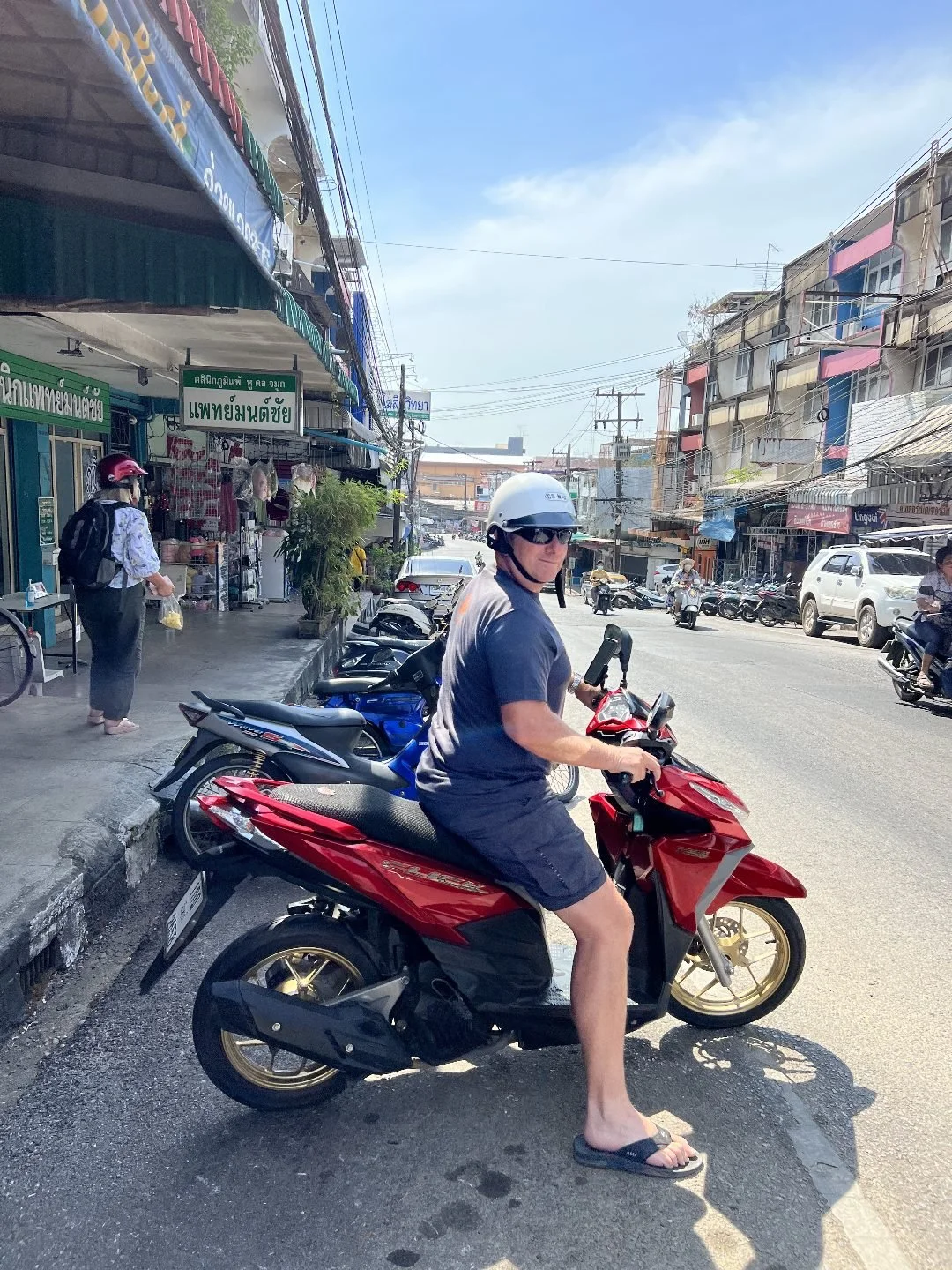
Cam’s dad in Chanthaburi
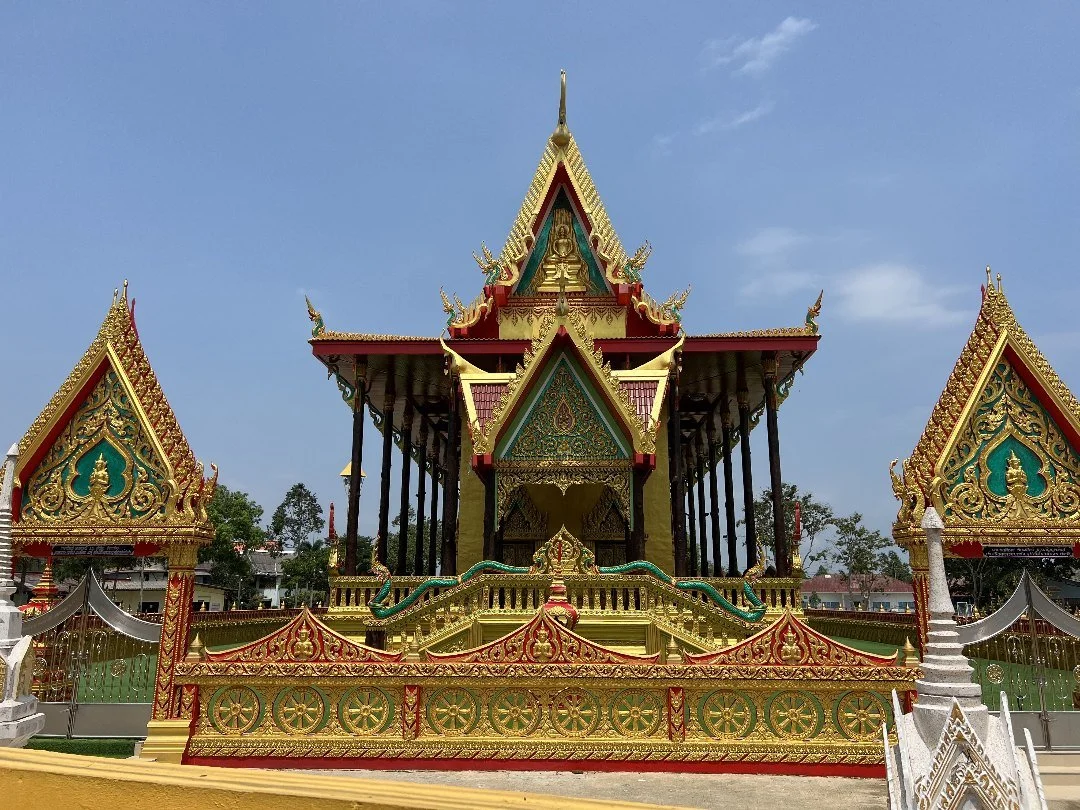
Hidden temple we found on the way to 7-11
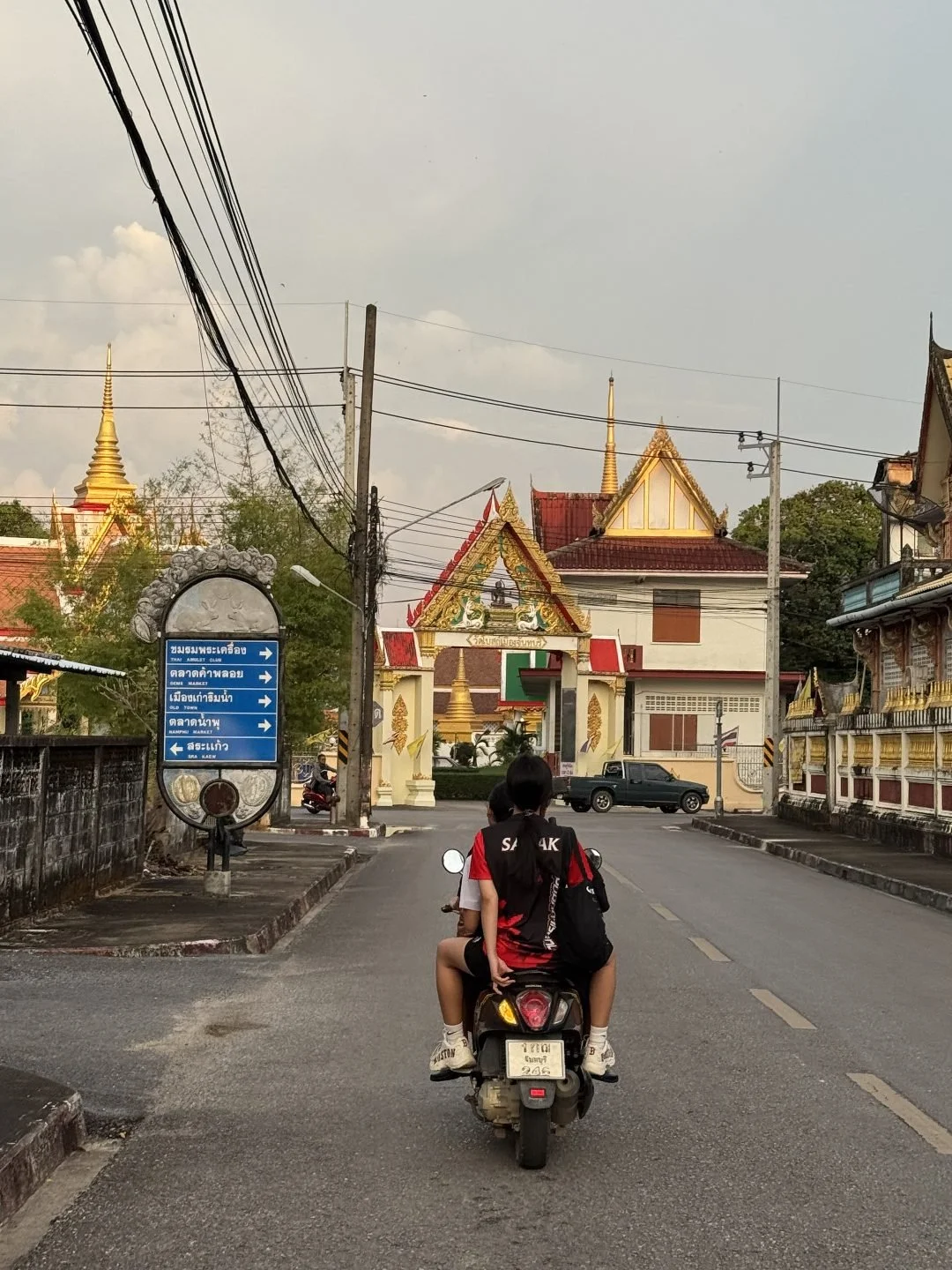
Followng Pare around Chanthaburi
10. Try Durian (Even if You Think You Hate it)
Kat has loved durian her entire life but it took Cam a while to warm up to the fragrant fruit. He visited during the April harvest one year, and tried a creamy and sweet variety (Monthong) that finally turned his opinion around. Durian just tastes better in Chanthaburi, it’s the world’s largest producer after all, with the famous Fruit Festival held in late May to early June every year. But, if we’re to be honest, we prefer durian chips. Unlike the fruit, they don’t smell and are super tasty. Just be careful drinking too much alcohol with durian as it can lead to nausea and severe hangovers!
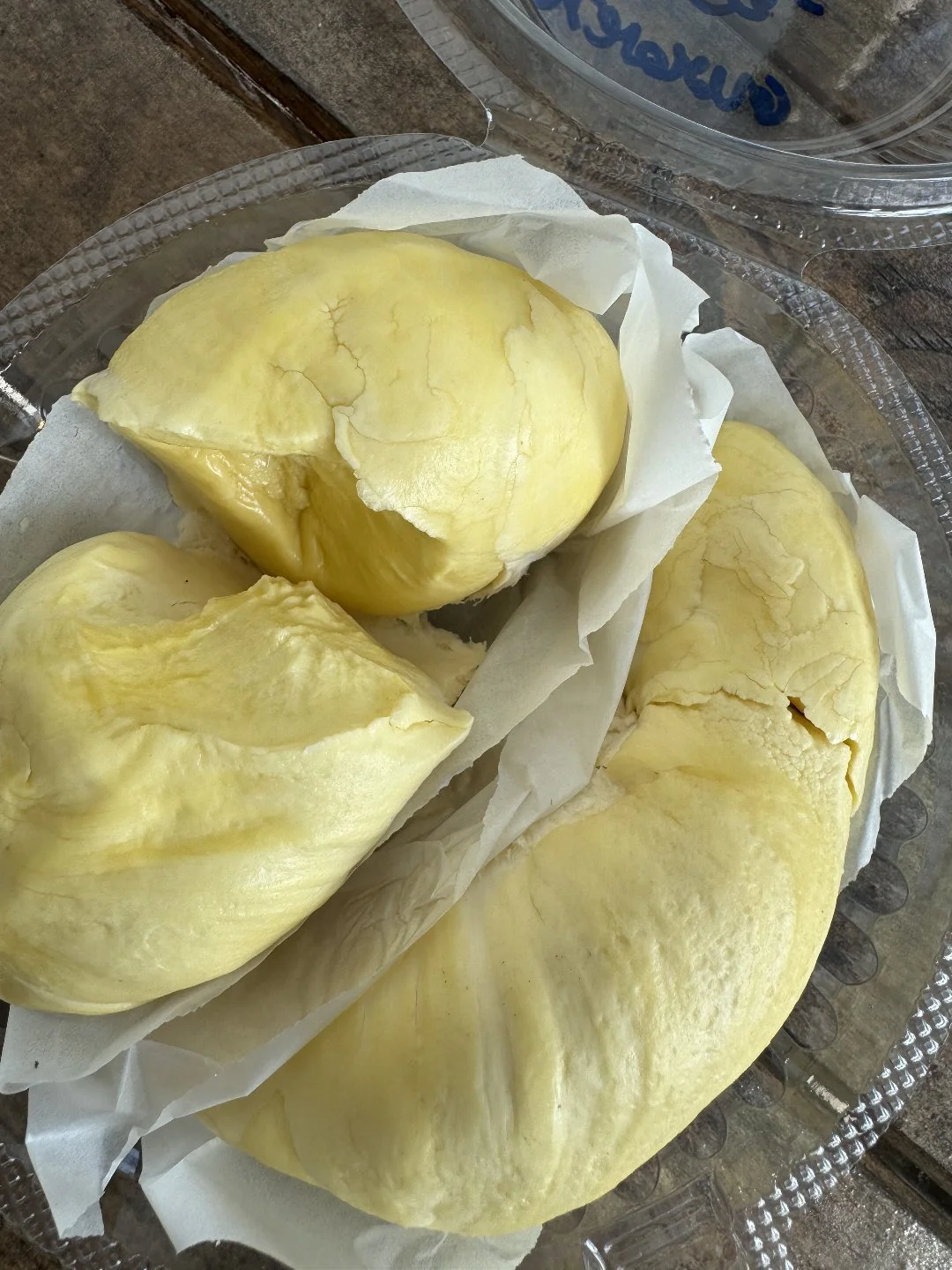
Durian
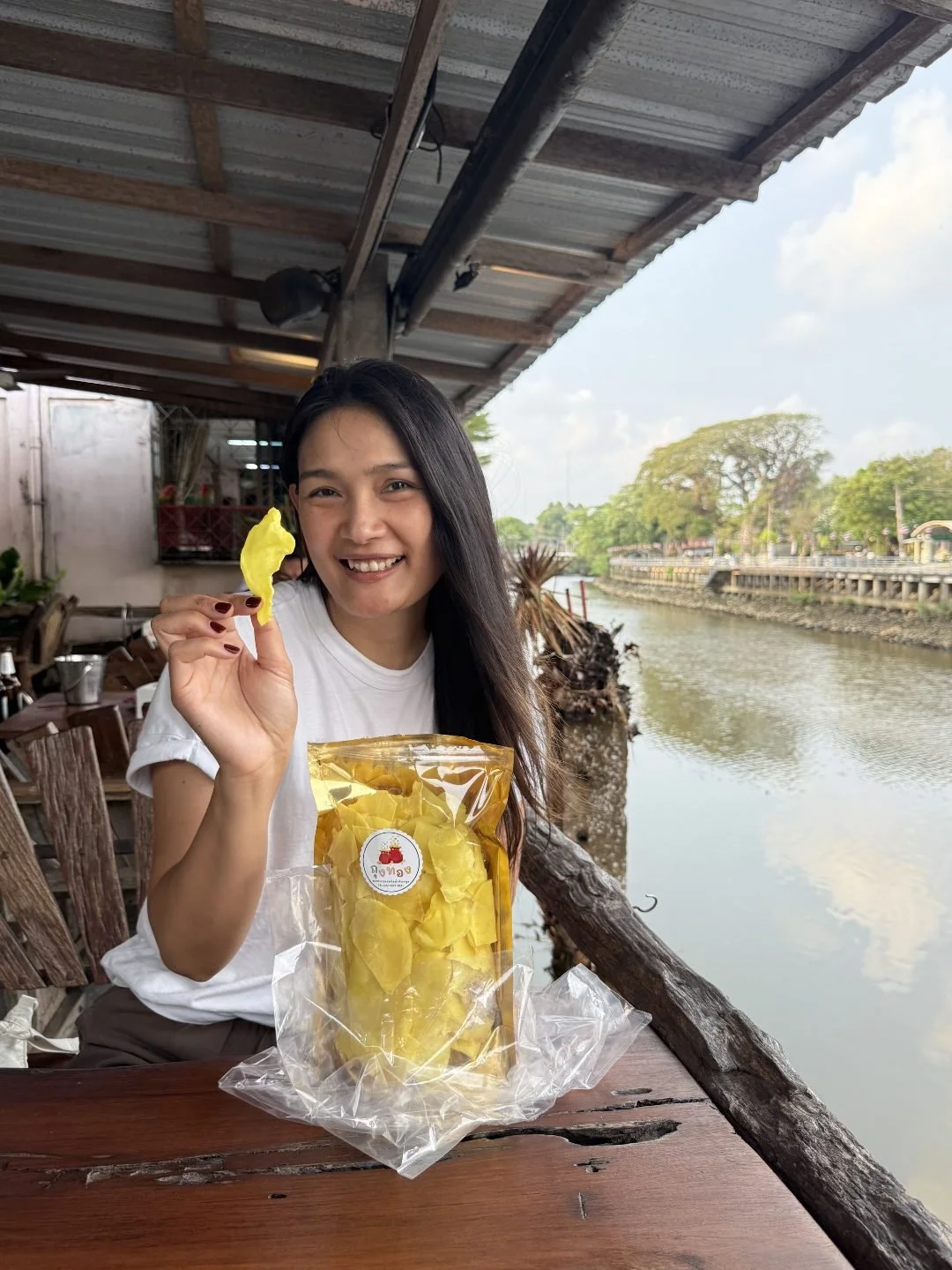
Durian chips
11. Have Dinner at Chantorn Pochana
Sticking with the theme of durian, one must-try dish in Chanthaburi is the Massaman Durian Curry served at Chantorn Pochana. Located in the historic riverside area, this neighborly restaurant is famous for incorporating regional fruits and local herbs into savory dishes. We came here for dinner recently and ordered the Massaman Durian Curry, Sen Chan Pad Pu (stir-fried noodles with crispy crab) and smashed shrimp mixed with chilli, lemongrass and shallots served with vegetables. All of the food was delicious, extremely flavorful and reasonably well priced.
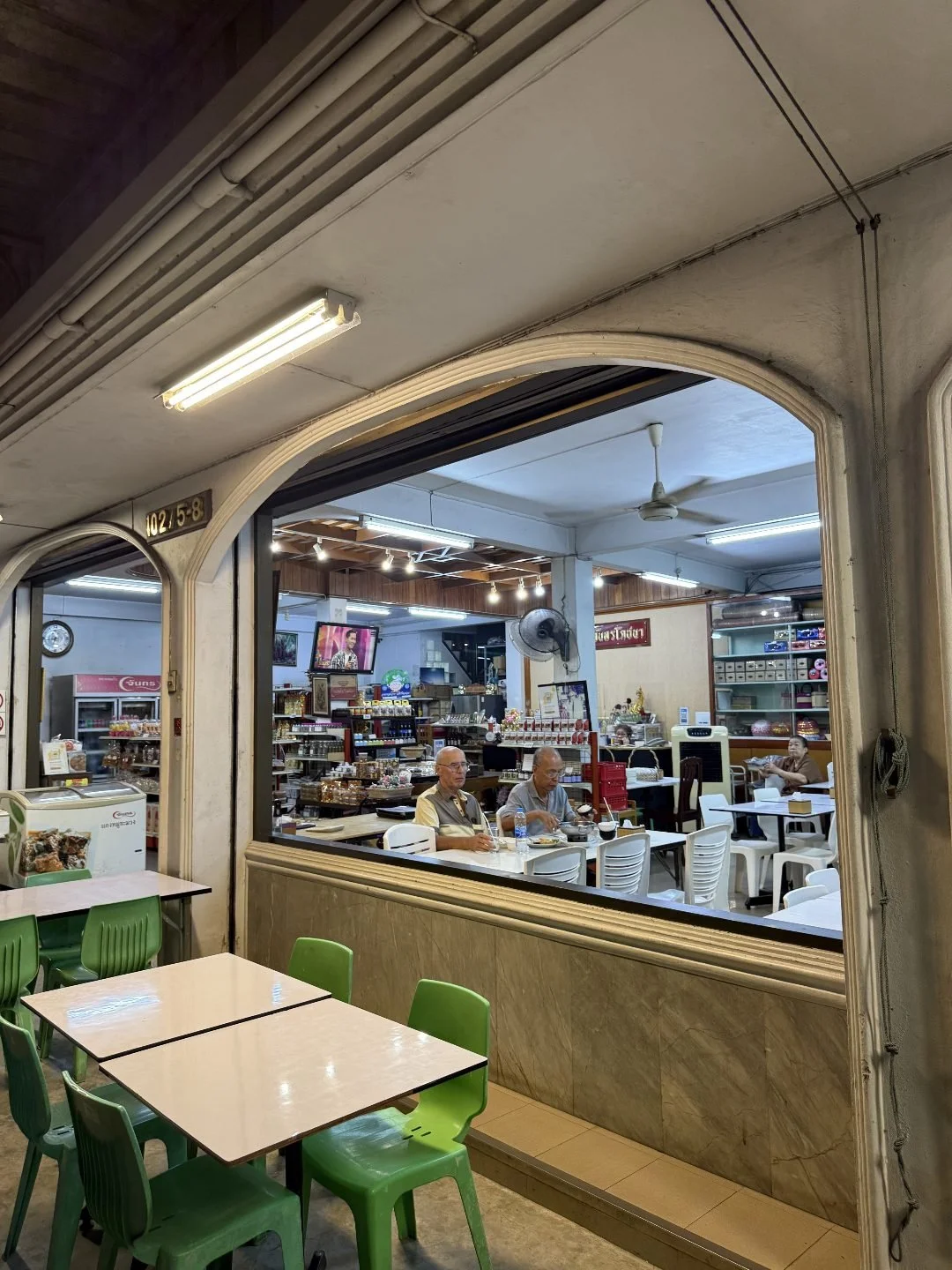
Chantorn Pochana
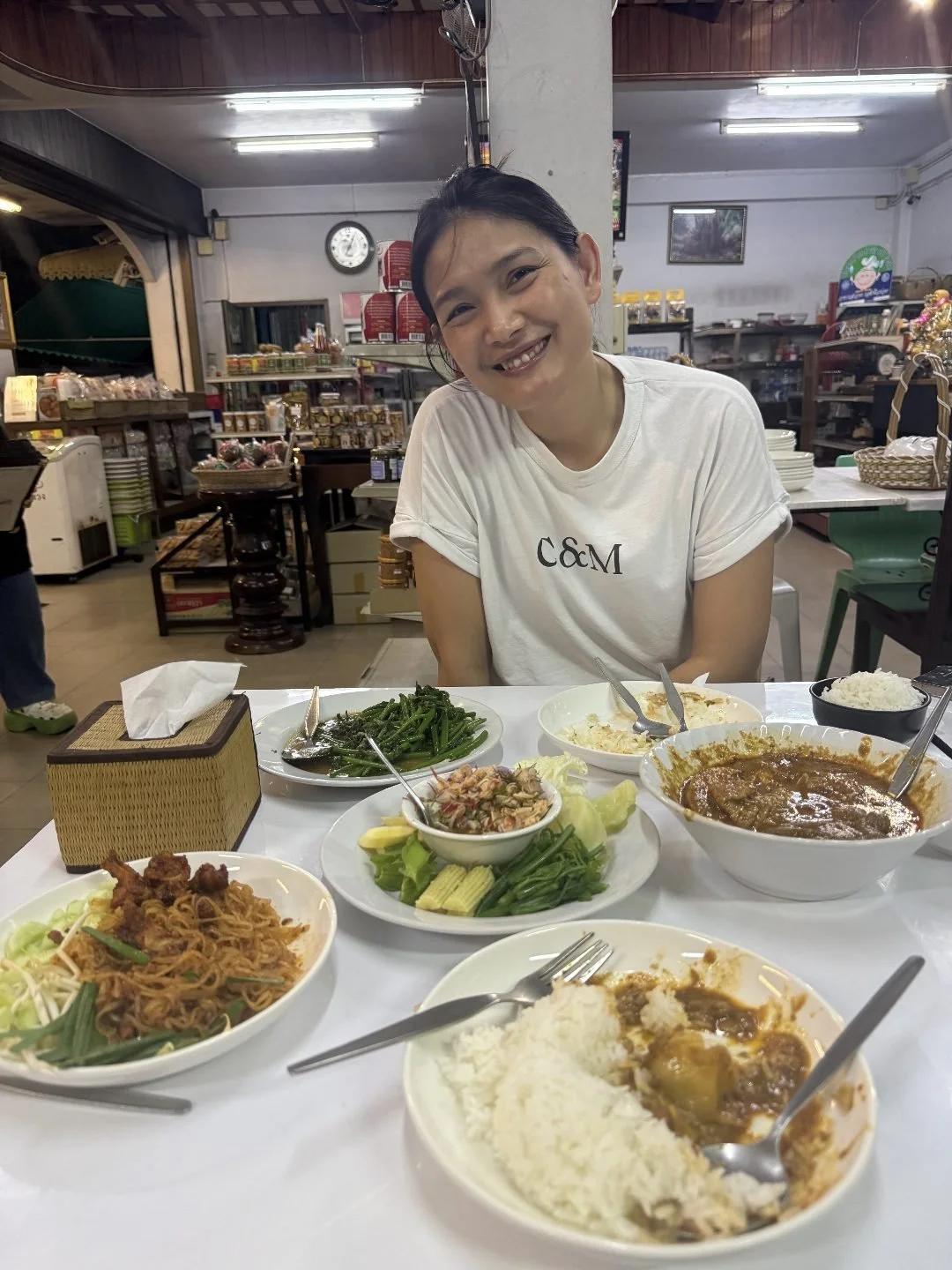
Chantorn Pochana
12. Eat Street Food at Centric Market Plaza
The Centric Market Plaza is a bustling local market offering all sorts of goodies: fresh sushi, Thai desserts, regional fruit and snacks, and lemon drinks, as well as cheap clothes and fashion items. The vibe throughout the indoor and outdoor areas is very family-friendly - it’s a great place to take your kids for some street food if you’re visiting Chanthaburi as a family.
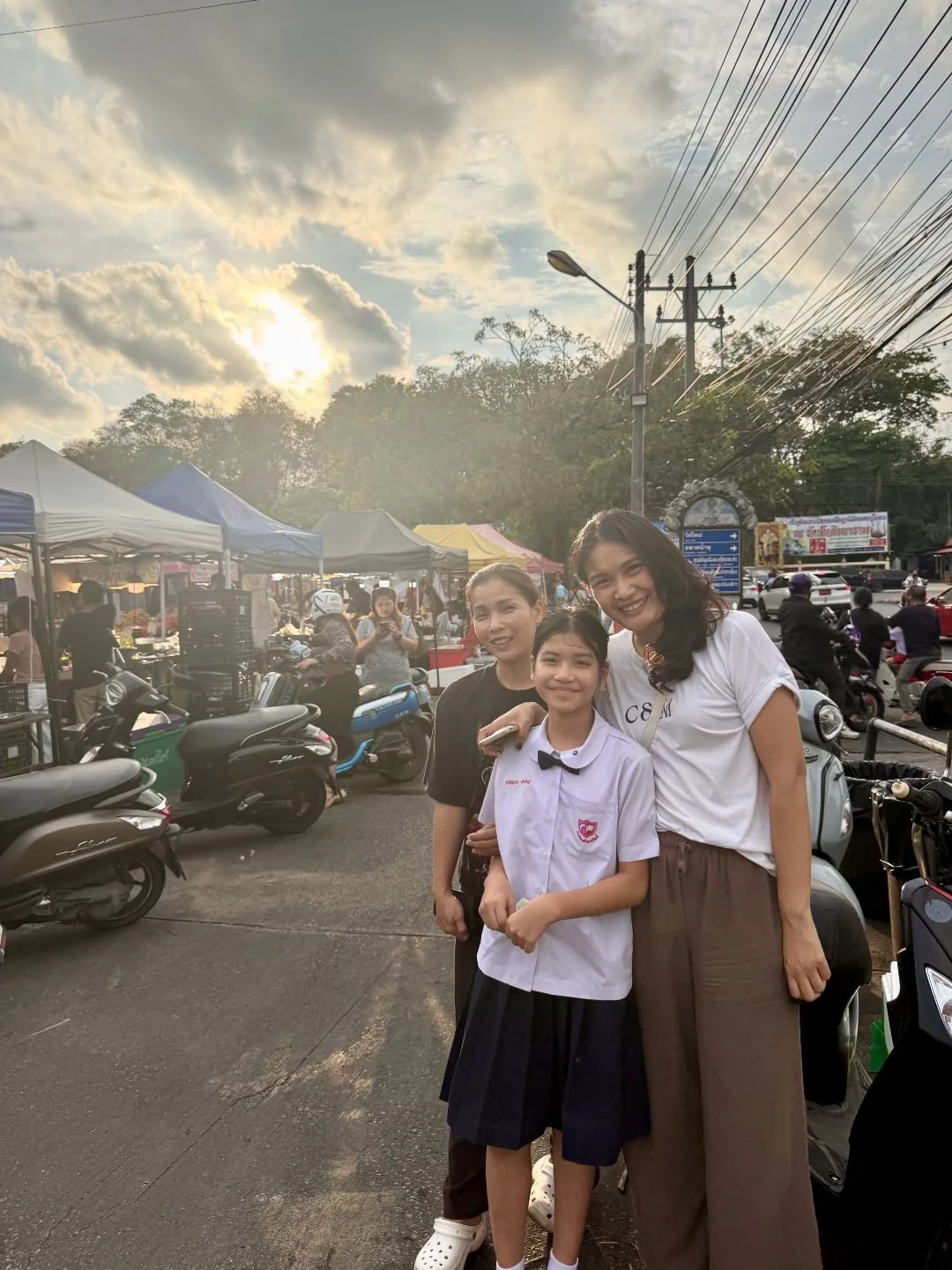
With family at the Centric Market Plaza
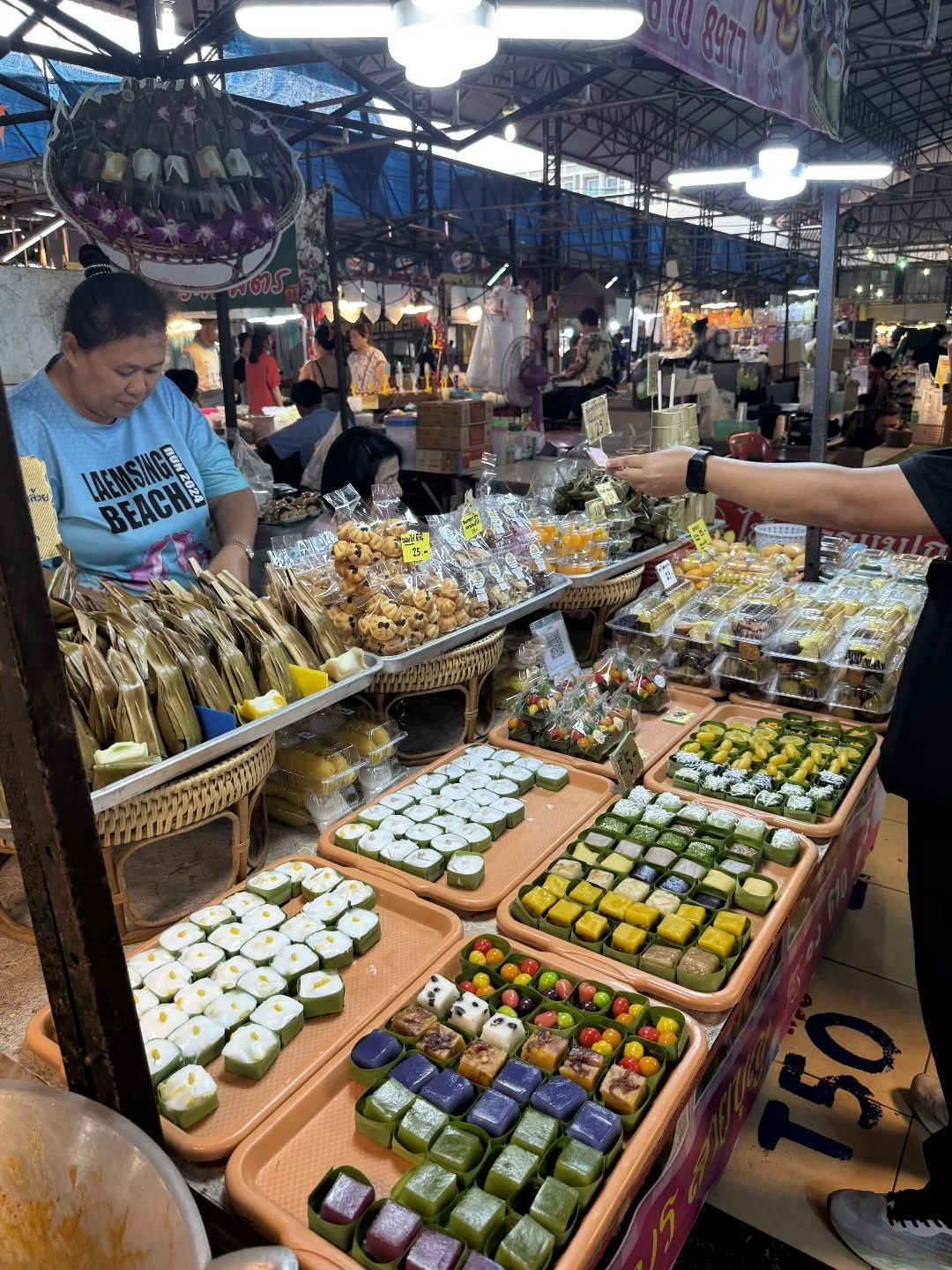
Centric Market Plaza
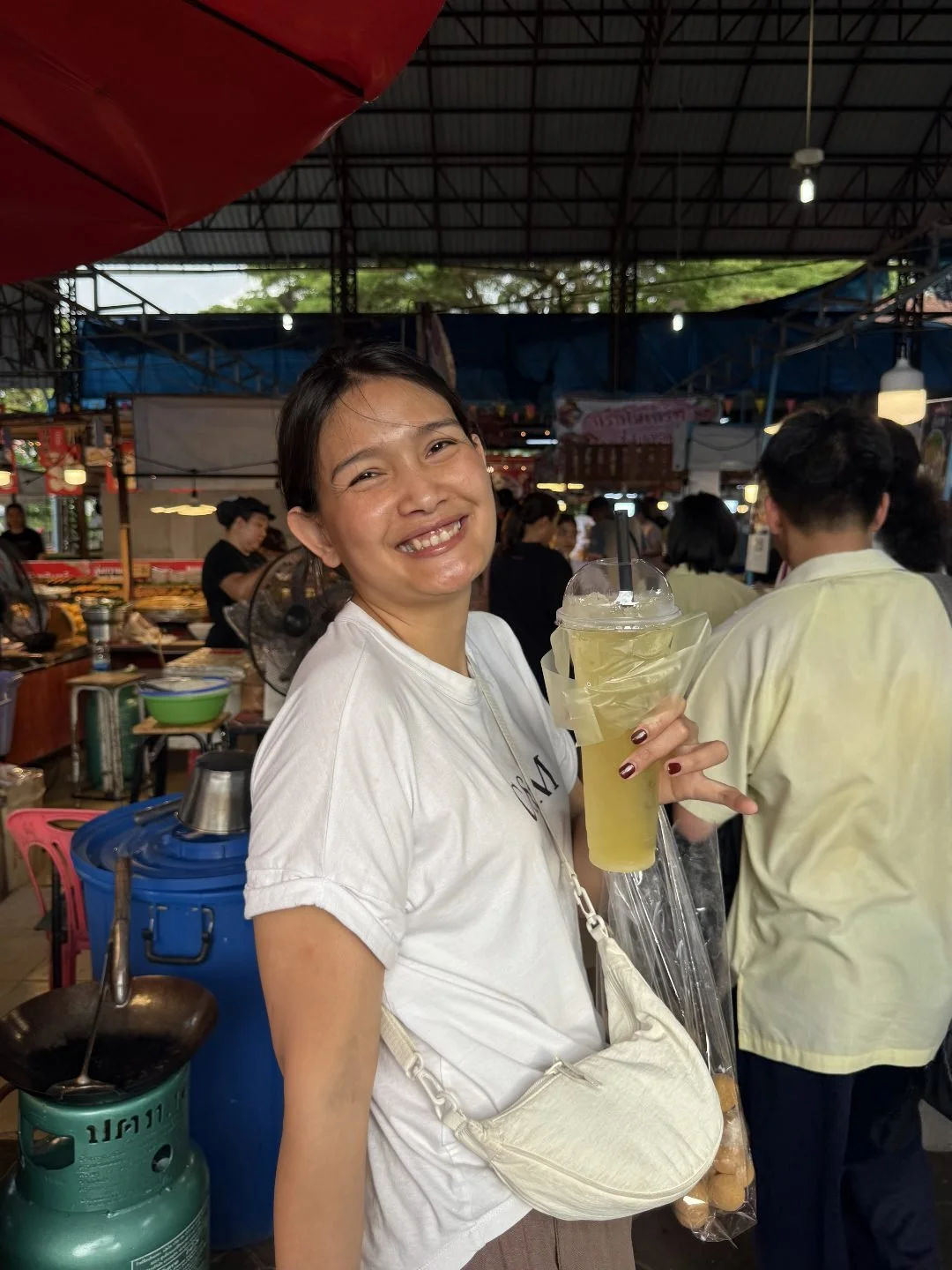
Kat at Centric Market Plaza
13. Start the Day at Khombang Morning Market
The Khombang Morning Market, situated on the outskirts of Chanthaburi, is an old-style market in the middle of a cozy neighborhood full of traditional Thai wooden houses. Pare works at a street food stall here, selling fresh spring rolls to the locals for their breakfast or lunch. We decided to come here one morning to help her set up shop and enjoyed engaging with the locals, selling a few spring rolls ourselves and soaking up a different side to the city. If you’d be interested in checking it out, just remember that the market opens from 5:30 AM to 9:30 AM everyday.
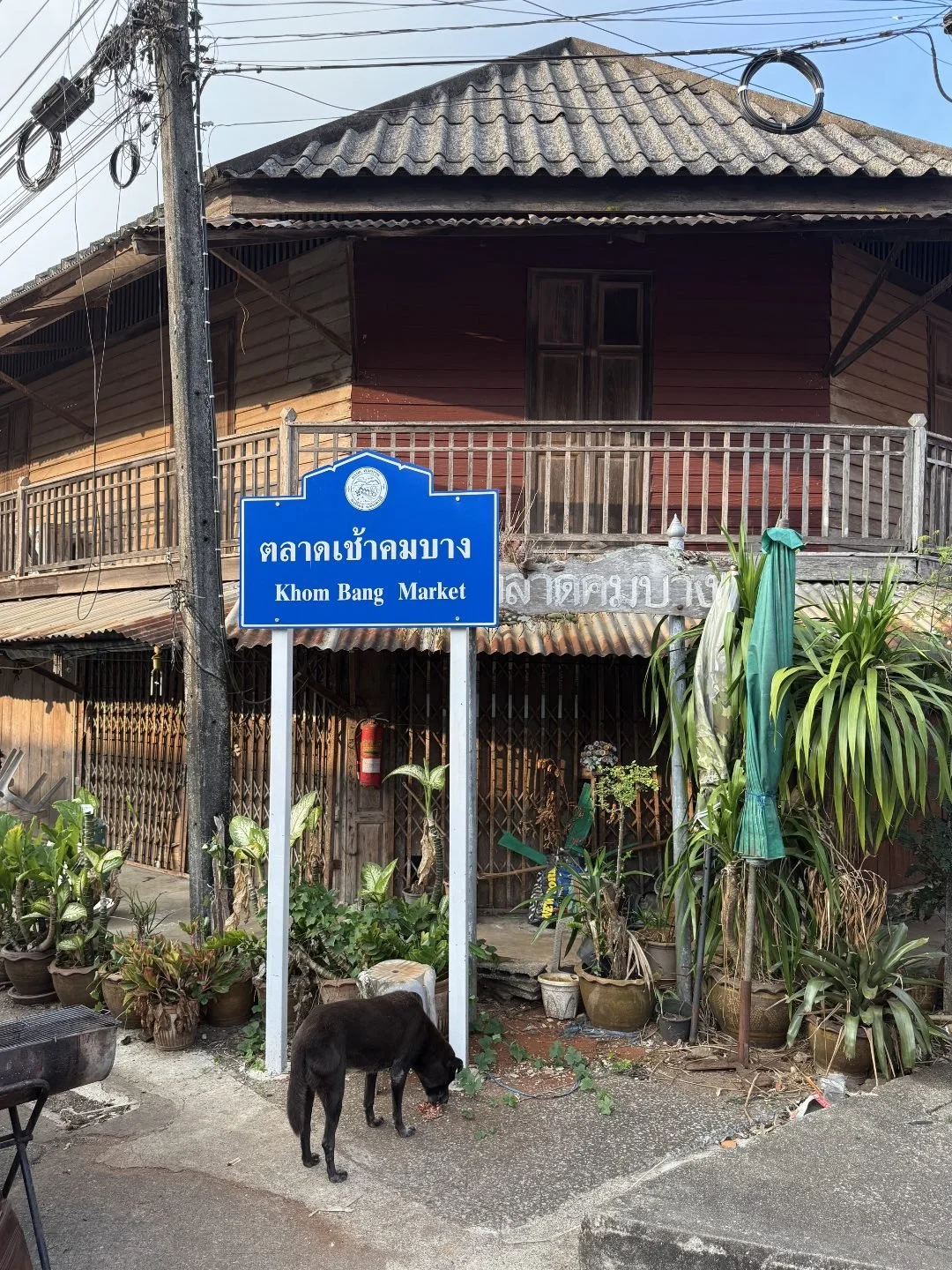
Khombang Morning Market
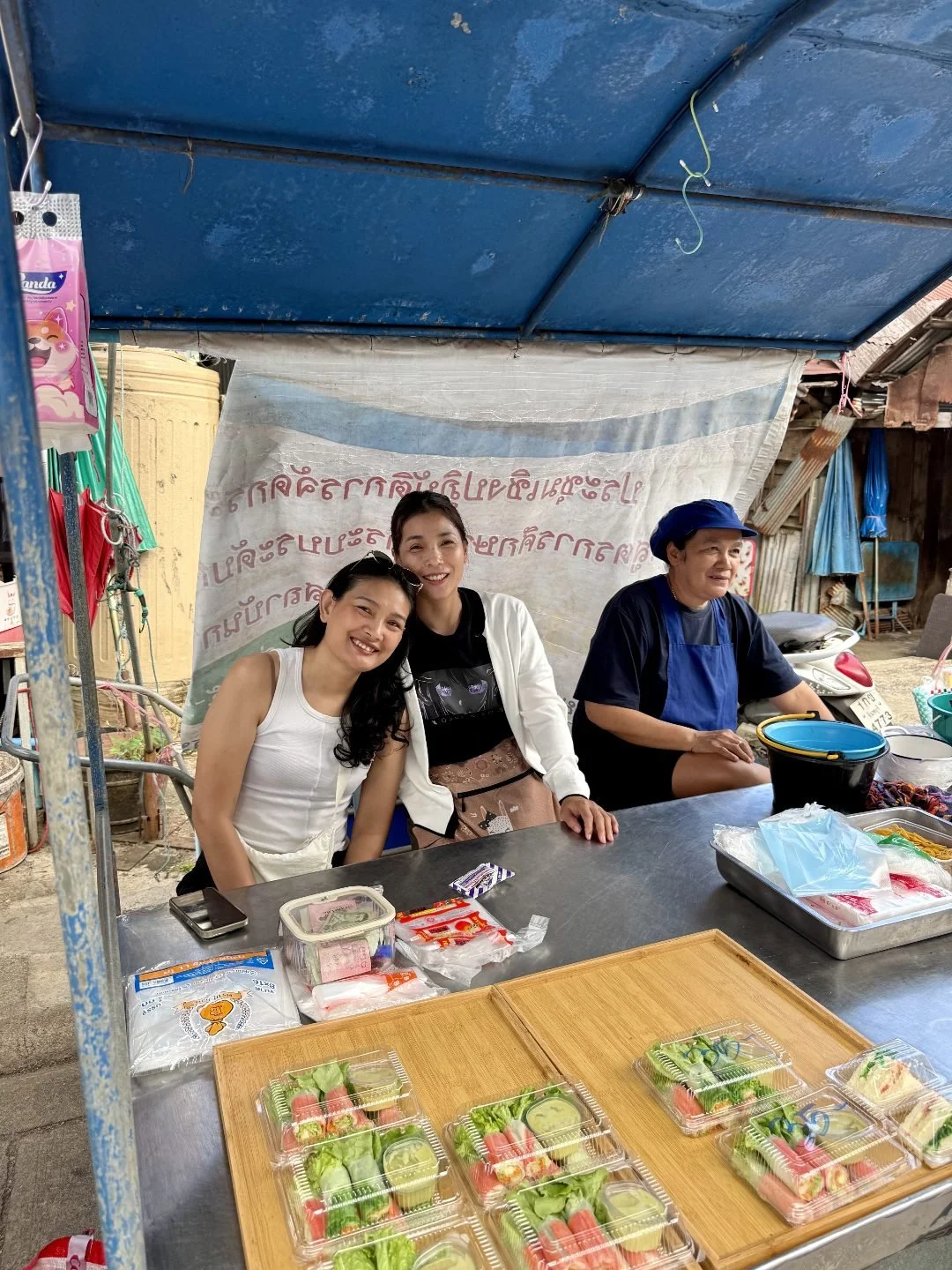
Kat and Pare at the Khombang Morning Market
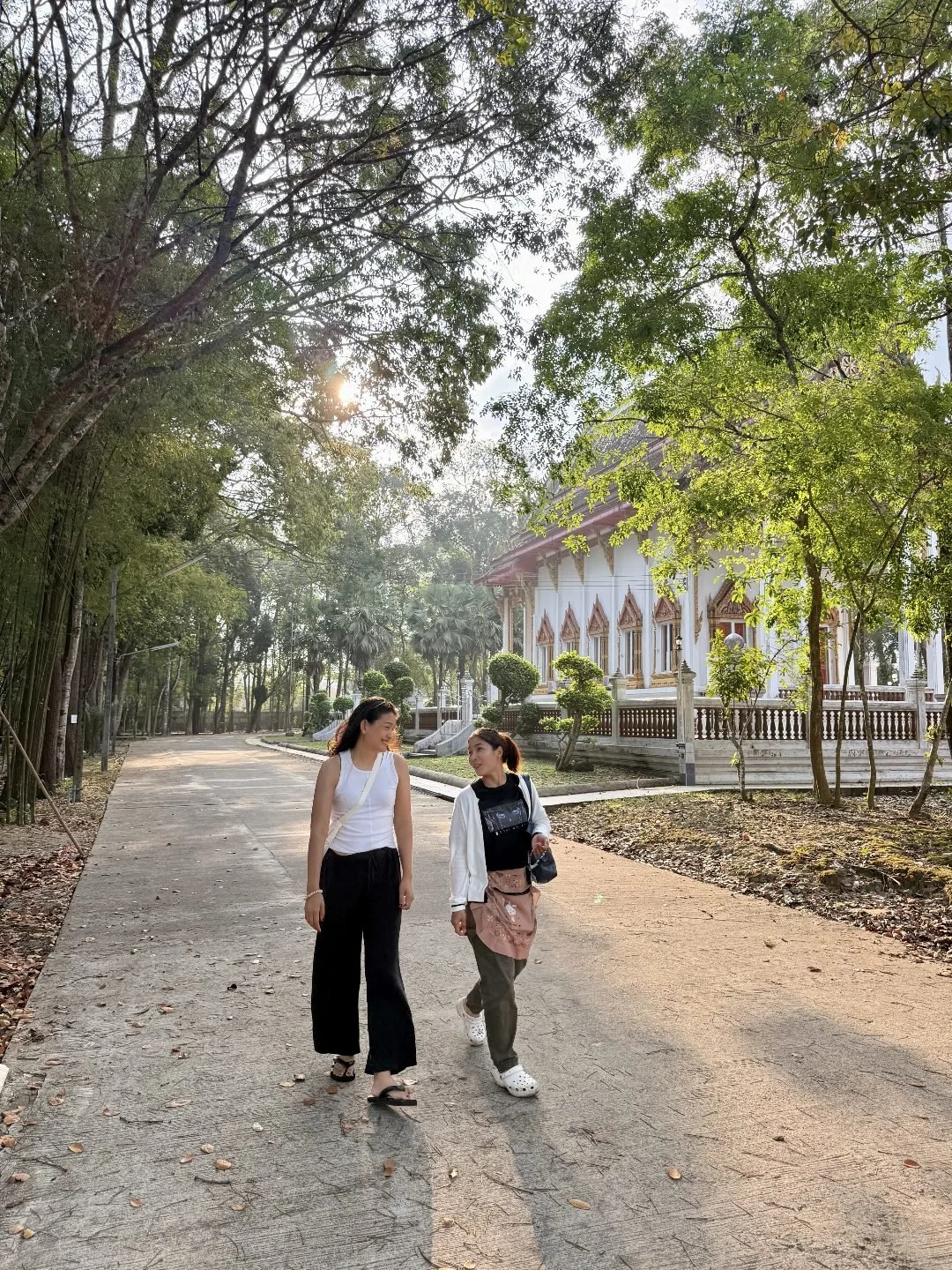
Kat and Pare returning from the Khombang Morning Market
14. Find Good Luck at Wat Mangkorn Buppharam
Wat Mangkorn Buppharam is located on a main highway before you turn off to Namtok Phlio National Park. The temple offers a unique blend of Chinese art and Buddhist architecture. Many locals visit this temple in order to seek prosperity and good luck, and to resolve conflicts, with over a dozen different spots in the temple designated for worshipping.
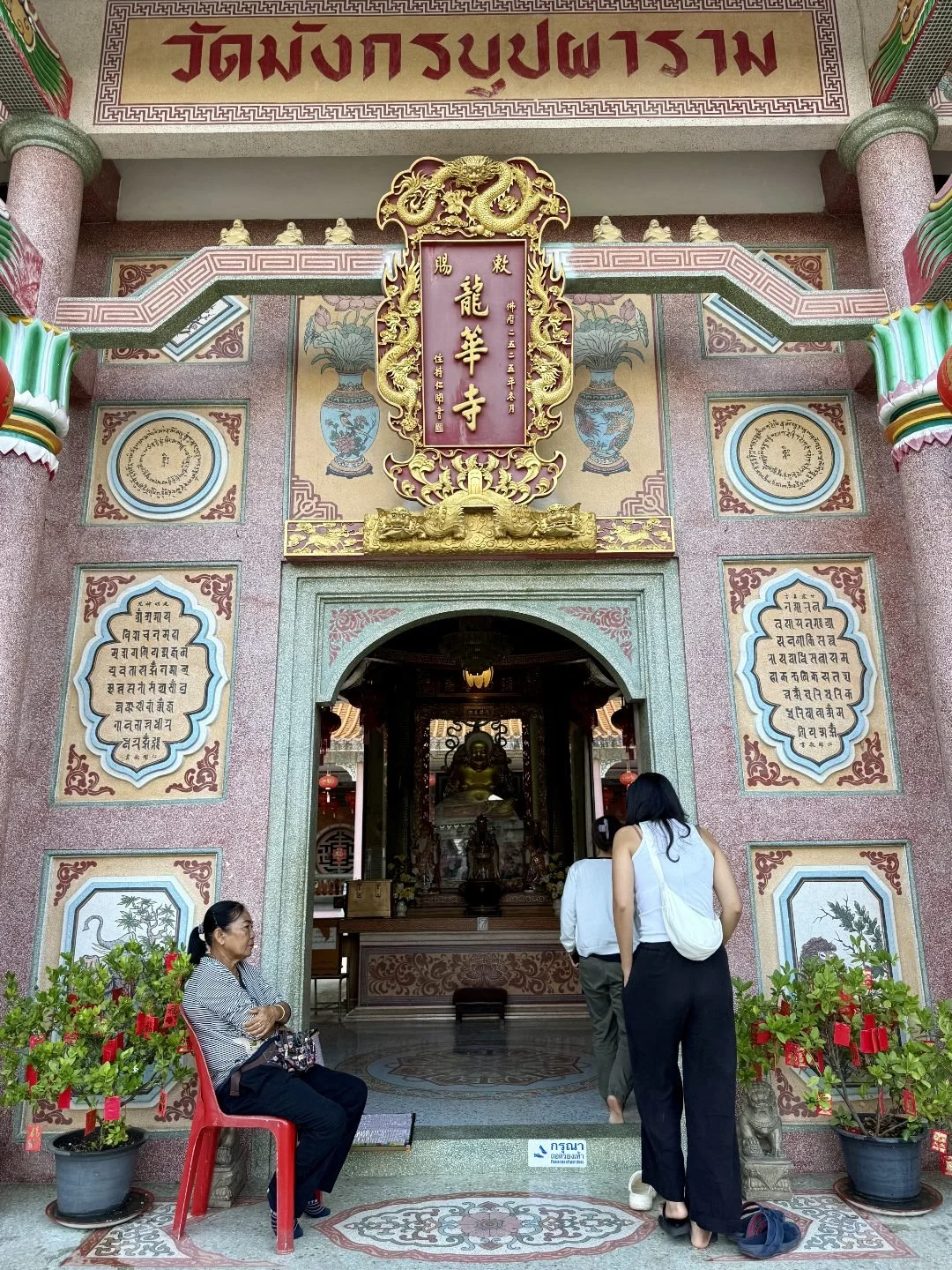
Wat Mangkorn Buppharam
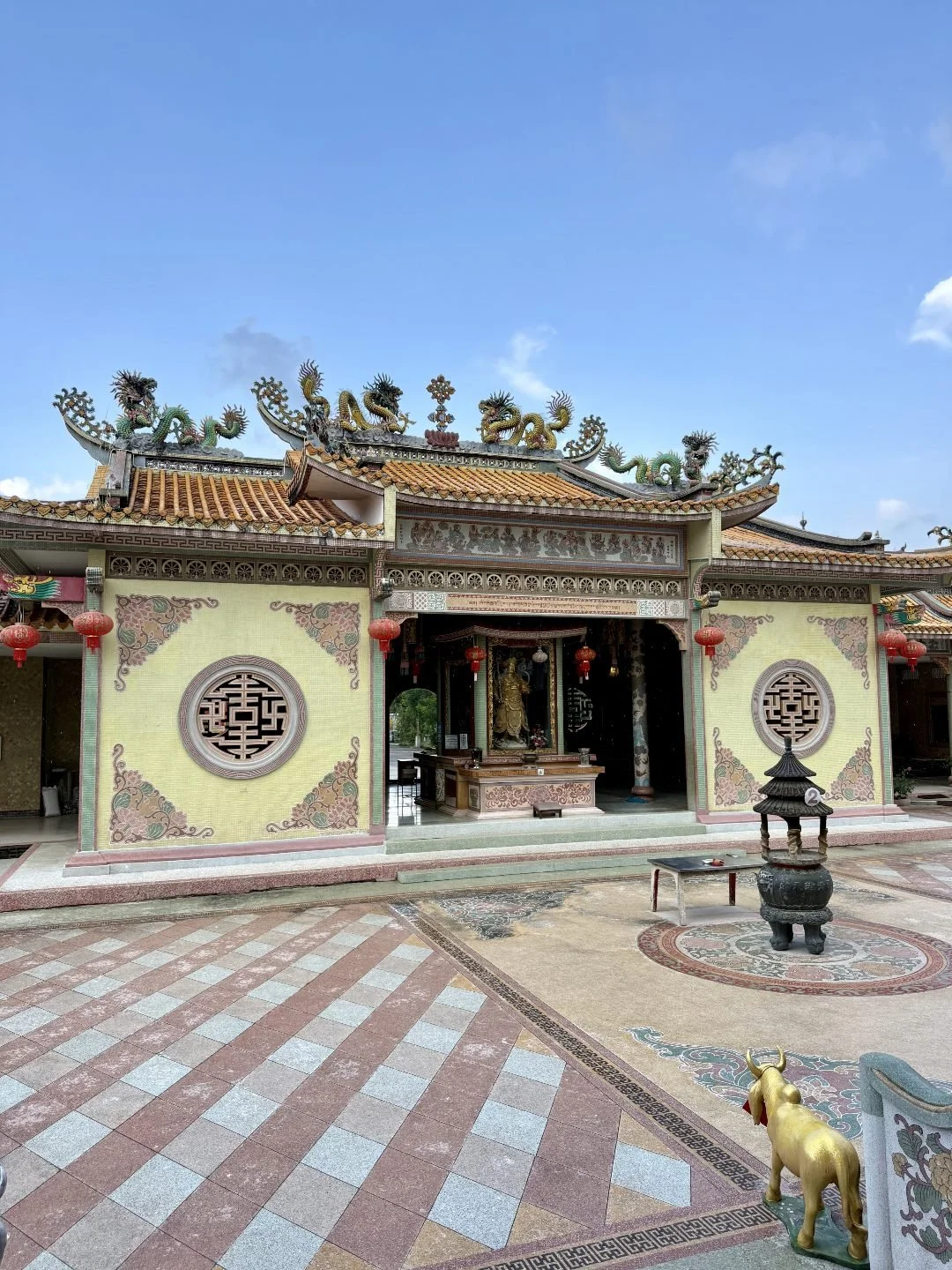
Wat Mangkorn Buppharam
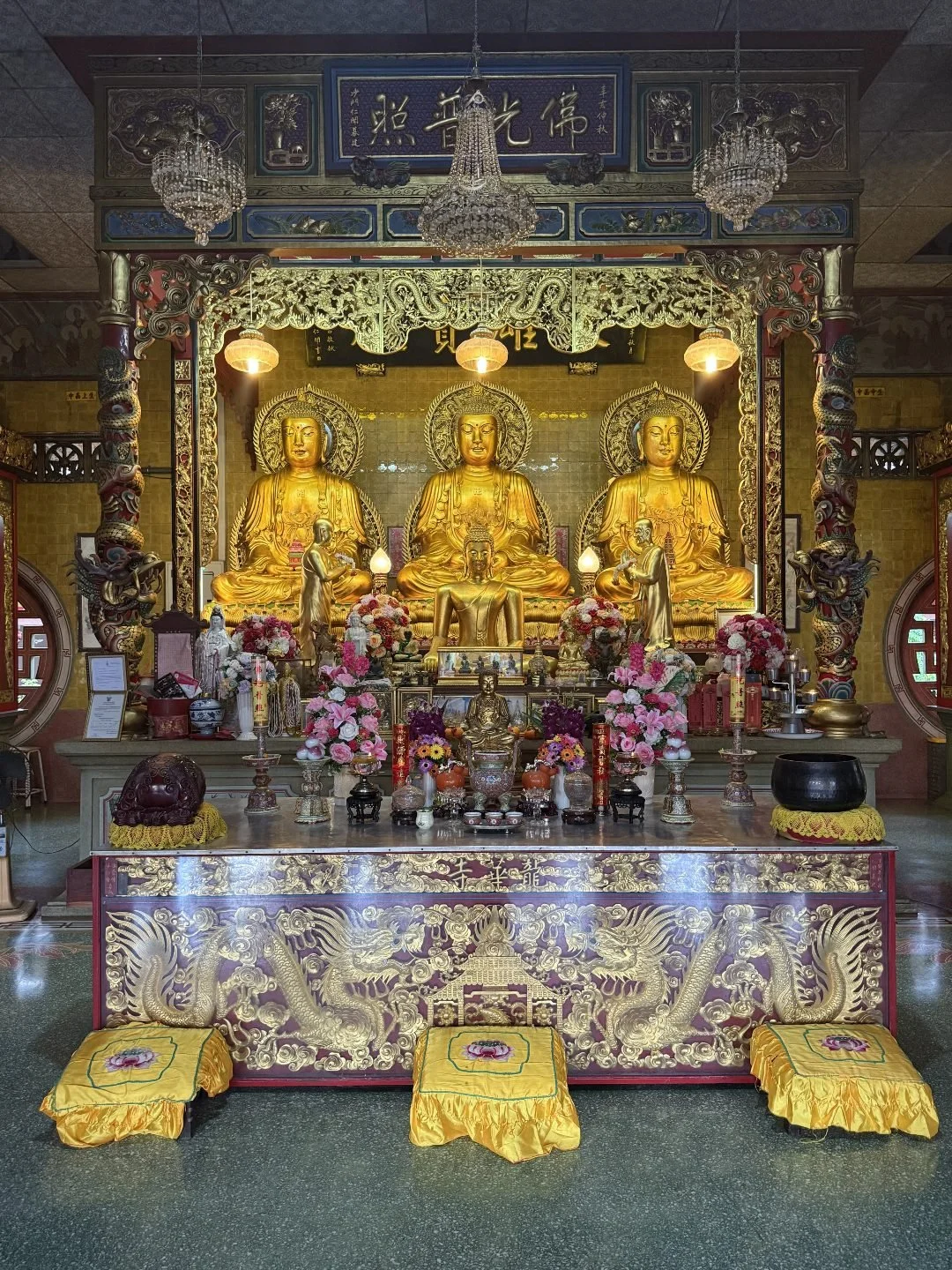
Wat Mangkorn Buppharam
15. Head Off to Koh Chang or Koh Kood
The ferry piers that whisk you away to Koh Chang and Koh Kood are about 90-minutes drive from Chanthaburi. If you’ve got the time, be sure to visit both of these islands. Koh Chang is the more lively option, full of amenities (hotels, restaurants, 7-Elevens) and activities to keep you busy like beach clubs, snorkeling tours and mangrove kayaking. While Koh Kood is all about the simple pleasures: tropical beaches, palm trees and sunset bars.
Read more: 20 Best Things To Do in Koh Chang: The Complete Guide
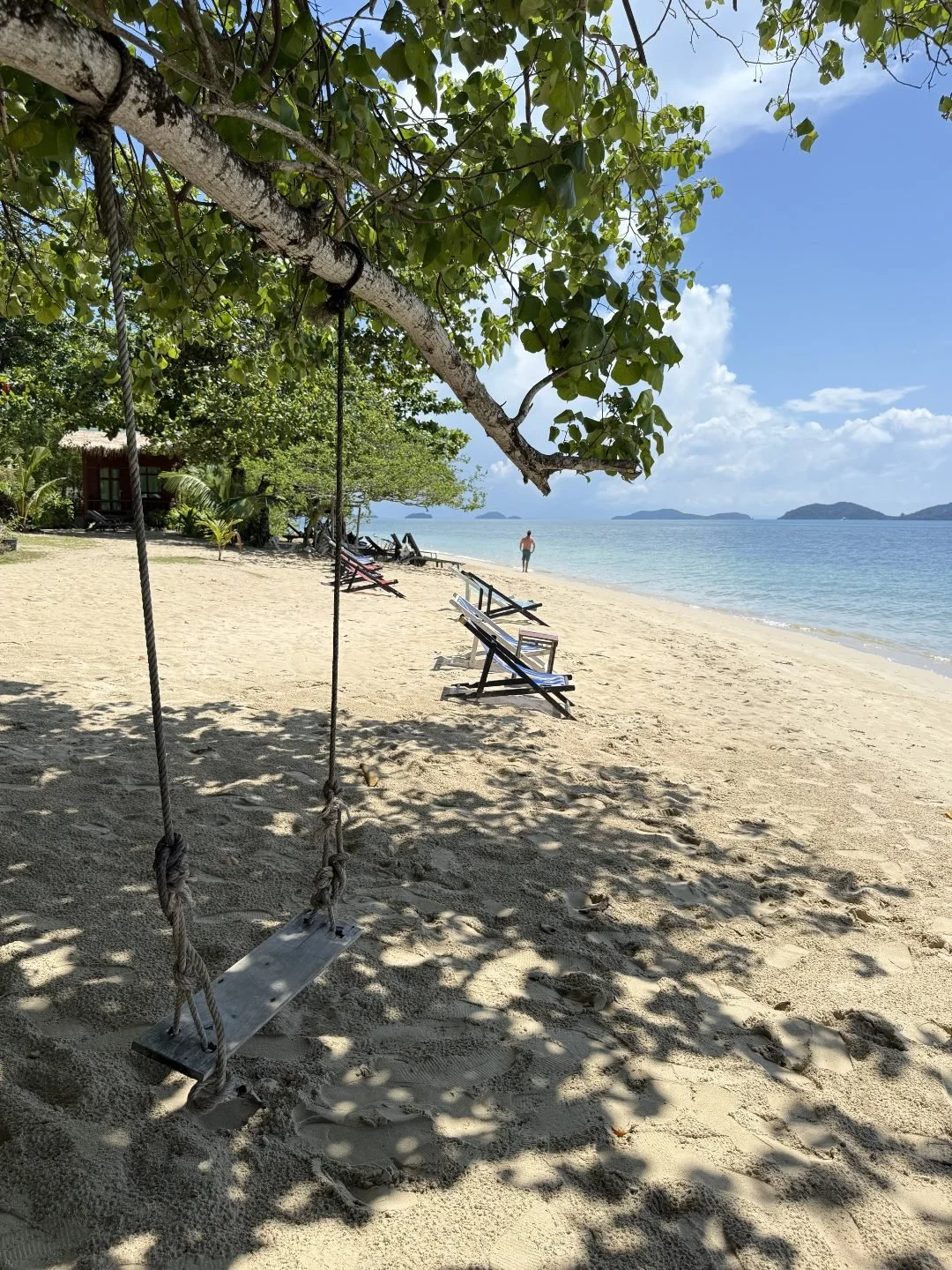
Koh Chang
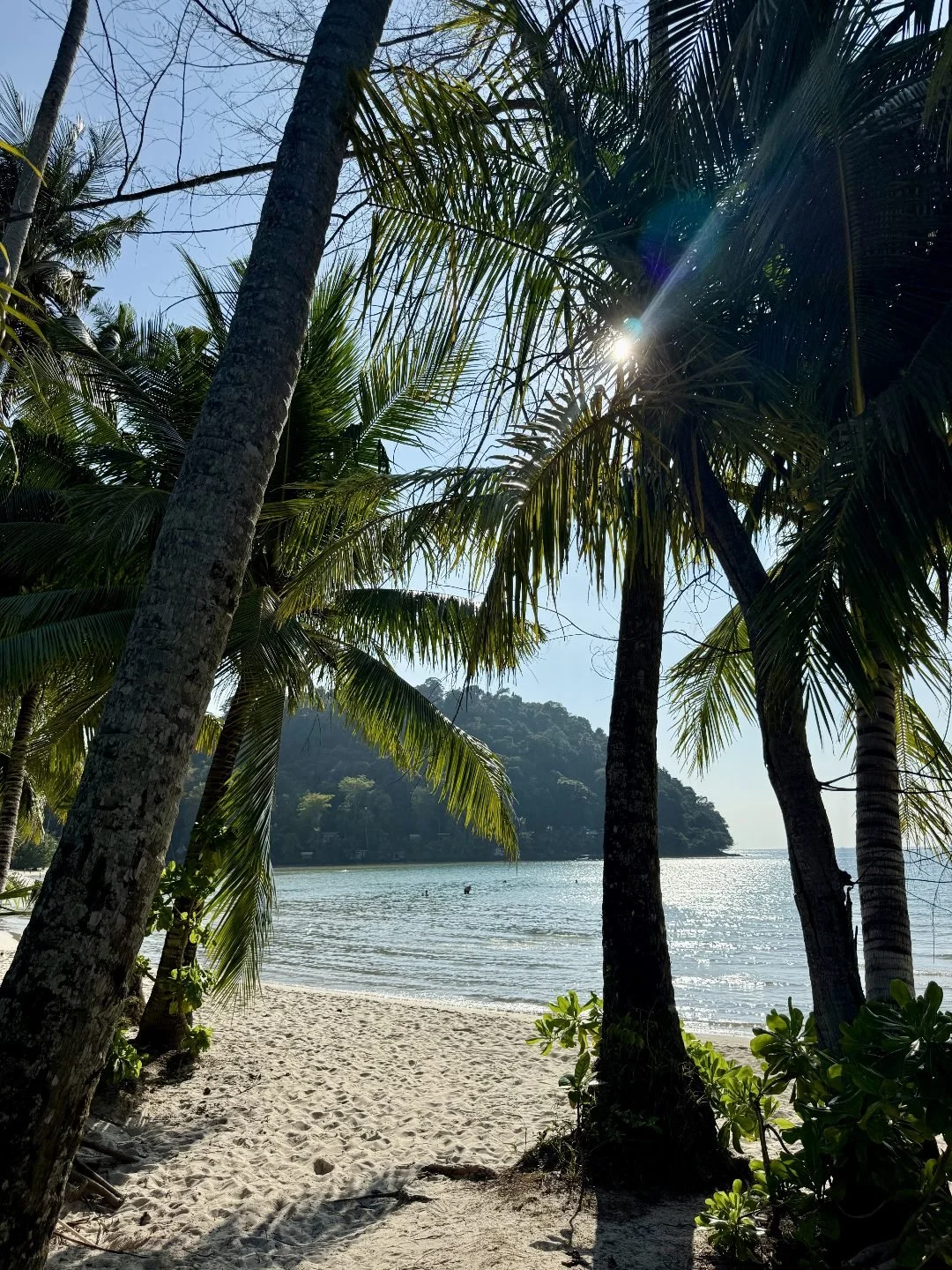
Koh Kood
Where to Stay in Chanthaburi
We’ve stayed at several different hotels and resorts in Chanthaburi over the years, some with pools and some with restaurants, but to be honest the best experience is being based at one of the historic inns along the Chanthaboon Waterfront. You’ll be walking distance to the Gems Market, have a range of restaurants and shops on your doorstep, and be able to admire the river at night as it glows from the fairy lights and temples.
Punyashthiti Villa: We loved everything about this hotel, from its heritage charm to its wooden details to its generous breakfast of rice soup, fresh fruit, juice and coffee. One night, we sat out on the balcony with Pare and Ring, listening to Hotel California by the Eagles, and enjoying the views over a few beers. It was magical!
Baan Luang Rajamaitri: Just a 5-minute walk down the road, again located on the Chanthaboon Waterfront, is this old shophouse turned boutique hotel. All the rooms are individually themed, and similar wooden details are found throughout the building. Many people consider the property to give a museum-like atmosphere.
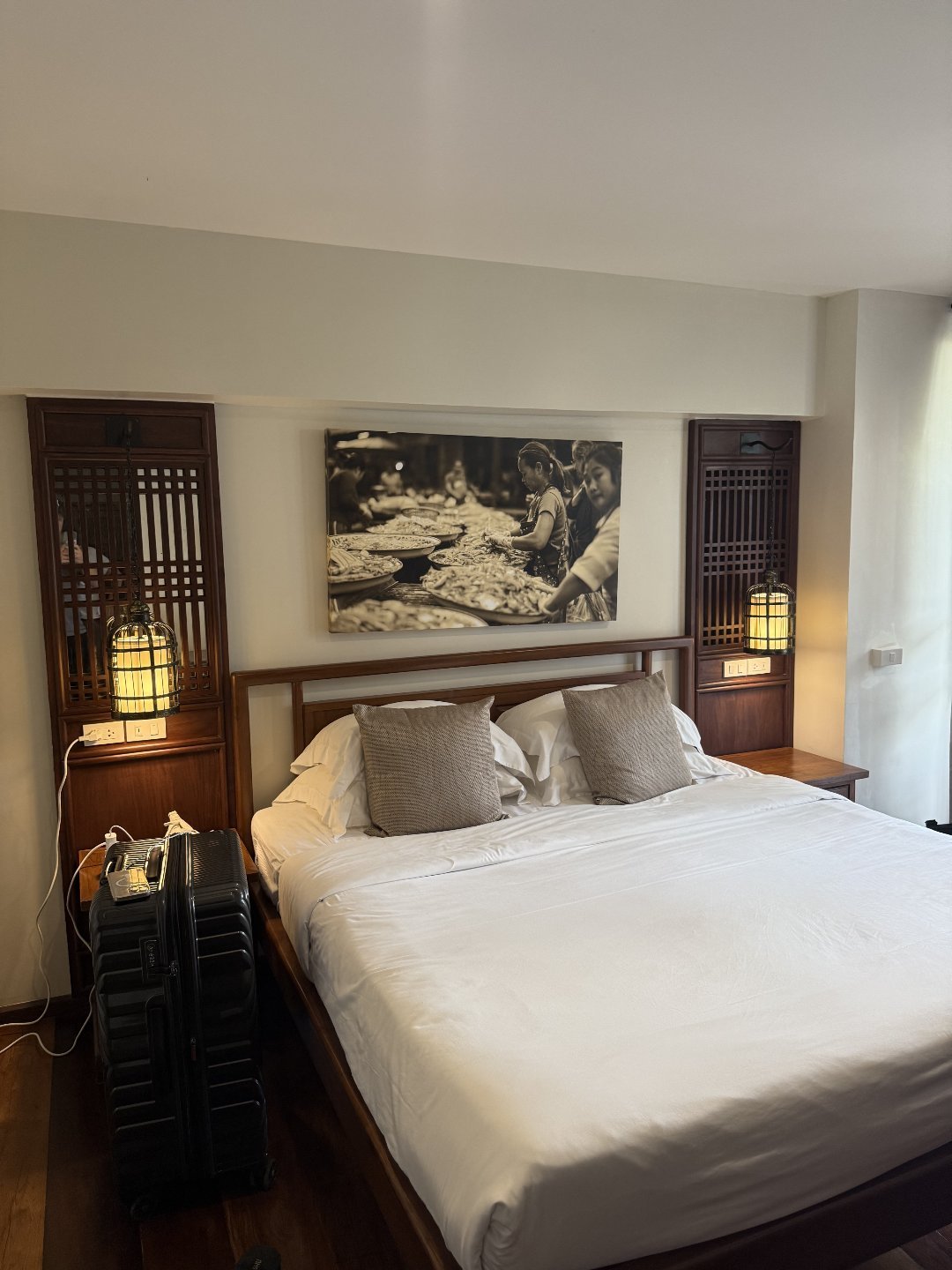
Punyashthiti Villa
When to Visit Chanthaburi
Chanthaburi is definitely a year-round destination but the safest weather window, especially if you want to go island hopping as well, is from November to March. It can get really hot and sticky from April to July, which will be uncomfortable for many, however this is also the “fruit season” when markets overflow with durian and orchards run unique tours/tastings.
Expect a lot more rain during the wet season (May to October), more than other parts of Thailand, but this can still be a charming time to visit. The plus side is that the scenery is greener, the waterfalls are stronger and the hiking trails are super lush. The ferries to Koh Chang still operate but high winds can create rough seas from August to October, so flexibility is key.
How to Get to Chanthaburi
We usually take a private van from Bangkok, which can be an expensive way to travel as a couple but which becomes cost-effective when split between a small group. The trip can take anywhere between 3-5 hours depending on things like traffic, departure points and how many stops you take along the way. We’ve also gone on the bus a few times from the Eastern Bus Terminal (Ekkamai), and also taken Grab taxis all the way to Chanthaburi. Grab’s can be uncomfortable and risky though, especially if you get an adventurous driver who loves to overtake the entire time!
FAQs for Visiting Chanthaburi
Is Chanthaburi worth visiting?
The answer, in our humble opinion, is an emphatic yes! Chanthaburi is worth visiting for an extended trip (not just an overnight stay) where you can settle into the local rhythm: mingle with the locals at markets, enjoy seafood banquets, shop at the Chanthaboon boutiques, visit waterfalls and national parks, and explore the labyrinth of streets on scooters.
How many days should you spend here?
Two or three nights is ideal for Chanthaburi. Let’s say you’re planning a 2-week trip to Thailand. Here’s a cool little itinerary: four days in Bangkok filled with rooftop bars and buzzing nightlife, three days in Chanthaburi to go on an authentic foodie journey, and then a week split across Koh Chang, Koh Kood and Koh Mak to get some much needed beach time.
Is Chanthaburi touristy?
Not compared to other Thai destinations like Pattaya, Chiang Mai and Koh Phi Phi. Thankfully, Chanthaburi doesn’t suffer from over-tourism - it has a niche appeal which attracts the right type of traveler. The odd foodie, history-buff or intrepid traveler will feel right at home here, mixing with the locals and immersing themselves in one of Thailand’s best kept secrets!
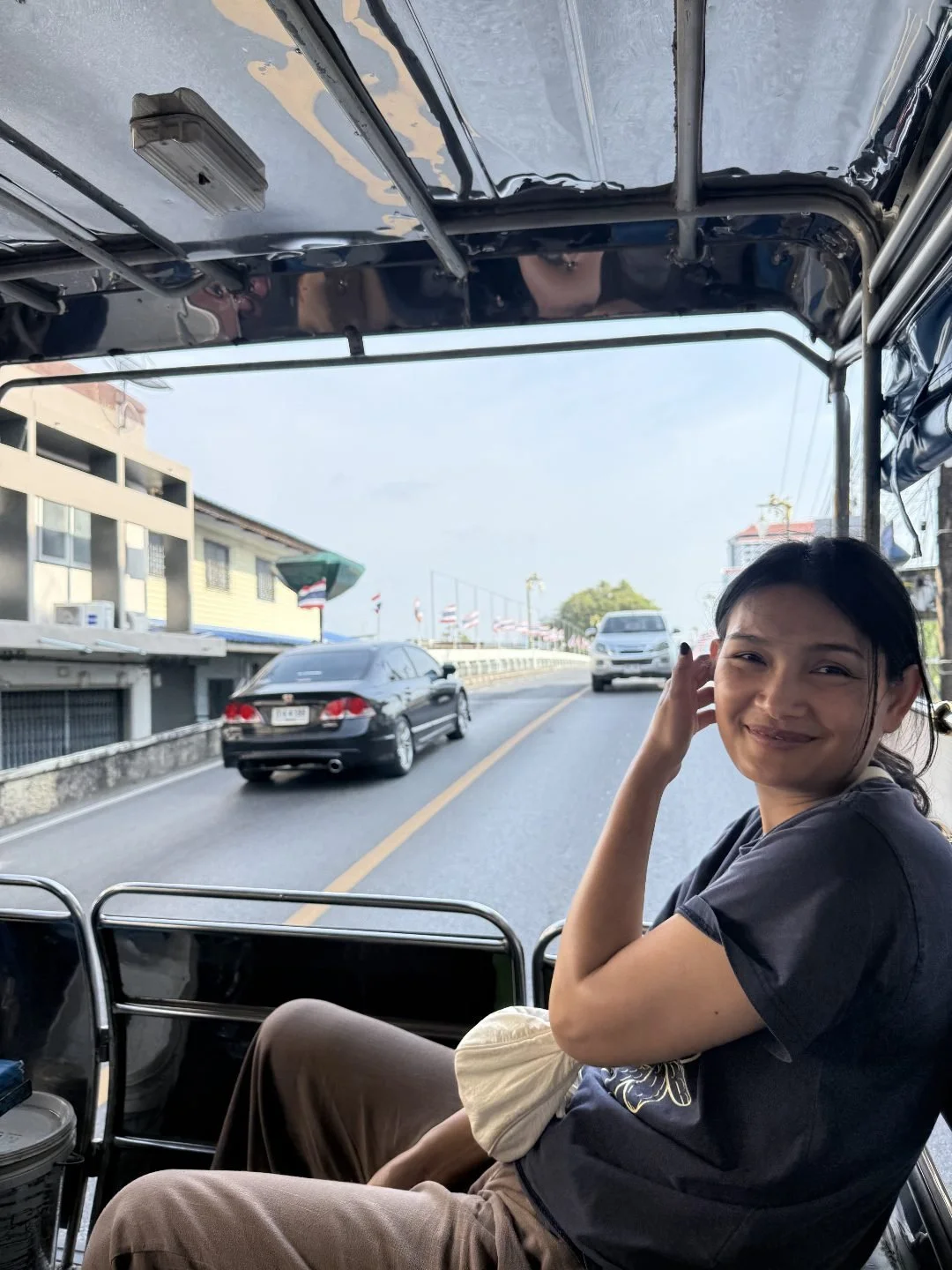
Songthaew rides in Chanthaburi
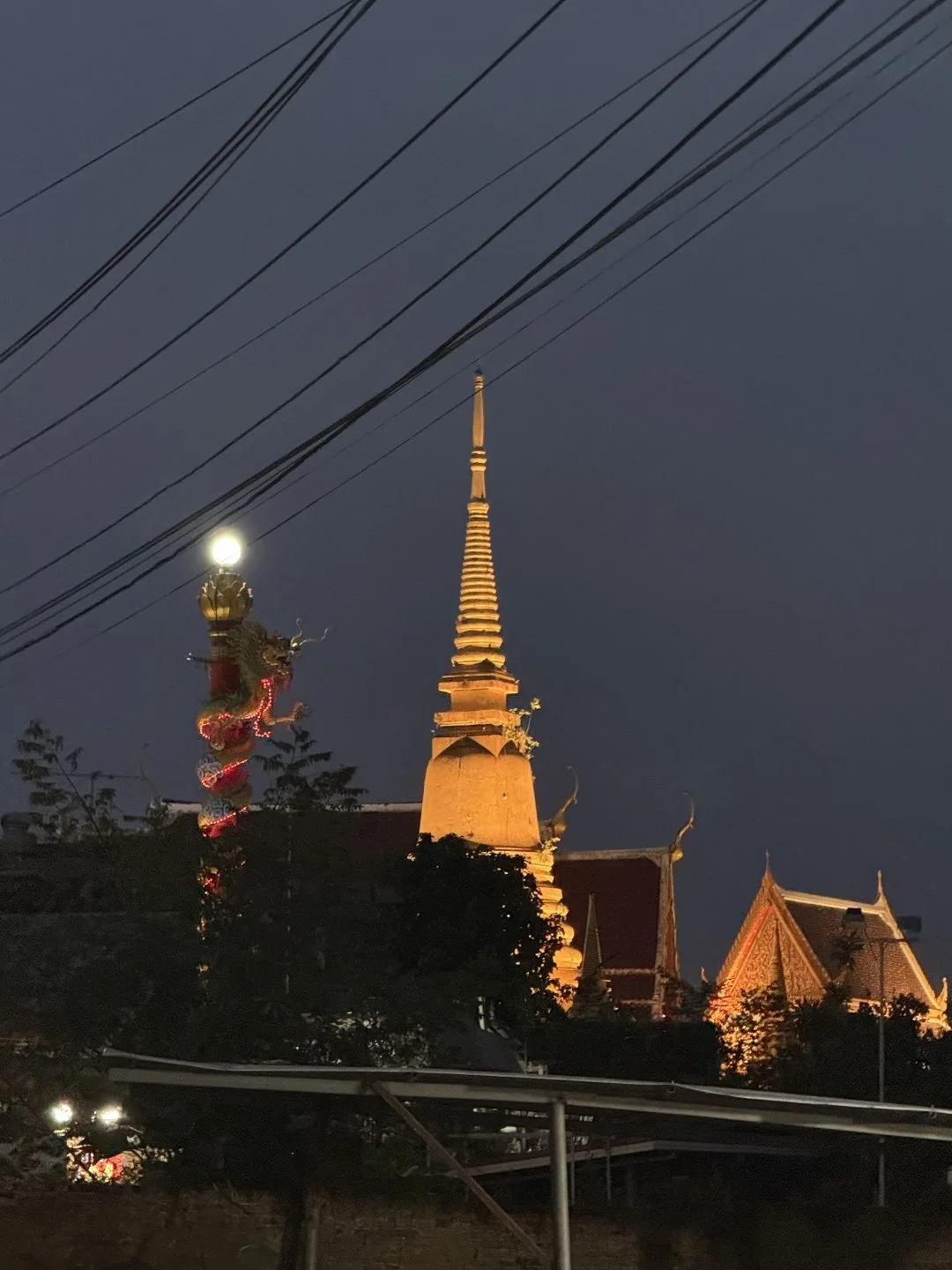
Temples glowing at night
