
How to Visit Wat Pho: Home to Bangkok’s Reclining Buddha
The temple complex of Wat Pho is located in the middle of the Old City, on Rattanakosin Island, and is best visited at 8:00 AM to avoid the crowds. You’ll have to pay 300 THB to enter but it’s worth the price, and is much cheaper than the nearby Grand Palace which costs 500 THB. Wat Pho has been a classic attraction of Bangkok for decades now and despite its popularity, it’s still worth visiting today. The star of the show is definitely the Reclining Buddha: a majestic golden statue that stretches for 46 meters.
We’ve visited Wat Pho several times and it never gets boring. It always slots nicely in our Bangkok plans, as it’s only a 30-minute walk away from Khao San Road (where we often stay). The walk takes you along boulevards lined with Thai flags and prestigious buildings, such as the Supreme Court and Ministry of Defence. The area outside the temple is bustling with action: tuk-tuks, massage shops and food vendors jostle for space surrounded by timeless yellow architecture. It’s a wonderful introduction to Thailand itself.
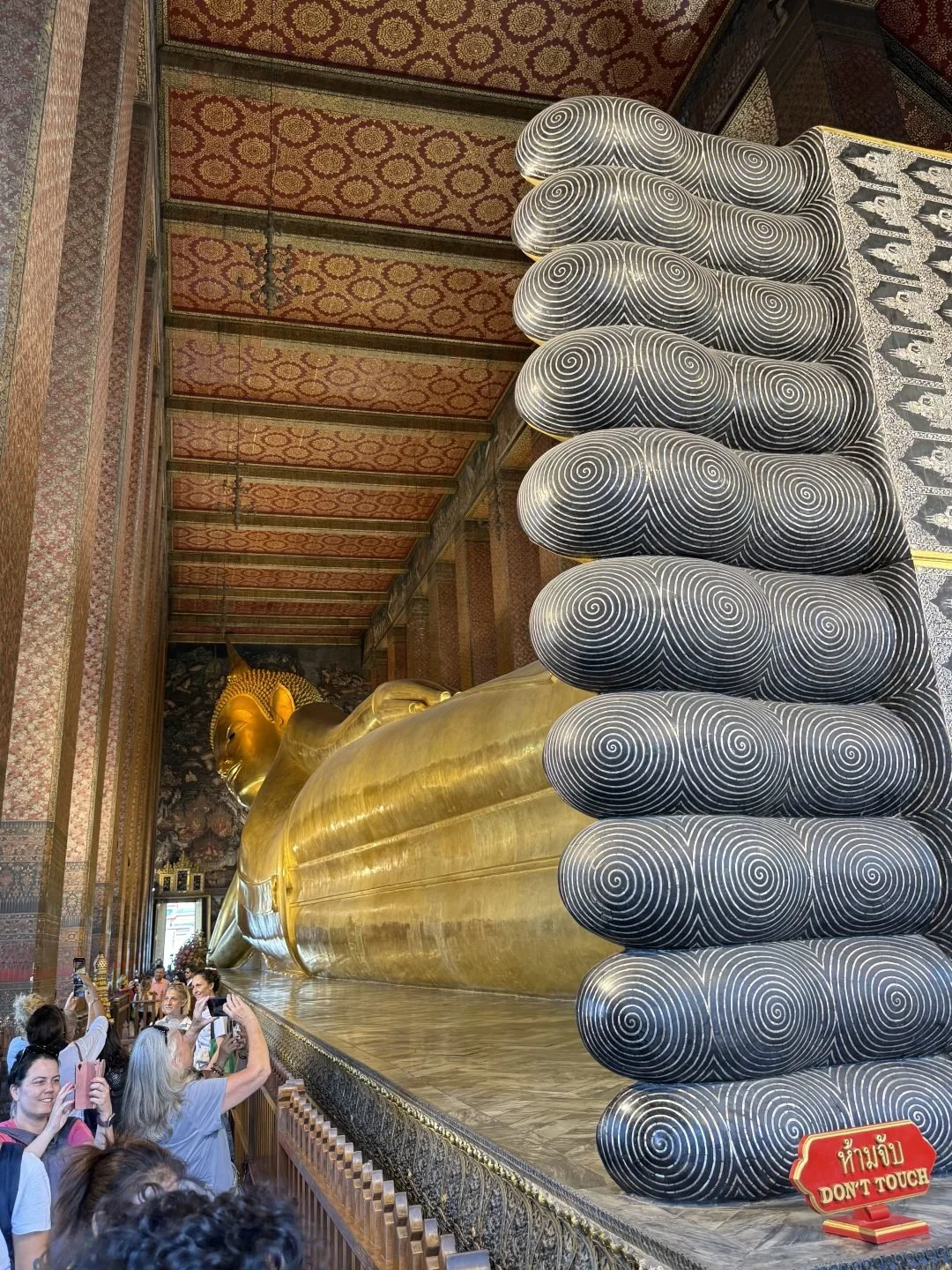
The Reclining Buddha
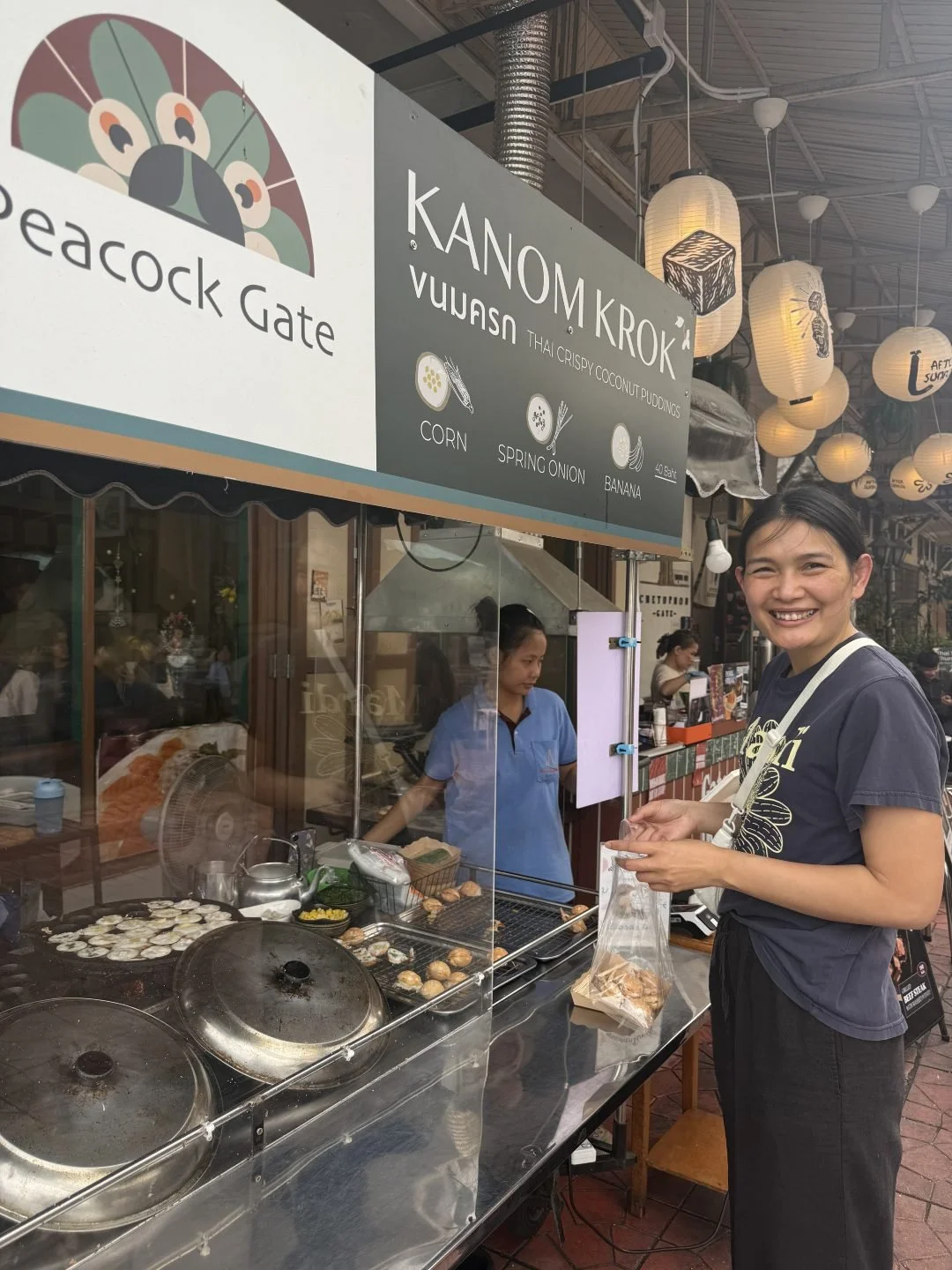
Street food vendors outside Wat Pho
Top Things to See at Wat Pho
The Reclining Buddha
The Reclining Buddha not only spans 46 meters long but it also rises 15 meters high, adding to the sense of scale when you first see it. The statue is covered in gold, features incredible symbols on its feet, and has a blissful look on its face - representing a state of Nirvana. Surrounding the statue are a number of alms bowls where you can drop coins in for good luck. We noticed a couple of small cracks on the Reclining Buddha on our last visit there, perhaps from the recent earthquake, but it was still very impressive.
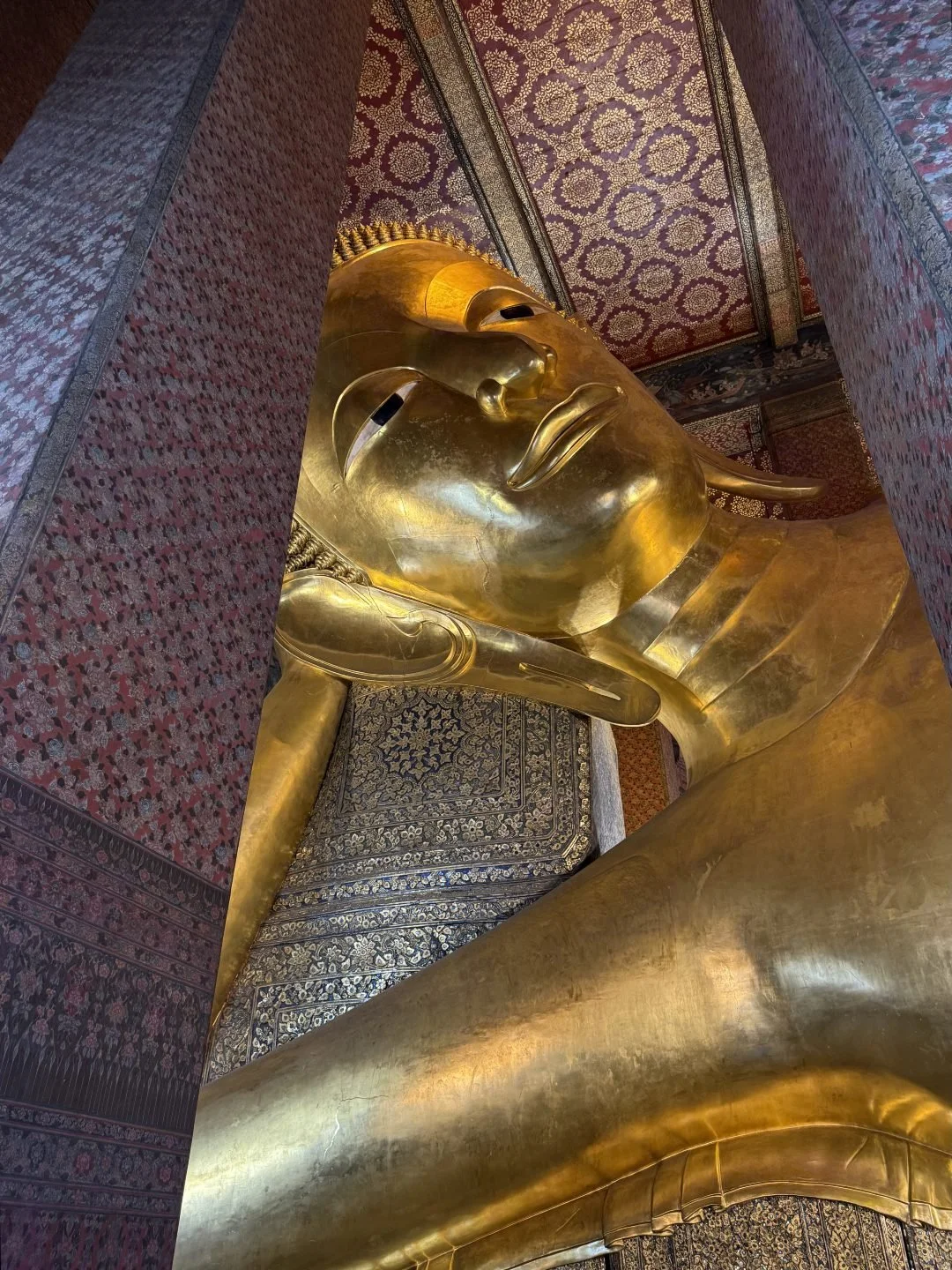
The Reclining Buddha
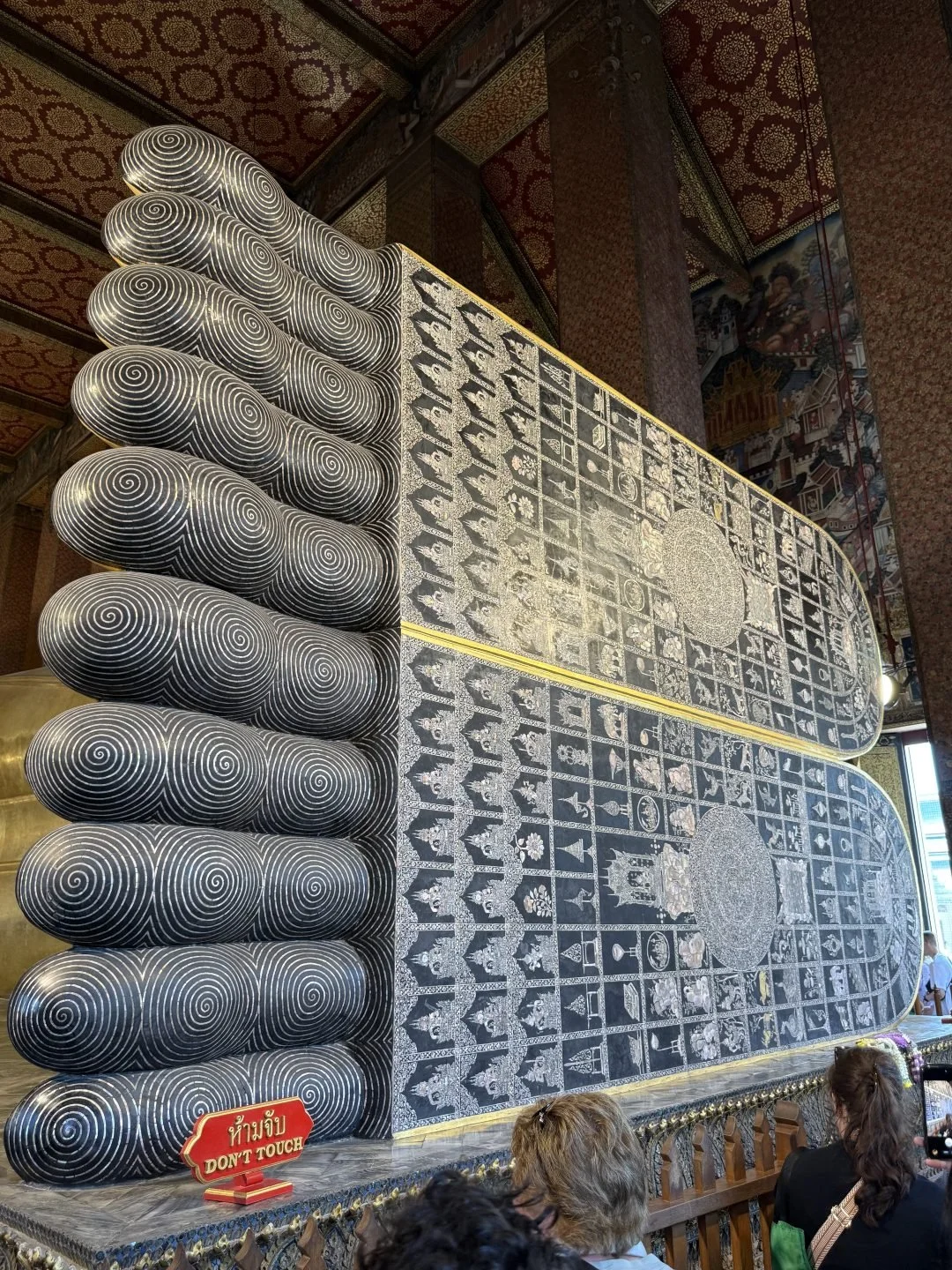
The Reclining Buddha
The Four Great Chedis
The Four Great Chedis, otherwise known as Phra Maha Chedi Si Rajakarn, are the natural next stop on your exploration of Wat Pho. They’re situated just south of the Reclining Buddha in the main courtyard area. Here you’ll find these four colorful stupas standing at over 40 meters high covered in mosaic tiles - individually colored green, white, yellow and blue. We like this site mainly for its Chinese-style gates and epic stone guardian statues.
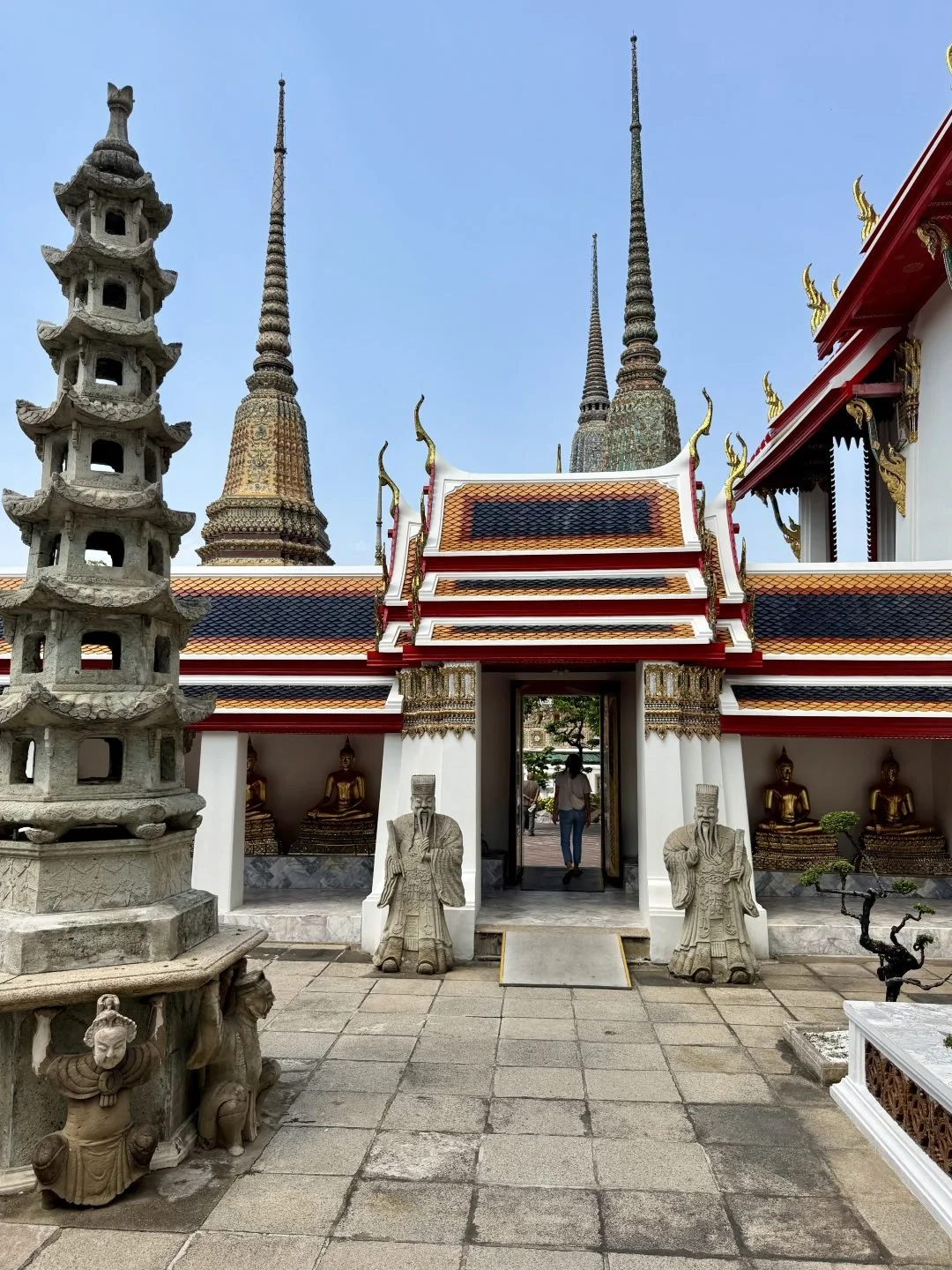
Chinese guardian statues
The Phra Ubosot (Ordination Hall)
Ordination halls are usually the most sacred place within Thai temples and this can easily be felt at Wat Pho. The Phra Ubosot is home to a golden Buddha statue seated on a three tier pedestal, with the ashes of King Rama I buried below. On your visit, we recommend sitting at a distance and admiring the statue, without pointing your feet at the Buddha which is disrespectful in Thai culture. Another highlight of the Ordination Hall is the massive teak doors - with panels depicting stories from the Ramakien Epic. It’s common to hear tour guides talking about these works of art.
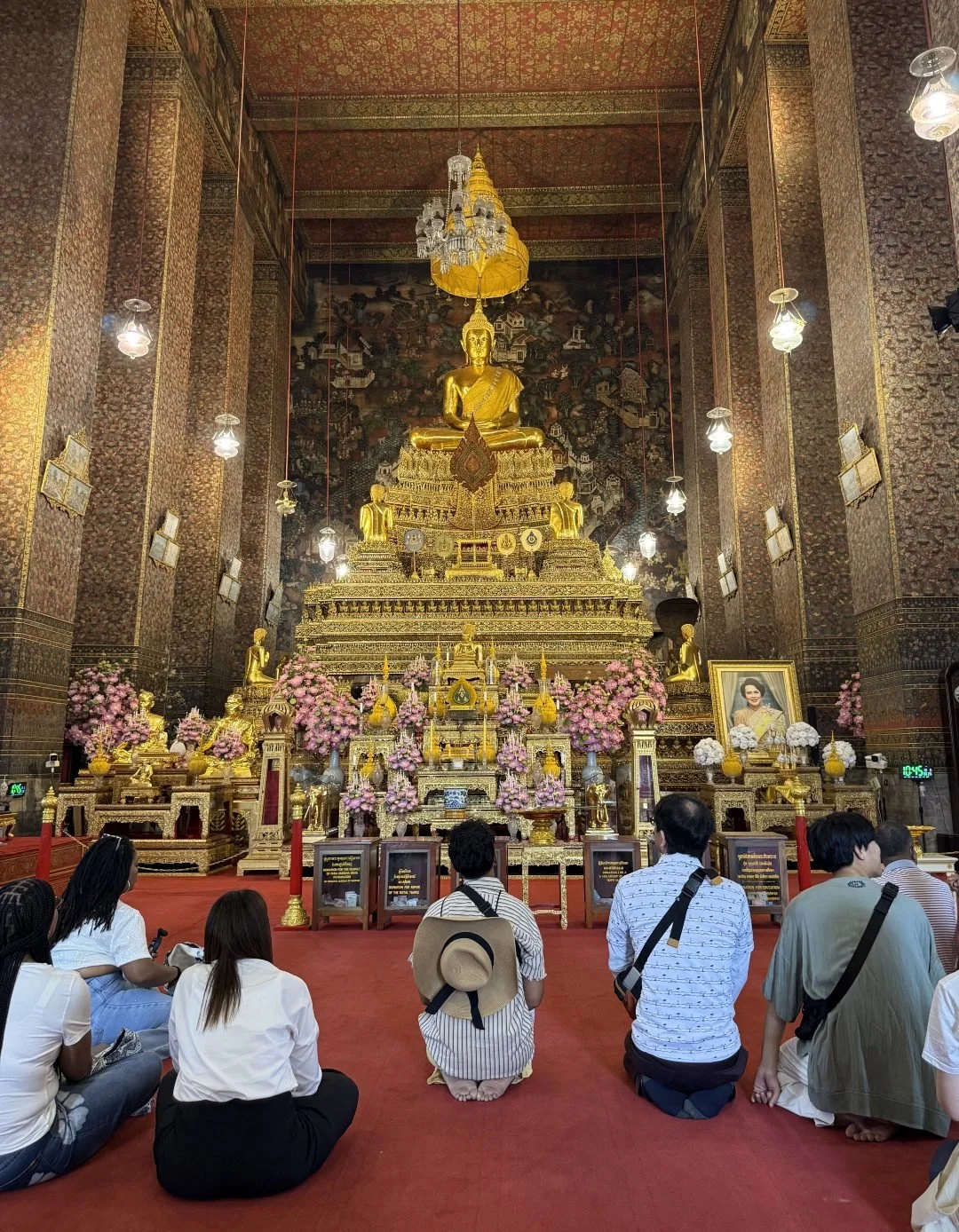
Phra Ubosot (Ordination Hall)
The Rows of Seated Buddhas
Not far from the Ordination Hall are these covered walkways which house rows of Buddhas. These statues were rescued from the ancient capitals of Ayutthaya and Sukhothai, and then restored. Look out for the rows with dark bronze sculptures sitting amongst golden ones, creating quite the contrast. As you can probably tell, this is one part of Wat Pho where you’ll want to have your camera ready - there’s almost 400 statues to capture.
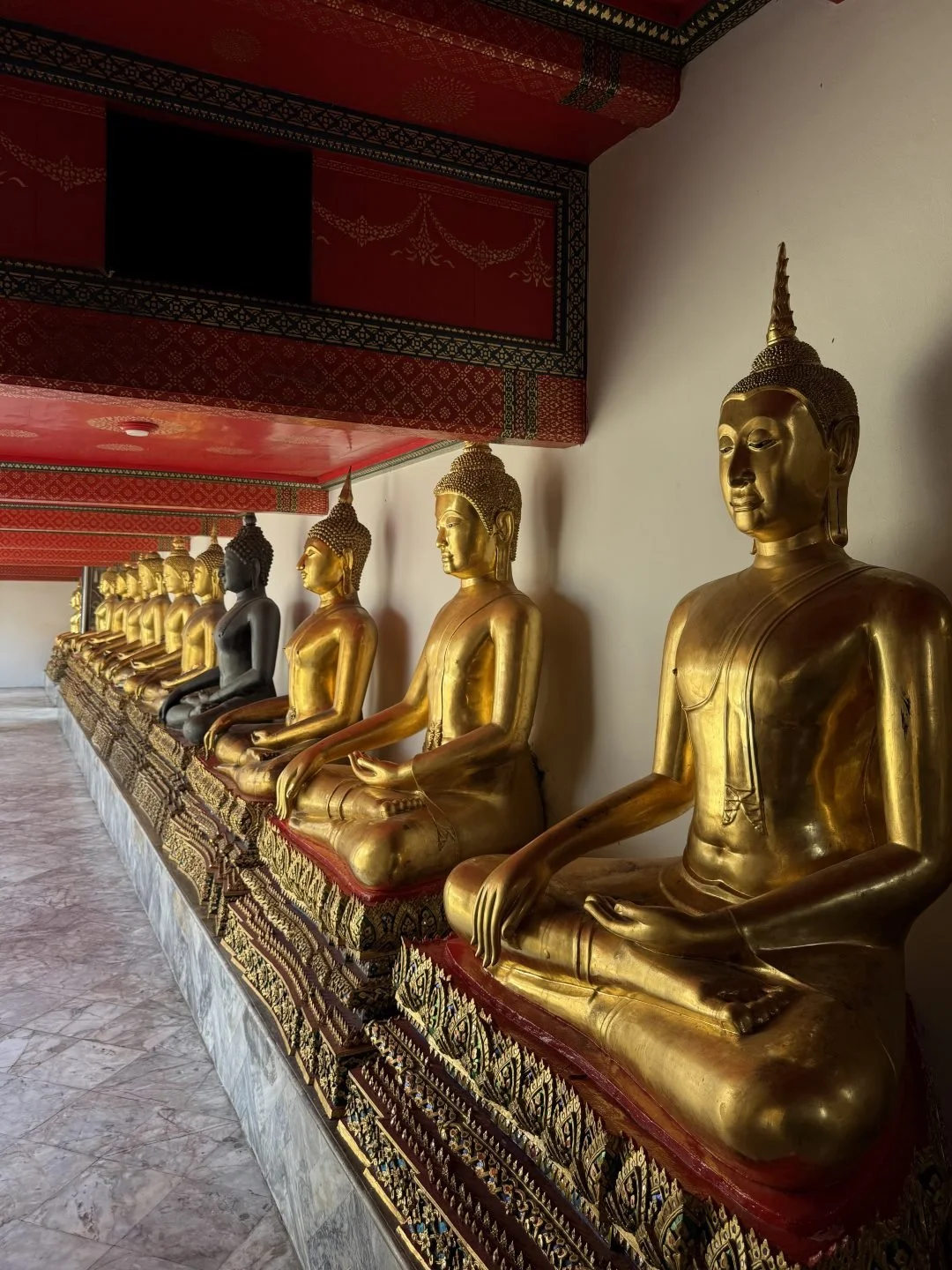
Rows of seated Buddhas
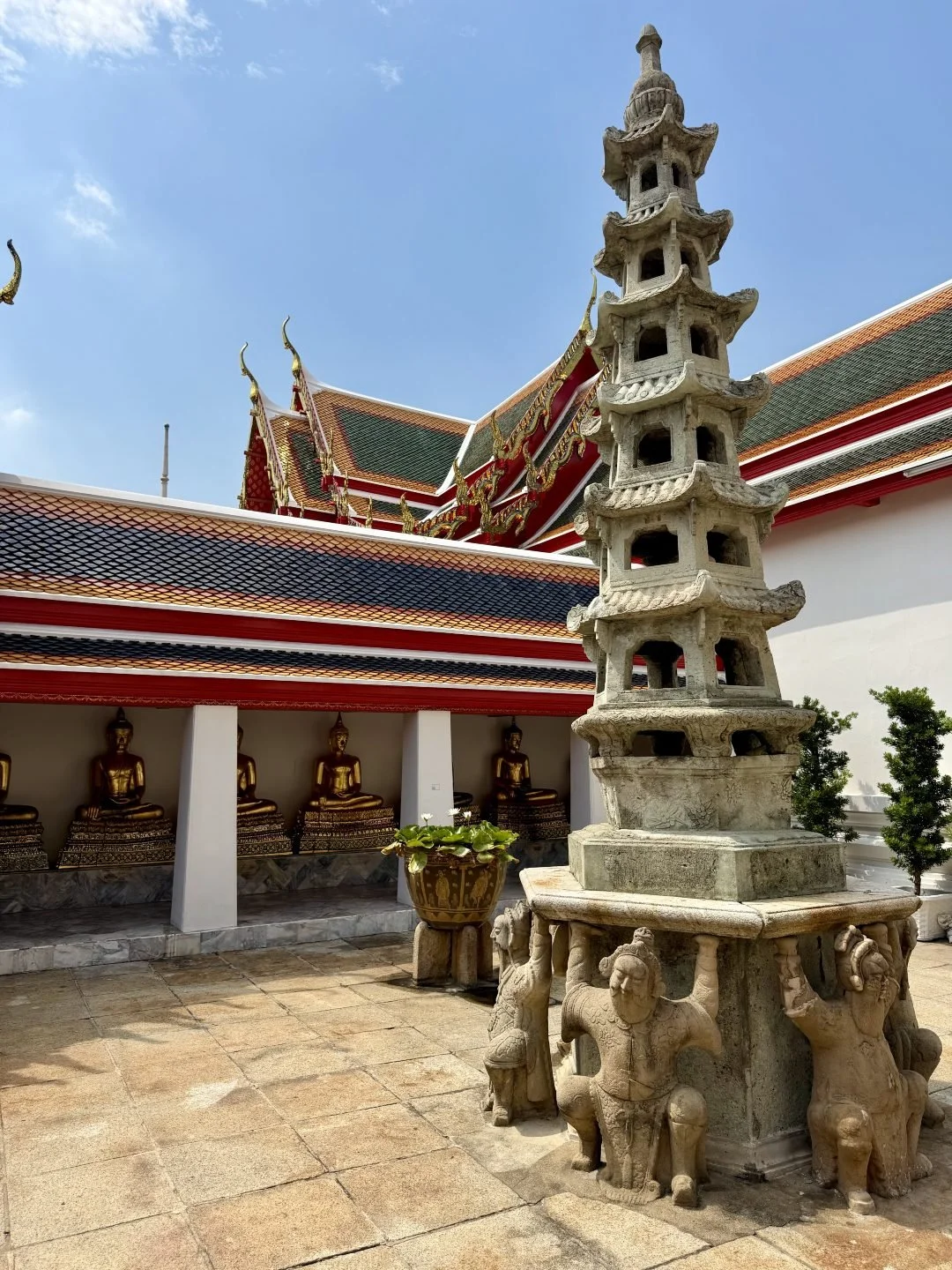
Rows of seated Buddhas
Authentic Thai Massage at Wat Pho
Did you know that Thai massage was traditionally taught at temples? Indeed, Wat Pho is considered the “first university of Thailand”. As you wander around the temple, you’ll see wellness inscriptions carved into the walls and statues striking elaborate yoga poses. There’s still a massage school in Wat Pho to this very day - where aspiring therapists come from all corners of Thailand (and the world in fact) to take courses.
Most travelers will be more interested in getting a Thai massage rather than studying it, and that’s where the on-site massage pavilion comes into play. You can get yourself a walk-in treatment within the temple grounds, and if it’s full just put your name on the waiting list. That being said, there are dozens of massage shops outside Wat Pho that do just as good a job - some are basic shops while others are more modern, boutique parlours. Either way, you can’t go wrong with a traditional Thai massage.
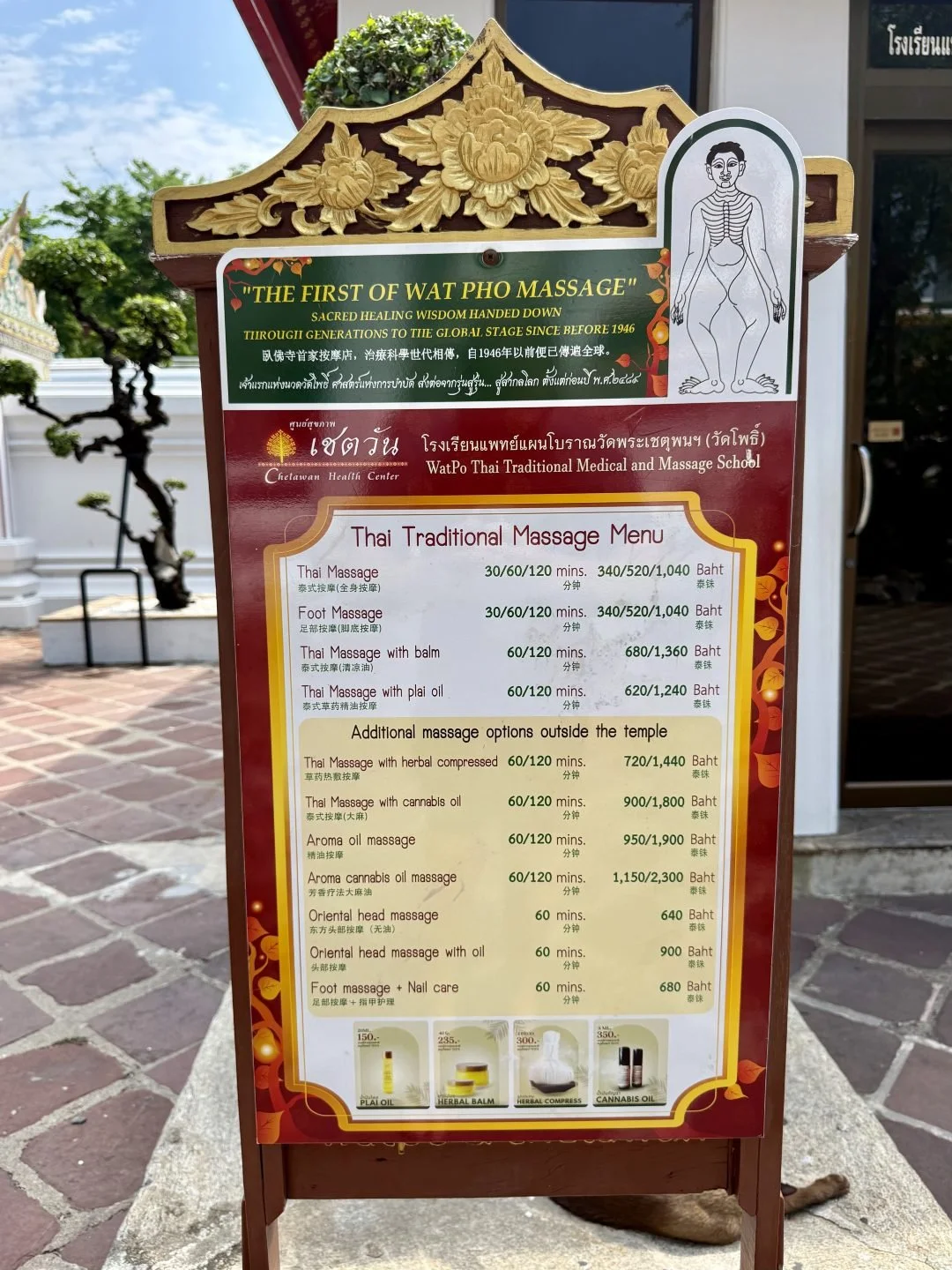
Massage at Wat Pho
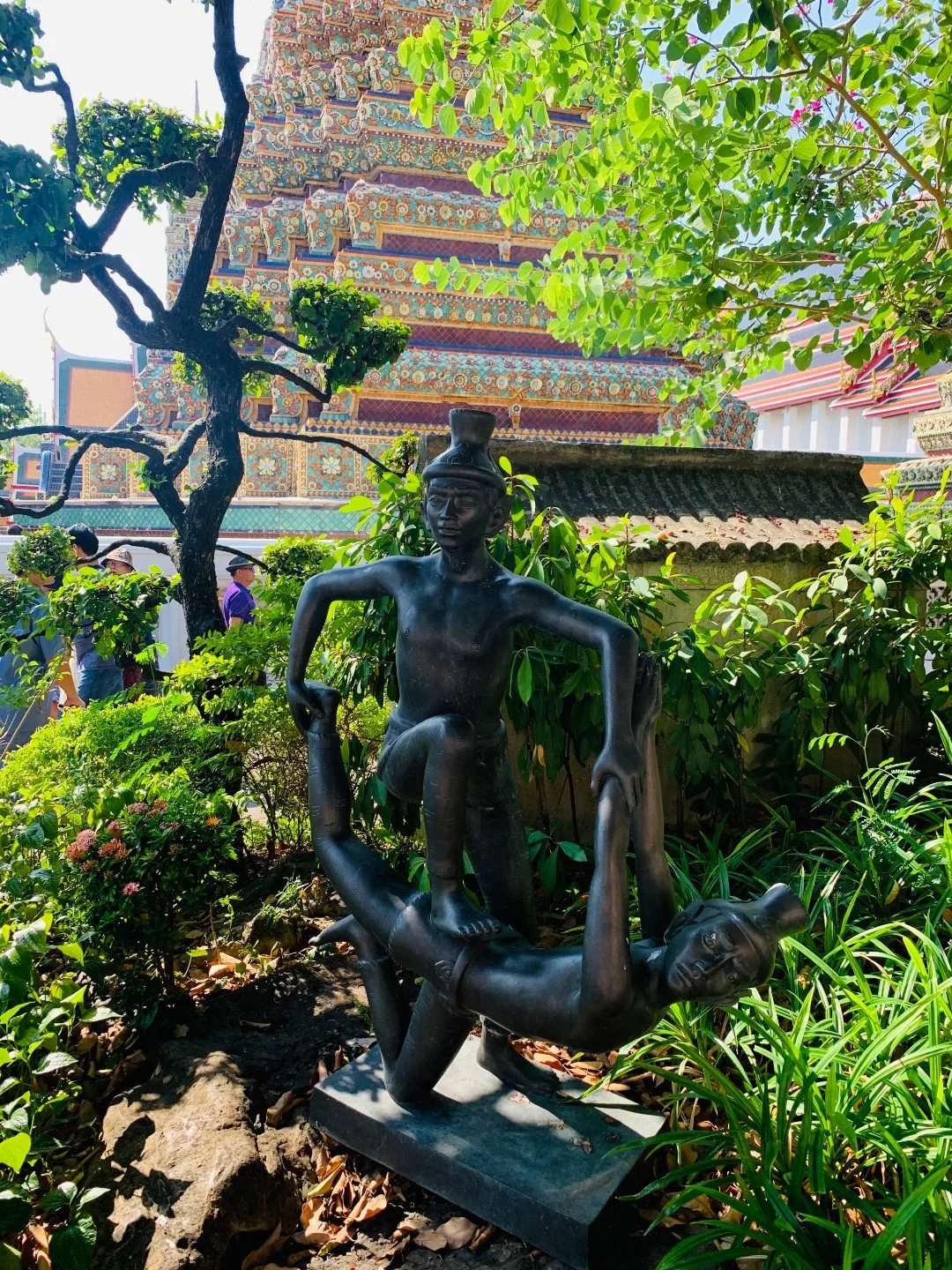
Massage statues at Wat Pho
Visitor Information for Wat Pho
Wat Pho rarely closes, open every day at 8:00 AM to 7:30 PM, so watch out for the temple is “closed today” scam. This is where a tuk-tuk driver takes you to a dodgy suit shop or overpriced gem store instead of Wat Pho, and proceeds to pressure you to make a purchase. The entry fee is 300 THB for foreigners and they only accept cash at the ticket booth. The dress code is the same as all Thai temples: be sure to cover your knees and shoulders.
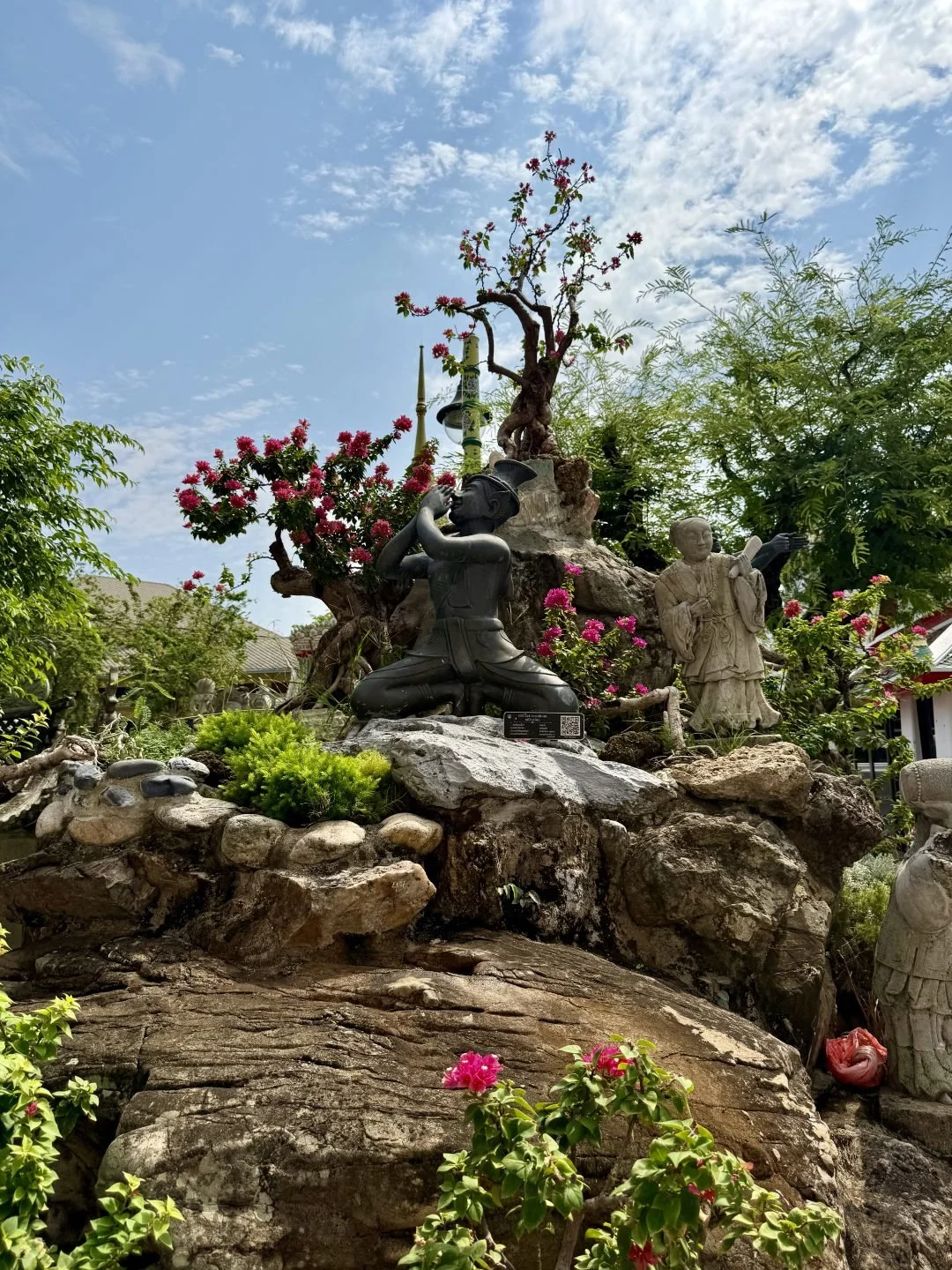
Wat Pho
How to Get to Wat Pho
Wat Pho is quite walkable from central areas of the Old City. As mentioned before, it only takes 30 minutes from Khao San Road. The best alternative to walking is jumping on the MRT, and riding the Blue Line to Sanam Chai Station. From here, it’s a 5 minute stroll to Wat Pho. Another way to avoid the traffic is taking the Chao Phraya Express Boat to Tha Tian Pier. Tuk-tuks can be fun provided that you agree on a fair price beforehand.
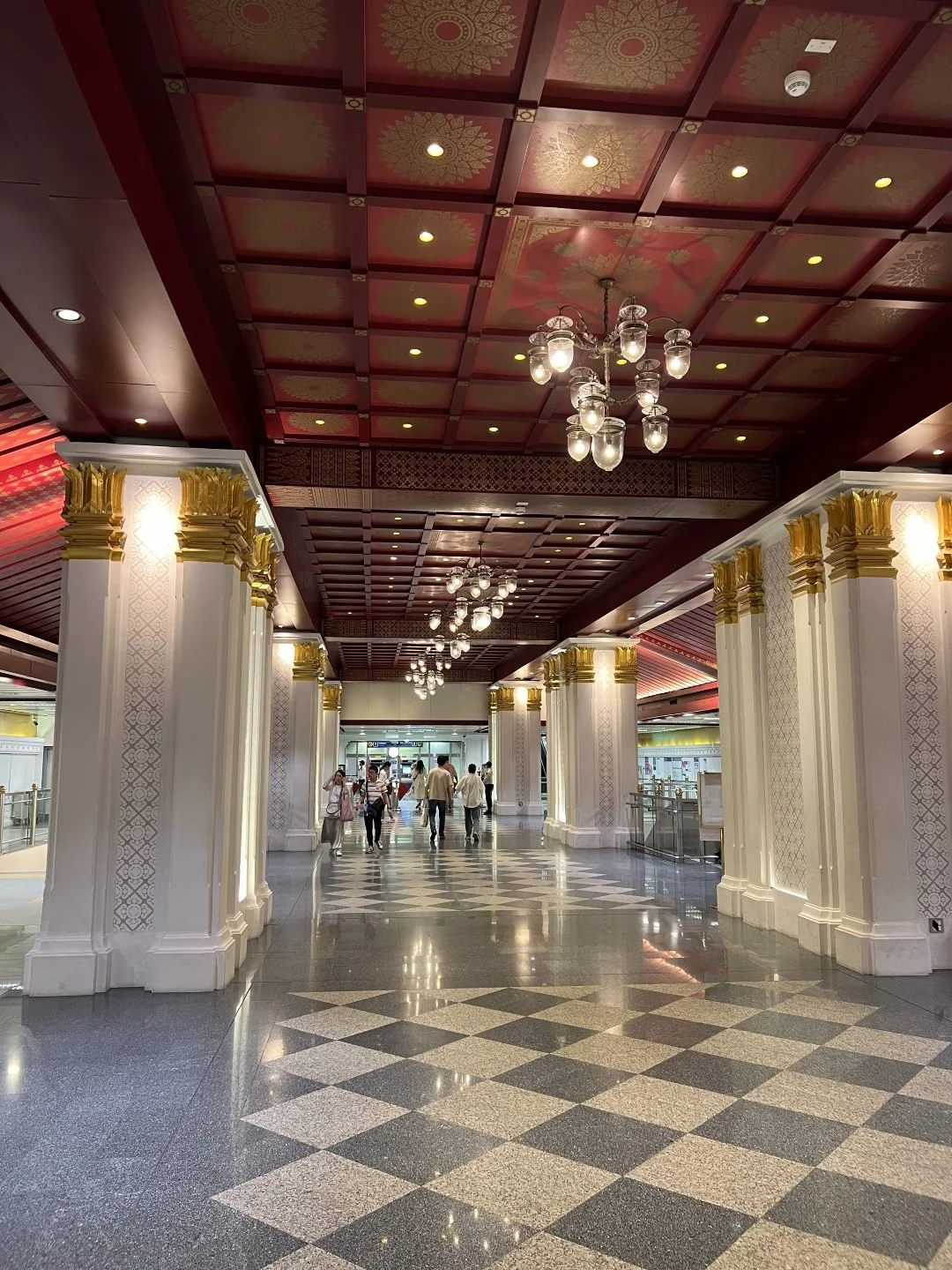
Sanam Chai Station
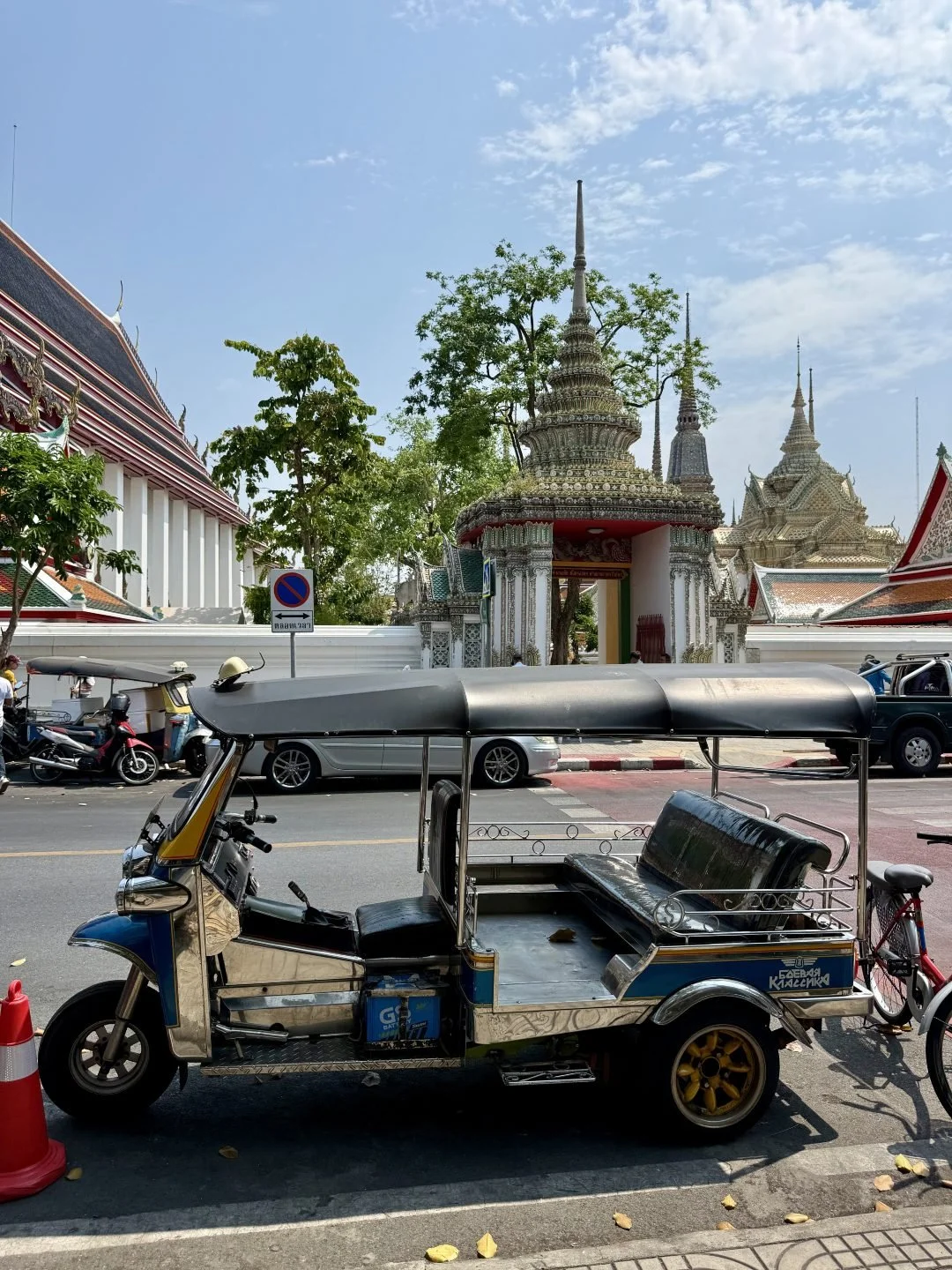
Tuk-tuks outside Wat Pho
The Perfect Day in the Old City
8:00 AM: Beat the Crowds at Wat Pho
We can’t stress enough how important it is to arrive at Wat Pho early and by early we mean at 8:00 AM as soon as the doors open. Even by 10:00 AM, the tour groups start flooding in and the chances of getting good photos are slim. We tried rocking up at 10:00 AM once and it was hectic, especially at the Reclining Buddha. You only need a couple of hours, but you could extend your time afterwards with a coffee and cake at A Pink Rabbit + Bob.
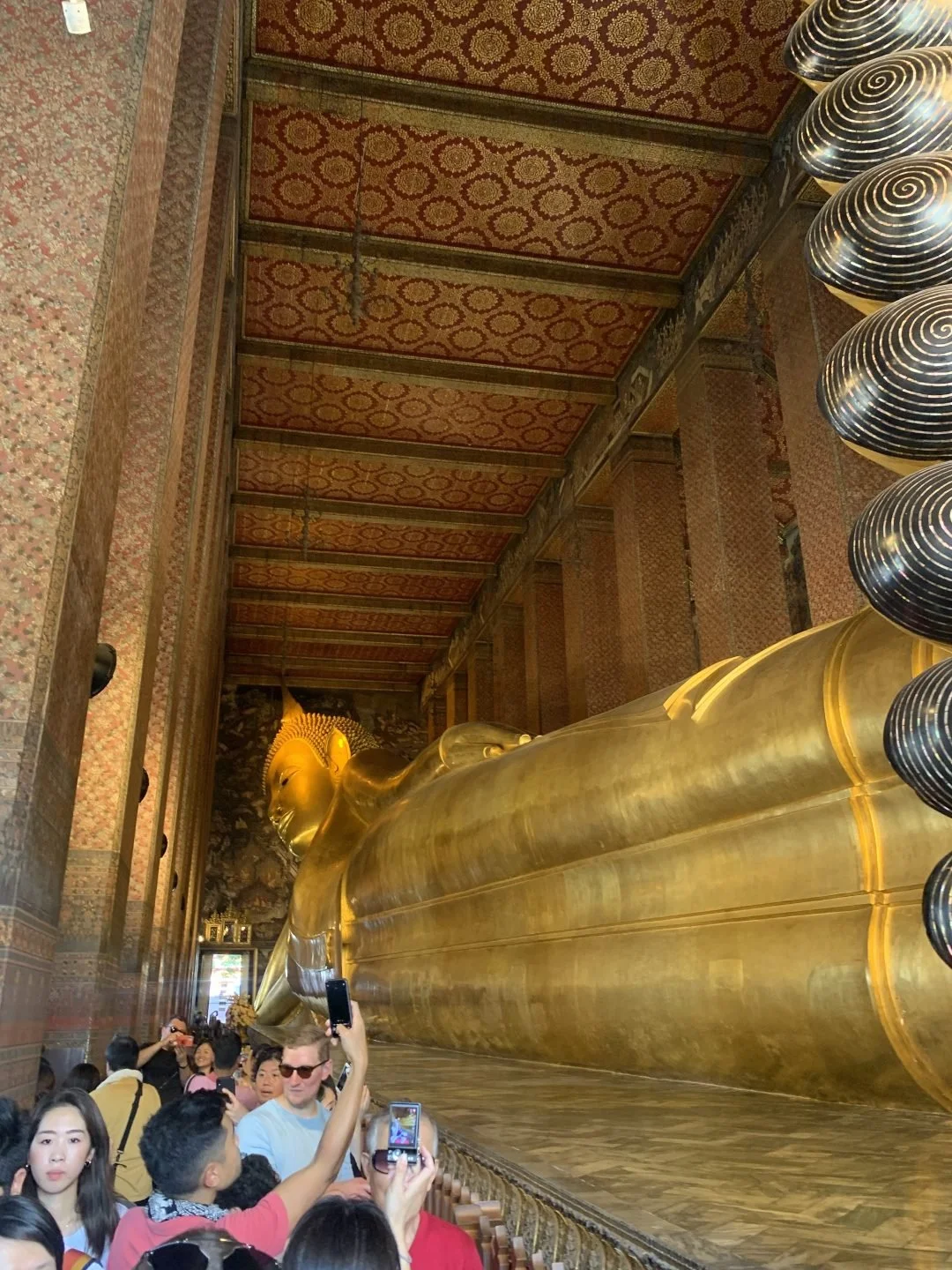
Crowds at Wat Pho
10:00 AM: Explore the Grand Palace
It takes 10 minutes to walk to the Grand Palace, another iconic complex in the Old City. You’ll want to spend most of your time at the Temple of the Emerald Buddha, as well as checking out the Ramakien Gallery, Royal Pantheon & Library, and various golden chedis dotted around the grounds. Again, up to two hours is all you really need at the Grand Palace.
Read more: How to Visit the Grand Palace in Bangkok: A Detailed Guide
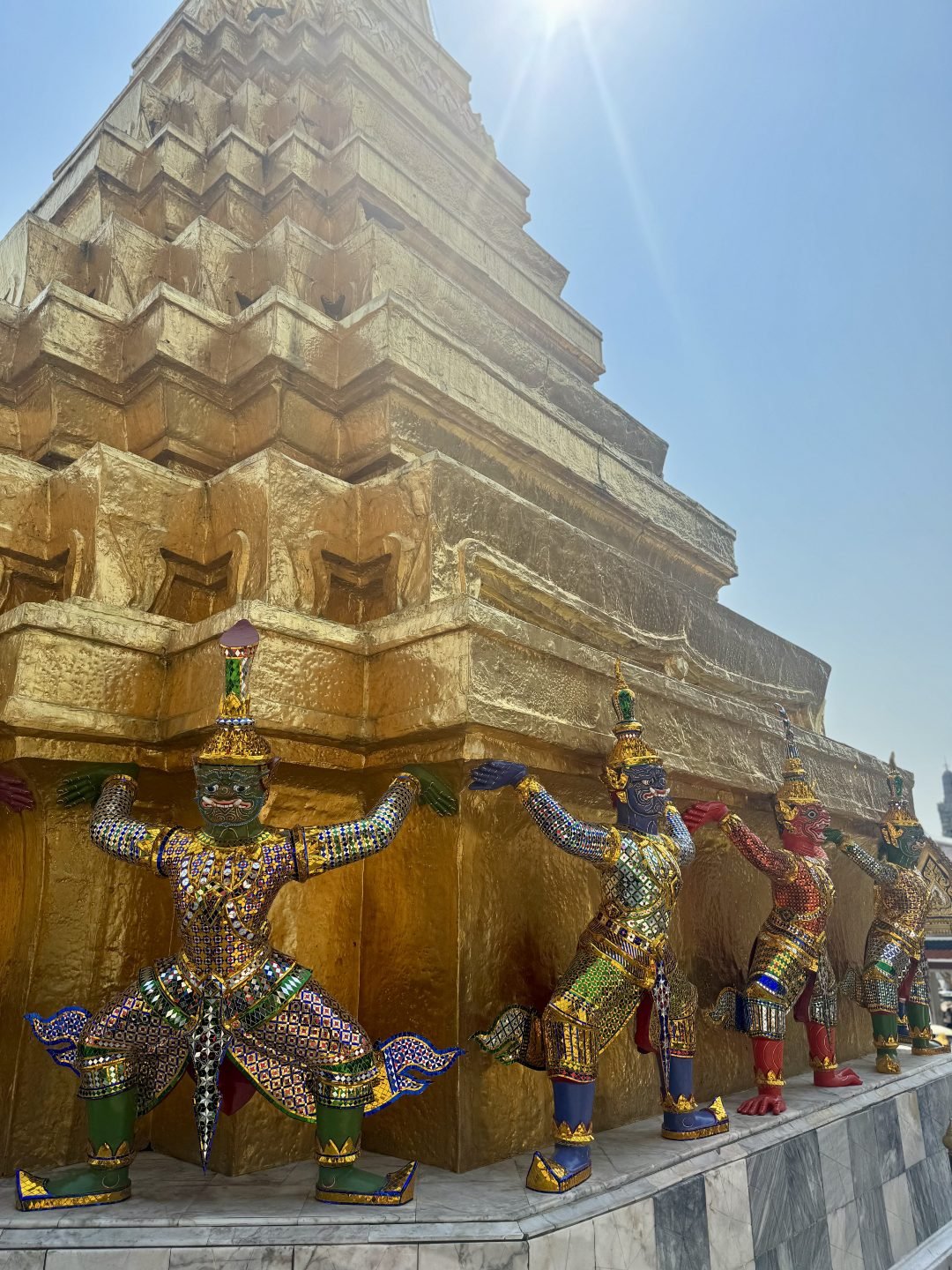
The Grand Palace
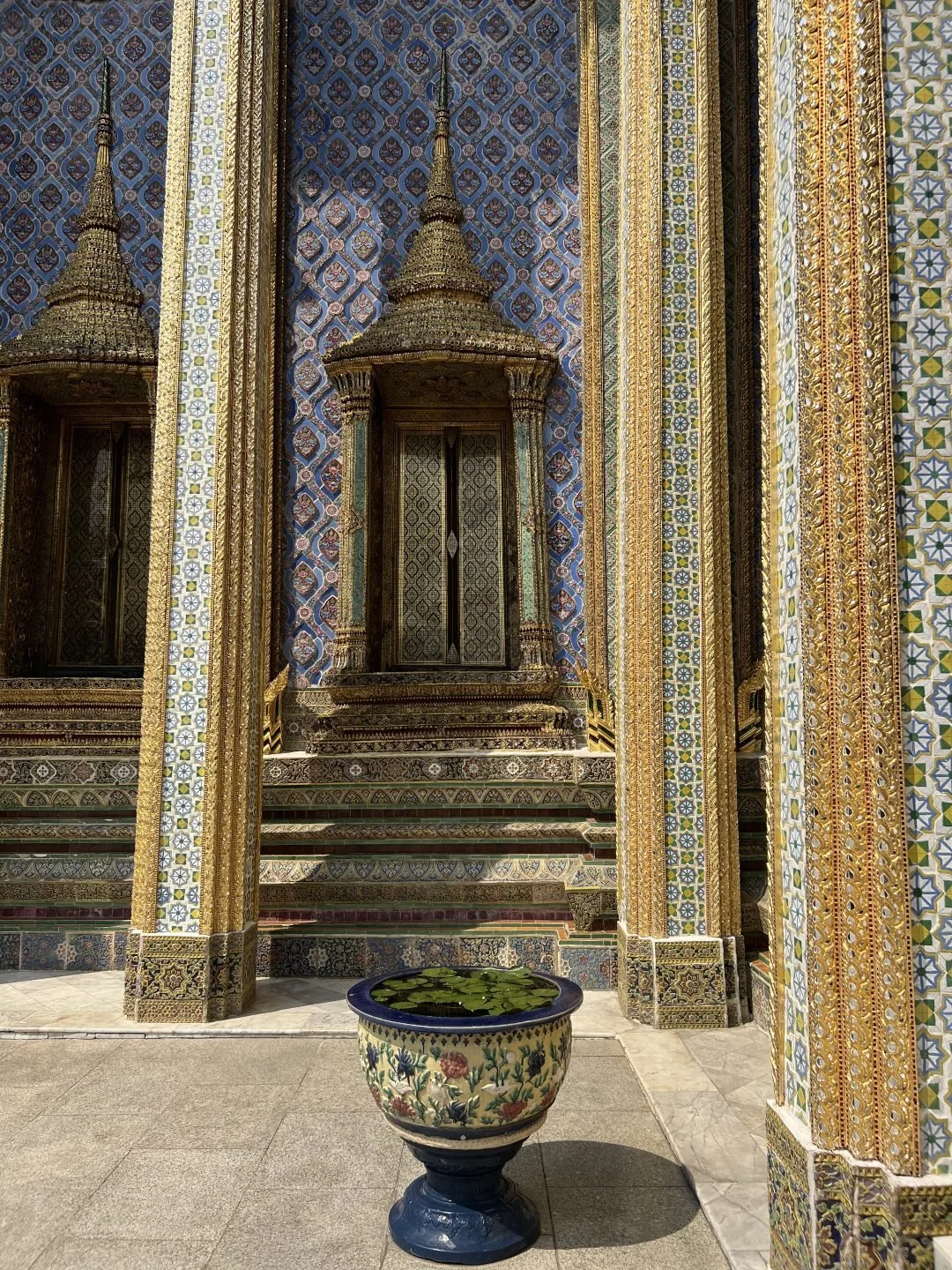
The Grand Palace
12:00 PM: Have Lunch at Tha Tian Pier
Two temples in and you’ll be fiending for lunch and a spot of shade. A great area nearby is Tha Tian Market - home to cafes, shophouses and views of the Chao Phraya River. We suggest grabbing lunch at a place where you can actually see the river, restaurants such as The Deck by Arun Residence. Here you can try a few Thai classics like Tom Yum or Pad Thai, and then sit back and enjoy the views of Wat Arun over a few ice-cold Singha beers.
2:00 PM: Cross the River to Wat Arun
From Tha Tian Pier, it’s a quick (3 minutes) and cheap (only 5 THB) ride across the river to Wat Arun. When the sun is beaming down in the afternoon, it may be hot but the bright light makes the porcelain spires glimmer - a spectacular setting for photography lovers. Be sure to walk partway up the central prang to get a nice view of the river and to see the layout of the Old City. If visiting three temples by yourself in one day sounds too hard, you can always book a private guided tour of Bangkok’s Big Three which makes the day more efficient and stress-free on your part.
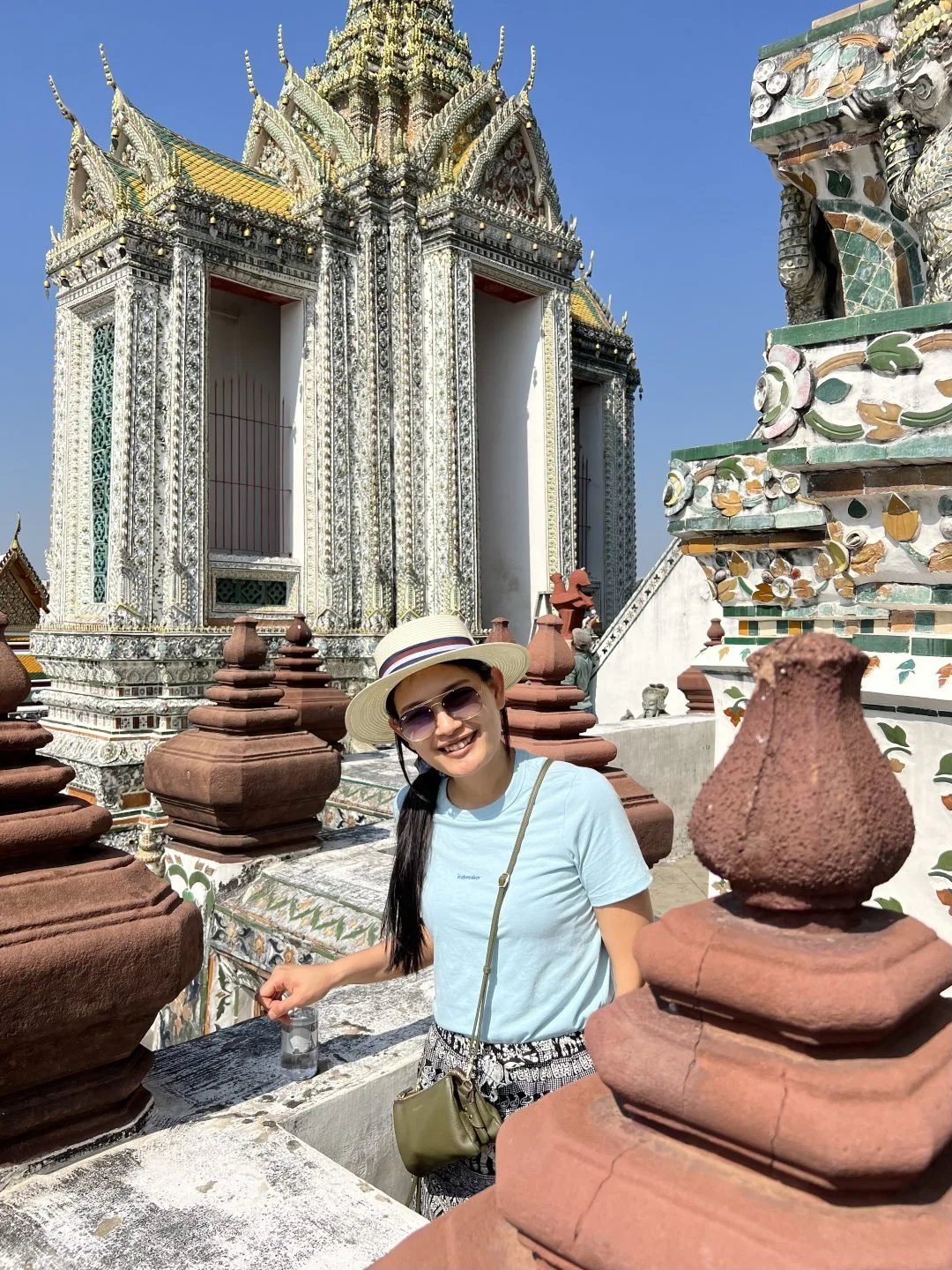
Wat Arun
4:00 PM Onwards: Rest Up & Enjoy the Night
By now you’ll probably be a little “templed out” and ready for a few hours of relaxation, ideally by a pool. We recommend staying at Casa Vimaya, a stone’s throw away from Khao San Road, and heading back here for a swim before you freshen up for the evening. Then at night, the Old City offers so much: you can watch Muay Thai fights at Rajadamnern Stadium, eat street food around every corner, and party all night down Khao San Road. As they say: one night in Bangkok and the world’s your oyster. For more amazing temples to explore in the Thai capital, be sure to check out our article on the Best Temples in Bangkok.
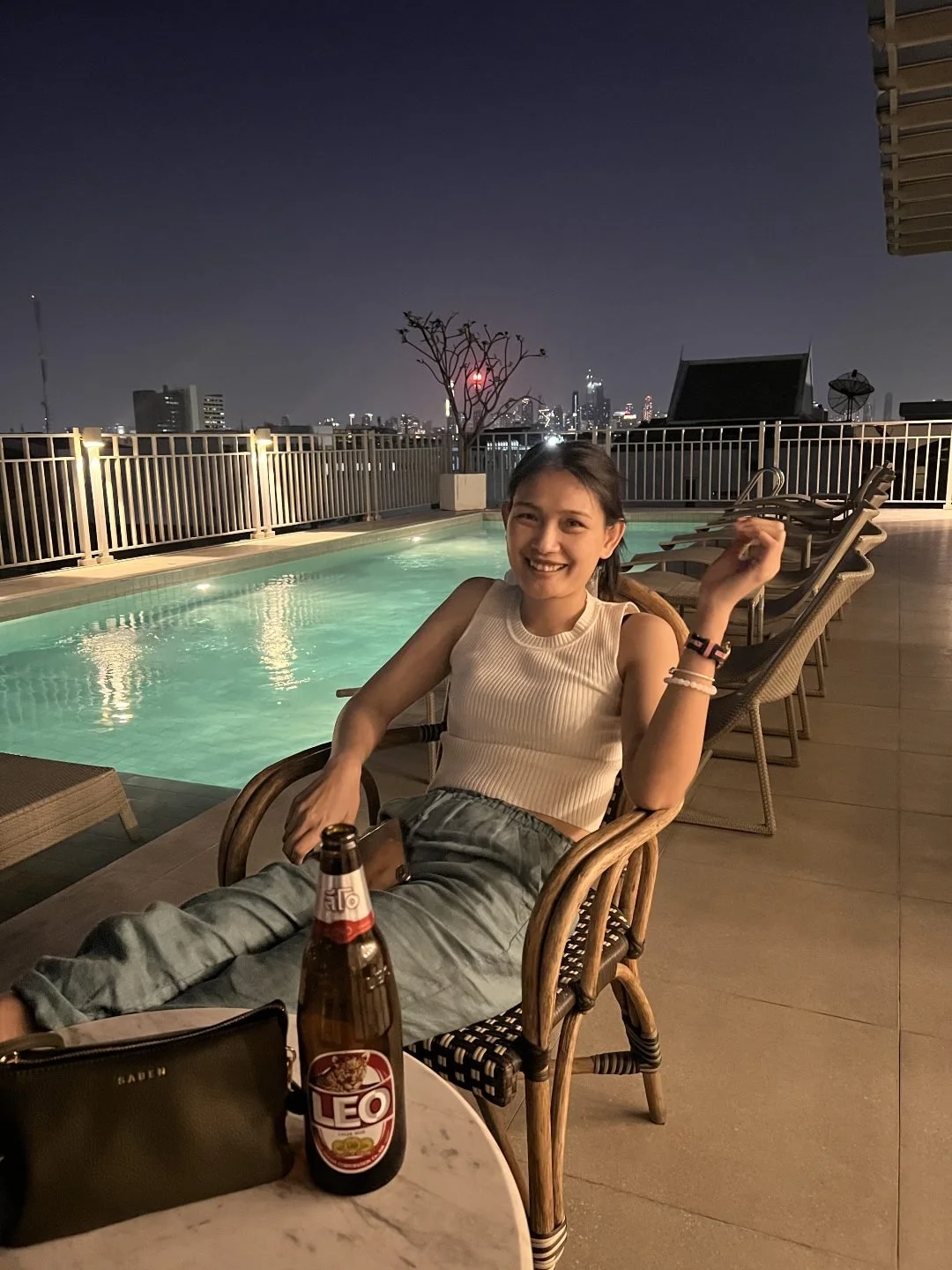
Casa Vimaya
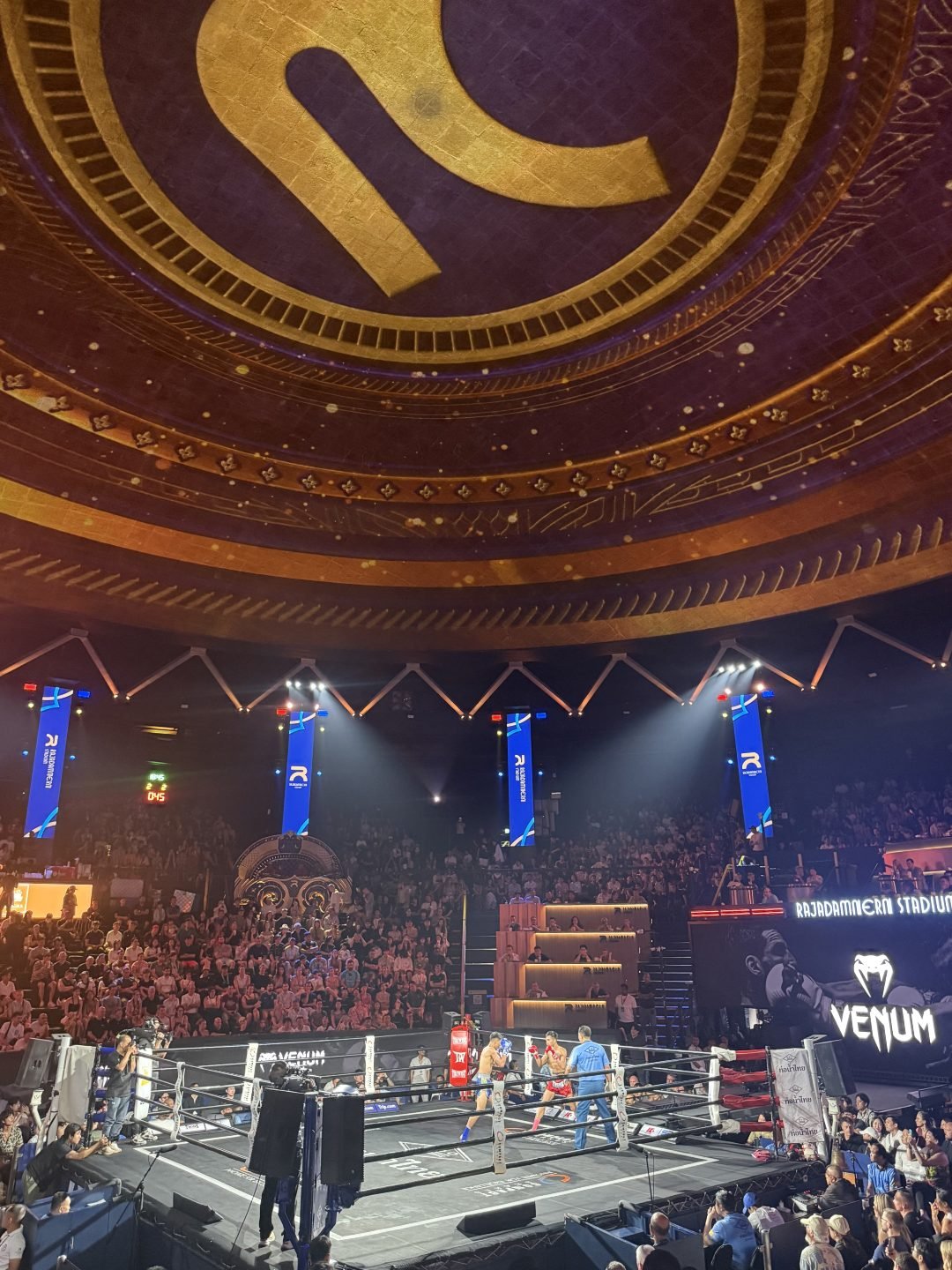
Rajadamnern Stadium
