
15 Best Things To Do in Chinatown: Bangkok’s Food Paradise
You can find a Chinatown in pretty much every major city in the world, but there’s something palpably special about the one in Bangkok. Its history dates back to the late 18th century, and over the years Chinese and Thai culture has blended together to create a full-on fusion of food, architecture and atmosphere. As you start from the Odeon Circle, with its “Friendship Gate”, you stroll down Yaowarat Road and get hit with a sensory overload: neon lights, sizzling hot woks and incense drifting out of shrines.
We always end up in Chinatown (for one reason or another) and never get bored. We’ve sat down hidden alleys gorging on hot pot, weaved our way through the tuk-tuks and Chinese script on the main drag, and explored the area on the back of motorbikes, and one thing remains the same: the energy is intoxicating. Whether you’re after fine dining or street food madness, our guide sets you up with the best things to do in this bustling district.
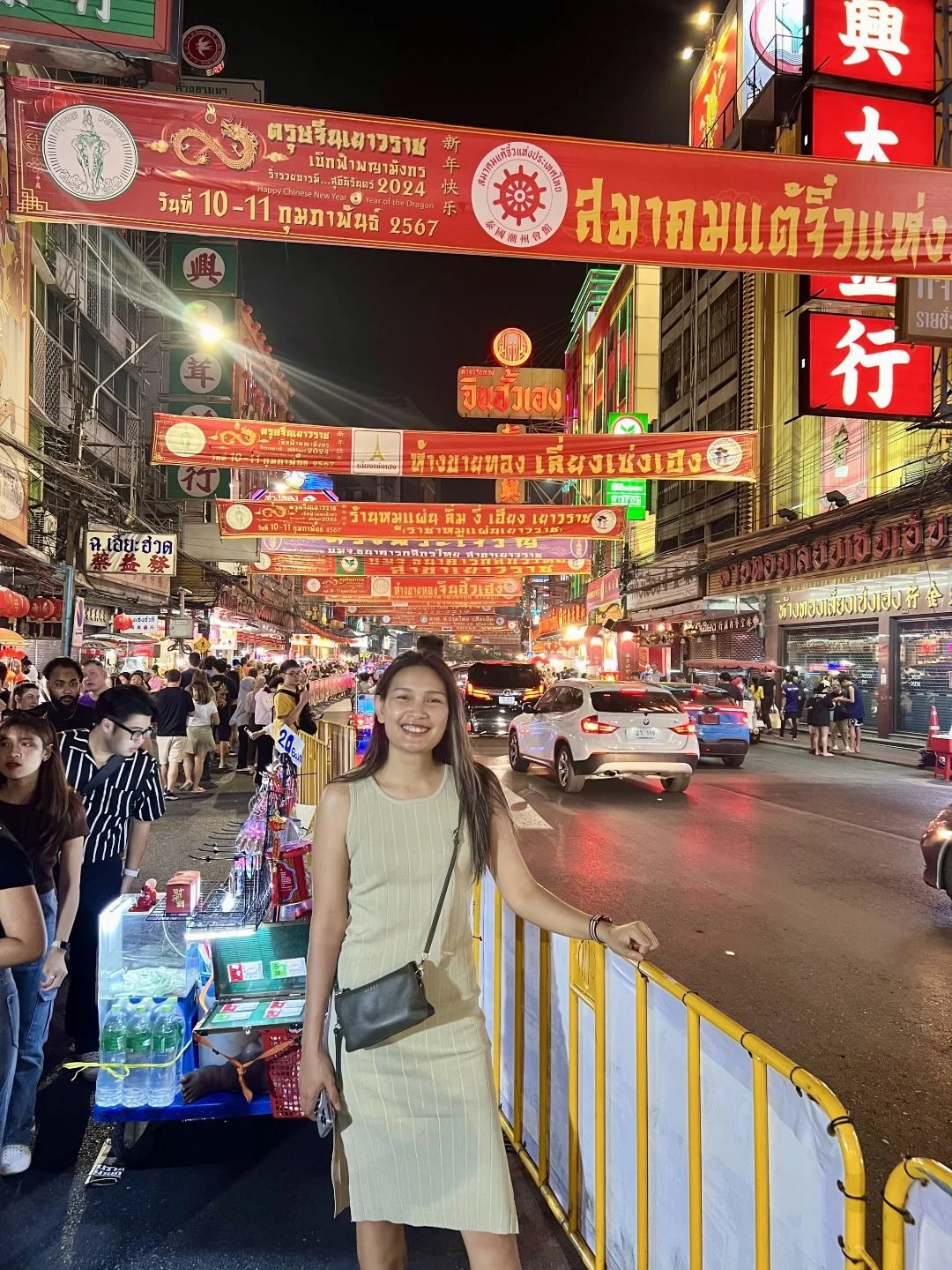
Kat exploring Chinatown
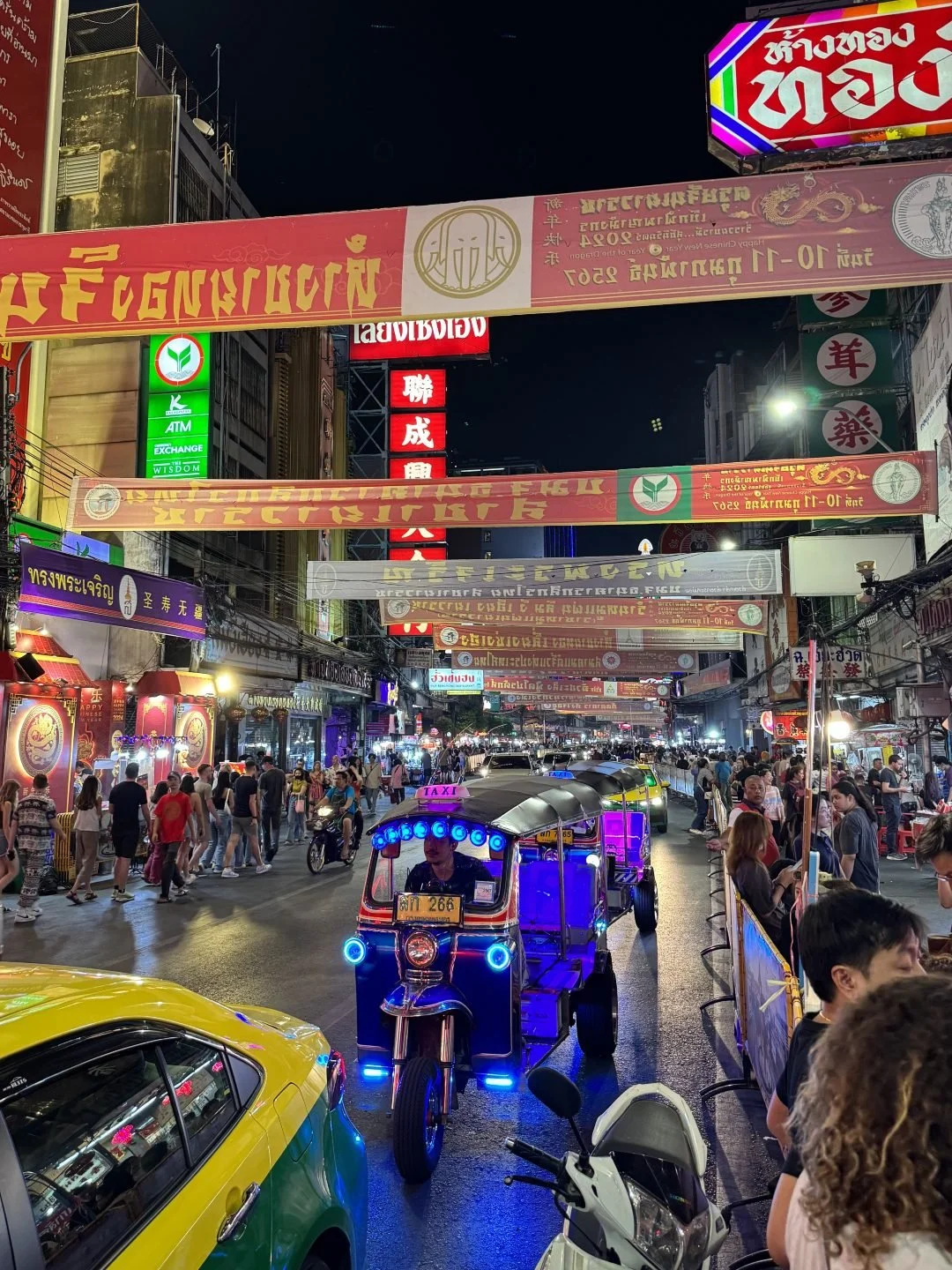
Chinatown Bangkok
15 Best Things To Do in Chinatown, Bangkok
1. Arrive on the Back of a Grab Motorbike
To kick off your Chinatown adventure, why not get there via the most fun method of transport Bangkok has to offer: the back of a motorbike. If you’re confident enough, you can hail an official motorbike taxi from a street stand - the ones called “Win” where the drivers wear orange vests. Or you could order your ride through the Grab or Bolt app (similar to Uber). By law, drivers have to provide a helmet but this is rarely followed on the streets of Bangkok and you have to explicitly ask for one. You should wear a helmet though, as police fines are becoming more common these days.
We arrived by motorbike once during Chinese New Year (Trut Chin) and encountered all sorts of festivities on the surrounding streets, including getting stopped in traffic by performers dressed in red who were dancing with a golden dragon puppet. These dragon displays act as a blessing for local shops, and the wider community, for the coming year. It was such a cool (and surprising) moment that Kat threw her fist in the air in pure joy.
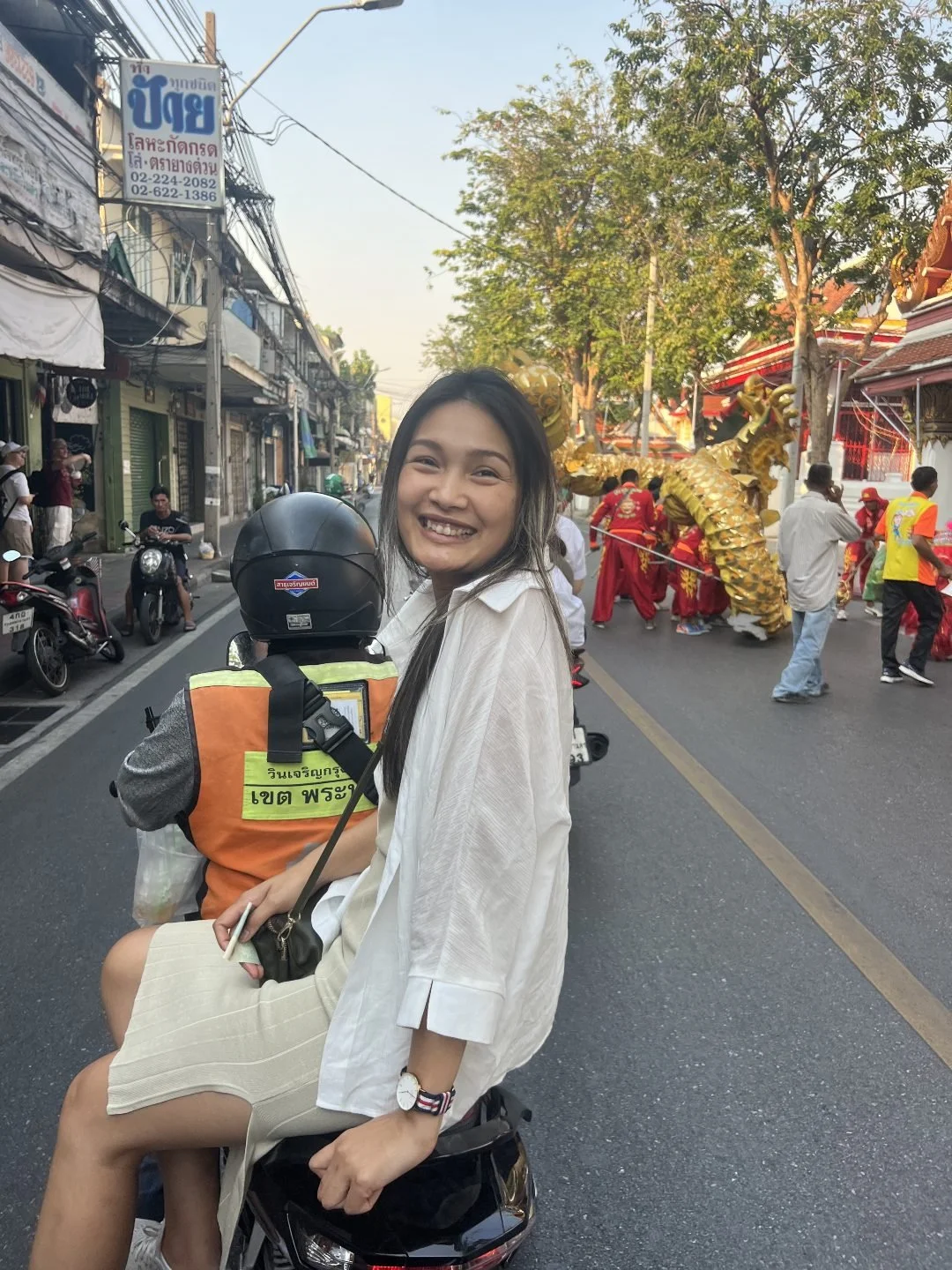
Kat on the back of a Win motorbike
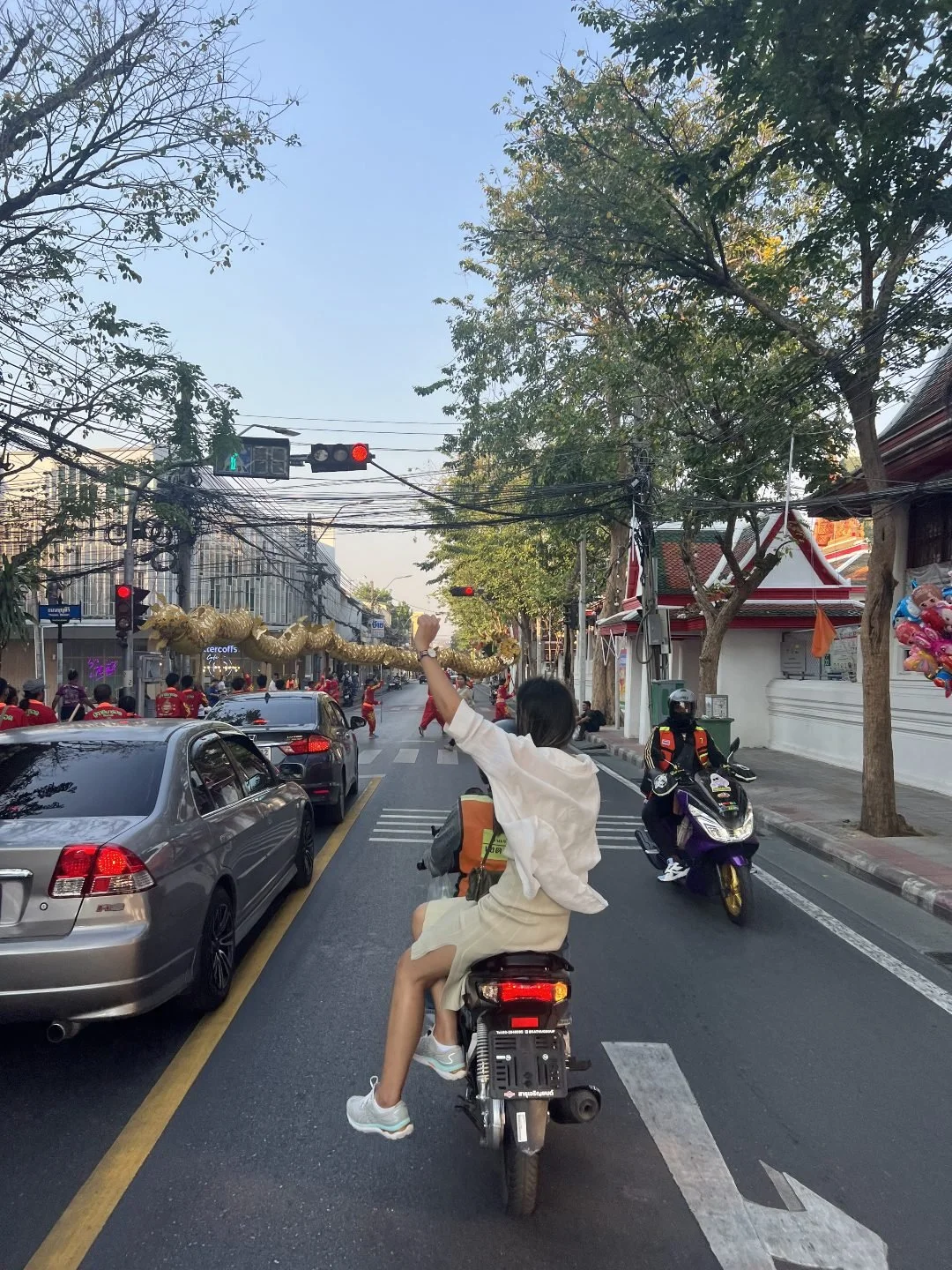
Kat on the back of a Win motorbike
2. See Chinatown’s Neon Lights at Night
The question of whether to visit Chinatown during the day or night is an easy one - definitely come at night. The neon lights and red lanterns add such an incredible energy to the streets, and not only down Yaowarat Road but the side alleys as well. Photographers in particular will love the scene: blue and yellow tuk-tuks parked up, orange local buses driving by and all sorts of colorful street food on display. The street food stalls pack away on Mondays, the city’s cleaning day, but apart from that are open every day of the week. We recommend coming between 6:00 PM and 10:00 PM for the best vibe.
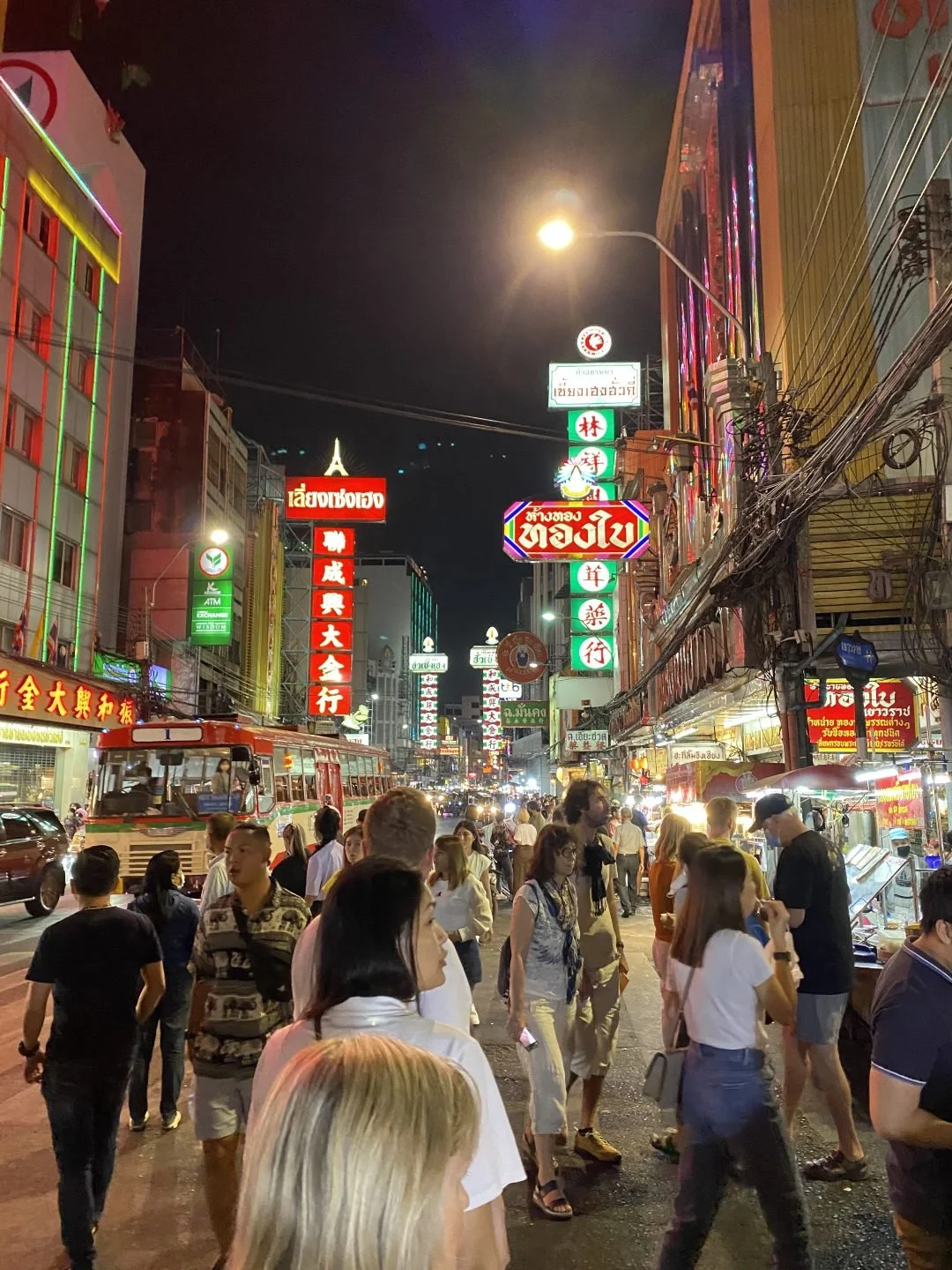
Neon lights of Chinatown
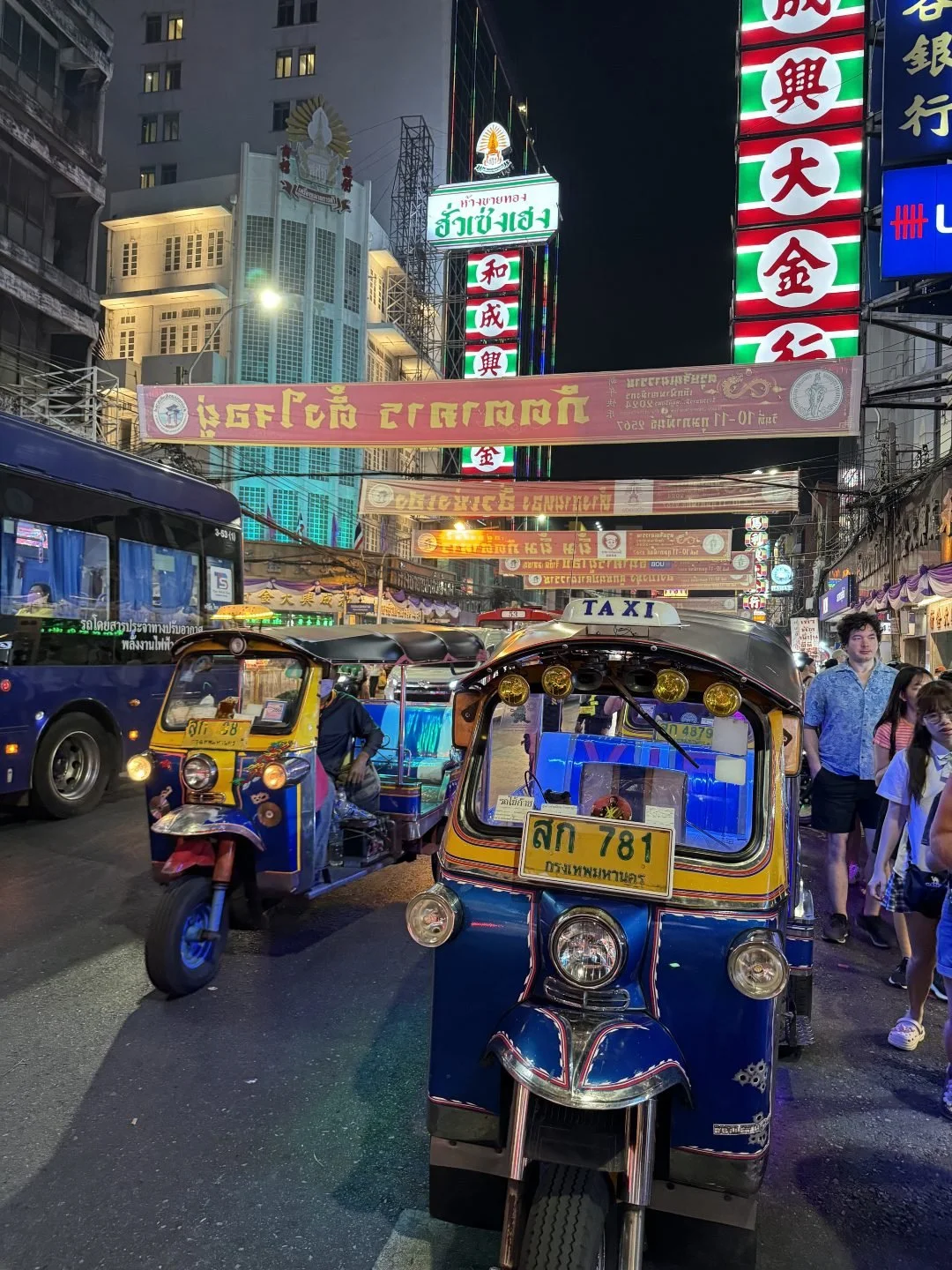
Neon lights of Chinatown
3. Have Thai BBQ (Mookata) in Chinatown
Chinatown doesn’t just offer Chinese food, believe it or not, there’s also a range of Thai options and even international cuisine on its periphery. One time with Cam’s family, we stumbled upon a fantastic Mookata restaurant down a random side alley. This local joint had nothing more than plastic stools, DIY Thai BBQ sets (Kat took charge of this) and cold Chang beer. We sat here for a few hours, dipping the pork into delicious spicy sauces, enjoying the hearty soup from the moat of the grill, and just soaking up the atmosphere of a little hidden gem. It was an awesome experience.
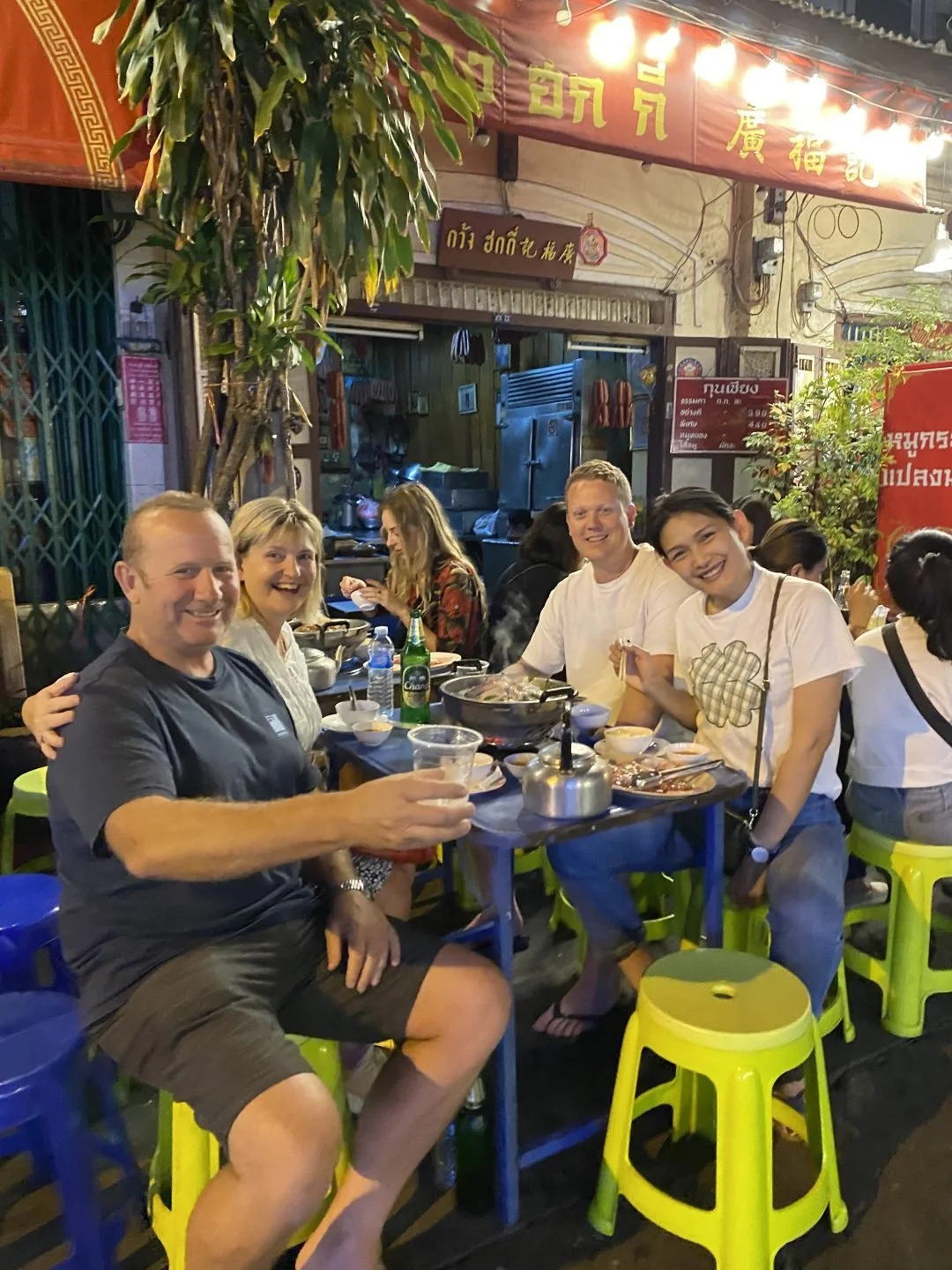
Thai BBQ (Mookata) with Cam’s family
4. Snack on Street Food Down Yaowarat Road
Definitely have dinner before you start gorging on the snacks of Yaowarat Road, otherwise it’s impossible to not spoil your meal. Xie Chinatown is a great choice prior to tackling the street food, with its famous stir-fried Hong Kong Noodles made with fresh crab and bean sprouts. Then you can dive into a world of crispy chive dumplings, red bean bao buns, and even Thai bites like Sai Krok Isan (sour sausage) and Ma Muang Bao (sour green mango).
Read more: What to Eat in Thailand: 50 Must-Try Dishes for Your Trip
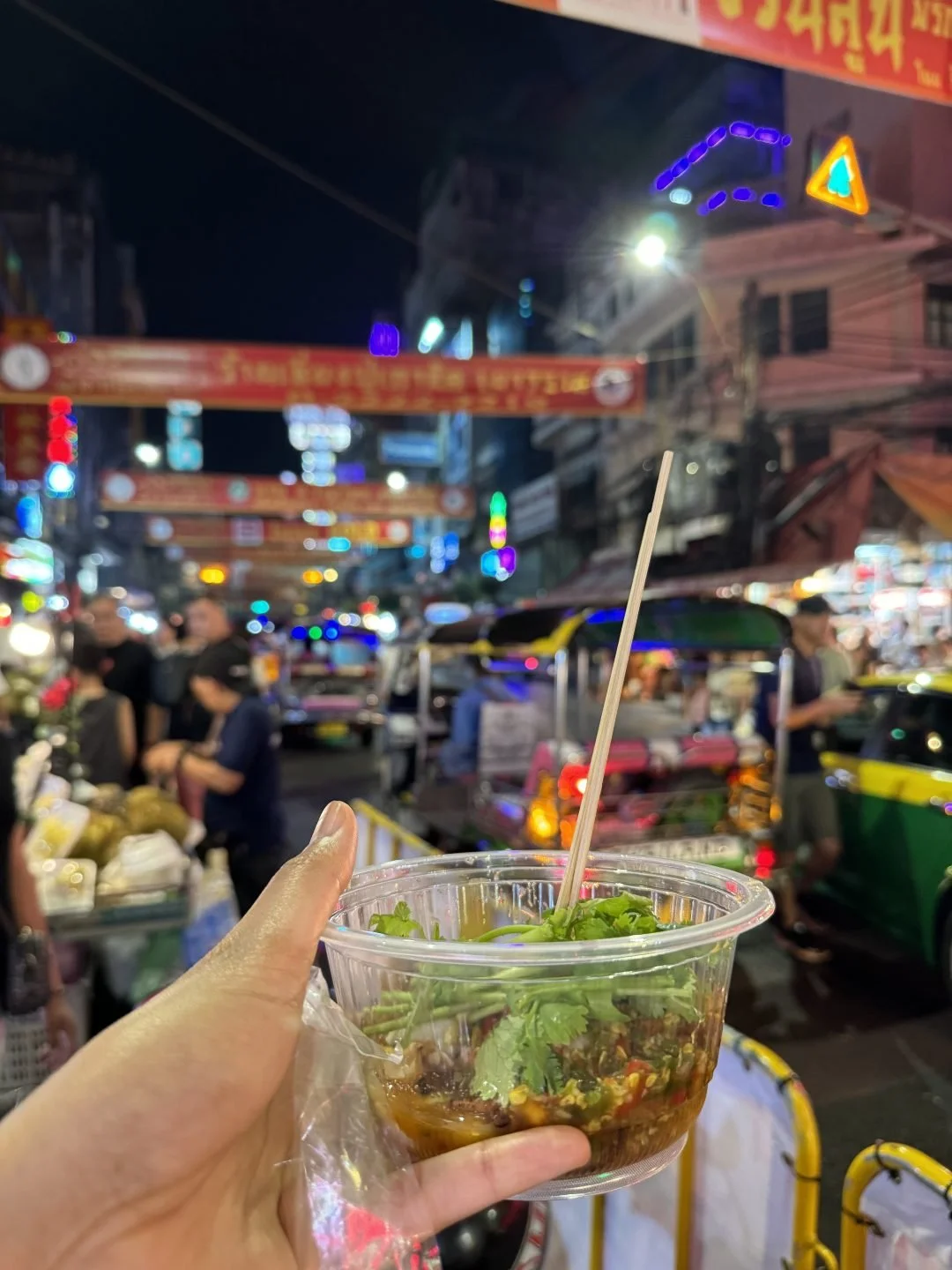
Street food down Yaowarat Road
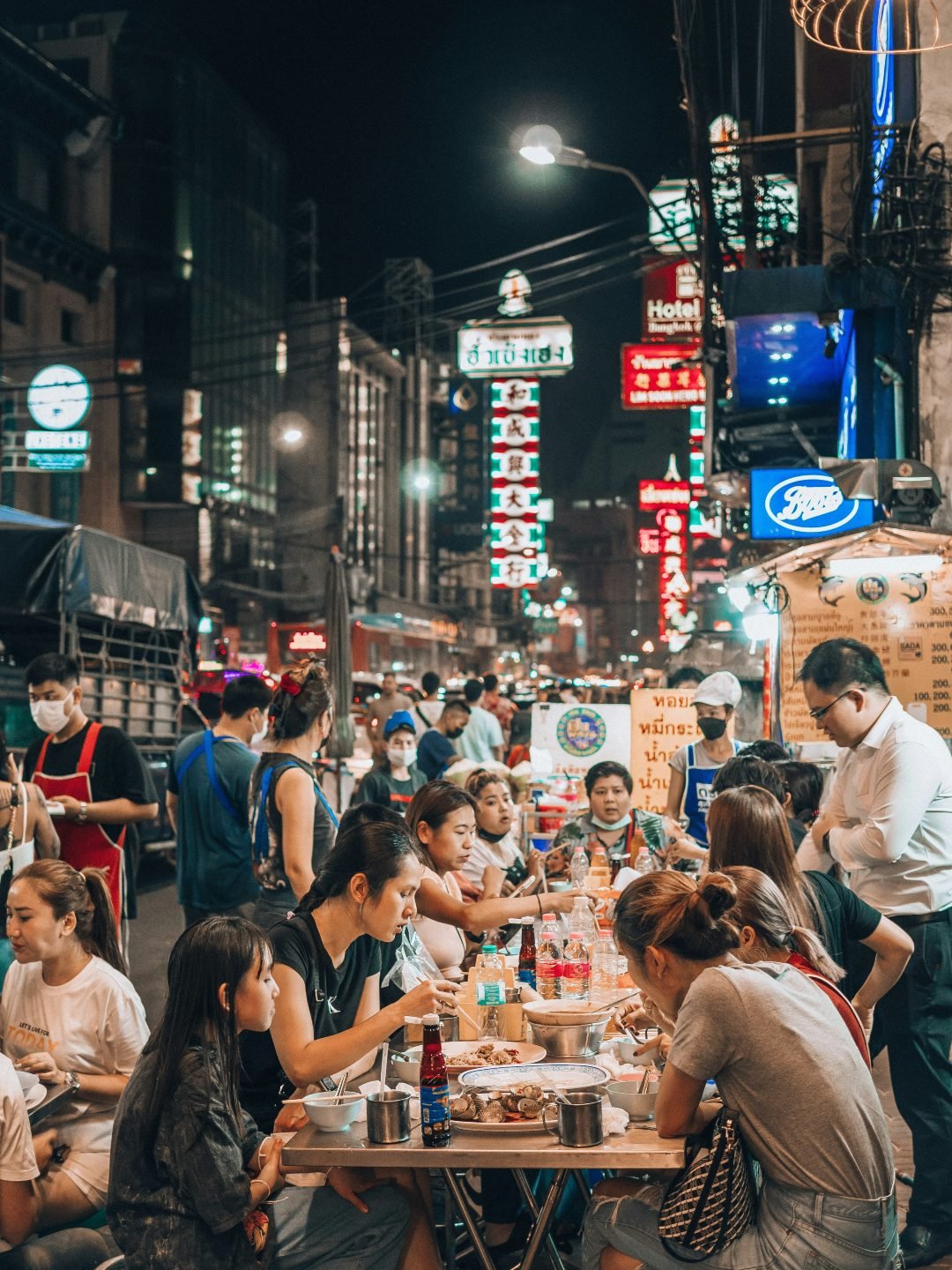
Street food down Yaowarat Road
5. Enjoy a Fine Dining Experience at POTONG
We know this recommendation won’t be for everyone, due to the price and pre-planning involved, but it’s still one of the stand out experiences of Chinatown. POTONG is a Michelin-starred restaurant run by the famous local chef Pichaya Soontornyanakij, simply known as “Chef Pam”. She created this restaurant in a Sino-Portuguese shophouse, which used to be her family’s Chinese medicine pharmacy. Food wise, you can expect a multi-course meal of progressive Thai-Chinese cuisine. But just know that tables book out months in advance, so you’ll need to secure your spot ASAP.
6. Explore the Little Treasures of Song Wat Road
Song Wat Road is just a few streets over from Chinatown, and makes for the perfect introduction to the area before heading to Yaowarat Road at night. Walking from one end to the other, you’ll come across a wonderful array of art galleries, boutique shops, and trendy cafes where you can stay properly caffeinated throughout. Be sure to do some vintage shopping at Road of Cinnamon, and don’t miss out on the mango sticky rice from Wanjai Cafe House (some of the best you’ll find in all of Bangkok).
Read more: Song Wat Road (Bangkok): A Guide to Art, Cafes & Food
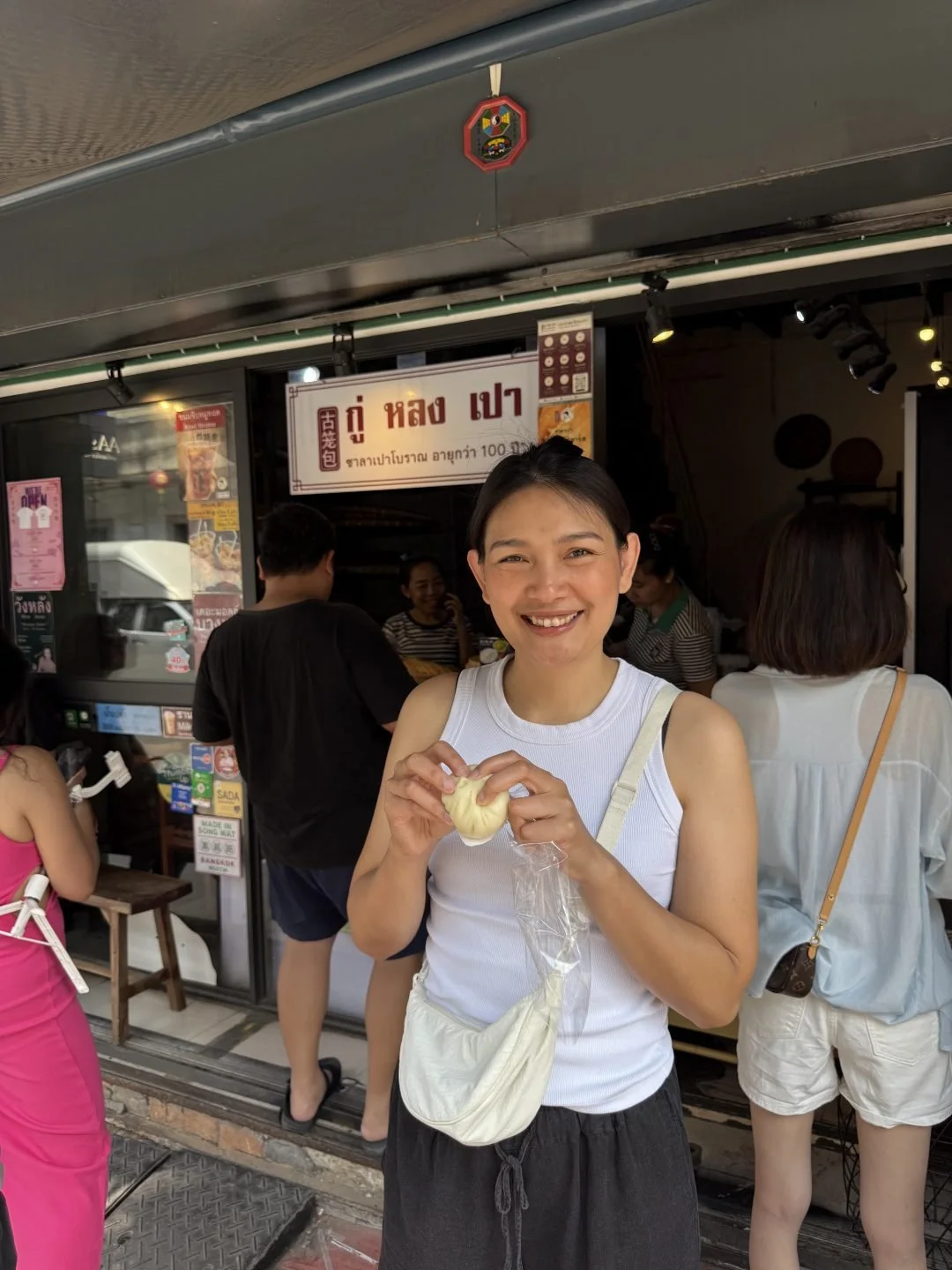
Bao buns at Song Wat Road
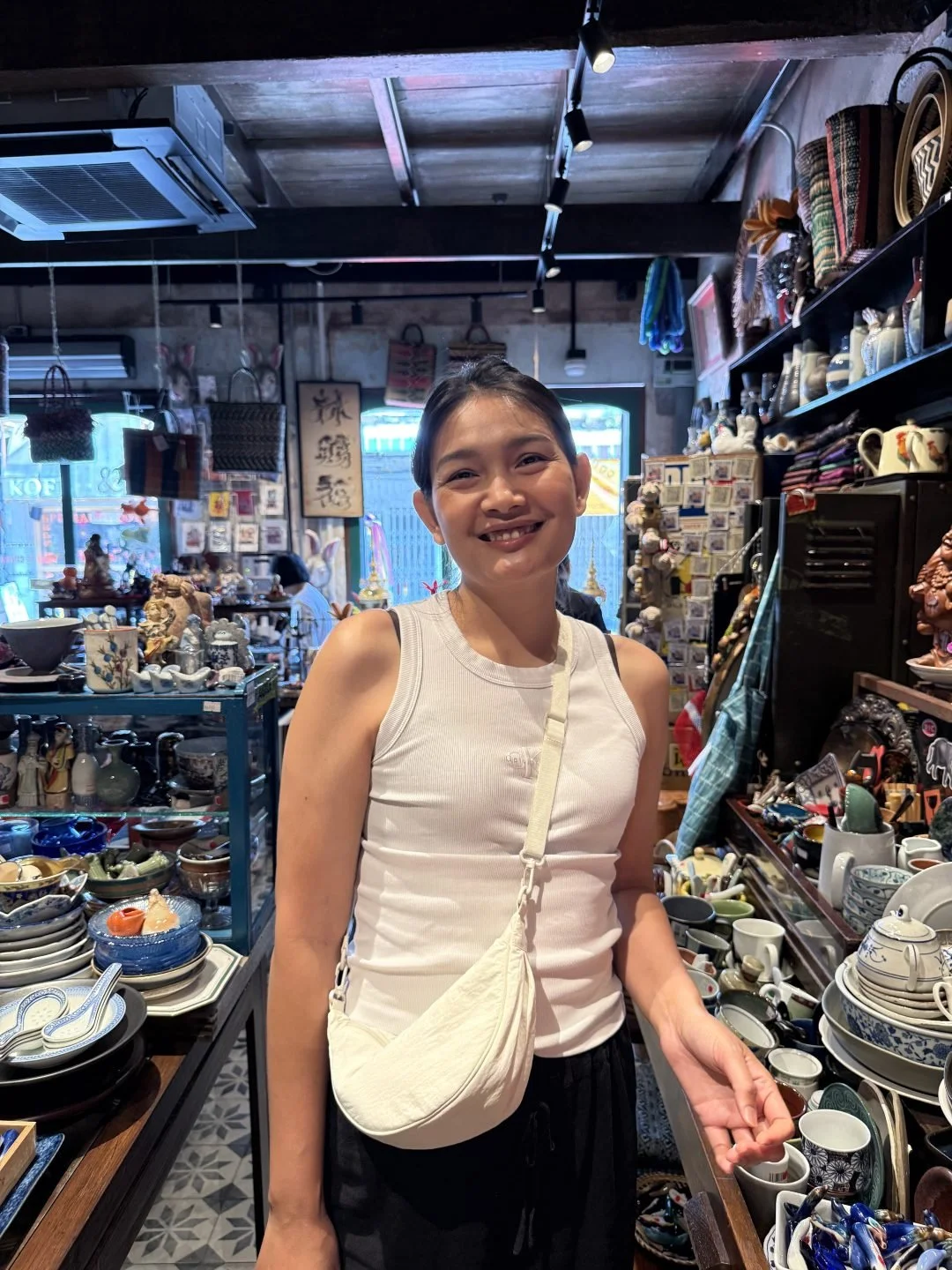
Road of Cinnamon, Song Wat Road
7. Hunt for Street Art in Talat Noi
Talat Noi is another neighborhood around the Chinatown area worth checking out, mainly for its street art but also for its quirky attractions like the metal Transformer sculptures made out of rusty car parts. You could spend a good few hours here getting lost in the narrow streets and stumbling upon shrines, colorful wall murals and cafes hidden inside old shophouses. You can even stop for lunch somewhere by the Chao Phraya River.
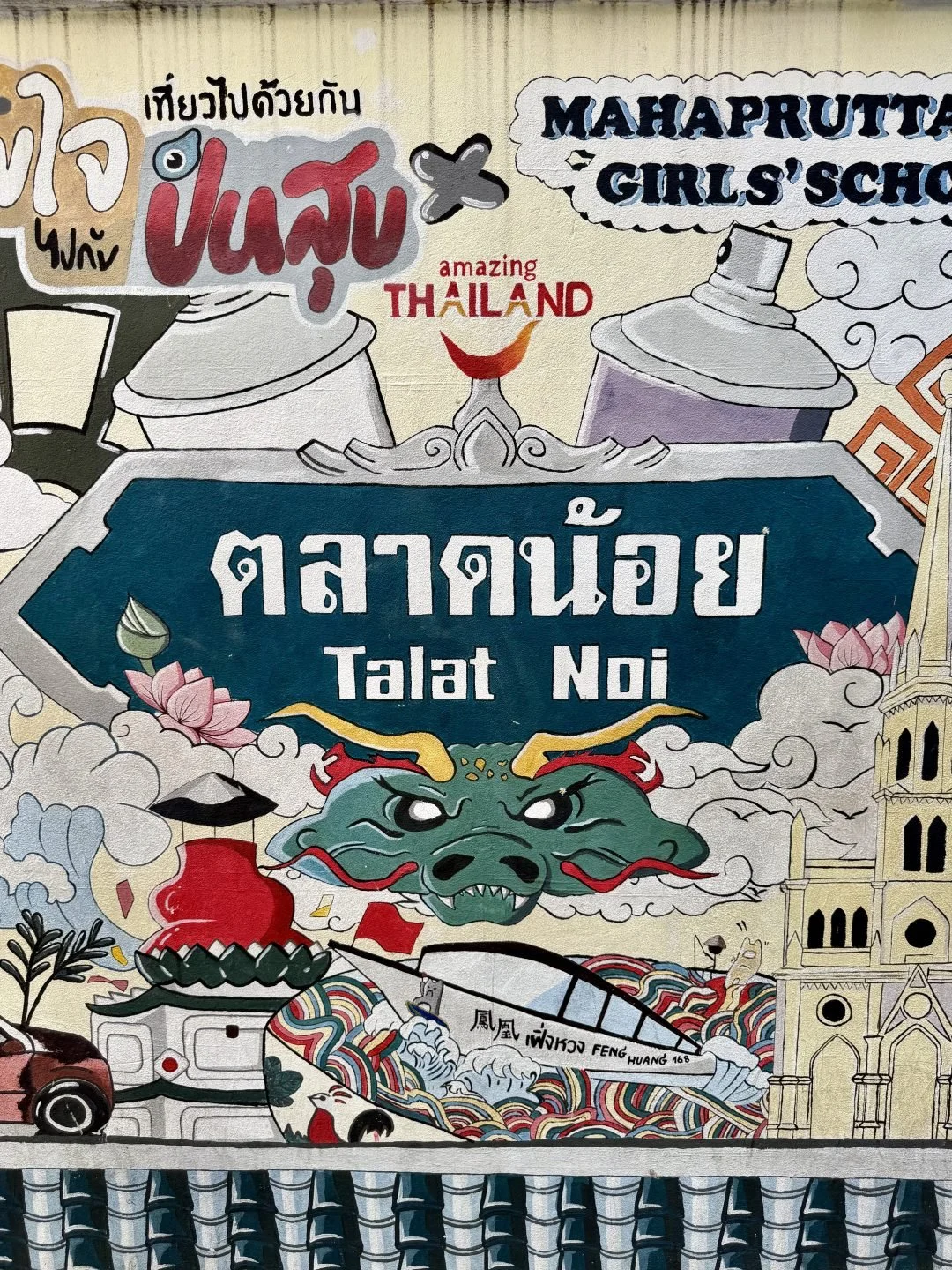
Street art in Talat Noi
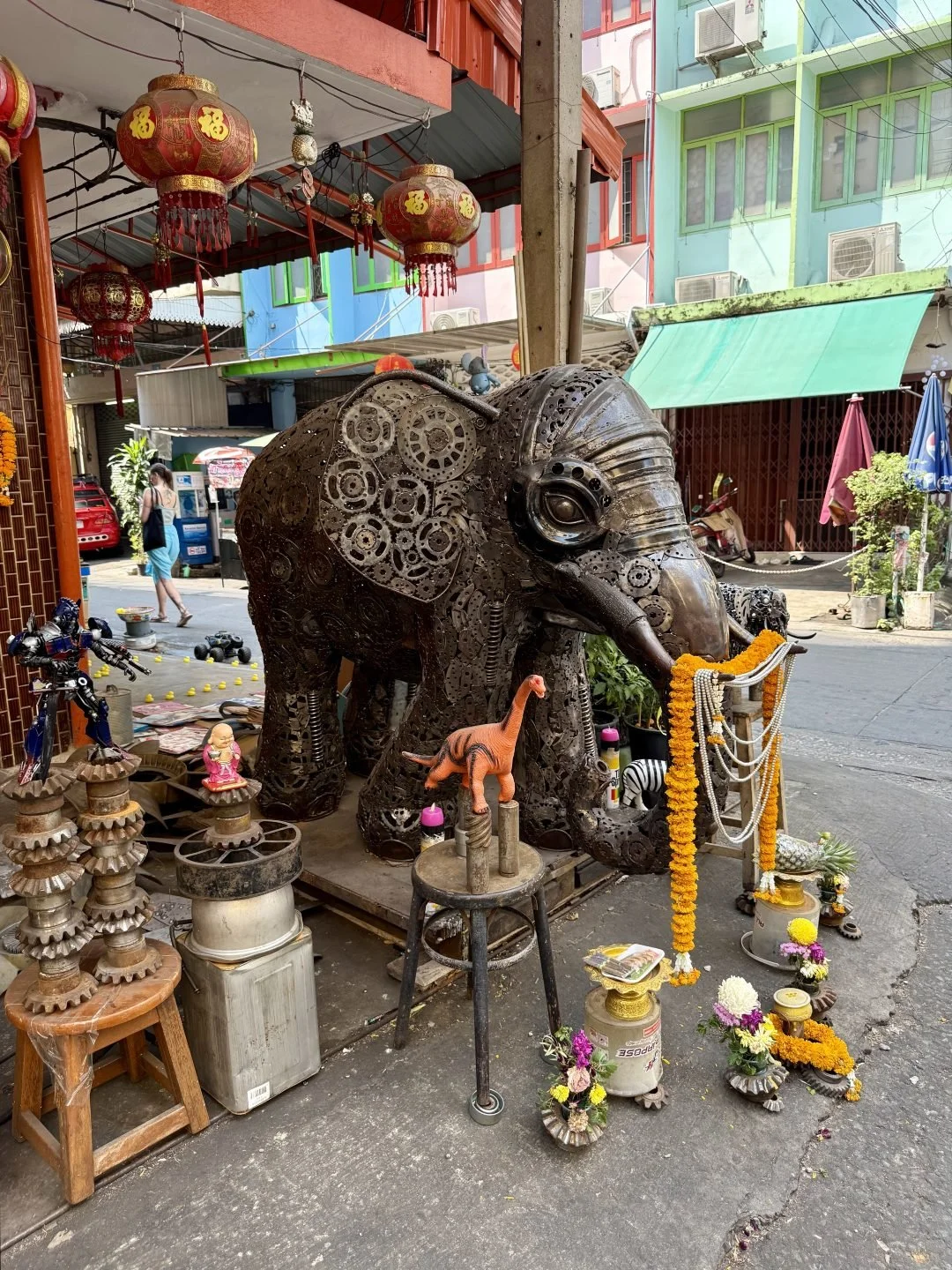
Metal sculptures in Talat Noi
8. Shop at the Sampheng Market
The Sampheng Market gives you a glimpse into the Chinatown of old - a wholesale market that’s been run by Chinese settlers since the 1780s. Inside the long skinny alleyway you’ll find everything from jewelry to cheap electronic goods, however you don’t actually need to do any shopping to enjoy it. Simply stroll on down and soak up the local vibe, with the sounds of bartering, motorbikes squeezing by and carts being loaded by local vendors.
9. Admire the Golden Buddha at Wat Traimit
The best temple to visit in Chinatown has got to be Wat Traimit: a beautiful marble building with golden touches that towers over the local streets. If you pay the 140 THB entry fee (for the museum and statue combo), you can walk all the way up to the cramped but cozy upper floor which houses the Phra Phuttha Maha Suwanna Patimakon - the largest solid gold Buddha statue in the world weighing an astonishing 5.5 tonnes.
Read more: 10 Best Temples in Bangkok: What to See & What to Skip
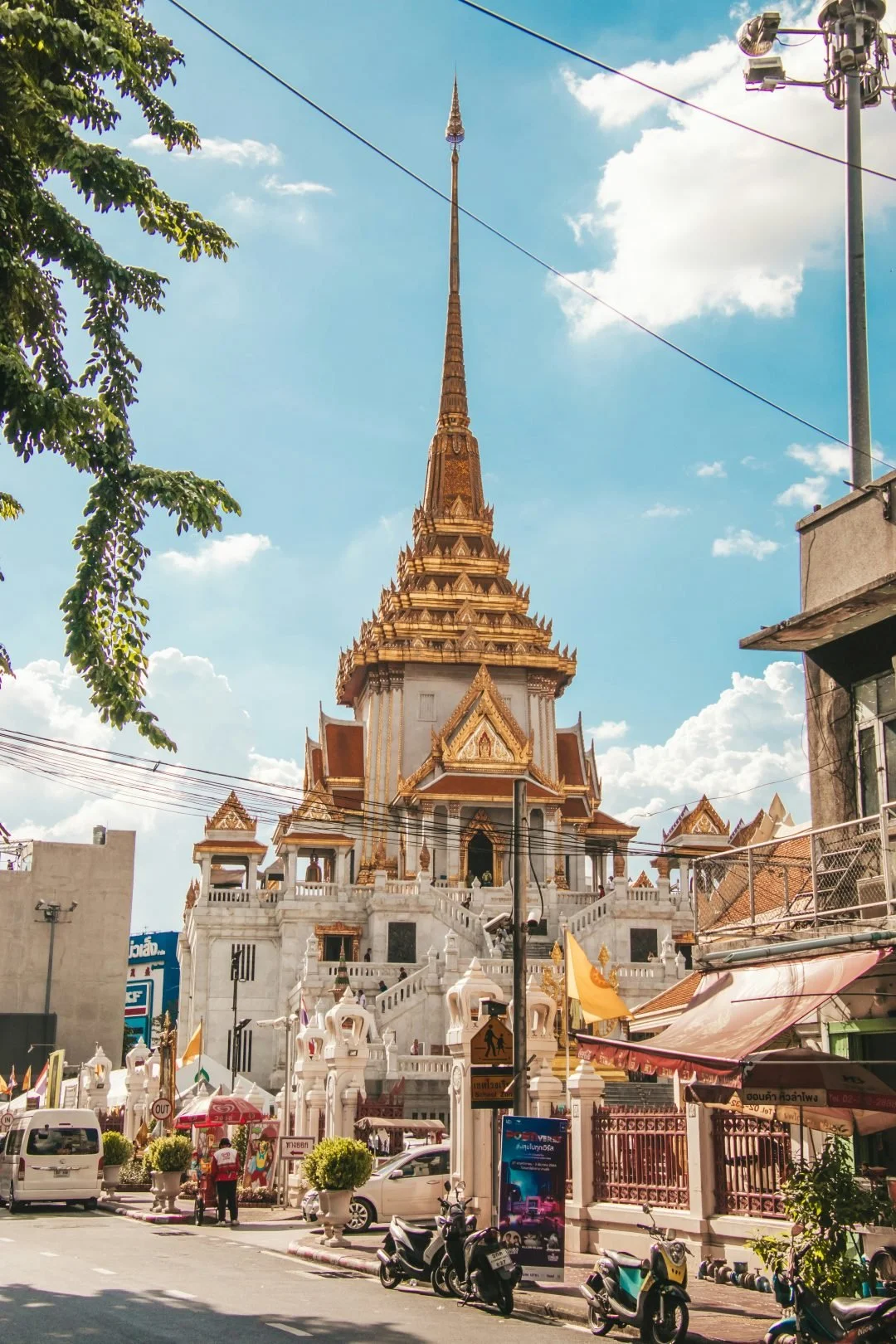
Wat Traimit
10. Discover Chinatown’s Best Bars & Rooftops
Chinatown’s nightlife scene is unknown to most travelers, simply because many of the best venues are nestled down dark alleys or tucked behind secret doors. To get things started, head to Ba Hao on Soi Nana which is a moody cocktail lounge featuring dim red lights. Down Yaowarat Road itself, there’s the hidden gem of Widdershins - a secret speakeasy hidden on the third floor of the Laoteng restaurant and accessed by opening a bookcase door, with a cute little terrace offering views of Yaowarat’s neon lights. For something totally unique, try a place called Wallflowers Upstairs.
Read more: 10 Best Rooftop Bars in Bangkok: From Nobu to Lebua
11. Hang Out at Soi Nana, Chinatown
Not to be confused with the wild “Nana Plaza”, this small enclave in the backstreets of Chinatown offers something different: a small slice of local bohemian culture. At Soi Nana, you’ll find independent art galleries, craft beer and candle-lit cocktail lounges - all housed in old Sino-Portuguese shophouses. Many of the bars serve cocktails mixed with Chinese herbs and spices, which pairs perfectly with the unrenovated interiors.
12. Get Lost Down the Hidden Side Alleys
Yaowarat Road is certainly the star of the show, however the unrelenting crowds can make it a chaotic experience (especially on the weekends). To avoid the sea of tourists and find a bit of quiet, we recommend exploring the little “sois” and side lanes - because you never know what you’ll see. Wherever you go, have your camera ready as these side alleys are perfect for street photography: grandmas collecting their washing, little shrines sitting outside homes, and artisans tinkering in their open garages.
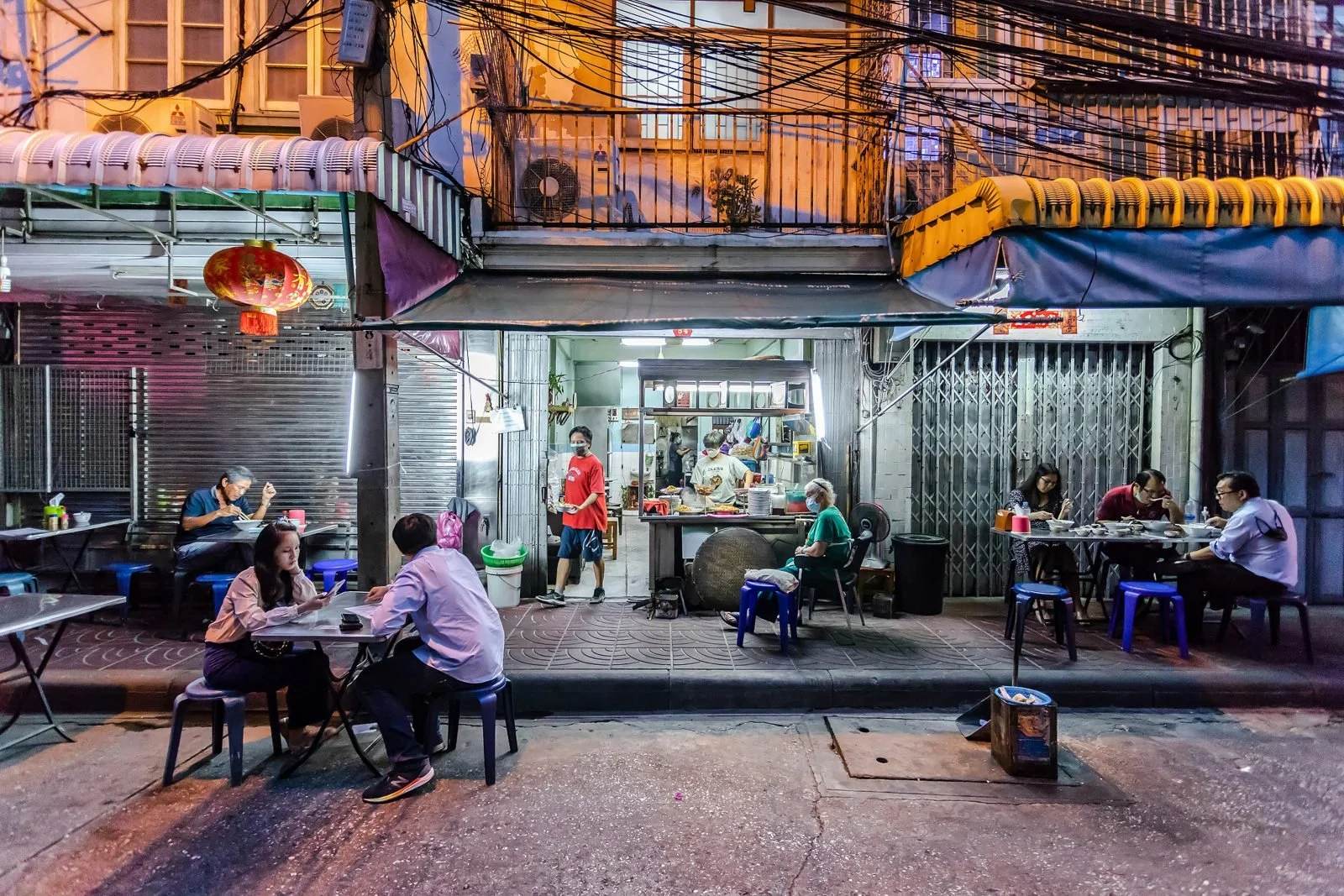
Side alleys of Chinatown
13. Visit Wat Mangkon Kamalawat (Wat Leng Noei Yi)
Wat Mangkon Kamalawat (Wat Leng Noei Yi) is situated around the corner from Yaowarat Road next to the Wat Mangkon Station (MRT). It’s one of the most important Chinese temples in Bangkok, with tiled roofs and a stunning red and gold interior. It’s not as impressive as Wat Traimit in our opinion but still worth visiting, particularly during the Chinese New Year. You can come here and watch locals make offerings and pray for good luck, health and wealth - or participate in the devotions yourself.
14. Book a Guided Food Tour of Chinatown
A food tour is a great way to savor the flavors of Chinatown, especially the small group ones that guide you through the maze of alleyways with no more than 8 people in your group. The tour recommended below does exactly that, giving you a feast of street food to try with over 15 tastings, including a couple of Michelin-listed spots. You’ll have your appetite well and truly satiated, and even make new foodie friends along the way.
Book here: Backstreets Food Tour with 15+ Tastings
15. Go During the Chinese New Year Period
Chinese New Year, which falls between the end of January and the middle of February, is an amazing time to visit Bangkok’s Chinatown. The energy is pure electric. Thousands of people flock to Yaowarat Road for various celebrations and street food wonders - and the amount of decorations and festivities is just wild. Banners and red lanterns hang over the streets, dancers run around with dragon puppets, you can hear the sound of firecrackers for miles, and many families wear red clothes, making it a truly stimulating experience.
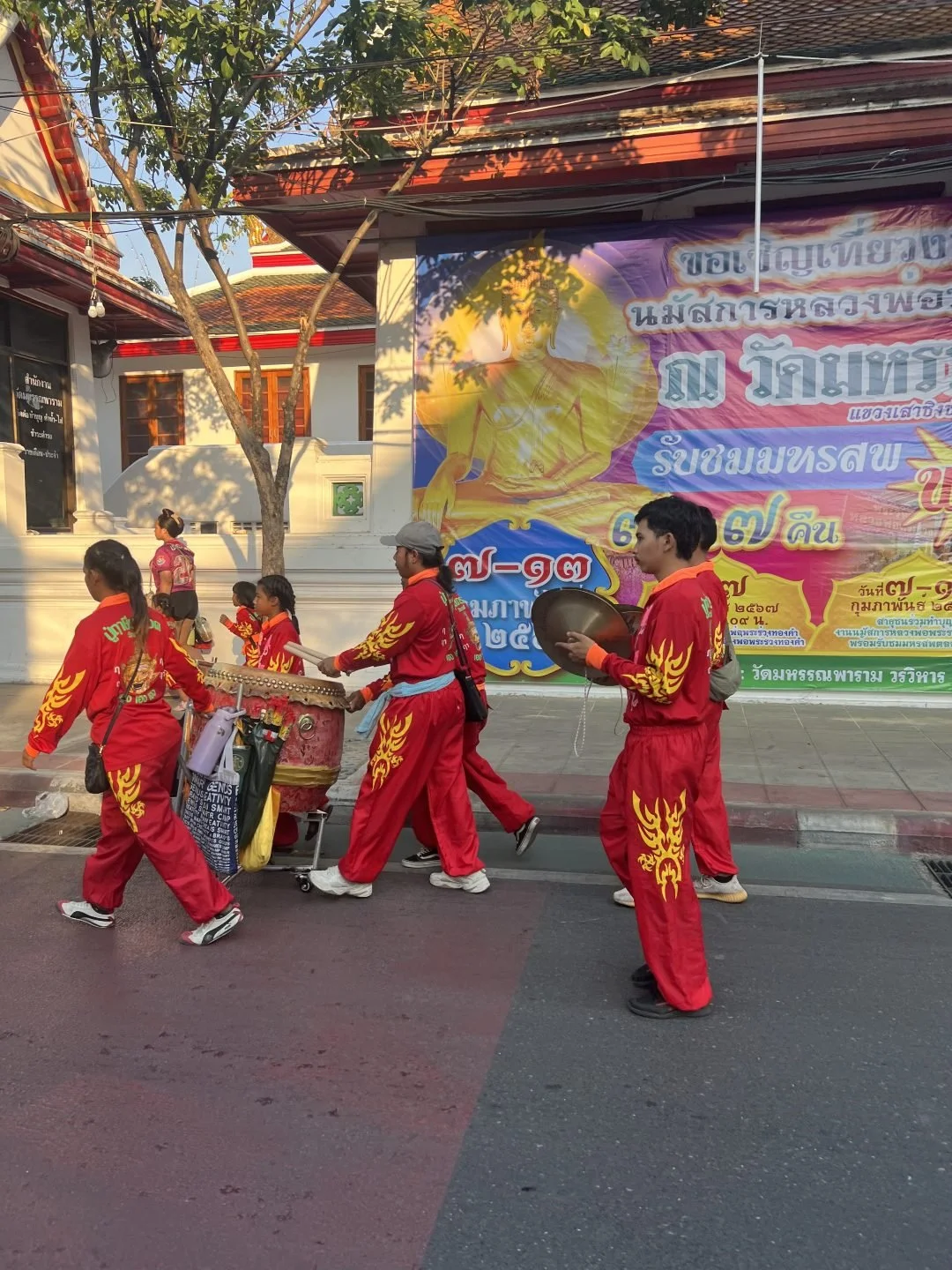
Locals dressed in traditional red clothes
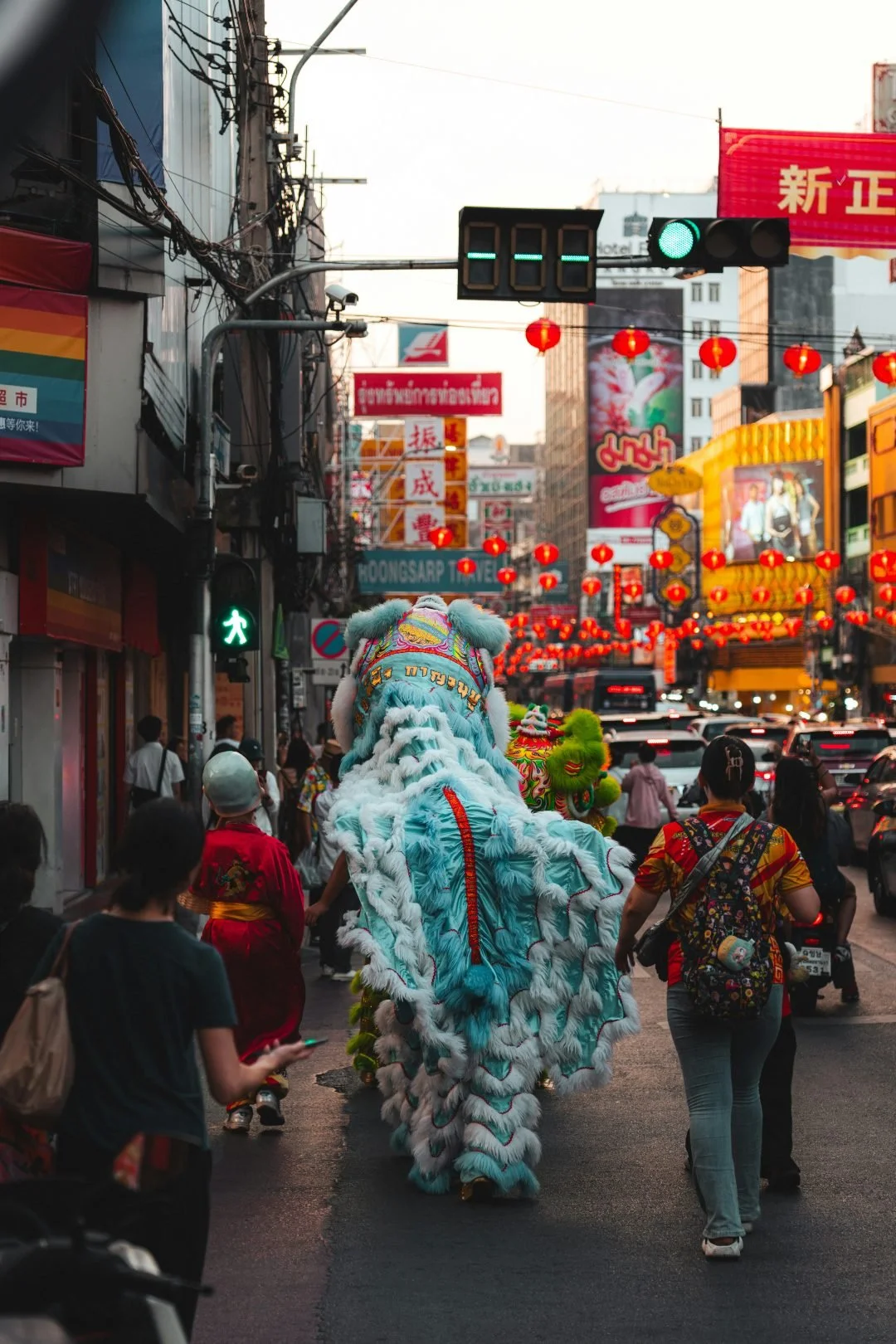
Chinese New Year festivities
Best Places to Eat in Chinatown, Bangkok
Chinatown requires an open mind, an empty stomach and a rather whimsical attitude. If you’ve got those three in check, you’ll be in for a delightful experience. Don’t stick to a rigid list of places before you’ve actually been here - the food landscape is forever changing. However, if you do prefer a bit more structure to your visit, you can consider the list below which will give you a solid starting point to base your night from.
Laoteng
Red Rose
Jok One Table
Fikeaw Yaowarat
HAGOW Yaowarat
Nai Ek Roll Noodle
Tanbo Chicken Rice
Tang Jai Yoo Restaurant
Hua Seng Hong Restaurant
Khao Gaeng Jek Pui (Je Chie)
Where to Stay Near Chinatown, Bangkok
The Chinatown area is not only a fantastic place to visit, but it also acts as a superb base for your accommodation. It’s one of the best alternatives to Khao San Road or Sukhumvit, and is connected via a range of MRT stations such as Wat Mangkon Station, Hua Lamphong Station, and Sam Yot Station (which takes you to the Old Town). If you’d like to stay in Chinatown, these three options covering budget, mid-range and luxury can serve as inspiration.
Budget: Lub d Bangkok Chinatown
Mid-Range: Shanghai Mansion Bangkok
Luxury: Millennium Hilton Bangkok
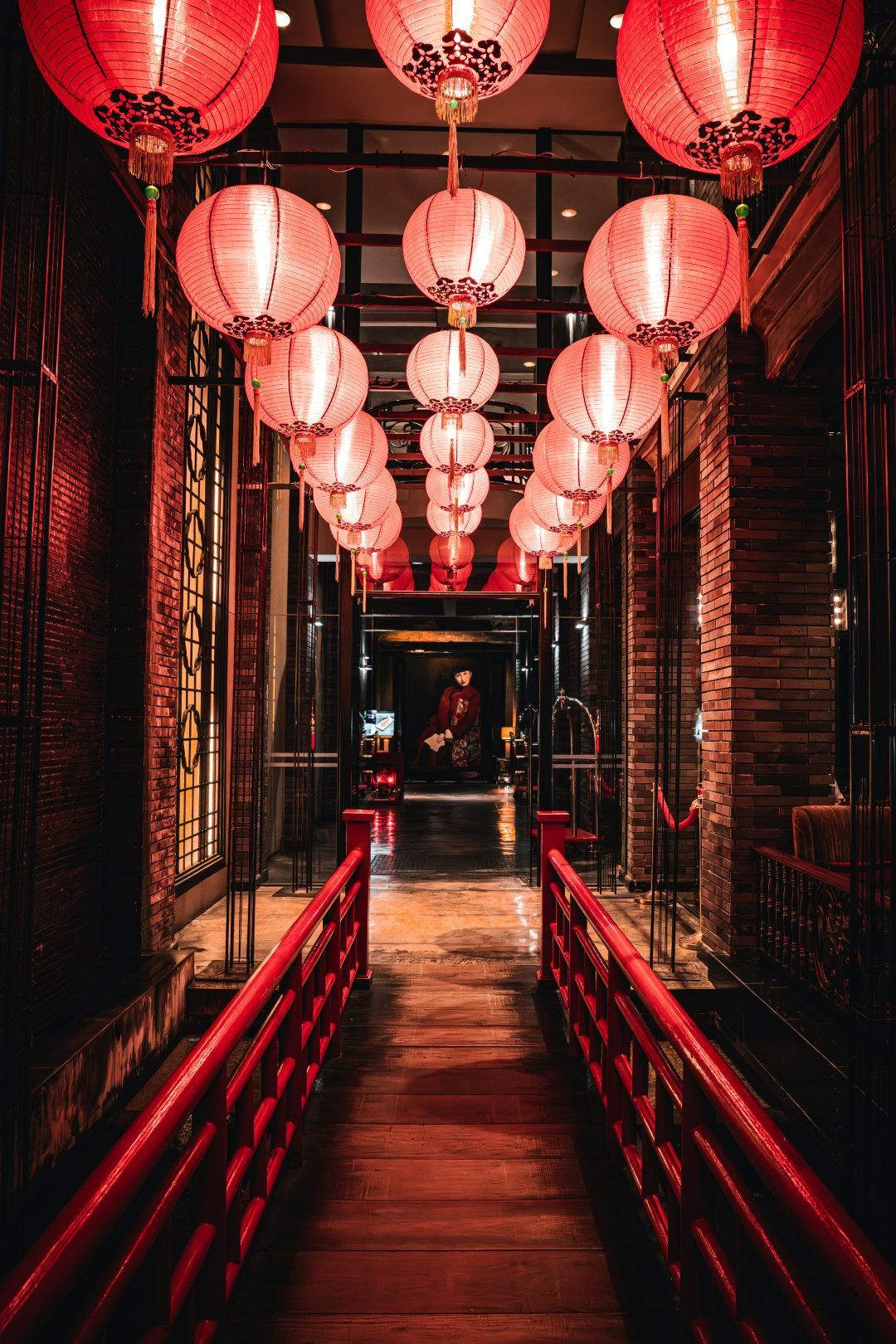
Shanghai Mansion Bangkok
Tips for Visiting Chinatown, Bangkok
We recommend dedicating an entire day and night for the Chinatown area. During the daylight hours, you can explore Song Wat Road and Talat Noi and perhaps a few spots by the Chao Phraya River, and then head back to Yaowarat Road at night. This requires a full day of walking, rather than 3 or 4 hours. You don’t need a huge budget for Chinatown, just some cash (and small change) to pay for the many snacks you’ll inevitably buy.
If you’re wondering if you can walk to Chinatown from Khao San Road, the answer is yes but it takes almost an hour. Your best bet is to jump in a tuk-tuk just after the morning rush hour traffic. Finally, we can’t stress enough how important it is to go hungry. Kat is an expert at this, skipping lunch and saving it all for Chinatown. When we visited with Cam’s family, they were in hysterics watching the sheer volume of food she put away. It was a sight to behold and we were all left wondering - where does the food go?
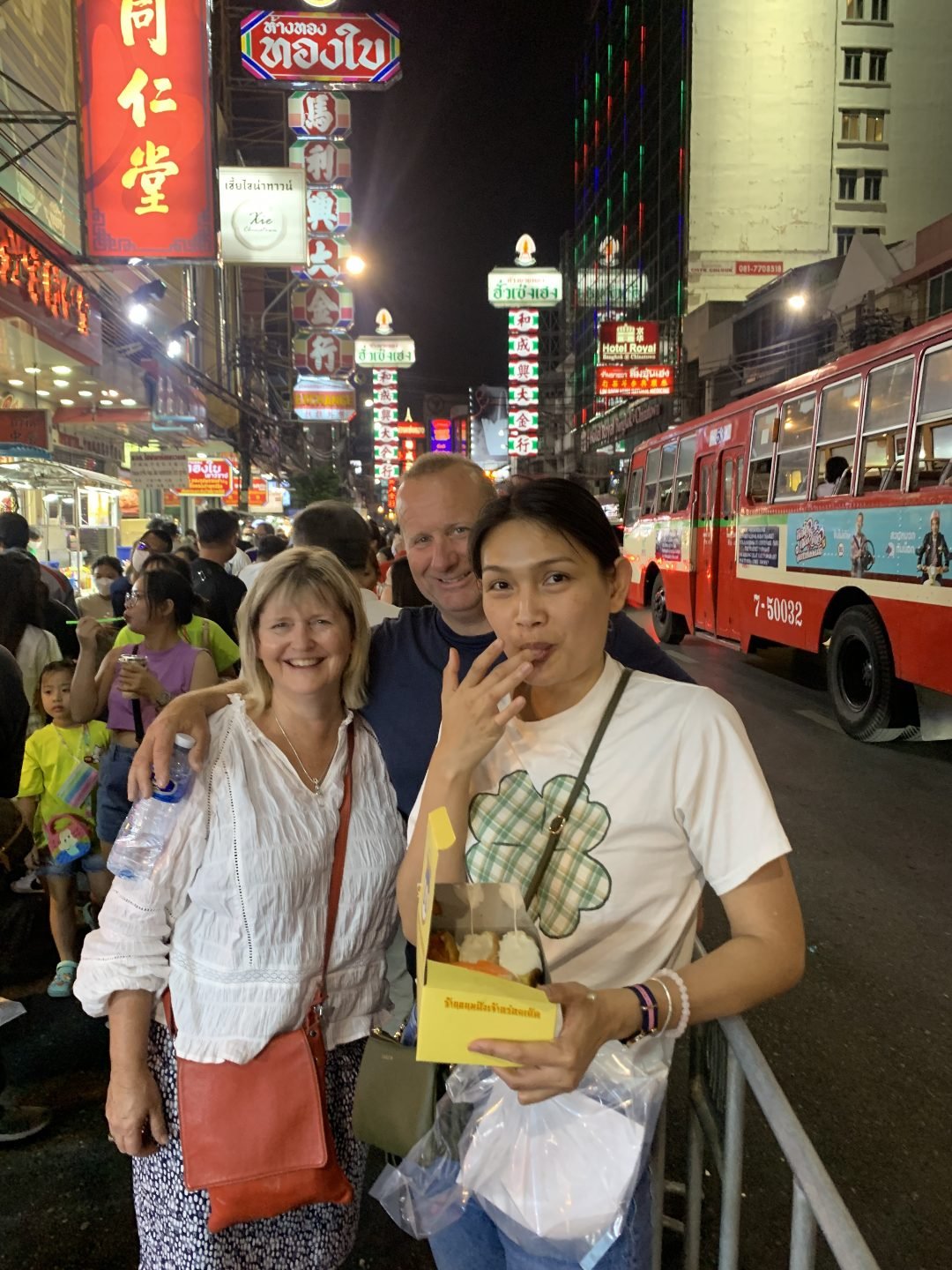
Kat gorging on street food
