
Wat Si Chum: How to Visit Sukhothai’s Hidden Giant Buddha
We’ve seen some incredible temples in Thailand over the years but none quite compare to Wat Si Chum in Sukhothai. The Buddha statue here is called Phra Achana, sitting peacefully inside a roofless sanctuary and revealed through a vertical gap in the brick walls as you walk towards it. Although this temple complex is much smaller than some of the other sites in the area, it was still (by far) the highlight of our Sukhothai visit.
Sukhothai is the type of place we think more travelers should check out, instead of automatically taking a day trip to Ayutthaya. It has a relaxed, authentic feel and the temples are far more impressive in our opinion. We decided to visit Sukhothai for two nights - a short, sharp trip with Kat’s mum joining us as well. We flew with Bangkok Airways and stayed at Midtown Sukhothai - an affordable, comfortable hotel with poolside villas.
We planned to have one full day in the historical park and the rest of our time would be spent relaxing at the hotel, trying the street food, and just soaking up the local atmosphere of the main town. The day we spent at the ruins was phenomenal - everything from the tuk-tuk rides to the Sukhothai noodles to the temple visits were amazing. But looking back now, the experience that really stood out was visiting Wat Si Chum.
Read more: Sukhothai Travel Guide: Best Itinerary, Temples & Hotels
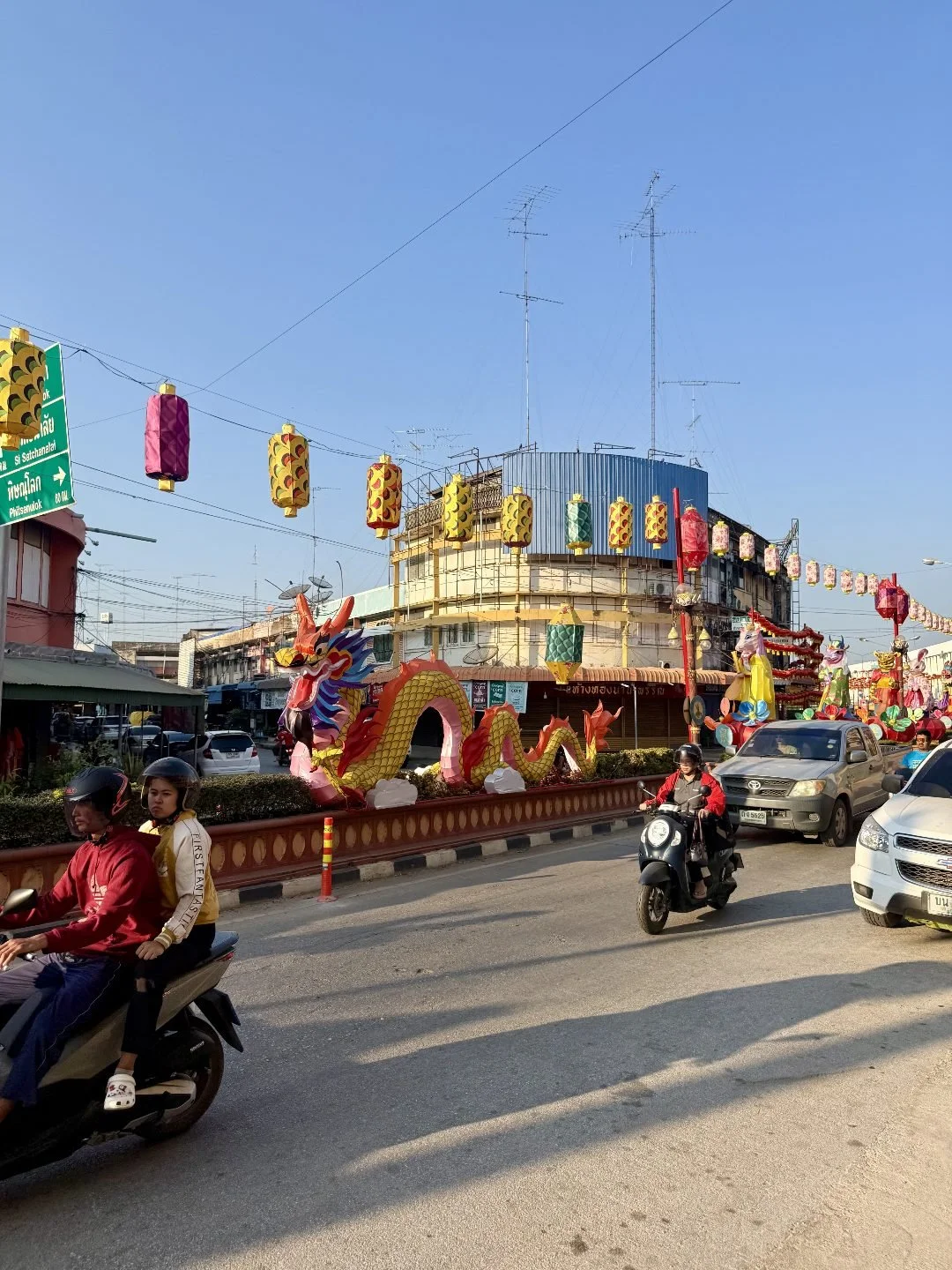
Sukhothai town
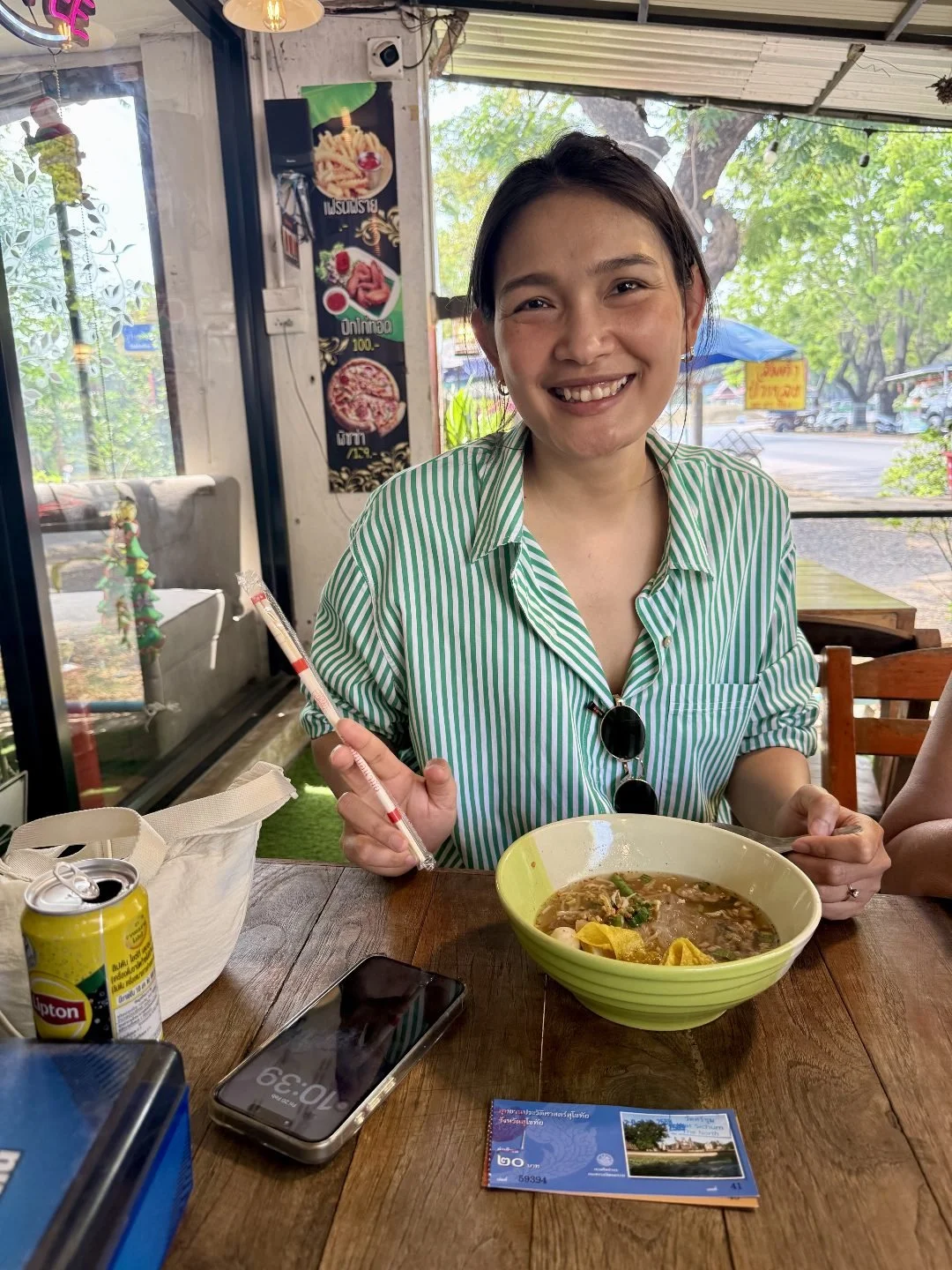
Sukhothai noodles
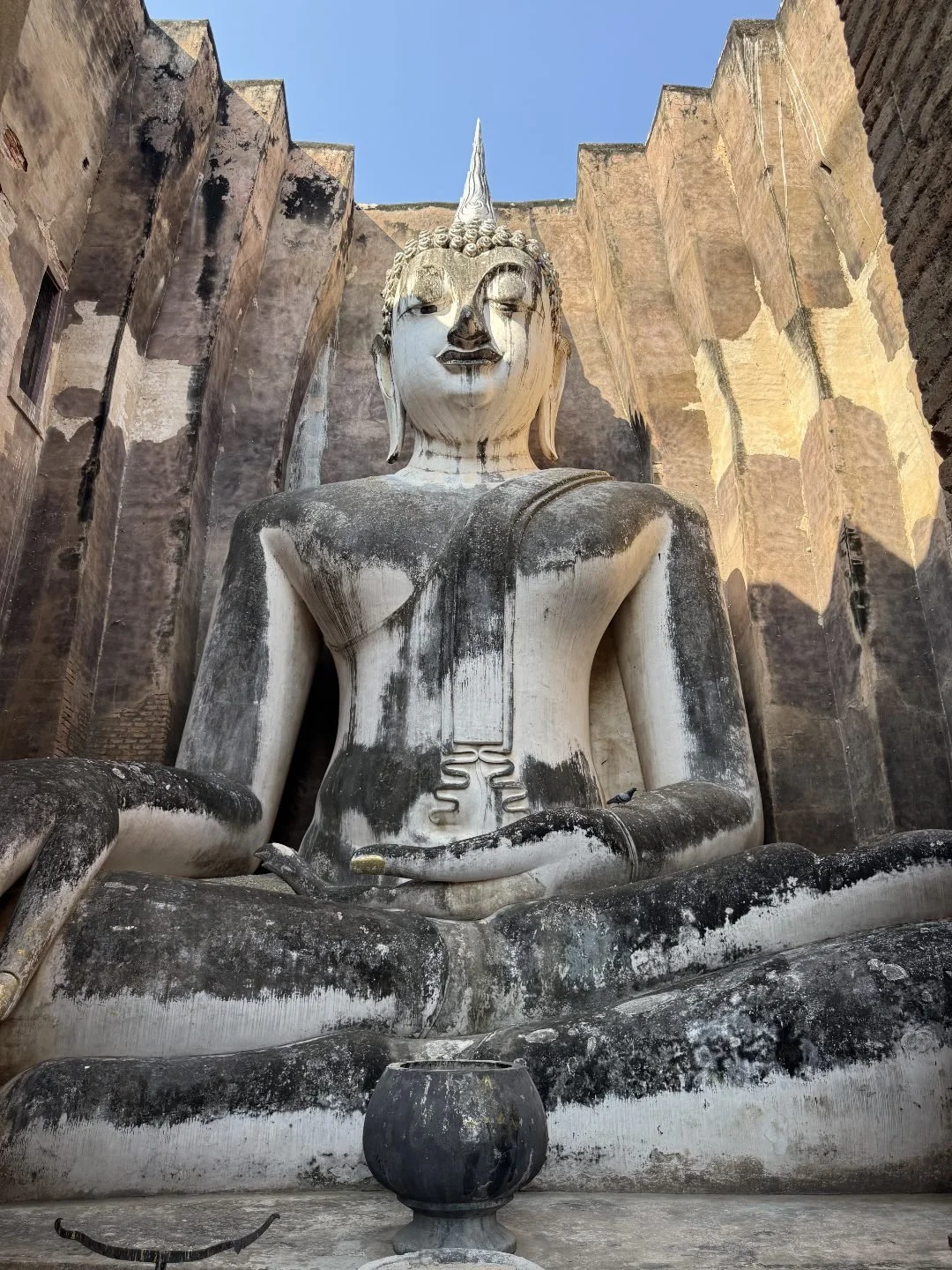
Wat Si Chum
The Legend of the “Speaking Buddha”
One thing we discovered about Wat Si Chum is that its history is rich, dating back 700 years to the 13th and 14th centuries. We learned about a legend called the “Speaking Buddha” which really fascinated us. It relates to the king’s soldiers who were taking part in a military campaign, and had retreated back to Sukhothai demoralized after some intense fighting. The king came up with an ingenious plan to lift the soldier’s spirits: he brought them to Wat Si Chum for what they thought would be a religious ritual.
However, the king had sent one of his soldiers up a secret staircase (behind the Buddha’s head) and told him to make a speech once the soldiers arrived at the narrow slit in the front wall. His words echoed around the shrine, bouncing off the brick walls, inspiring the soldiers to battle on to victory. It didn’t matter to us if the story was true or not, it still added something special and mysterious to an already enchanting place.
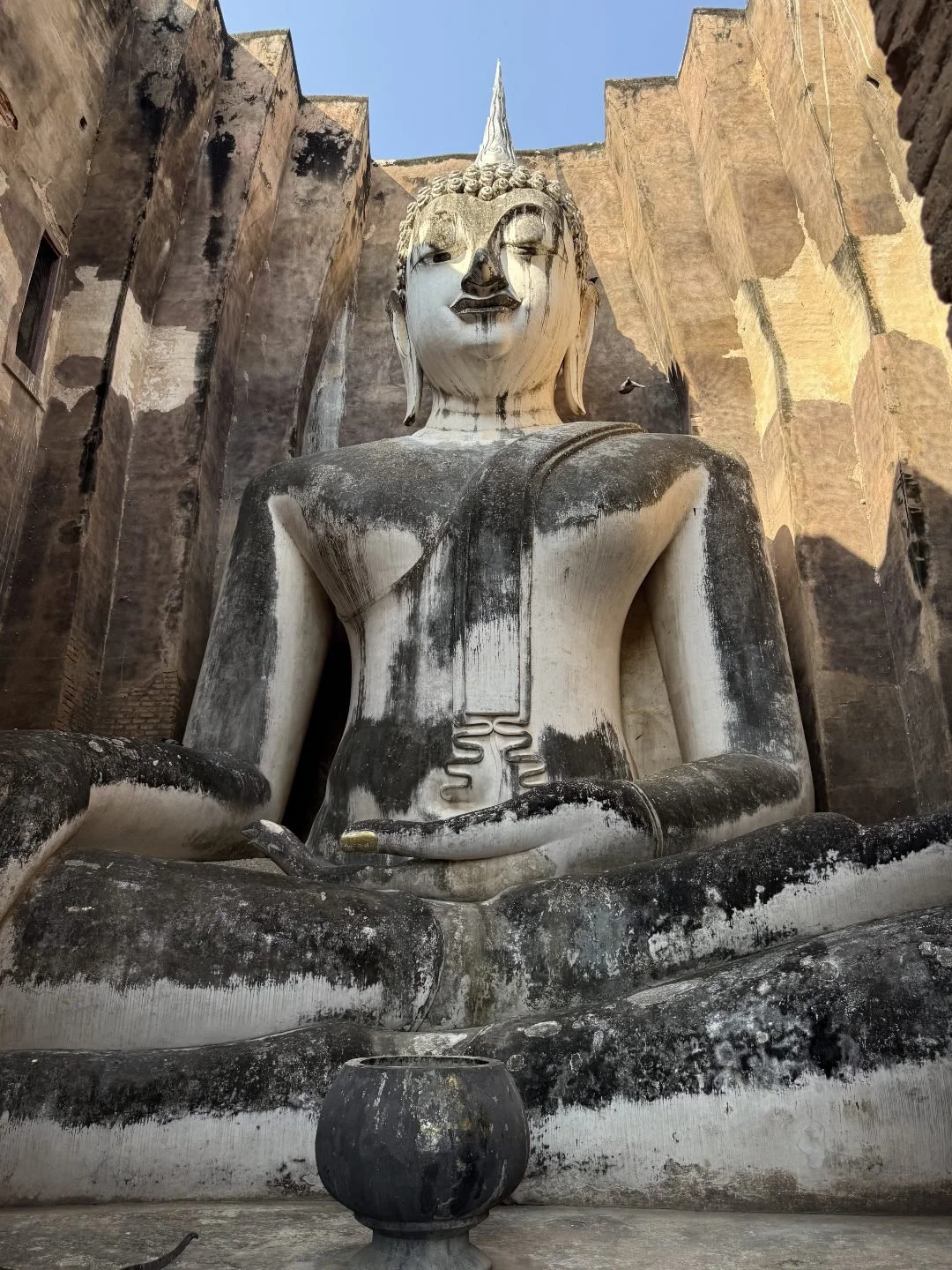
“Speaking Buddha”
Architectural Highlights of Wat Si Chum
Phra Achana: The Giant Seated Buddha
The highlight of Wat Si Chum is without doubt Phra Achana, the Buddha statue that is seated with its left hand in its lap and right hand hanging over its knee - with elegant fingers covered in gold leaf. Many Thais come here to make merit by first praying and then placing gold leaf on its fingers, something Kat’s mum participated in with a real sense of awe. If you arrive around mid-morning, you’ll see sunlight beaming down into the roofless sanctuary - creating some magnificent photo-opportunities.
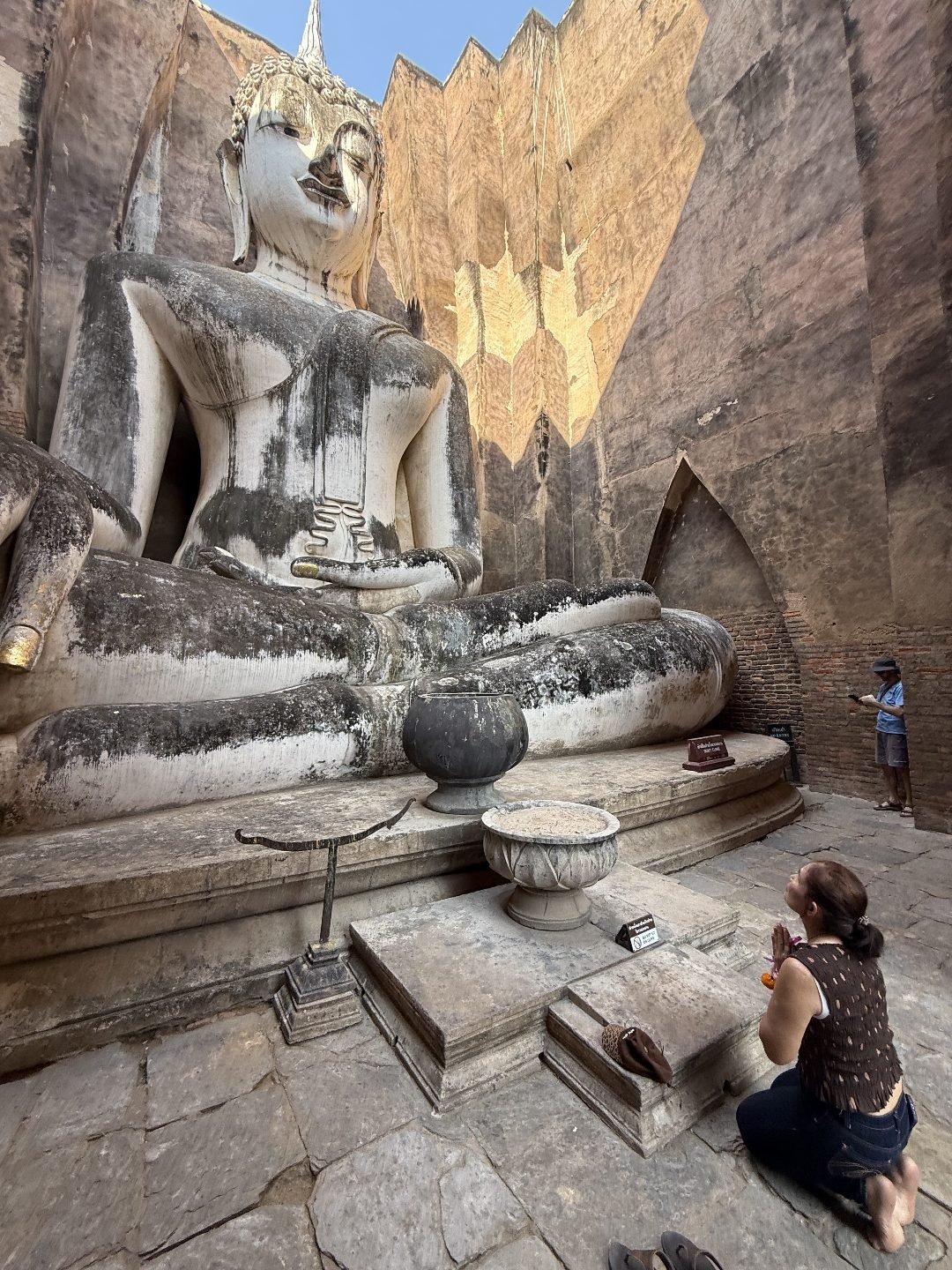
Phra Achana
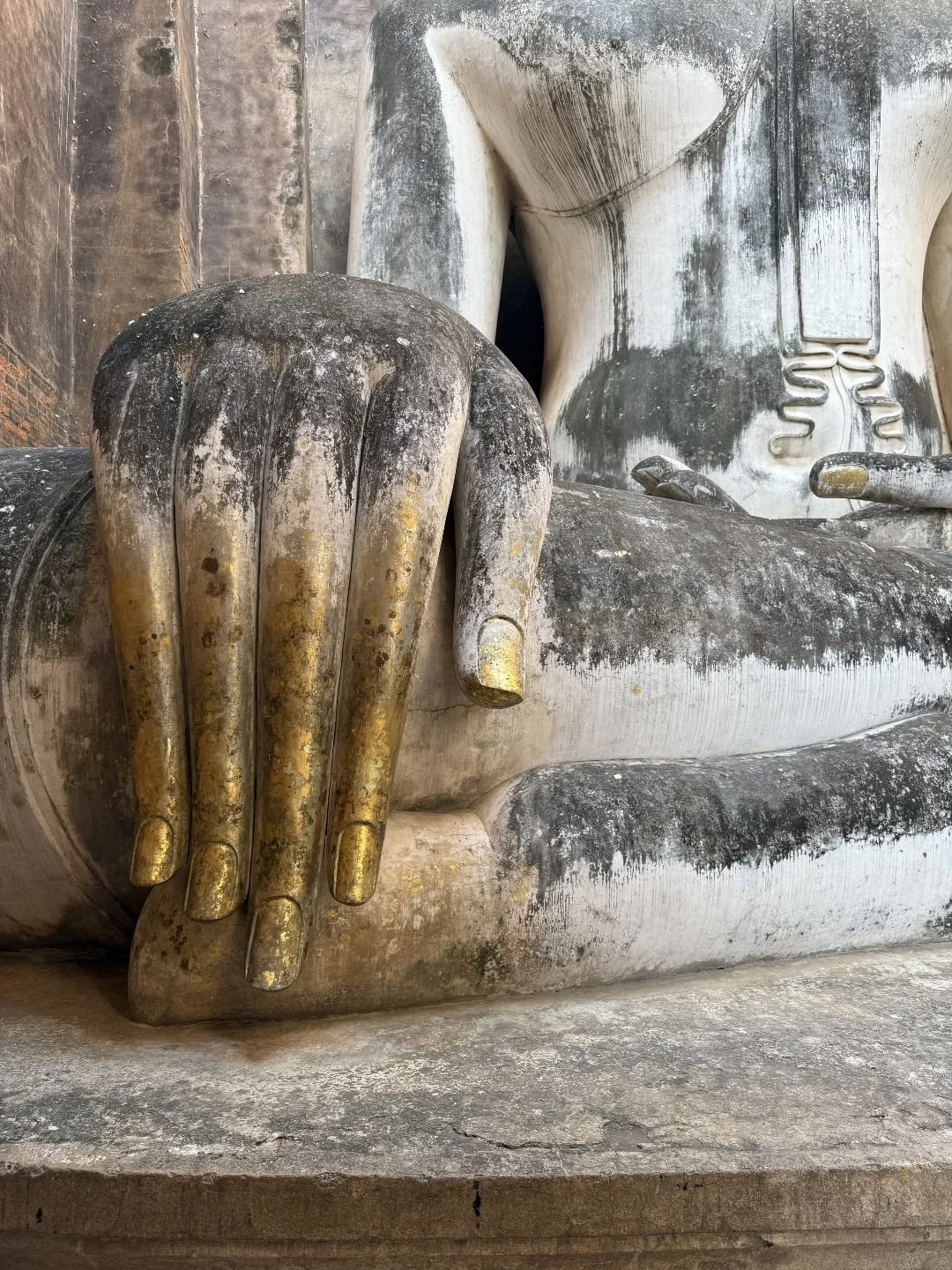
Phra Achana
The Mondop: Roofless Sanctuary
Phra Achana sits inside a roofless sanctuary called a “Mondop”, built out of brick and stucco materials. It’s square in shape and without windows, creating an eerie atmosphere once you step inside. As you walk towards the Mondop, you’ll see column ruins and crumbling brick foundations, but also a narrow vertical gap that gives you a glimpse of the statue - crowned with a “Ushnisha” which represents the Buddha’s transcendent wisdom.
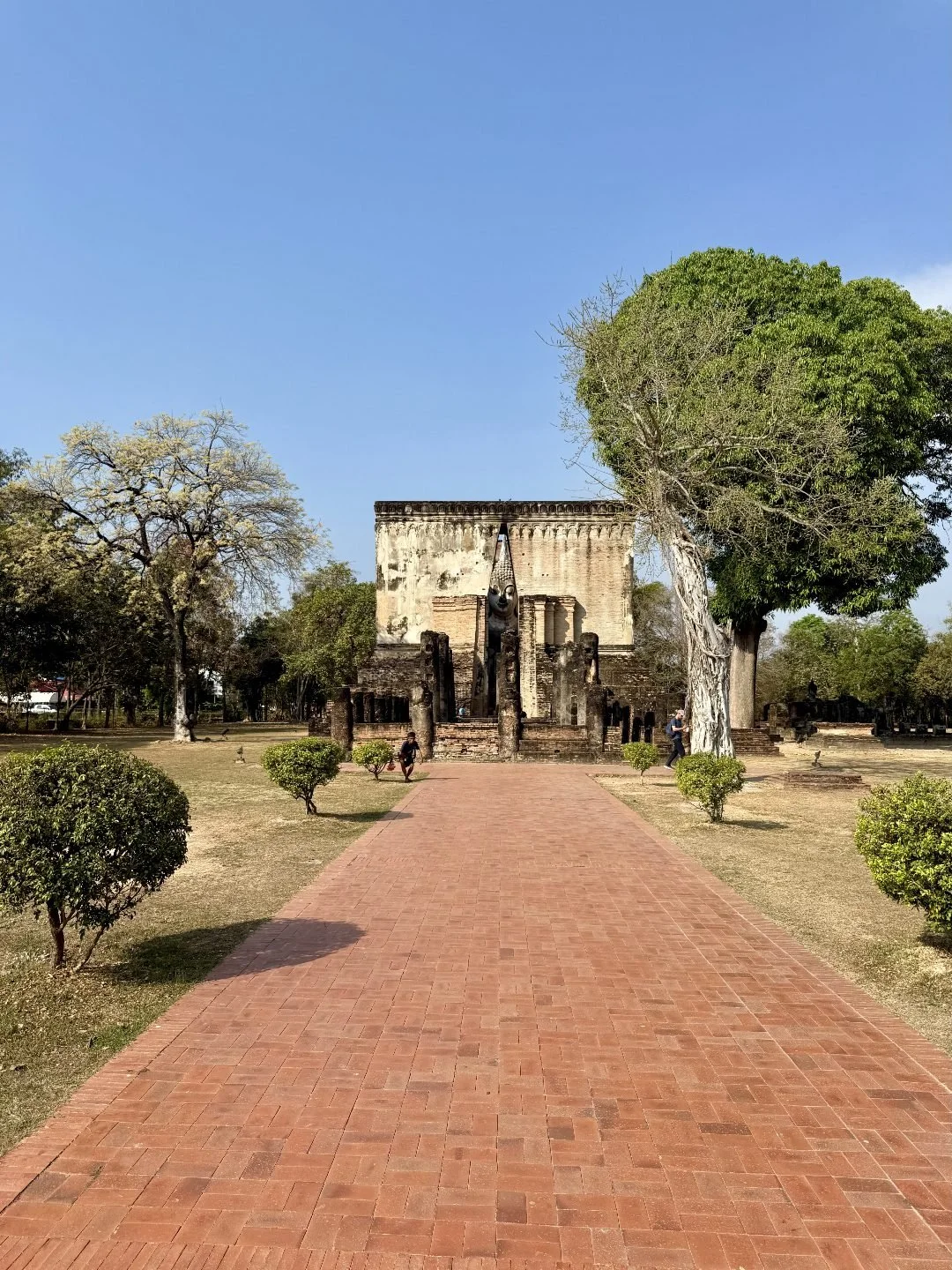
The Mondop
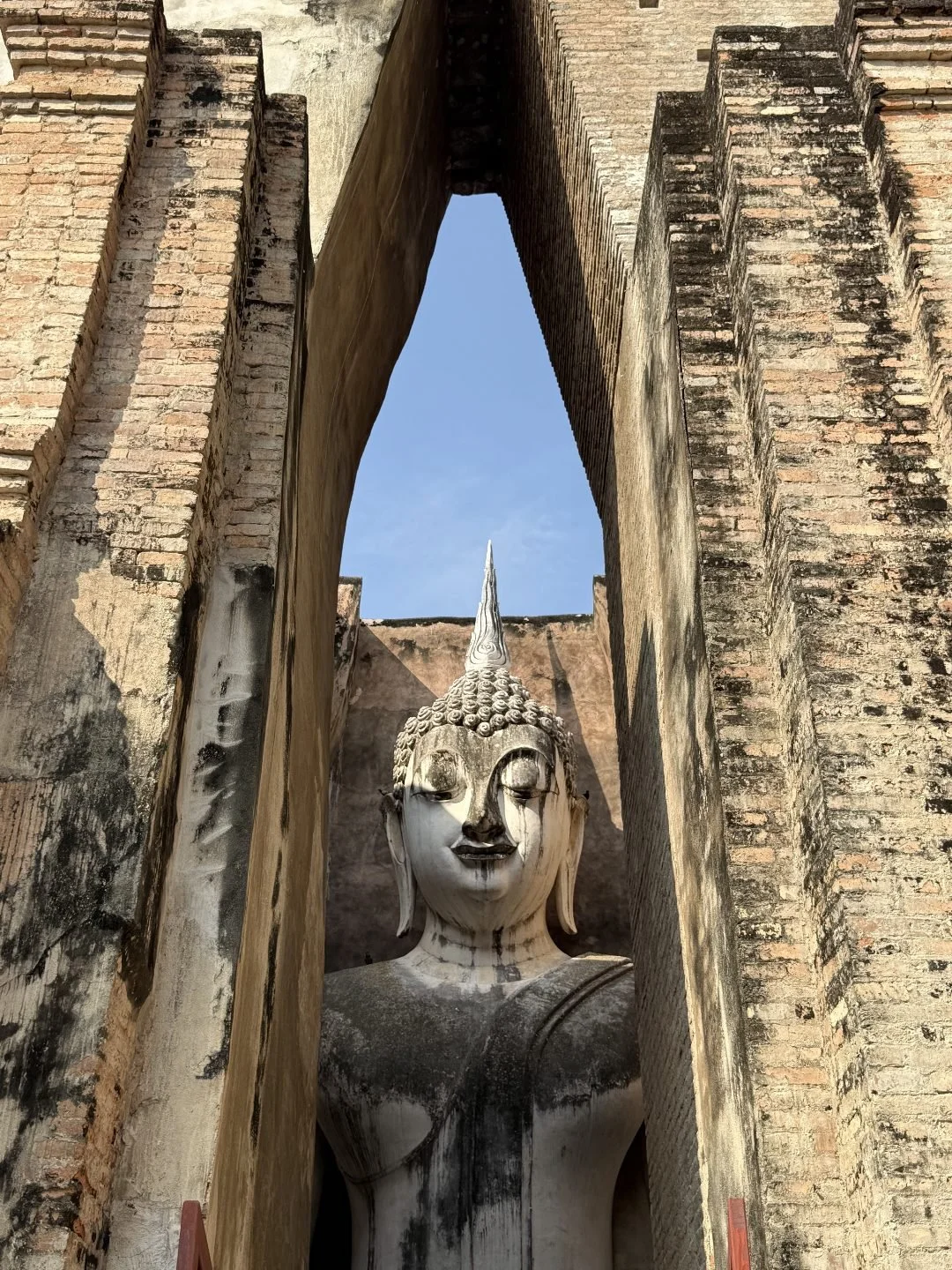
The reveal
The Smaller Seated Buddha Statue
The biggest surprise for us at Wat Si Chum wasn’t the reveal of Phra Achana, it was actually the smaller seated Buddha statue to the right of the Mondop right by the massive mango tree. We loved this statue because it had this weathered charcoal color to it as well as spots of glimmering gold leaf. The open door in front of the statue also created the perfect picture frame, with some of our favorite photos of Wat Si Chum coming from here.
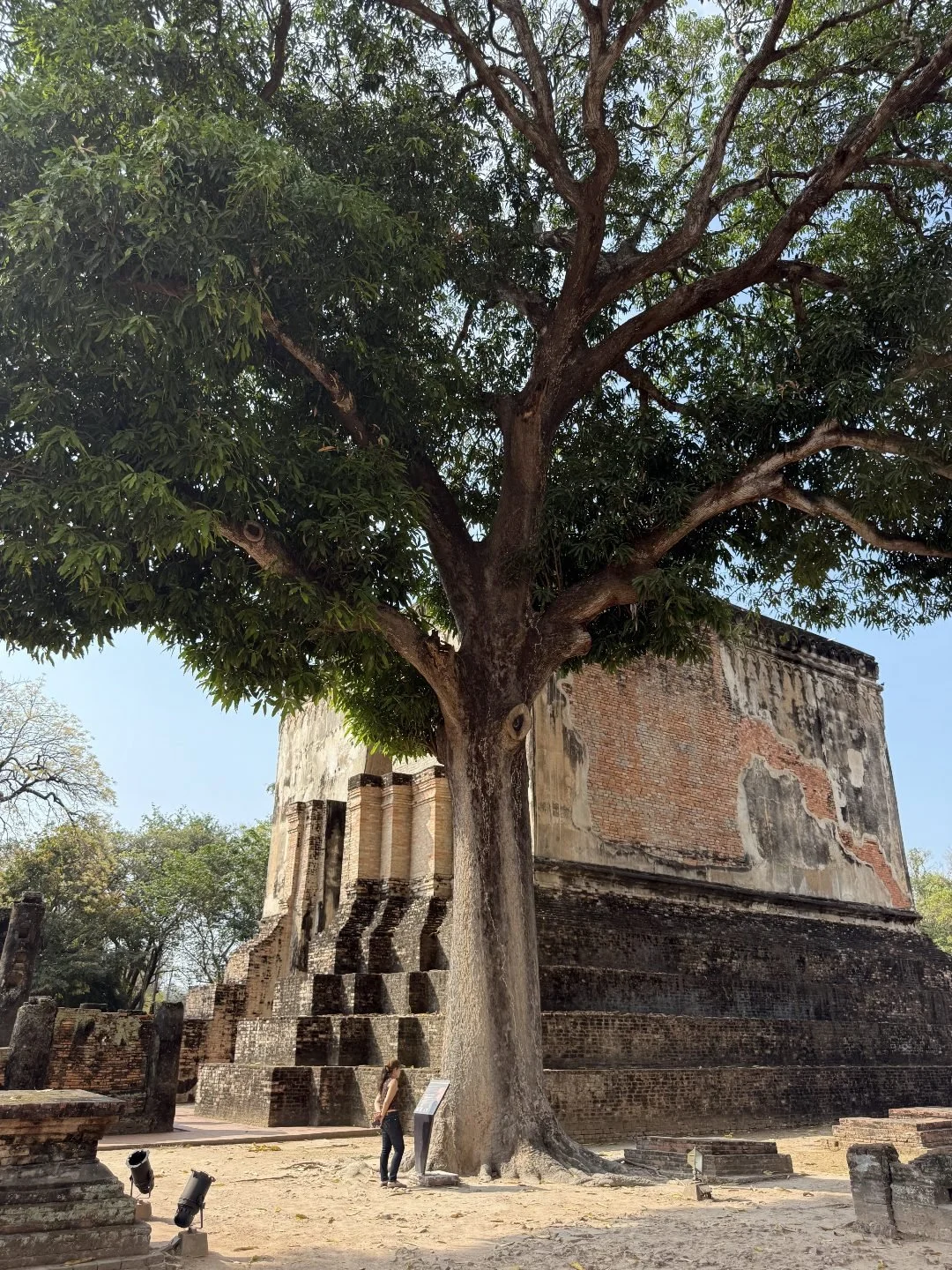
Mango tree
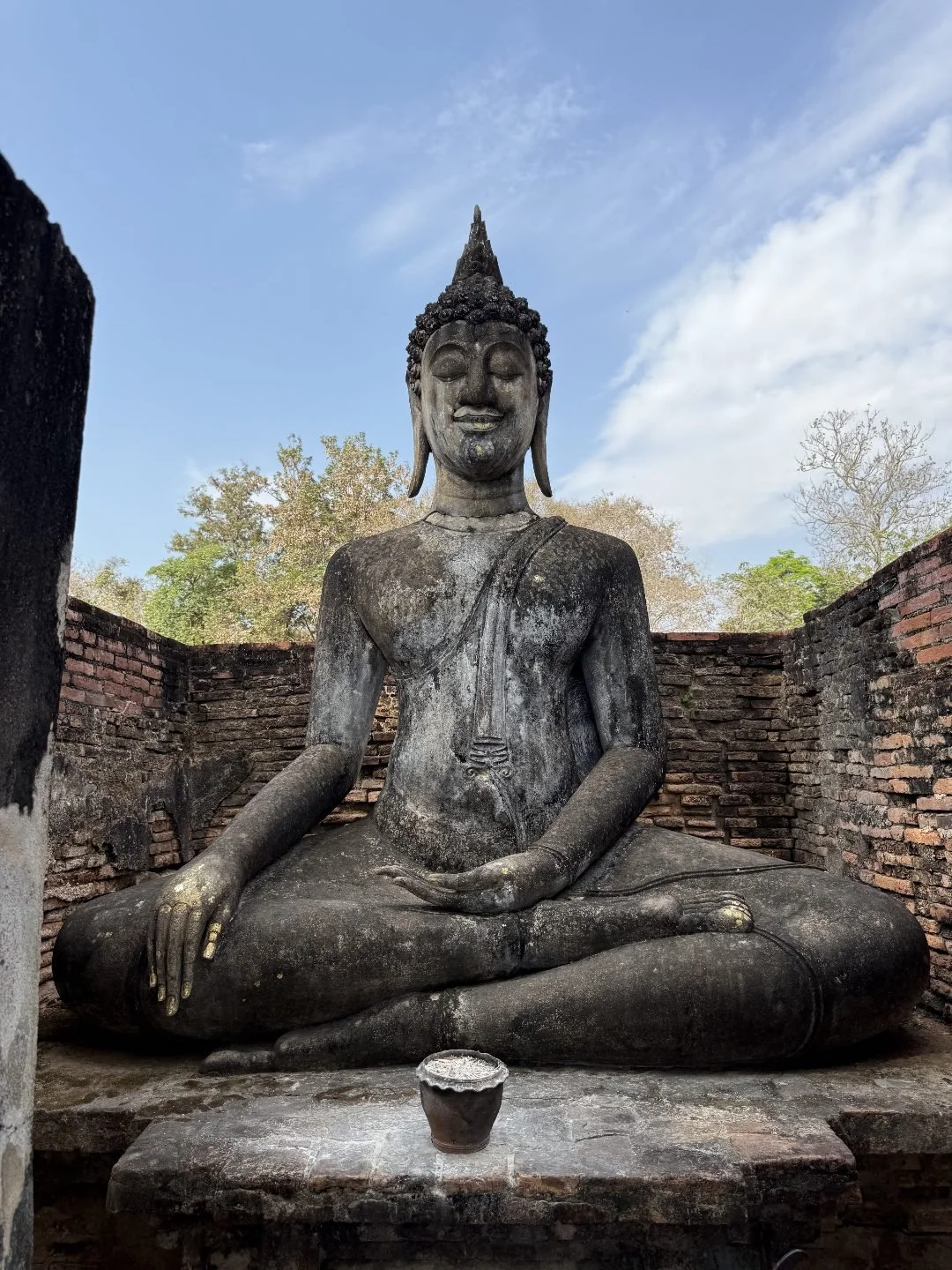
Smaller seated Buddha statue
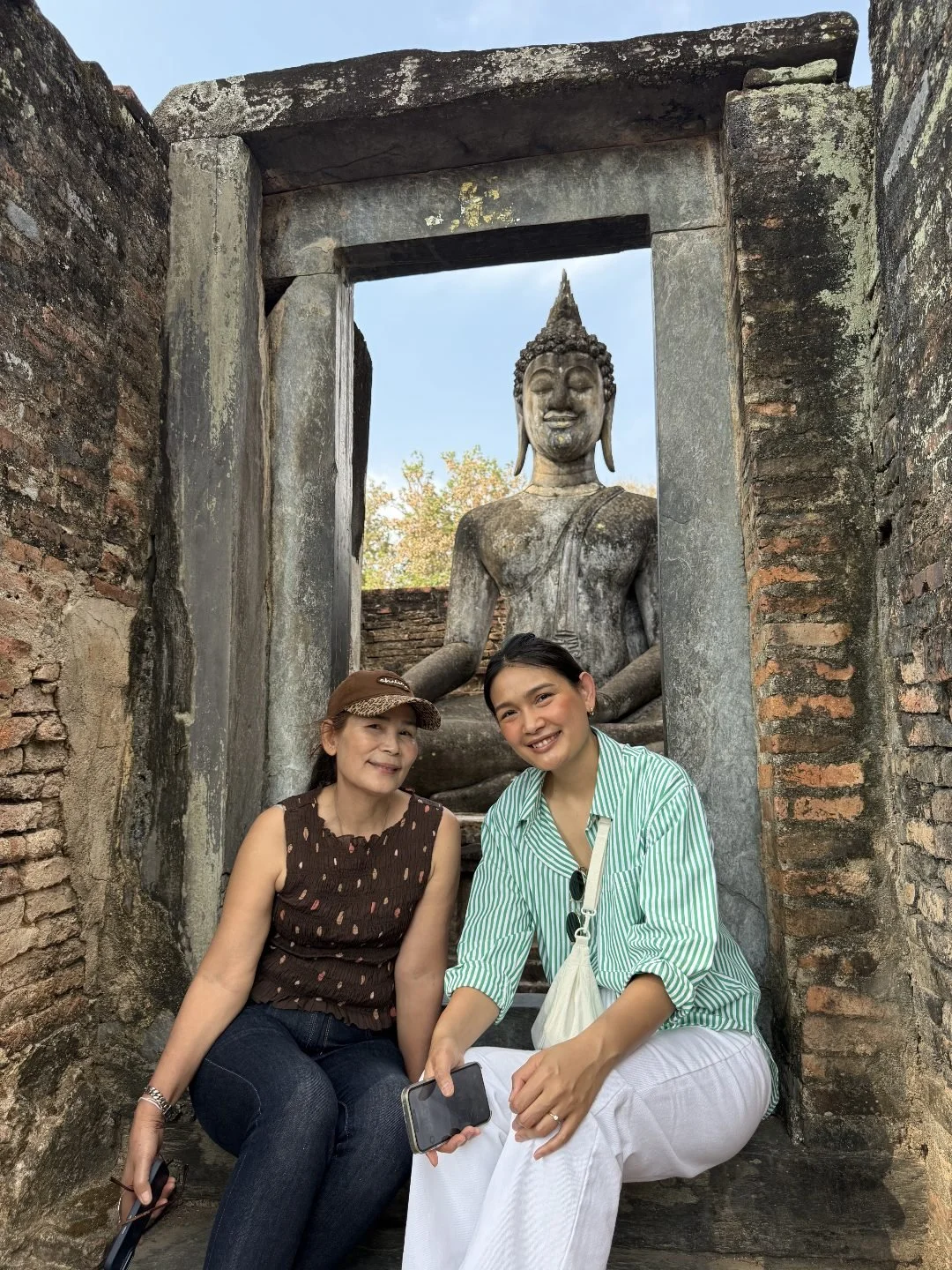
Smaller seated Buddha statue
Visitor Guide for Wat Si Chum
Entry Fee and Ticket Information
We visited Wat Si Chum in March, 2026 and at the time the price for the entrance ticket was 120 THB for foreign visitors (Cam) and 20 THB for Thai citizens (Kat). This ticket also gave us access to the Khmer-style ruins of Wat Phra Phai Luang, in the North Zone of the Sukhothai Historical Park, which we headed to straight after. Wat Si Chum is great value for money when you consider it’s one of the best temples in Thailand and much cheaper than the Grand Palace (for example) at 500 THB entry fee.
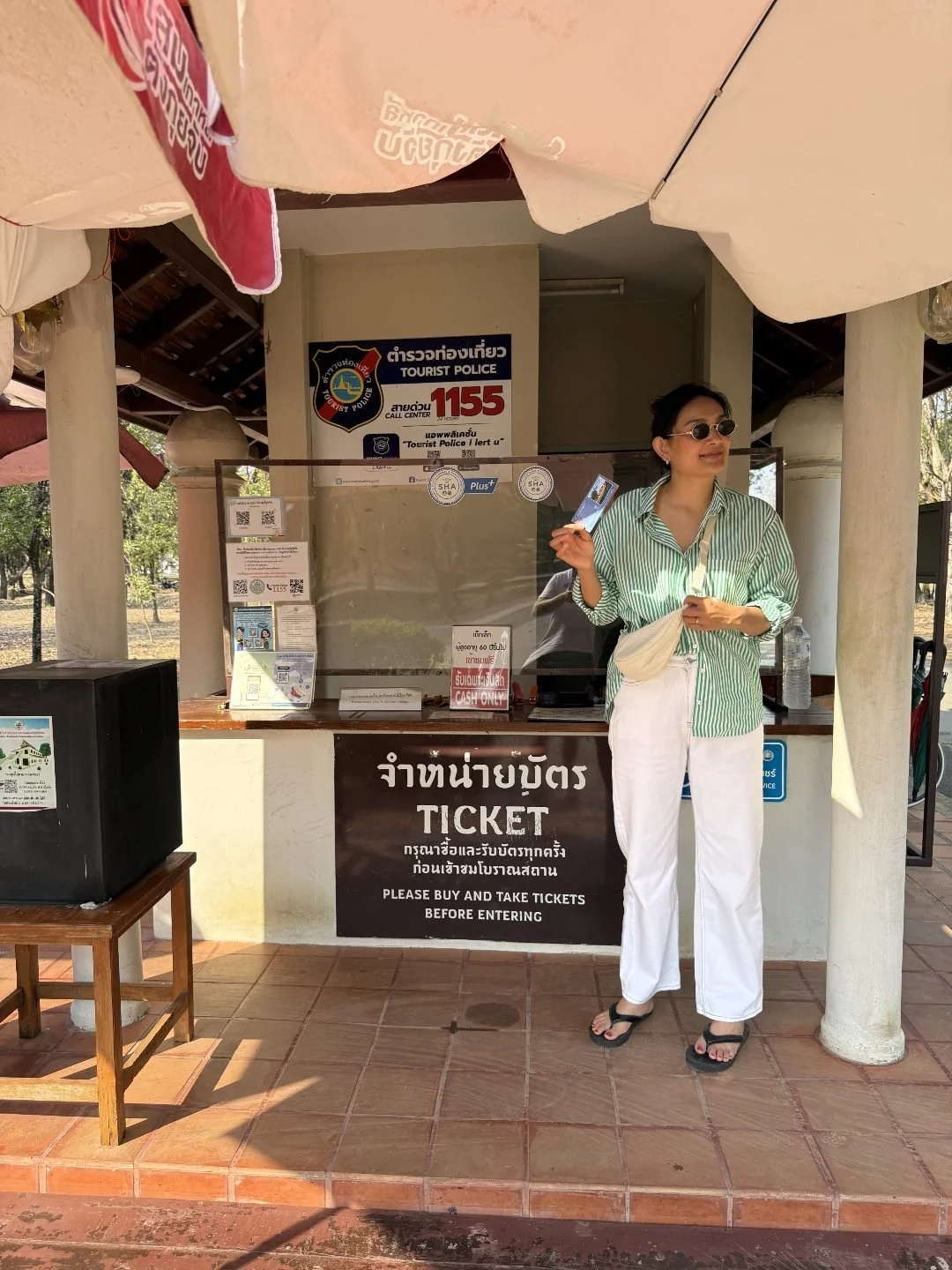
Ticket office
Opening Hours & Best Time to Visit
Wat Si Chum opens its gates at 7:30 AM every day and closes at 5:00 PM, although it’s probably best to arrive at around 9:00 AM. That’s what we did - and got to enjoy the temple without the mid-day heat and without too many tourists. And if you stay until 10 or 11, the sun will be high enough for light to start seeping into the dark roofless sanctuary - a sight to behold.
Dress Code & Cultural Etiquette
Wat Si Chum is like most temples in Thailand when it comes to dress code: you shouldn’t wear short-shorts, tank tops, or other revealing clothing. Sarongs can always be rented at the small shops by the ticket office if you need something last minute. You’ll also need to take off your shoes when stepping inside the Mondop and avoid pointing your feet at the Buddha statue - small things that are well appreciated in Thai Buddhist culture.
How to Get to Wat Si Chum
Traveling from Bangkok to Sukhothai
The Sukhothai Airport (THS) is owned and operated by Bangkok Airways, so you’ll have to book with them if you want a direct route. The flight usually costs between 4,000 - 5,000 THB per person return, and takes 1 hour and 20 minutes. This is the only thing that costs a bit for a Sukhothai trip, as everything else is cheap: from the accommodation to the food to the entry fees. We love flying with the boutique airline, Bangkok Airways, because their customer service and private airports are always quality.
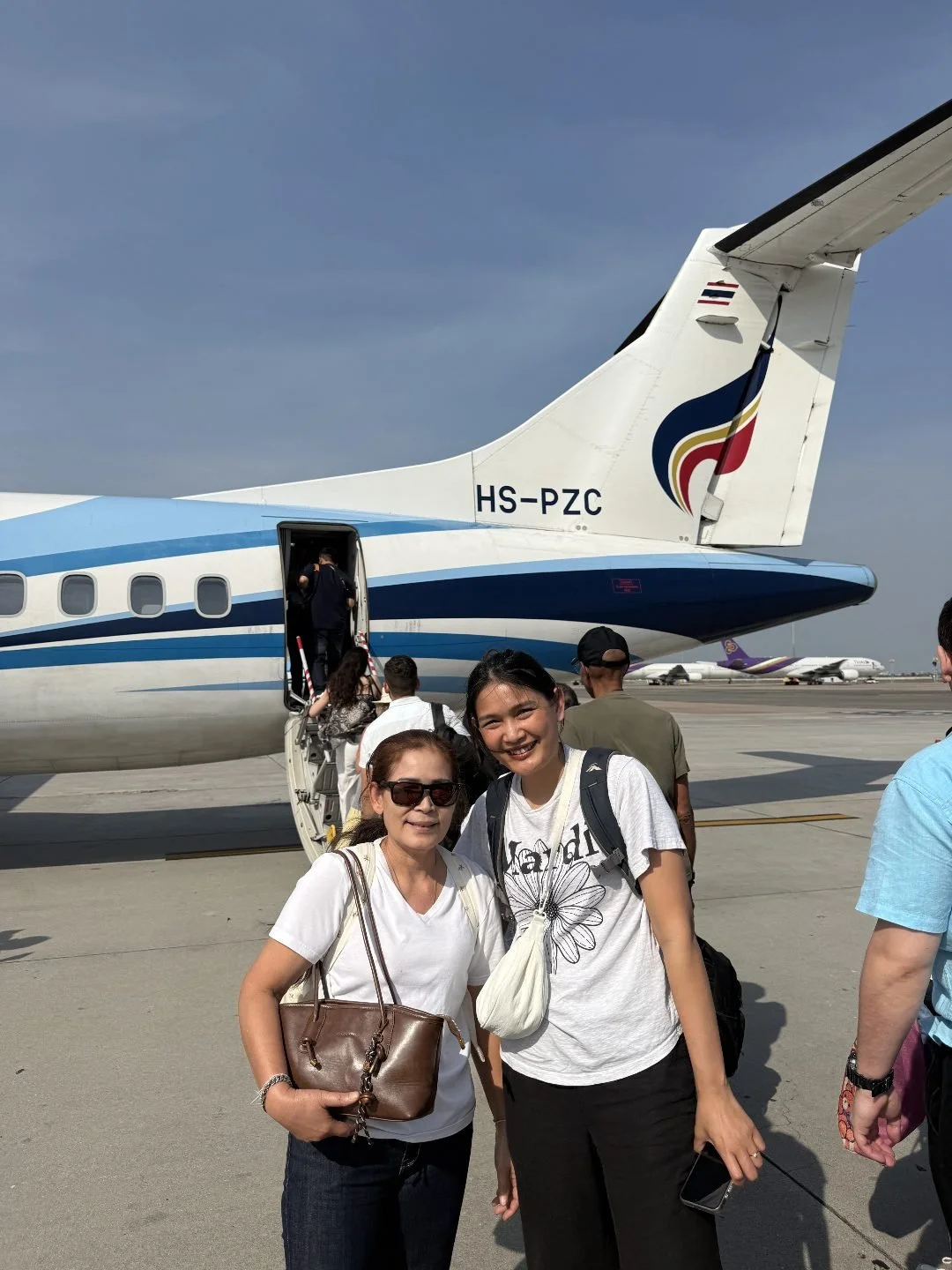
Bangkok Airways flight
Getting Around Sukhothai Historical Park
We found that the easiest way of getting around the historical park was to hire a tuk-tuk for the day. Although, since Wat Si Chum is located outside the old city walls, you can venture there via a bicycle tour, scooter or taxi as well. Remember that only bicycles and golf carts can be used as transport inside the walled zone - so paying for a golf cart to zip you around the different temples and having a tuk-tuk driver wait for you, is a nice strategy.
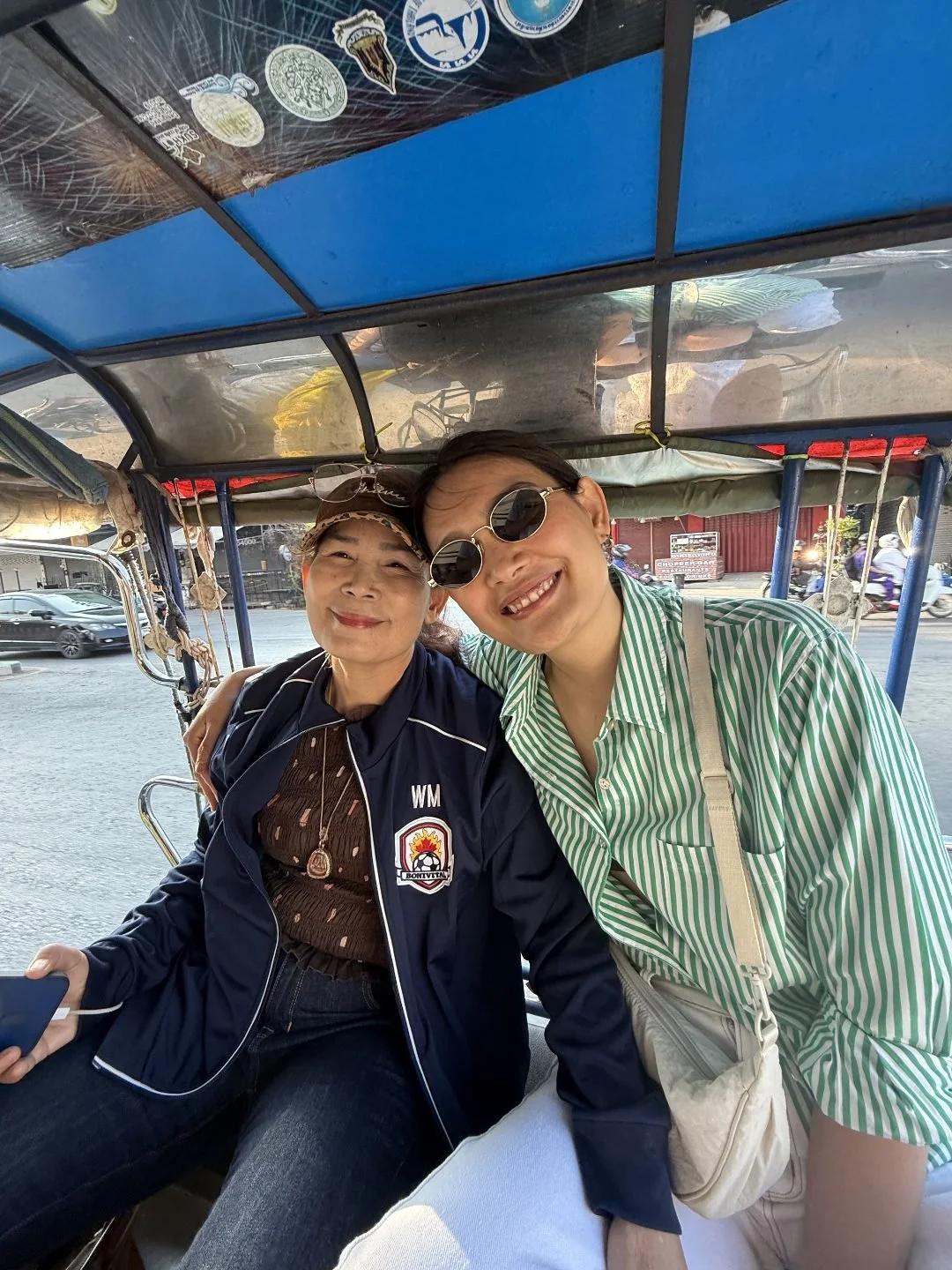
Tuk-Tuk
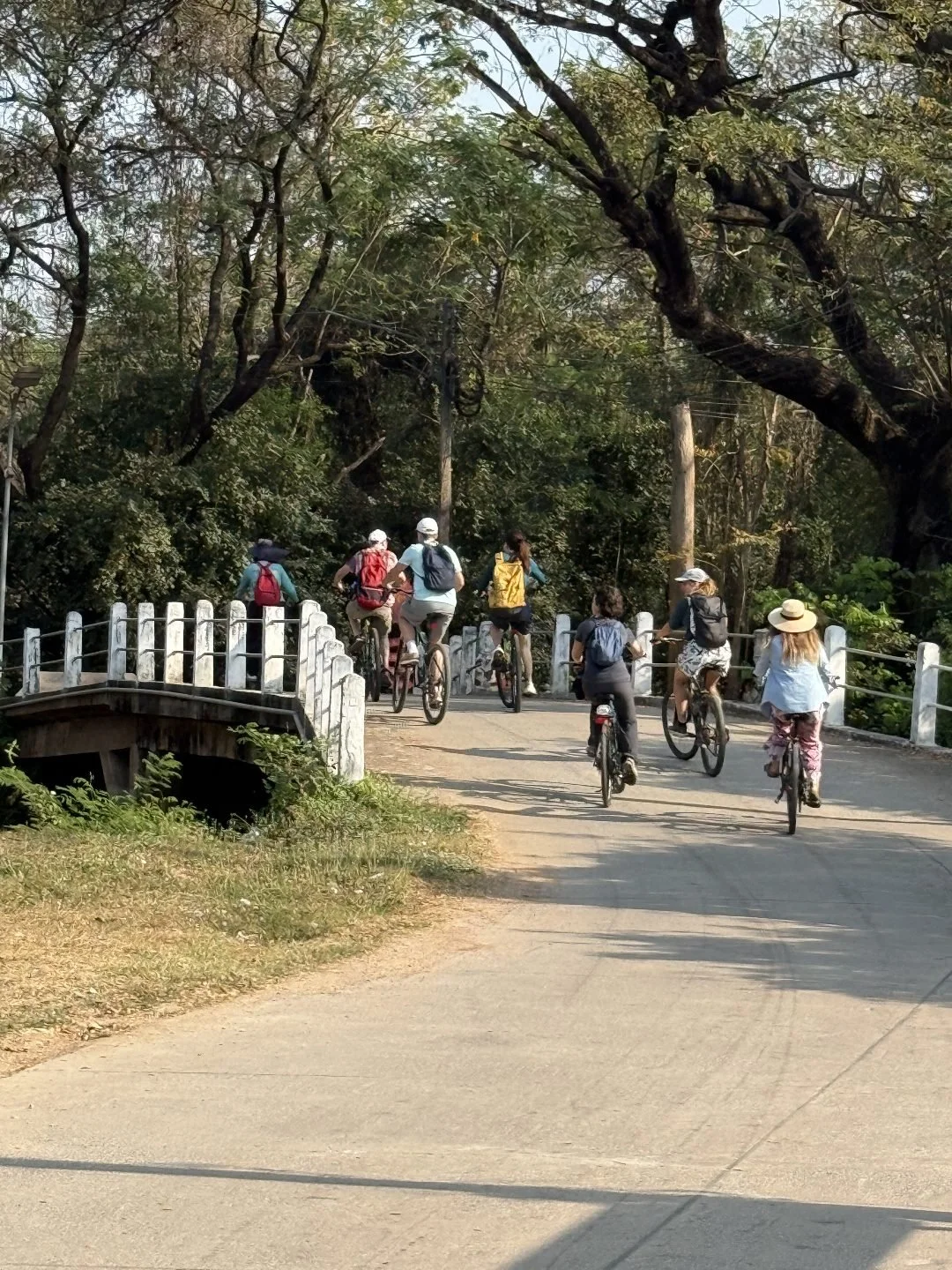
Cycling tour
FAQs About Visiting Wat Si Chum
Does the Central Zone ticket cover Wat Si Chum?
You do need to buy a separate ticket for Wat Si Chum, in addition to getting your Central Zone pass which covers classic ruins like Wat Mahathat and Wat Si Sawai. Unfortunately, Sukhothai Historical Park no longer sells combo tickets that give you access to all of the different zones. While this might seem inconvenient, the ticket prices aren’t too expensive and Wat Si Chum is one temple you’ll definitely want to spend money on.
Is Wat Si Chum the best temple in Sukhothai?
Wat Si Chum is the best temple in Sukhothai in our opinion. Truth be told, some of the temples in the historical park start to look similar after a while but this can't be said about Wat Si Chum - it’s totally unique. The white, grey and gold colors of Phra Achana and the serene expression on its face are captivating. Throw in the roofless shrine and the reveal that leaves you in suspense, and it’s no wonder this temple makes it to the top of bucket lists.
What other temples should I visit in Sukhothai?
Wat Mahathat and Wat Si Sawai are the two other temples we recommend visiting in Sukhothai. Wat Mahathat is the most recognised temple filled with brick paths, iconic Buddha statues, and ritual ponds that reflect the ruins beautifully. While Wat Si Sawai is home to three Khmer-style prangs, and an impressive Ficus tree with hundreds of twisting roots at its base. These two, in combination with Wat Si Chum, should be a priority as you explore the historical park. But make sure you give yourself time to explore Sukhothai town properly as well - it’s a UNESCO Creative City after all.
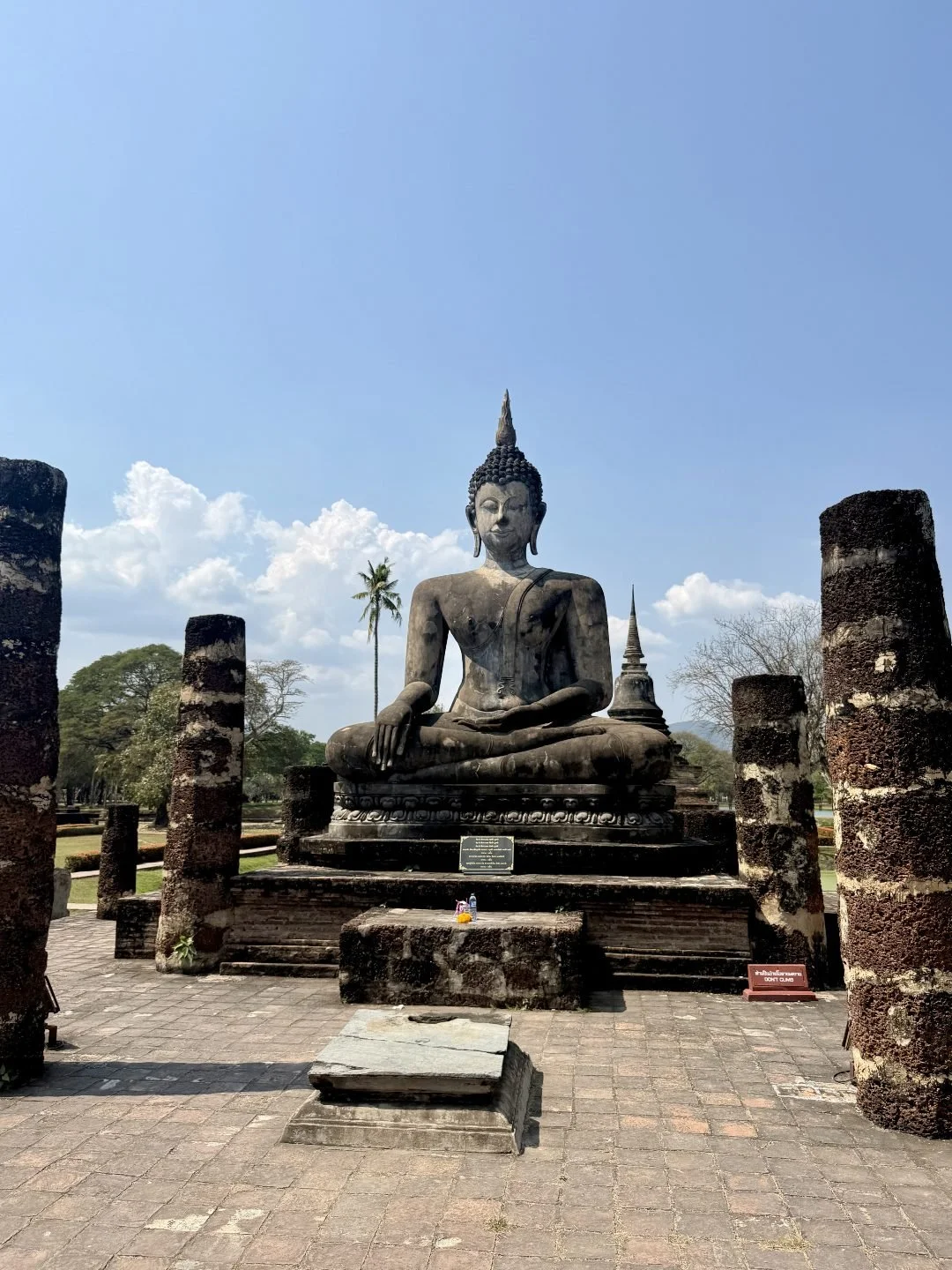
Wat Mahathat
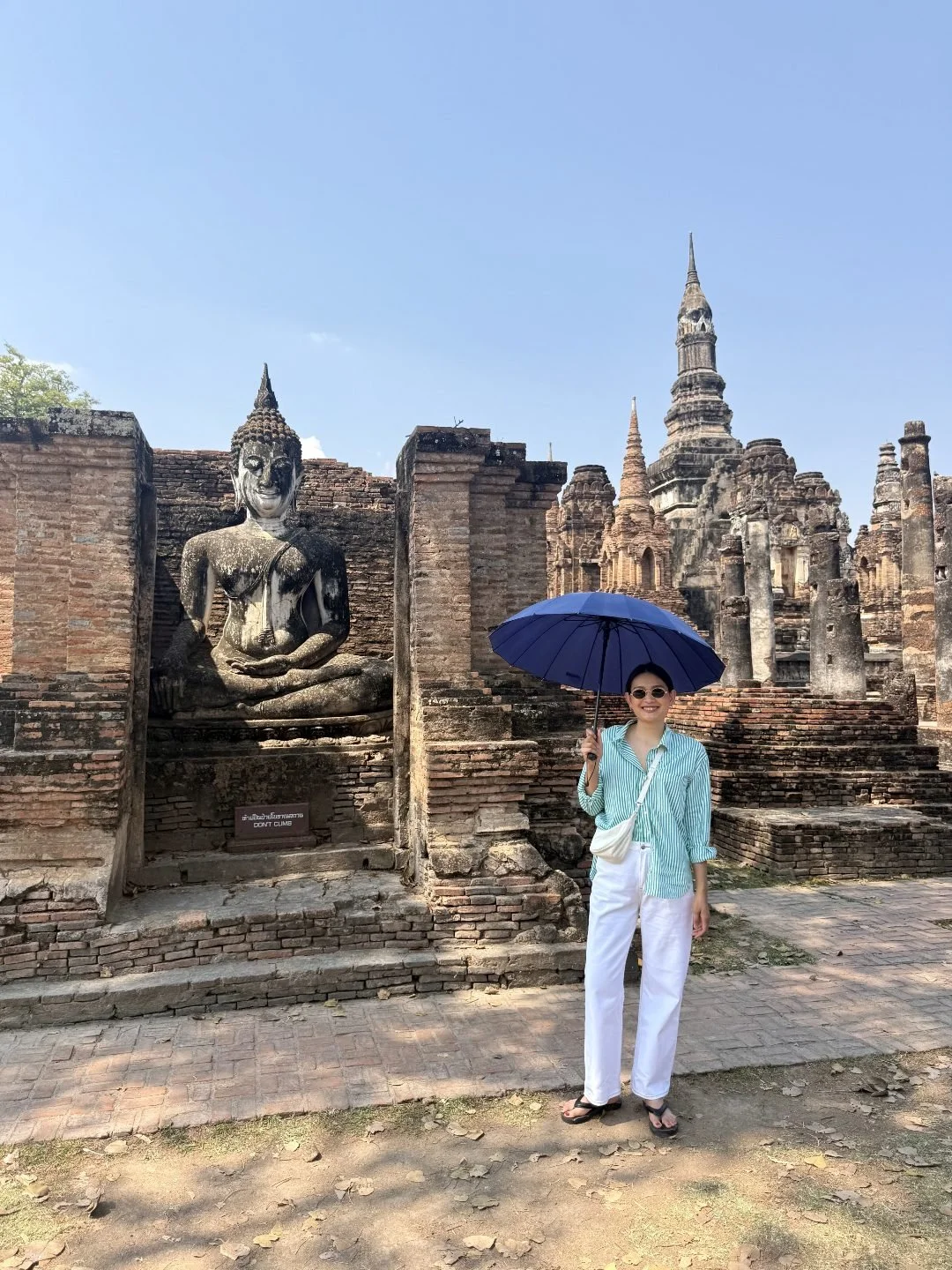
Wat Mahathat
