
10 Best Things To Do in Mallika City, Kanchanaburi
We stopped by Mallika City on our way back from Erawan Falls, after seeing it advertised in our hotel’s travel brochure. We didn’t even know this living heritage village existed before our Kanchanaburi trip, yet we enjoyed it from the very second we walked through those gigantic red gates. Our experience was strange in that we had the entire place to ourselves - we weren’t sure if it was abandoned, disliked or too far off the tourist trail.
Whatever the case, we actually preferred it this way, especially because we were dealing with large crowds at Erawan National Park moments prior. For those who don’t know, Mallika City is a recreation of what a traditional Siamese village would look like in 1905. It feels a little staged and tacky at first, but it slowly grows on you. Our favorite part was swapping our Thai Baht for these old coins called Satang: copper coins with holes in them.
We got overly excited at the start and exchanged 2,000 THB. It turns out you only need 500 THB max per person to buy lunch and shop through the little markets. You can always exchange the coins back to Baht as you leave though. It was a sweltering day in February so we decided against renting costumes, happy with just seeing the staff dressed in their own traditional outfits. If you’re looking for something unique to do when traveling through Kanchanaburi, we definitely recommend giving Mallika City a go.
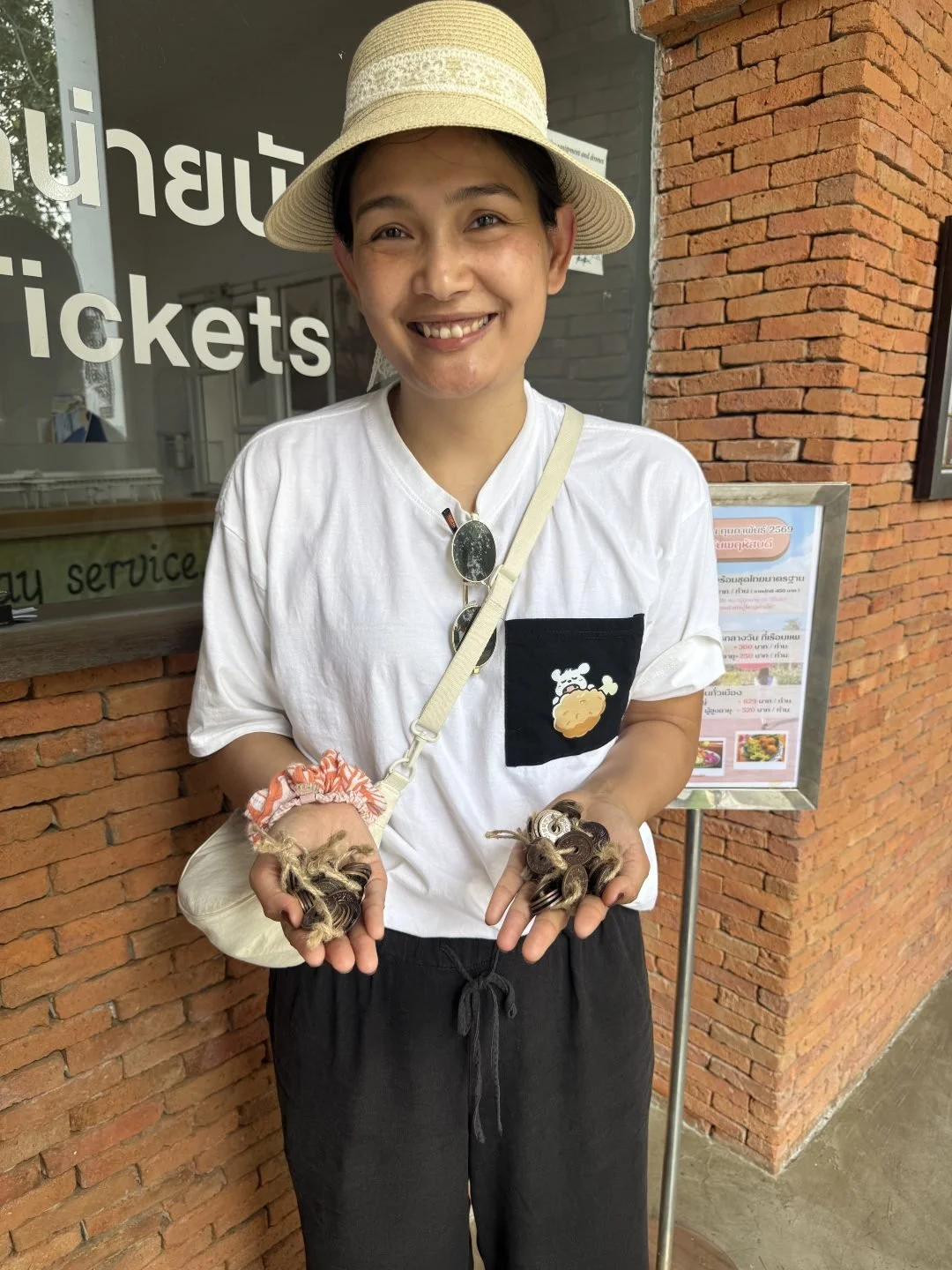
Satang coins
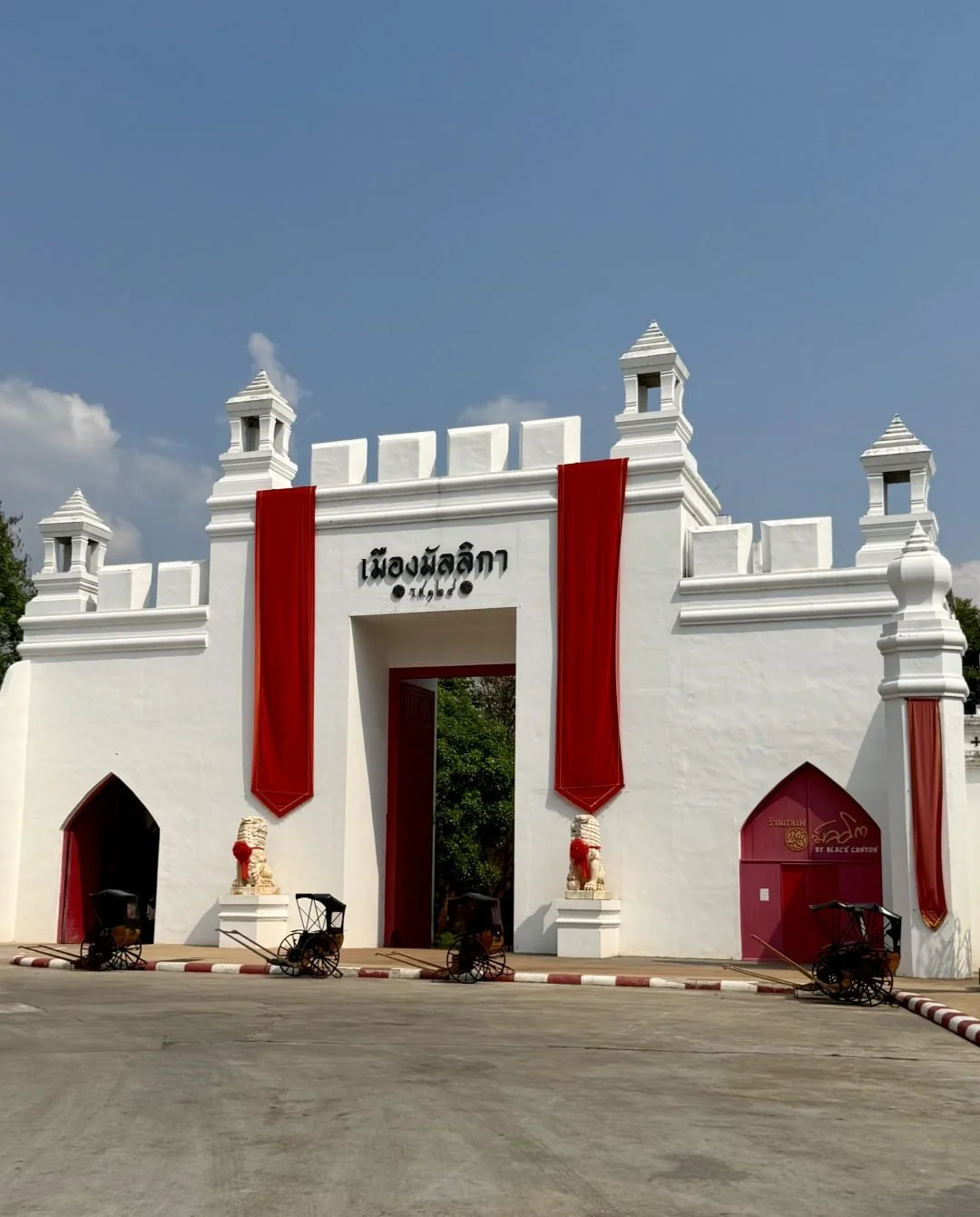
Mallika City
How to Get to Mallika City from Kanchanaburi
It takes about 30 minutes to reach Mallika City by private car or motorbike from downtown Kanchanaburi. Since it’s located west of the city, we suggest visiting after your morning trip to either Mueang Sing Historical Park or Erawan National Park. The route back from Erawan takes you down some awesome backroads by the way: we saw trucks stacked to the brim with corn and rugged mountain landscapes in the background.
Hiring a scooter or motorbike, of course, is the most convenient option for travelers. We picked one up for 400 THB per day. Otherwise, you could catch the local bus heading towards Sai Yok from the Kanchanaburi Bus Terminal. It’s not a good idea to take a day trip from Bangkok: you’d be looking at a 3-4 hour trip each way and the village isn’t so compelling that it’s worth such an effort. Instead, pair it with your Kanchanaburi plans.
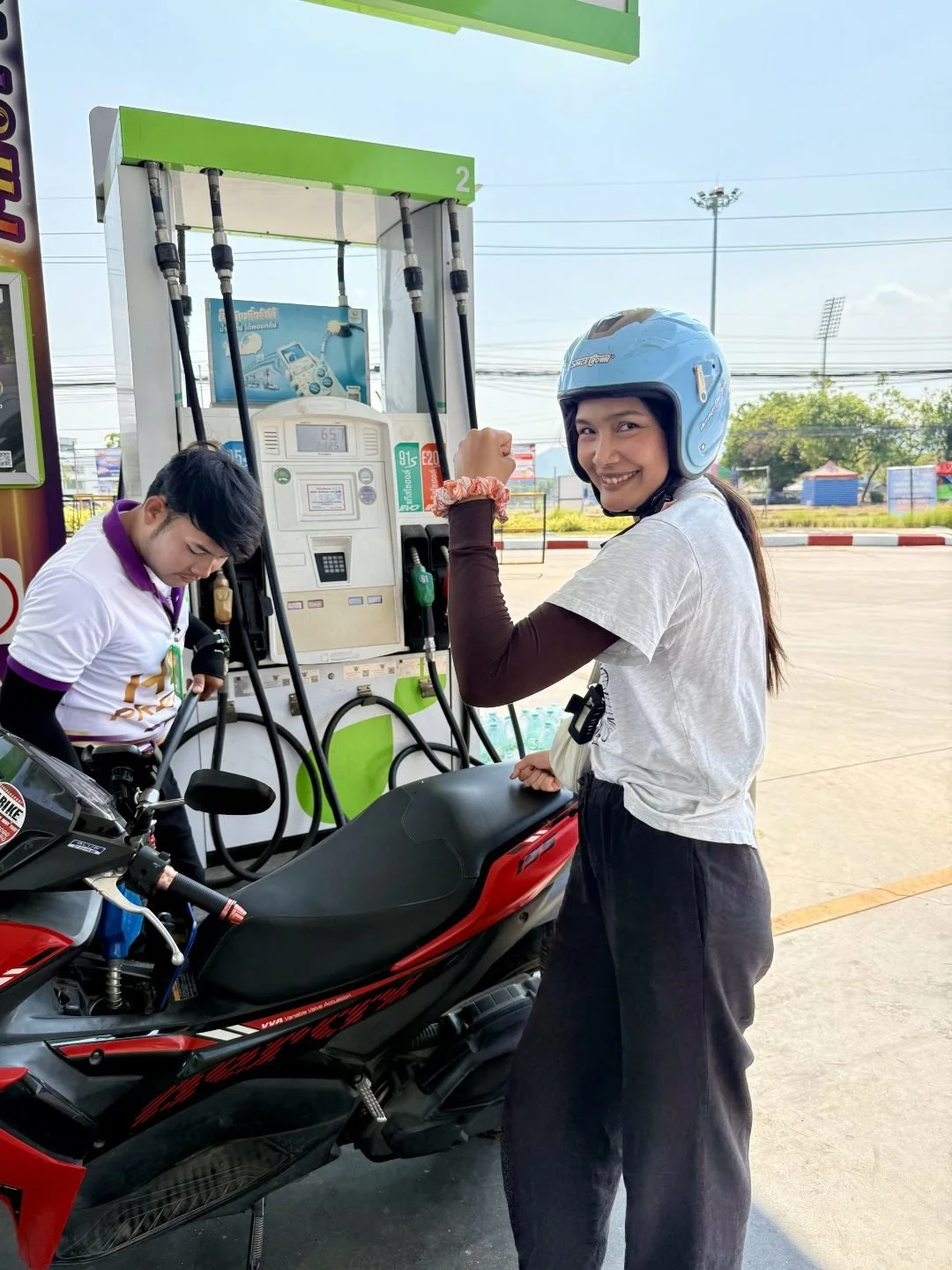
Filling up in Kanchanaburi
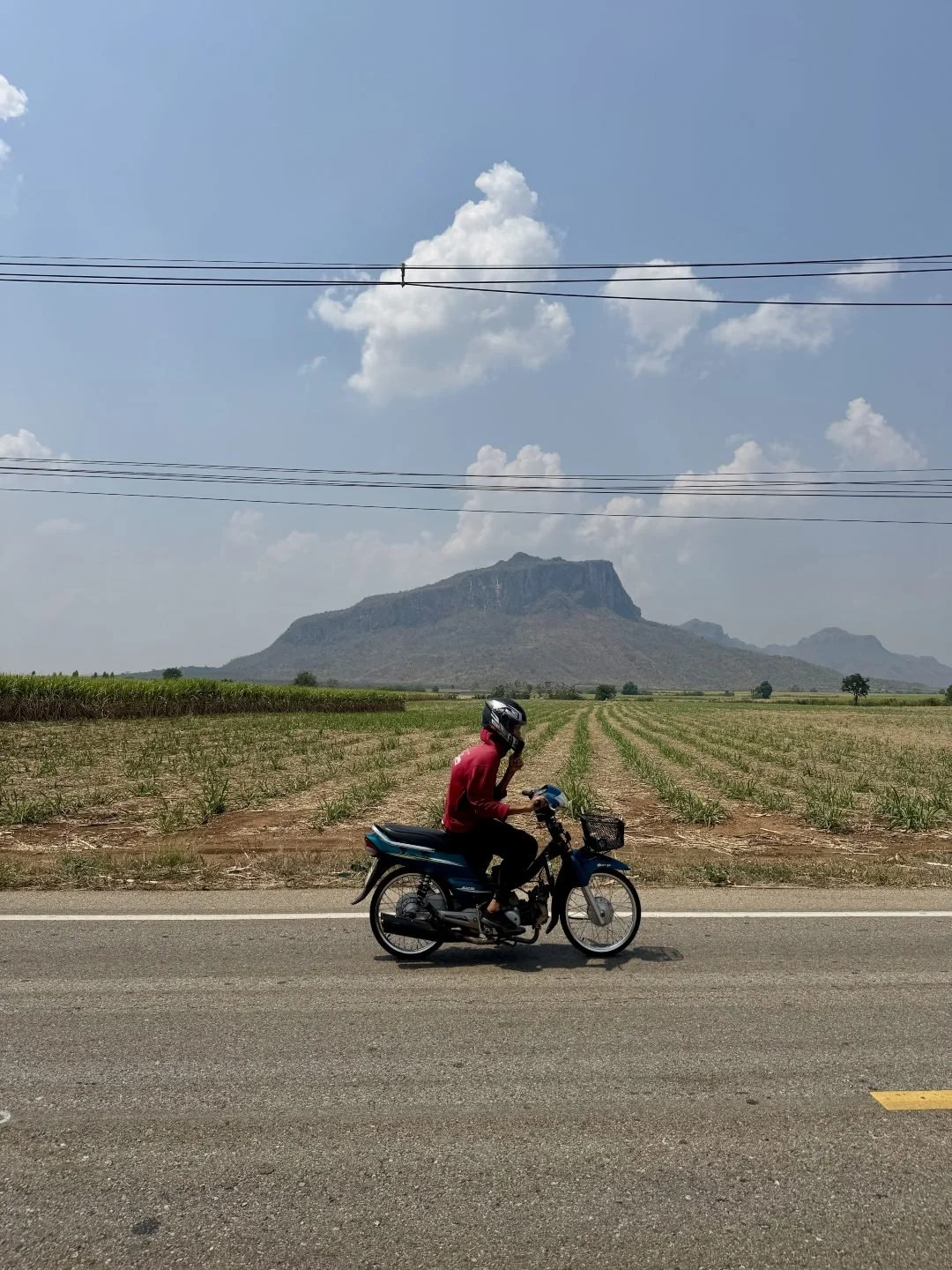
Kanchanaburi backroads
Visitor Information (Know Before You Go)
Opening Hours: 9:00 AM - 6:00 PM daily (although the last tickets are sold at 5:00 PM, so make sure you arrive well before then).
Time Needed: Plan for 2-3 hours. Enough to stop for lunch, spend your Satang coins, take photos and soak up the peaceful vibe.
Admission Fee: 250 THB per adult or 120 THB for children. This is one of the only attractions we’ve visited in Thailand where foreigners get charged the same as Thais. Kat didn’t get her usual discounted rate.
Costume Hire: If you decide to dress up (unlike us), you can buy a combo ticket that includes entry and a standard Thai outfit for 400 THB (an additional 150 THB). Silk outfits can cost more though.
10 Best Things To Do in Mallika City
1. Admire the White & Red City Walls
Upon arrival, we were immediately greeted by these massive white city walls and towering red castle gates. The security guard standing outside the gates saluted us as we pulled up and the rickshaw driver dressed in red also gave us a cheeky wave. It was a surprisingly cool moment. Before entering this “fortified world”, we took the time to admire the architecture and take a few photos with the staff. Then we headed inside in search of some lunch. By that time it was 2:00 PM and we were absolutely starving.
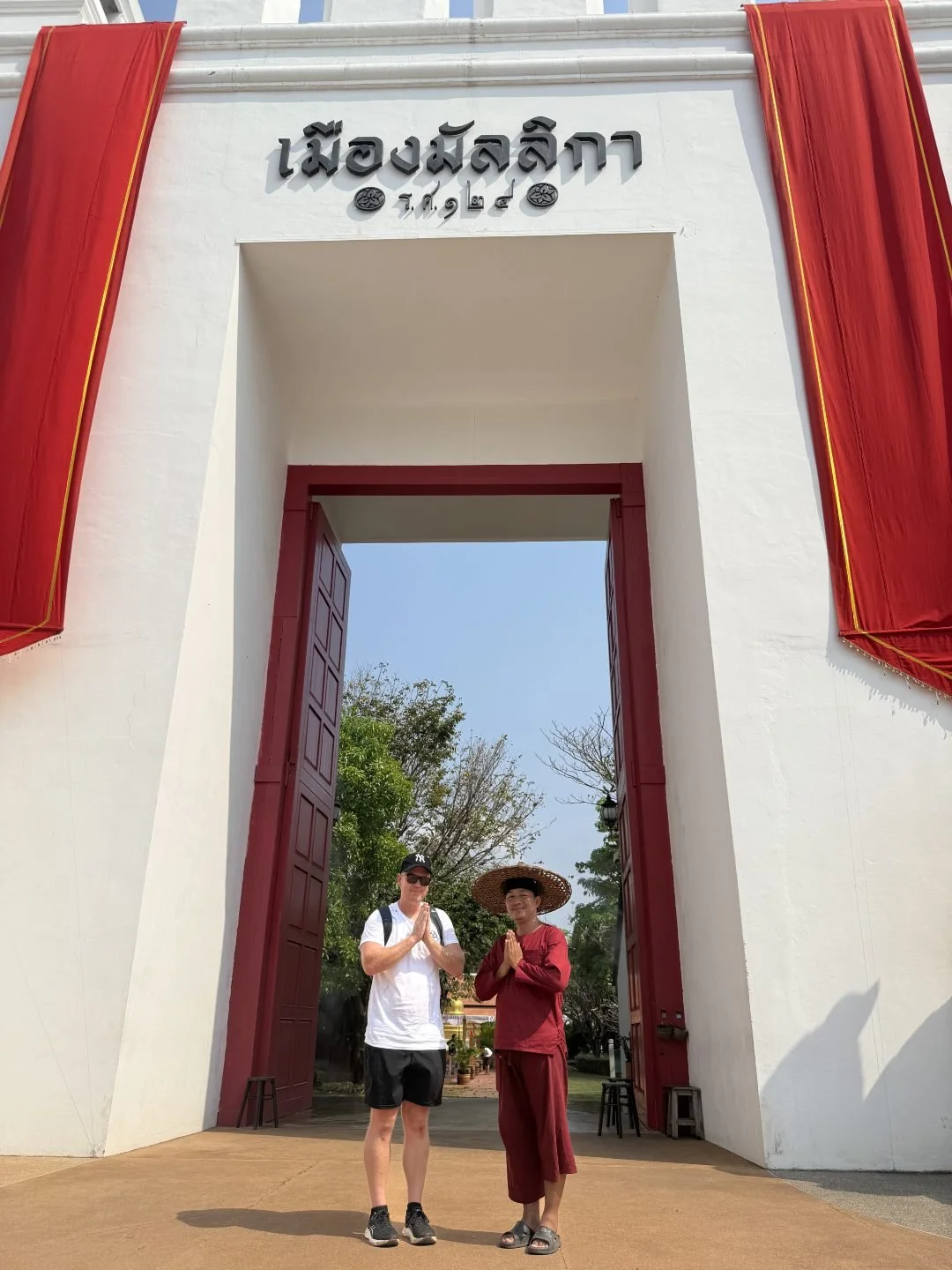
Mallika City
2. Enjoy Pad Thai or Noodle Soup by the Water
We needed no convincing when we walked past a restaurant and the staff invited us for lunch. The scene was gorgeous: cute little tables set up on a wooden deck overlooking the water and the Saphan Han bridge. Cam ordered Pad Thai and Kat ordered noodle soup, and we sat back and enjoyed watching the cooks prepare the meals over wood-fired woks and pots. The food was incredible - boasting this delicious smoky flavor - perhaps a throwback to how good Thai cuisine was back in the days of King Rama V.
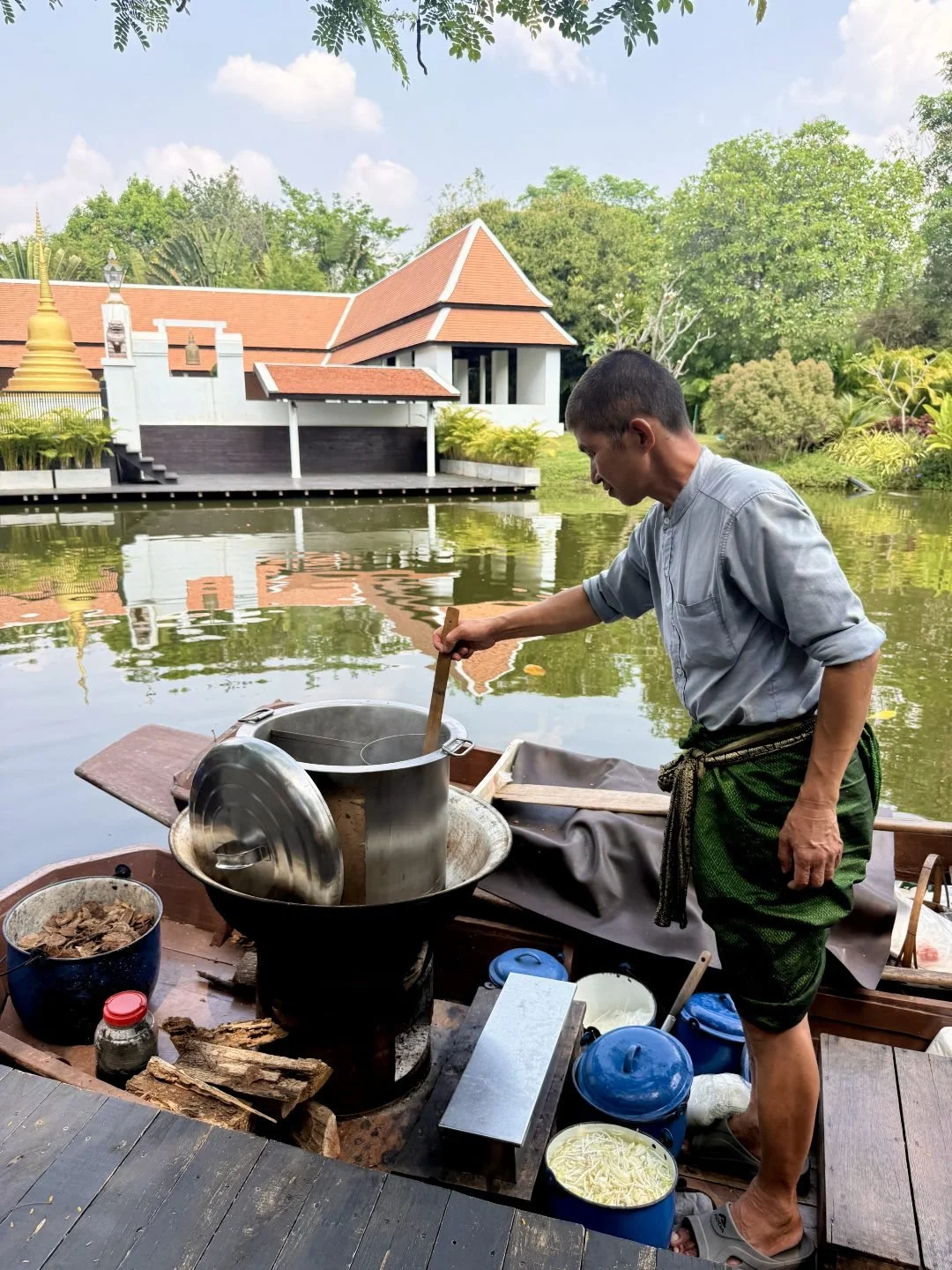
Lunch by the water
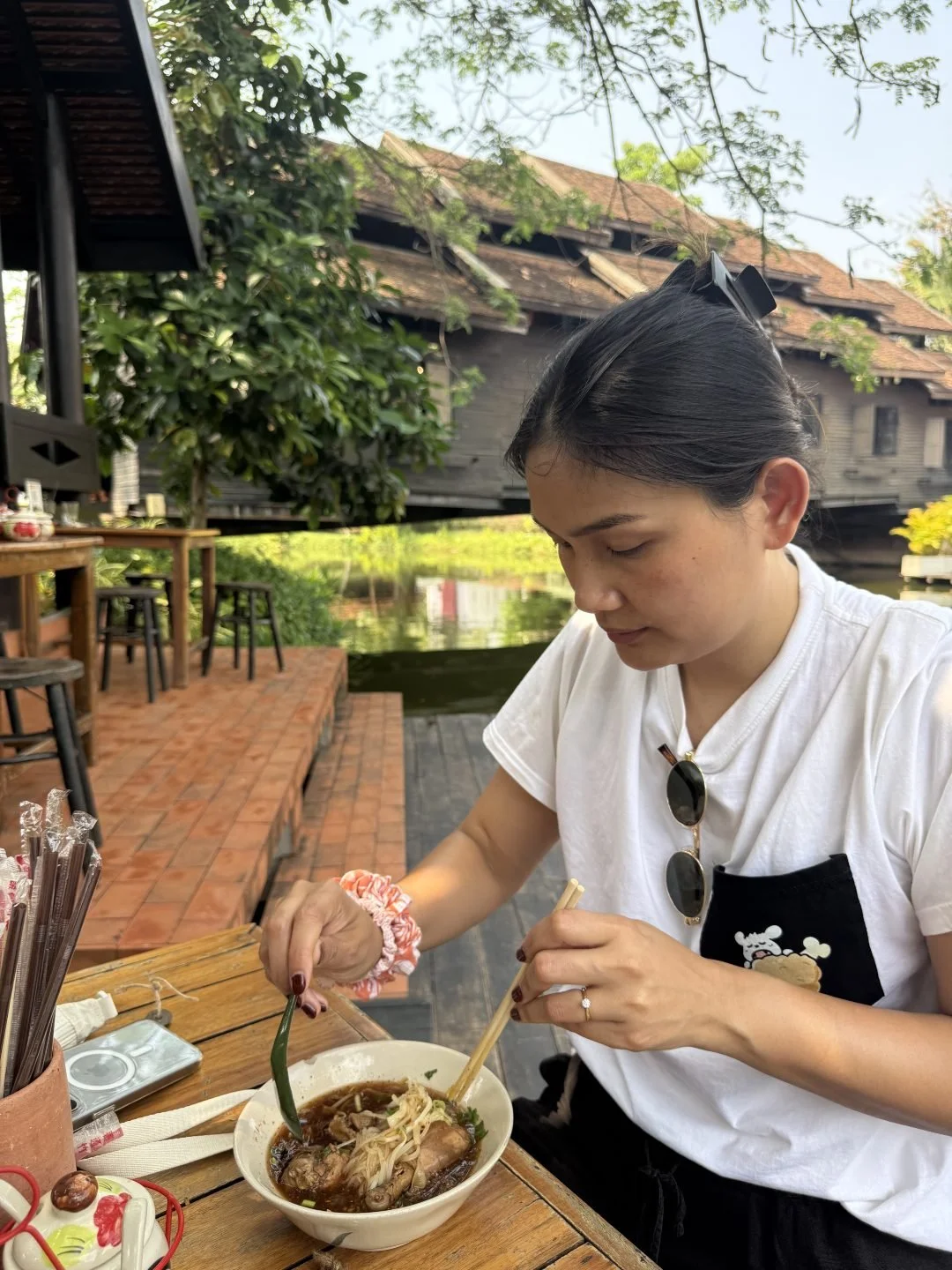
Kat enjoying noodle soup
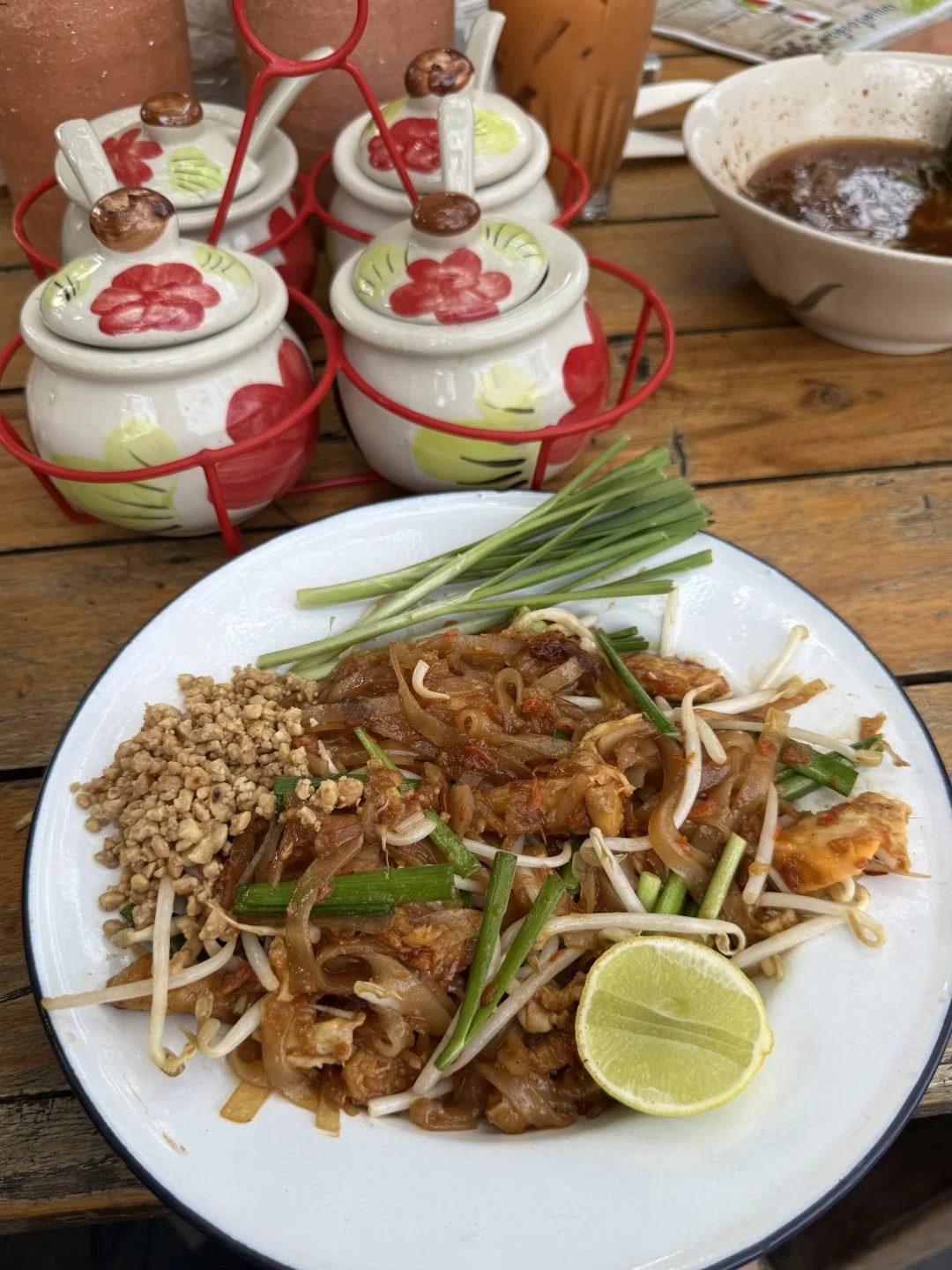
Pad Thai
3. Stop for Som Tum at the Floating House
Believe it or not, we were still hungry following lunch and so we decided to pop into the Floating House (Reuan Pae) for a plate of Som Tum. It was certainly dialled down a bit for tourists, lacking that strong fermented fish flavor and spice level, however the papaya was still fresh and crunchy. These floating shophouses were common in Thailand in the early 20th century where food, and all sorts of goods, were transported by river.
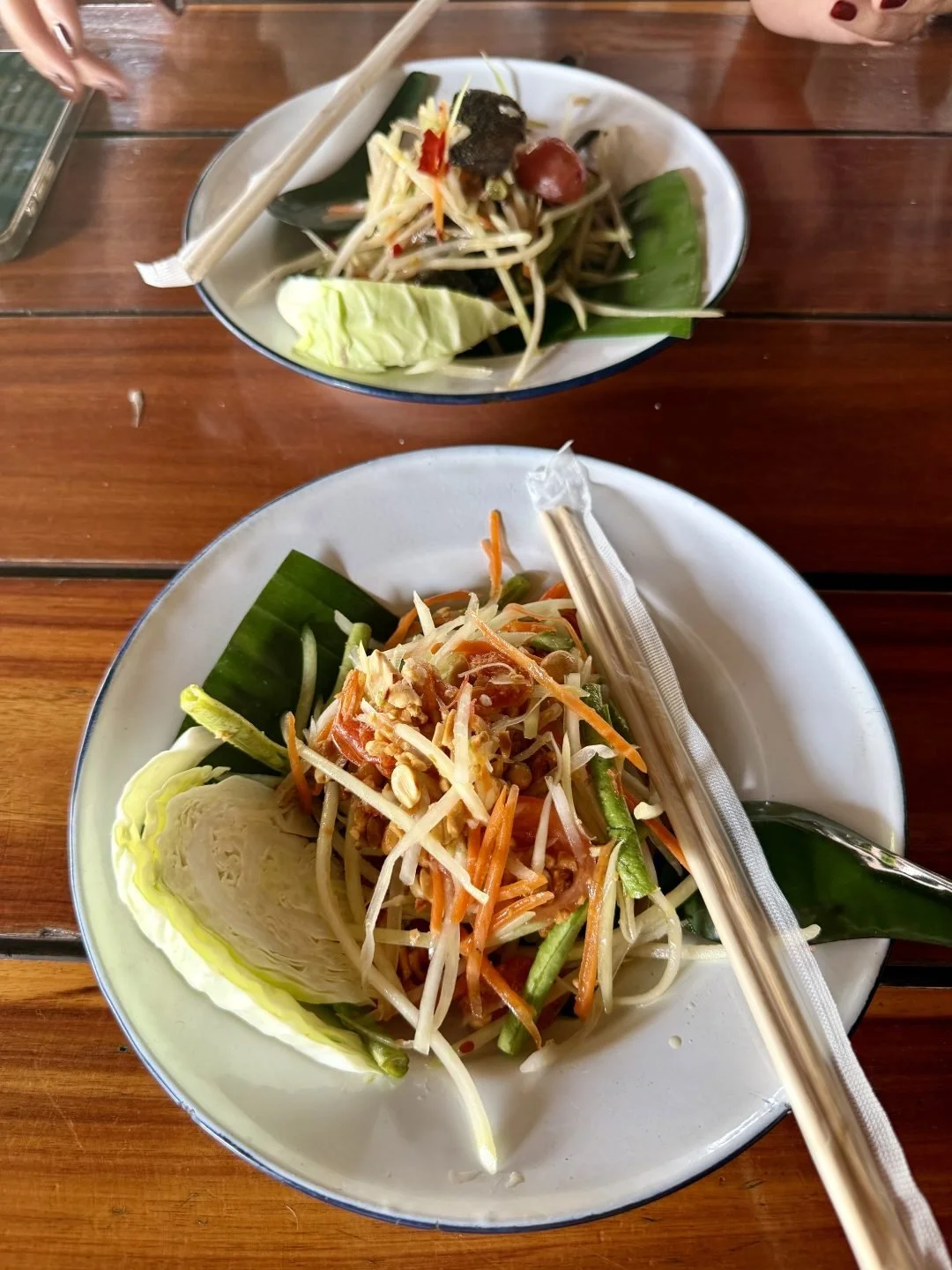
Som Tum
4. Buy Some Dried Fruit Snacks
Throughout the village you’ll find vendors selling everything from trinkets and souvenirs to dried fruit and snacks. Cam, being a Kiwi himself, was drawn in by the dried kiwi on display. He purchased a small bag and continued munching as we wandered around. We had no idea how much it cost but it barely made a dent in our bag of Satang coins. Kat also bought pineapple versions of the same thing which were just as tasty.
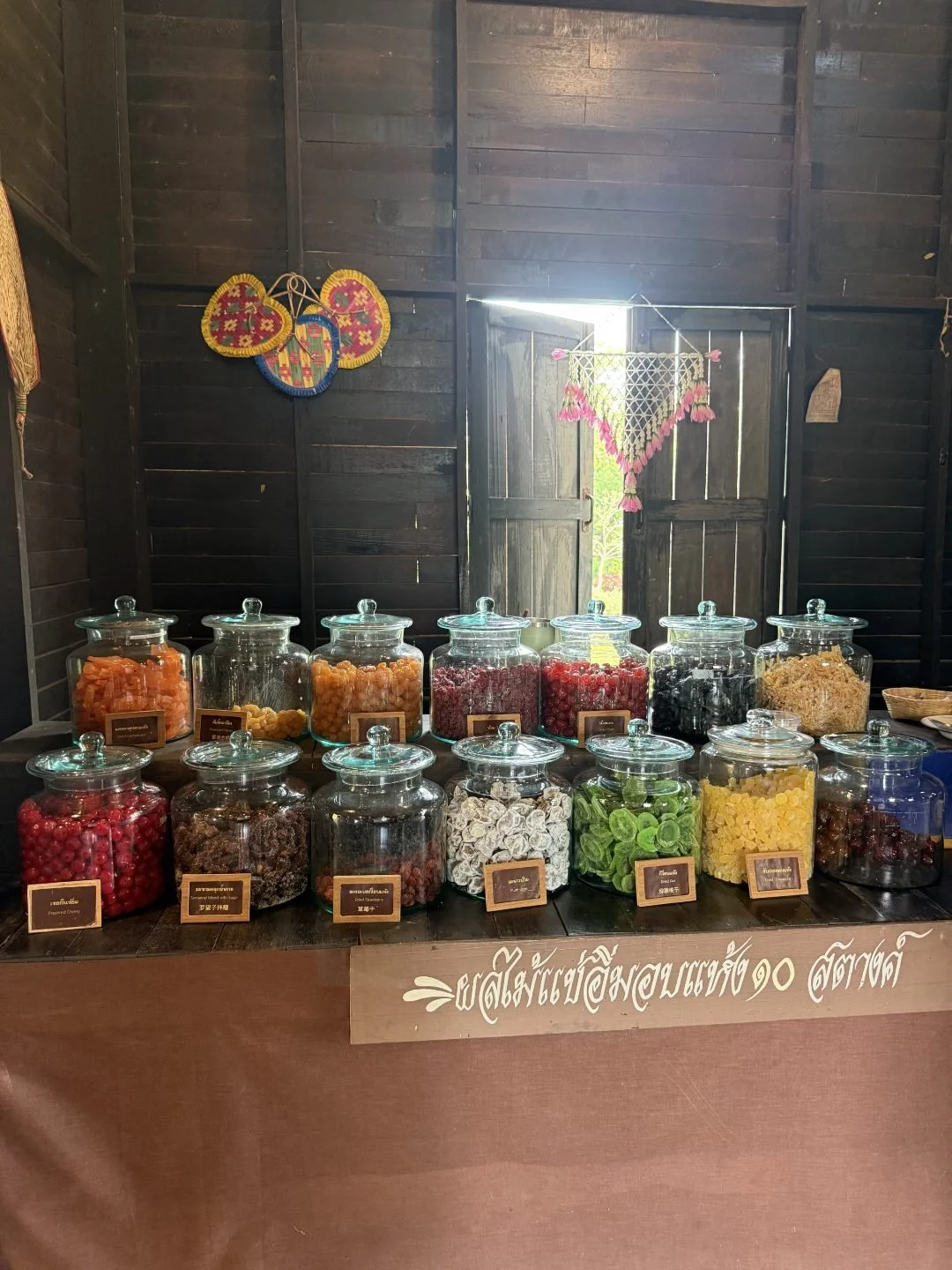
Dried fruit snacks
5. Explore the Ancient Market Zone
Continue walking and you’ll naturally stumble across an area called the Ancient Market Zone. This is a replica of several famous market districts in Thailand from 1905, including the Yaowarat Road (Chinatown) zone with its distinctly Chinese feel. You’ll see red lanterns, colorful wall murals and plenty of food inspired from this period. Although, by the time we got there, we were completely stuffed and so just enjoyed taking photos.
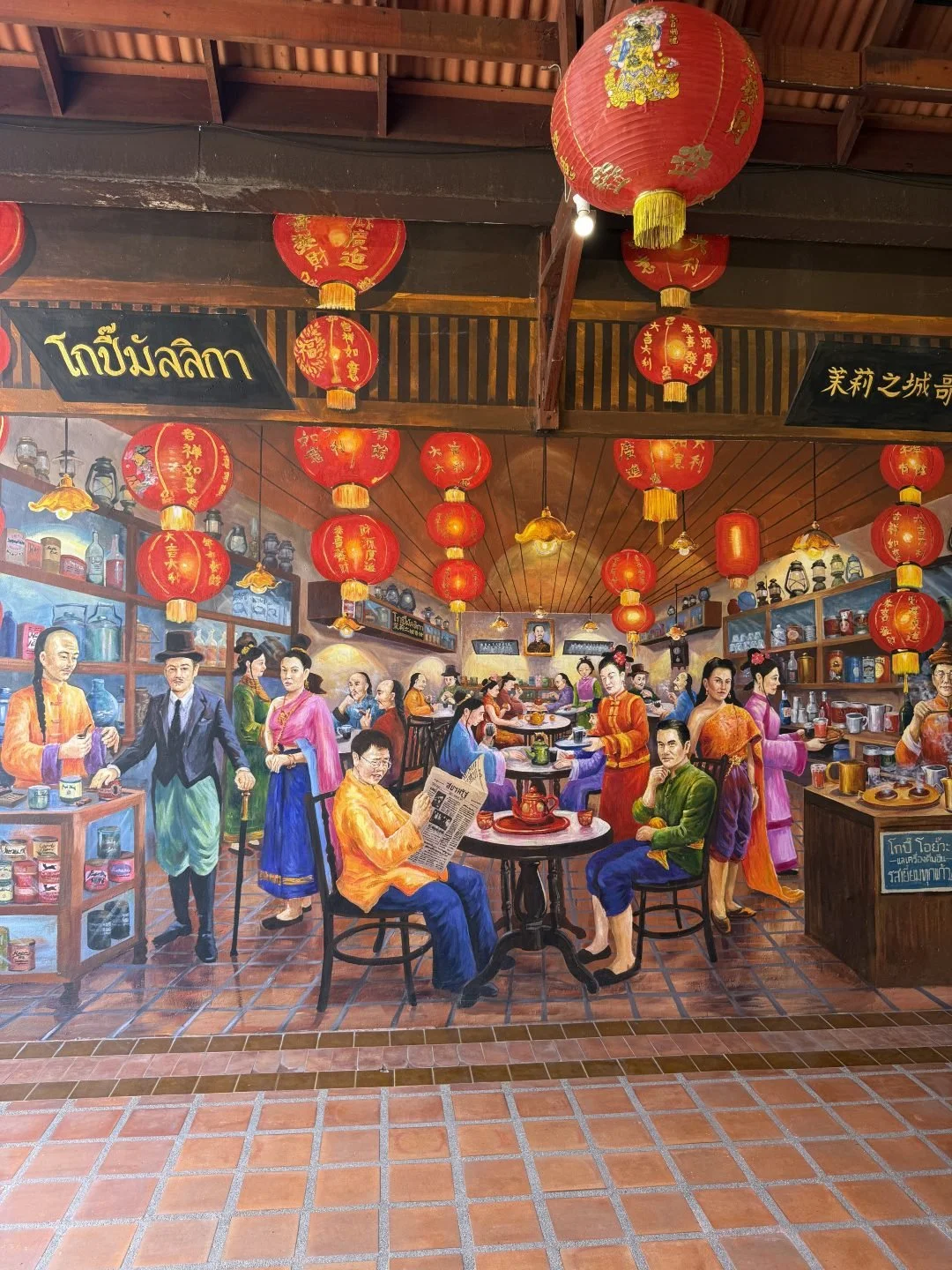
Ancient Market Zone
6. Climb Up the Watch Tower
Not too far from the Ancient Market Zone is the City Tower or Watch Tower. The design stems from a typical “prison tower”, where guards would get an elevated observation point to keep an eye on prisoners and prevent them from escaping. Visitors are welcome to climb to the top and soak up the views across Mallika City, out towards the jagged green mountains. We didn’t actually do the climb ourselves as we were struggling with the heat.
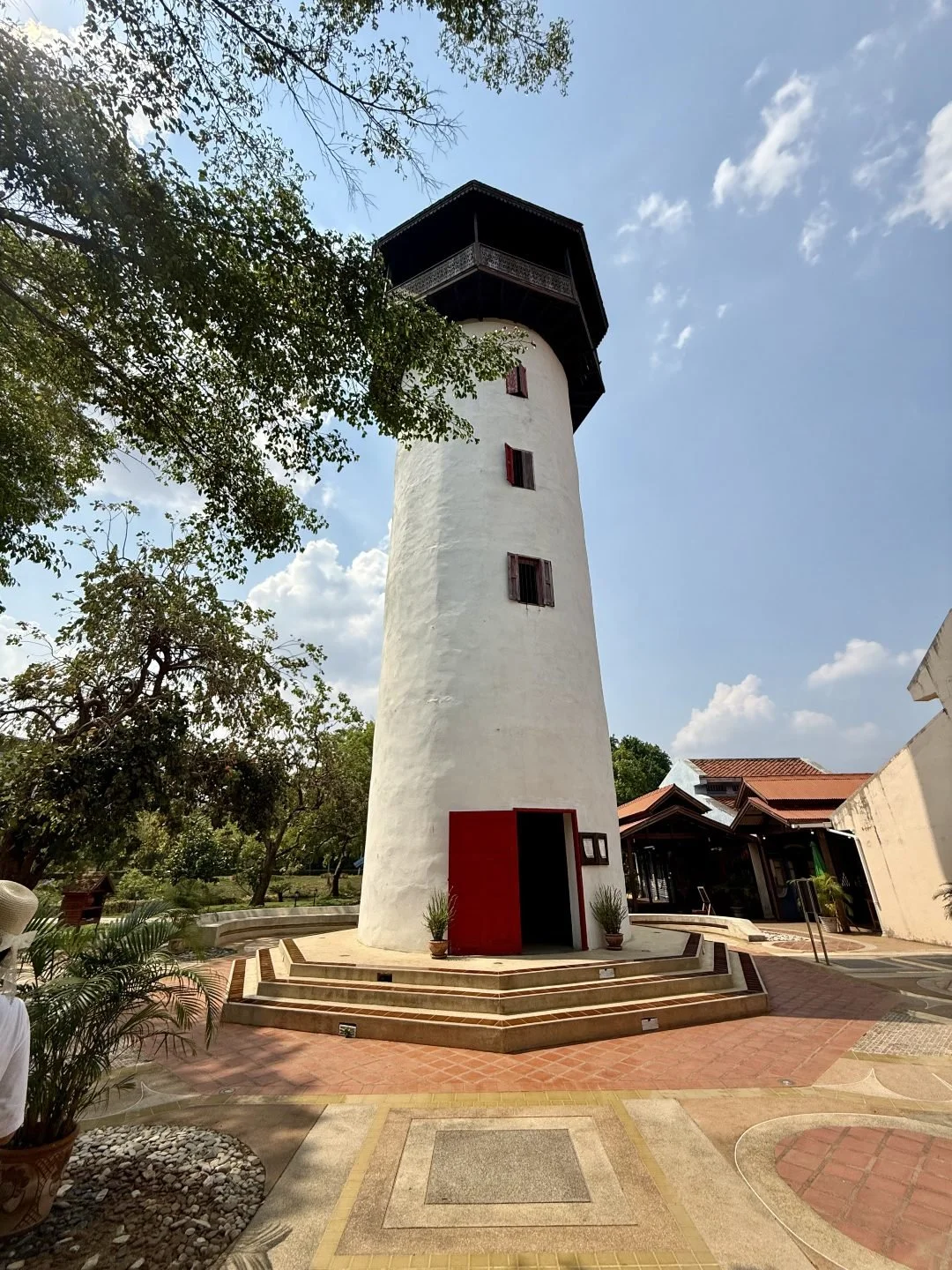
Watch Tower
7. Capture Photos of the Houses & Gardens
Mallika City is worth visiting for the photo opportunities alone - we could see why people would love to dress up here. Around every corner is another photogenic spot, whether it’s the Commoner’s House (Reuan Dieow) or Family Mansion (Reuan Khaha Bodi). We loved the gardens in particular - they’re perfectly manicured. One is even called the Jasmine Garden, which ties in nicely with the name “Mallika” meaning jasmine.
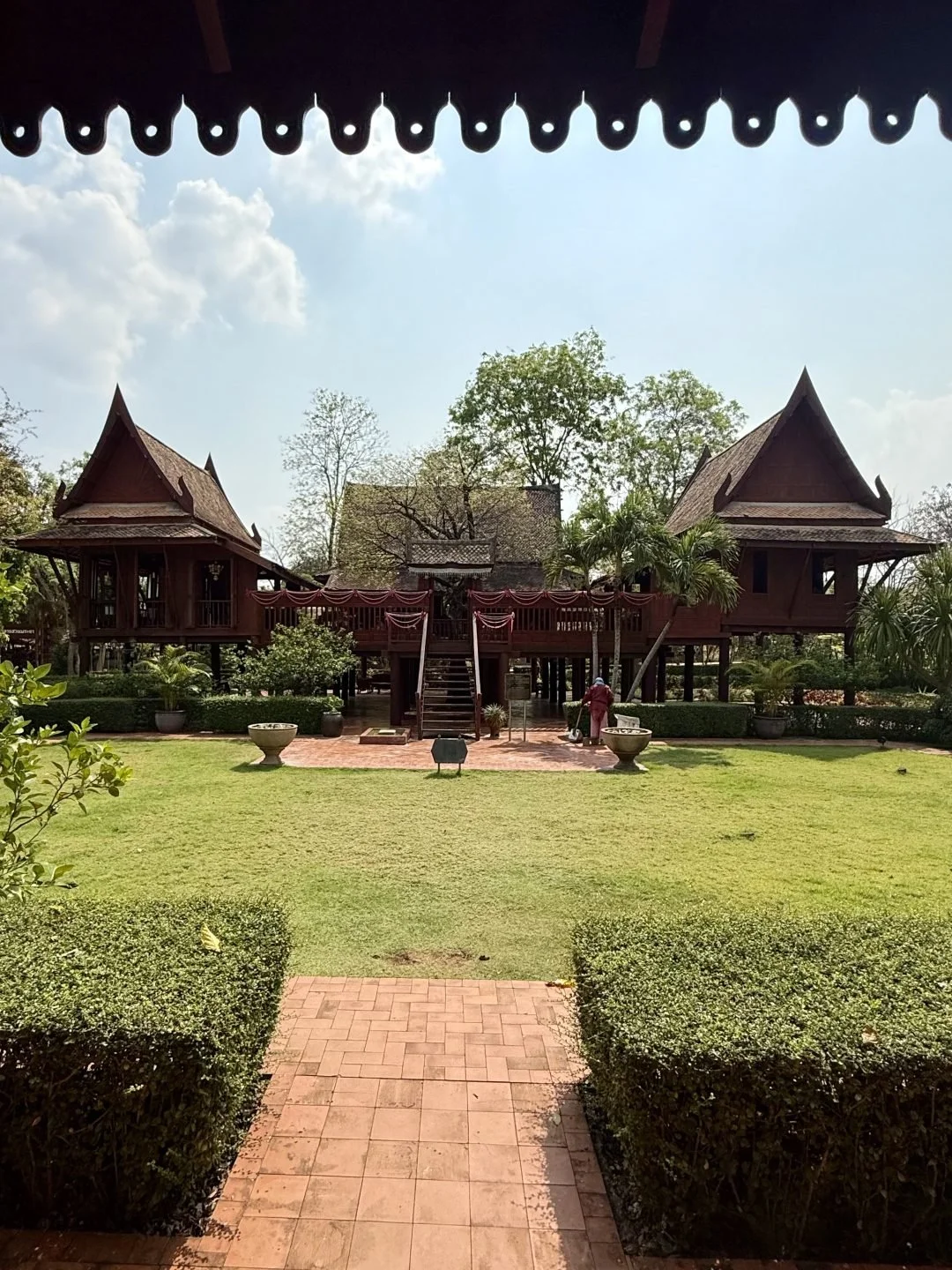
Family Mansion (Reuan Khaha Bodi)
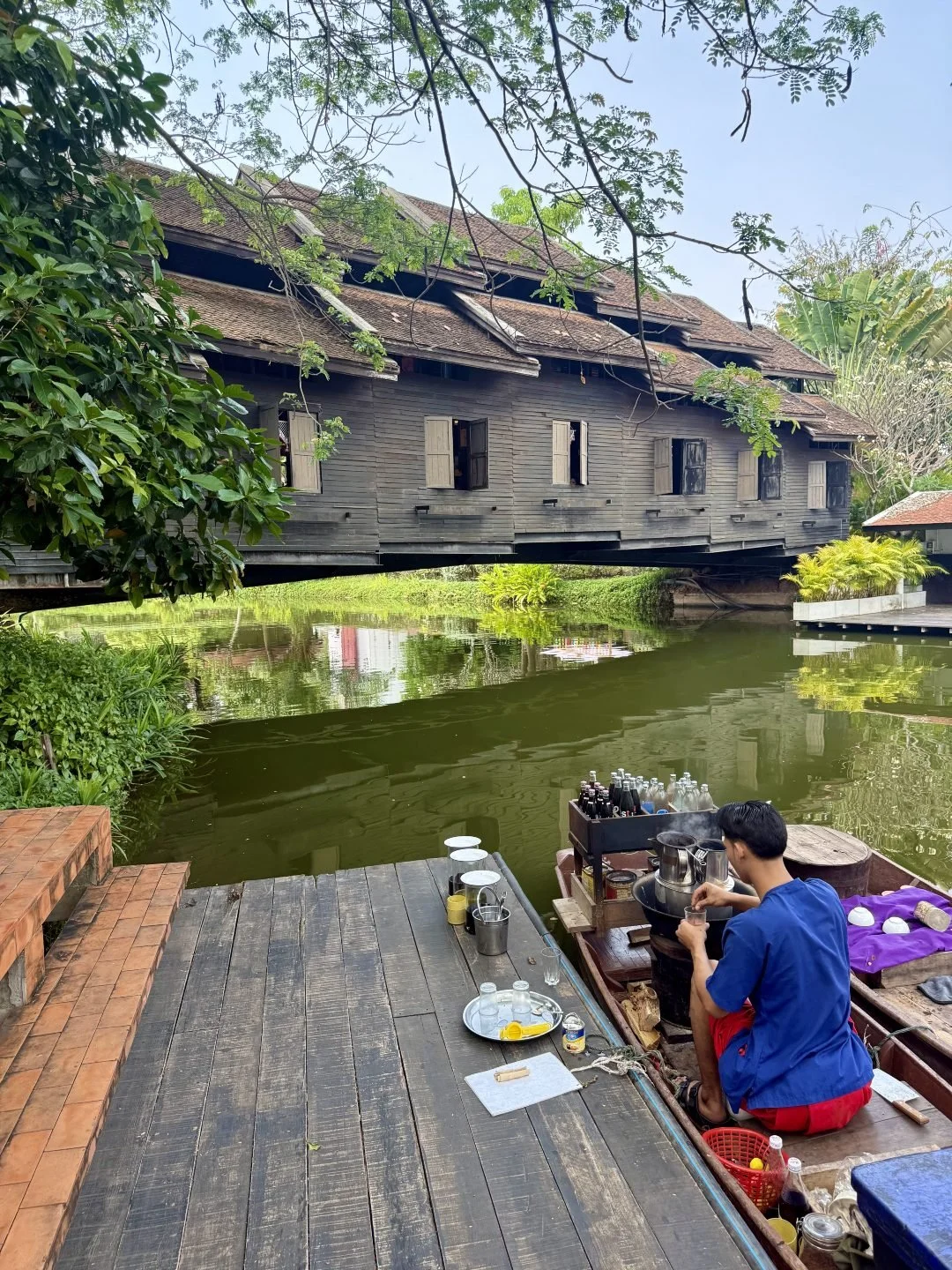
Saphan Han bridge
8. Ride a Rickshaw Inside Mallika City
There’s a bunch of rickshaws at Mallika City with drivers waiting outside to offer rides as you enter. It costs no more than 50 THB for a quick trip and would be a fun way of getting around the village. Back in the reign of King Rama V, rickshaws were primarily operated by Chinese immigrants who lived under royal protection. We were tempted to hire one, mainly to escape the sun, but in the end found walking to be a relaxing option.
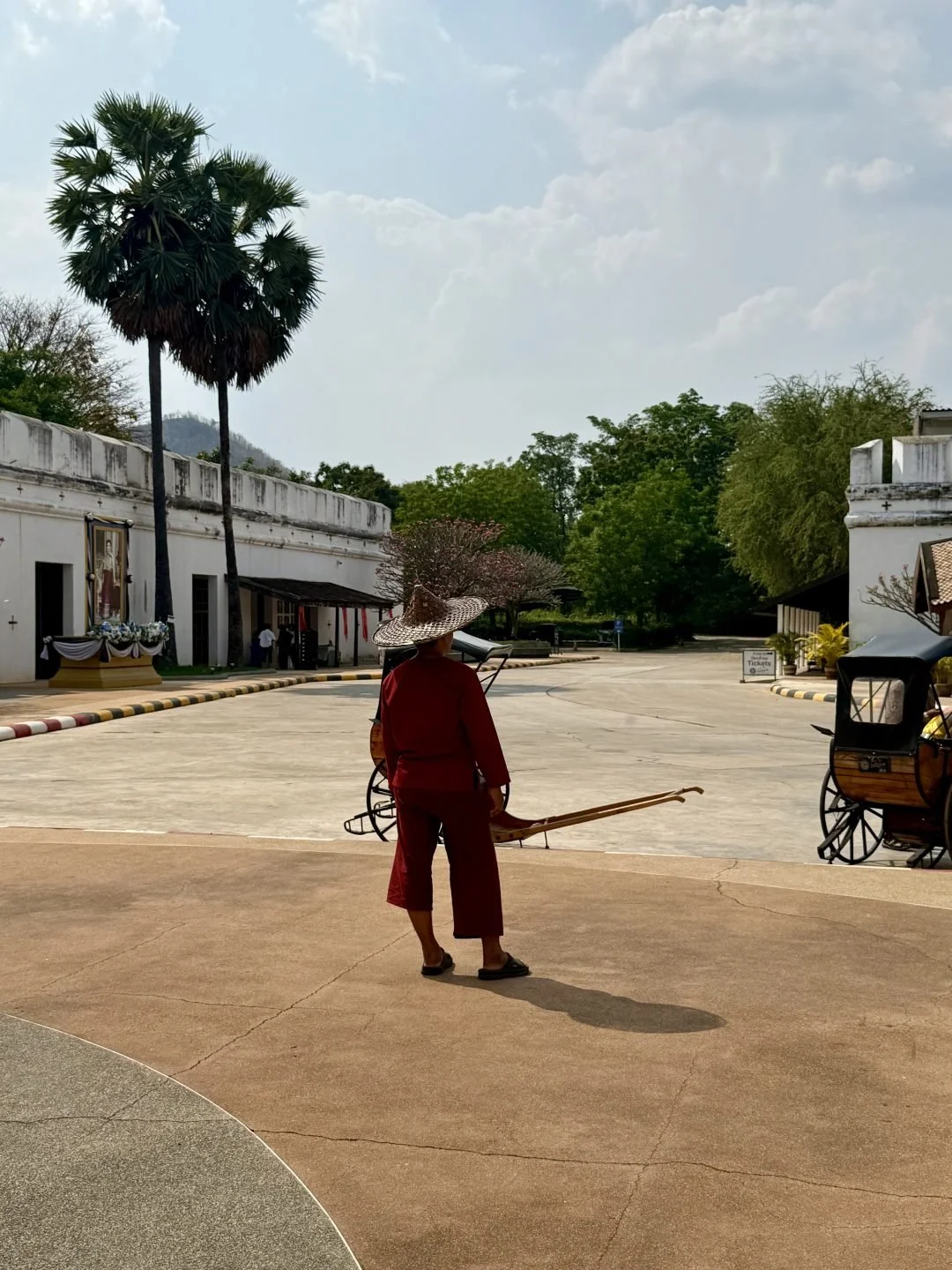
Rickshaws
9. Say a Few Words in the Old-Fashioned Dialect
One of the coolest parts about Mallika City was listening to the staff speak in their old-fashioned dialect. Kat, for one, was really impressed. She had learned about this in movies but to hear it on the ground in a somewhat real-world environment was fascinating for her. She finished her sentences with “chao kha”, instead of the modern way of saying “kha”, and had a fun time playing around with the words. Try practicing a few phrases before you go: it breaks the ice with the staff and shows you’re making an effort.
10. Take a Few Satang Coins Back Home
We ended up exchanging half of our Satang coins back to Thai Baht at the ticket office and kept a few as mementos. You can easily do the same and even make a necklace out of the hole in the copper coins. Keep in mind that only the Satang coins can be used as currency inside Mallika City - they won’t accept Baht for any purchases. Aim for about 300-500 THB or more depending on how much food and souvenirs you’re likely to buy.
Final Thoughts: Is Mallika City Worth Visiting?
Mallika City is clearly set up for tourism - there’s no two ways around that. It’s nothing like an authentic village that you might find in the more remote parts of Thailand, and some would even call it a cheesy open-air museum. But that’s a cynical take in our opinion. Mallika City is worth visiting if you embrace it for what it is: an attempt to transport travelers back to the Thailand of old. The connections we made with the people felt genuine and the setting is undeniably beautiful, so what else could you ask for?
