
Ayutthaya vs Sukhothai: Day Trip or Northern Adventure?
The biggest quandary when traveling through Thailand is deciding where to go with limited time. It’s incredibly easy to get stuck in decision paralysis choosing between the different cities, islands, and ancient capitals of this amazing country. This has only been exacerbated by the new visa-free rules which cut the temporary 60-day stay back down to the standard 30 days. You now have to be far more discerning with your itinerary.
On a month-long trip, it probably makes sense to visit just one of the famous historical parks such as Ayutthaya or Sukhothai. While both are UNESCO sites, they offer quite distinct experiences: one is a bustling day trip from Bangkok and the other is an adventure up north to quieter pastures. To help you make the right choice, we’ve created a comparison guide covering the effort, travel cost, and temple ruins of each destination. Read on to see whether Ayutthaya or Sukhothai comes out on top.
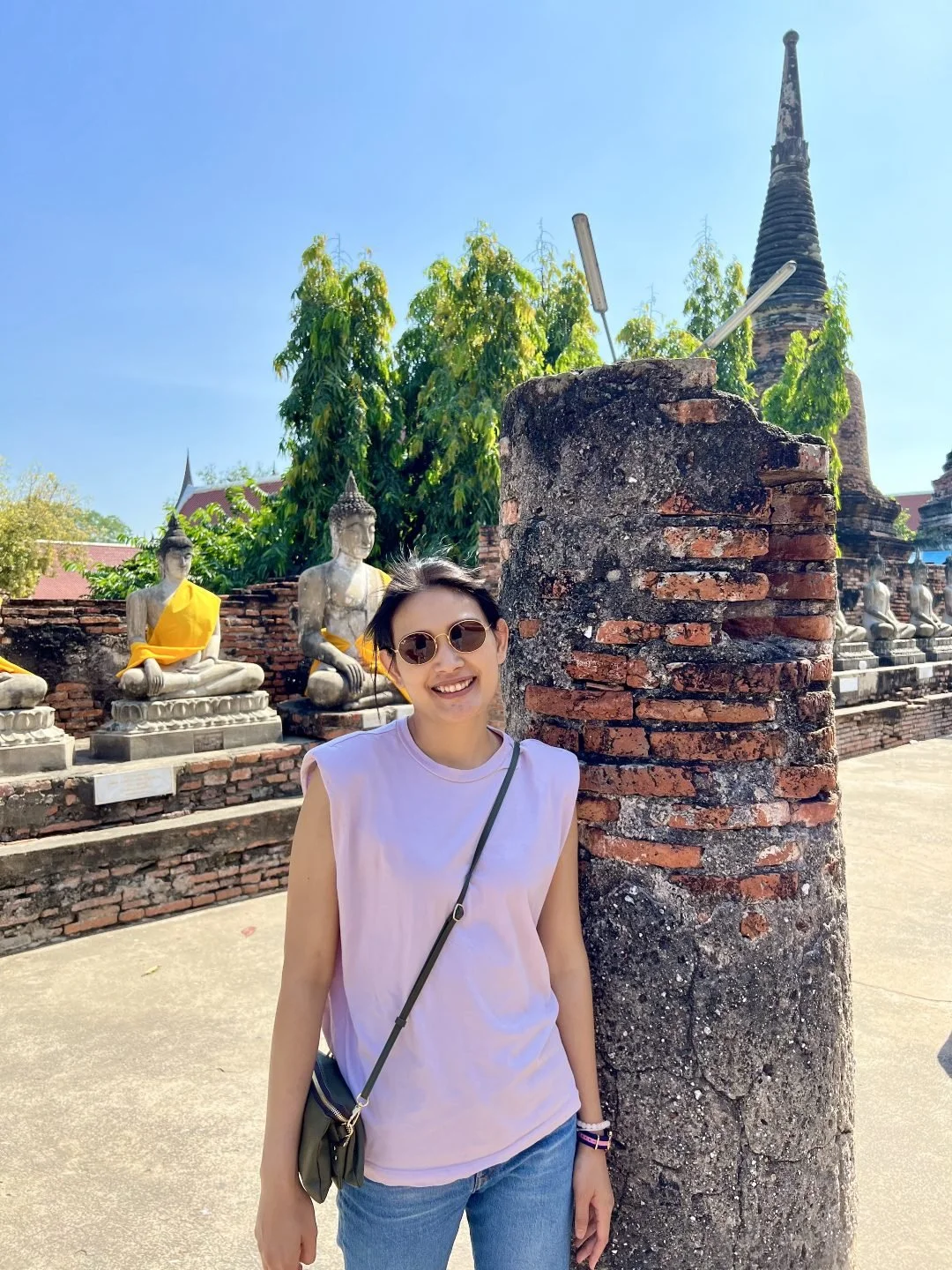
Kat in Ayutthaya
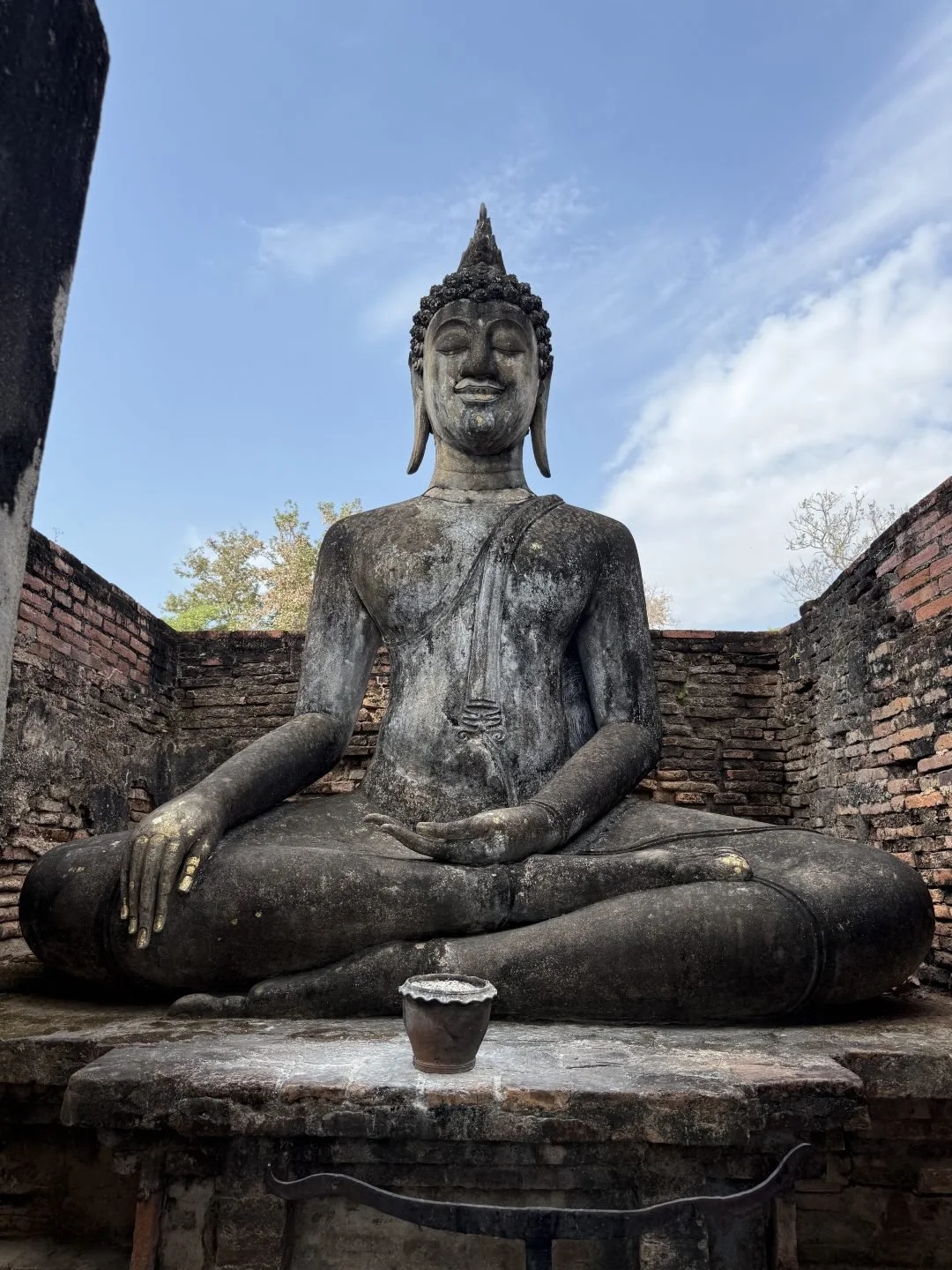
Sukhothai
Effortless Day Trip vs Slow Travel Stopover
Let’s get the obvious out of the way. Ayutthaya is close to Bangkok, which means you can get there in 60 minutes by express train from Krung Thep Aphiwat Station. Or you could book an all-inclusive tour where the day’s transport is handled for you. Ayutthaya is a wonderful option if you don’t want to explore the north at all, and prefer to focus on Bangkok (and its surroundings) and a few islands down south like Phuket and Koh Lanta.
Sukhothai, on the other hand, requires more deliberation. Firstly, you’ll need to determine your route: a simple return flight (what we did), a 4-6 hour train ride to Phitsanulok, or a slow meandering journey by car or motorbike through the central and lower northern regions of Thailand. Once you’re in Sukhothai, continuing up towards Chiang Mai or veering eastward to complete a loop of the Isaan region is perfectly feasible.
From our experience we can say that arriving by plane is convenient and fun. It’s only a 1 hour and 20 minute flight, and as soon as you arrive everything flows smoothly. You hop into a little tram/buggie, and cruise through the airport grounds that are beautifully designed with gardens and lotus ponds. Then it’s straight into a taxi for the 40-minute trip to New Sukhothai (the main town). Along the way, you’ll drive past rustic houses and rural landscapes that ooze tranquility. From there, you simply arrange a tuk-tuk or bicycle tour of Sukhothai Historical Park through your hotel.
The same efficiency applies for Ayutthaya trips. Tuk-tuk drivers offer tours of the temples the moment you step off the train platform and you can request your own stops, or ask for recommendations including where to eat locally. While getting around both historical parks is relatively seamless, finding decent accommodation for Sukhothai requires more prep. We searched for hours online and eventually landed on Midtown Sukhothai as the best choice. It’s walking distance to the street food carts and has no negative reviews about bullfrogs croaking all night (be careful about that).
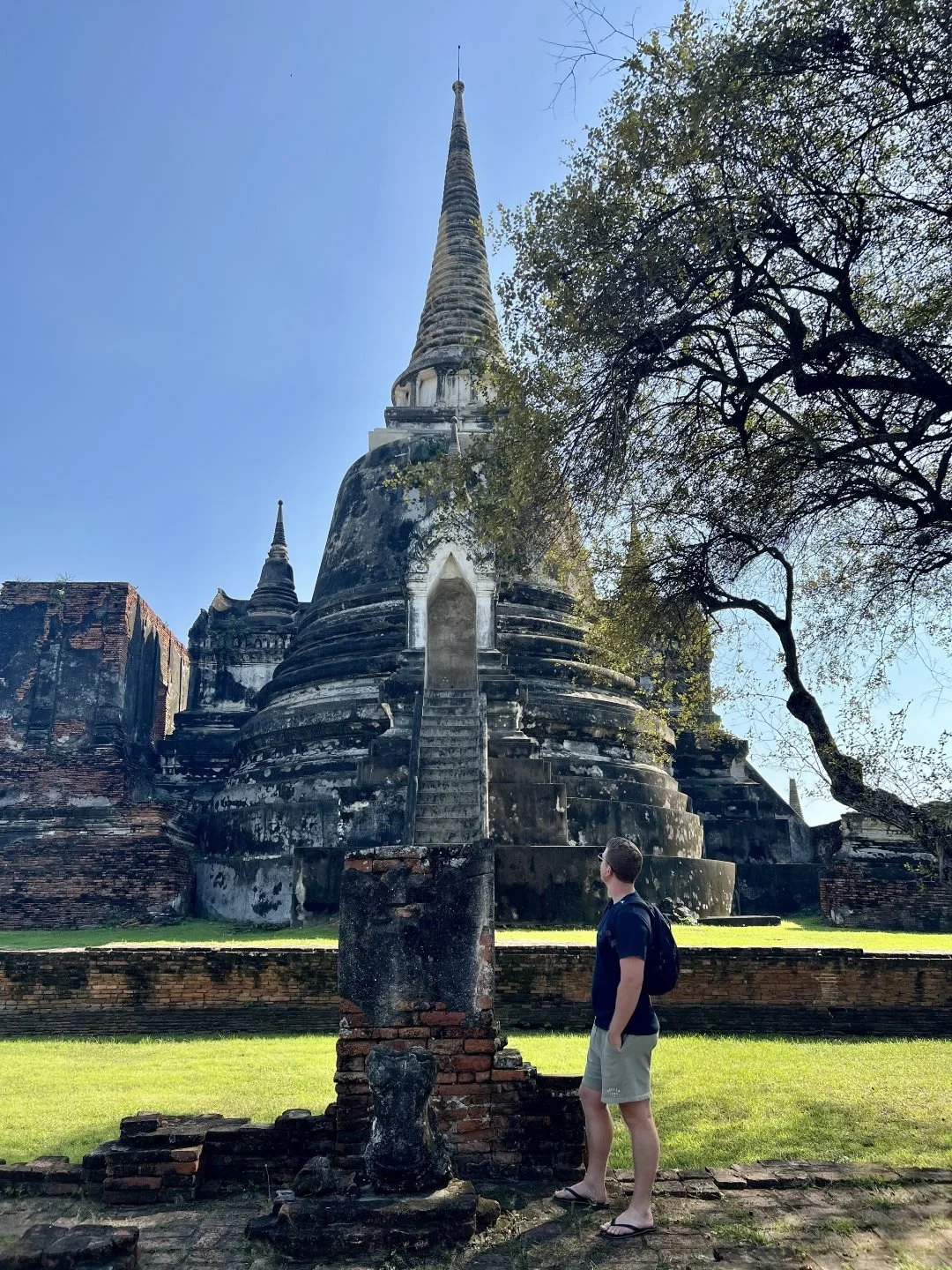
Cam in Ayutthaya
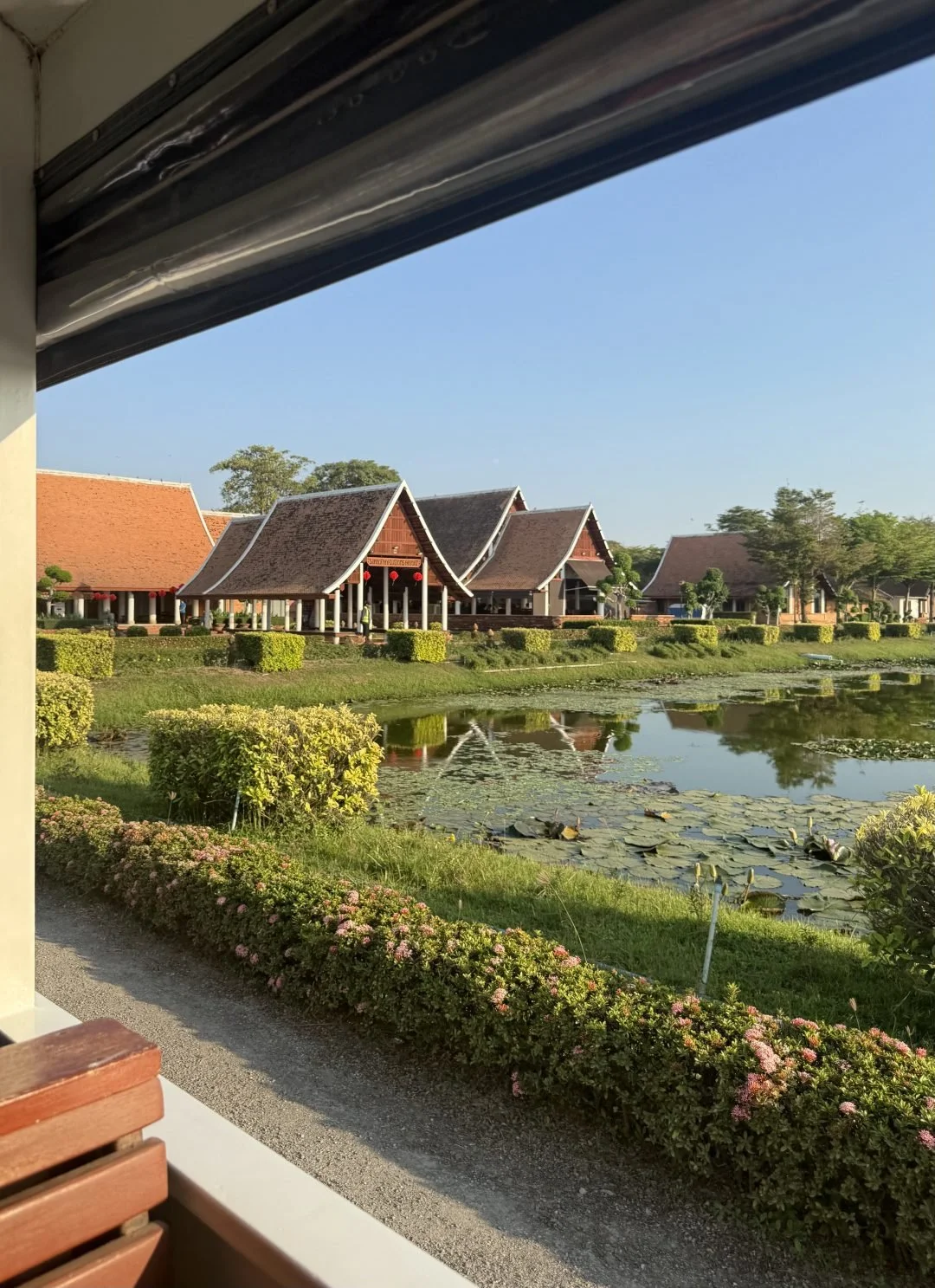
Sukhothai Airport
Getting around Sukhothai
Is Ayutthaya or Sukhothai Better Value for Money?
A day trip to Ayutthaya can be achieved on a shoestring - especially if you ride the third-class train, split a tuk-tuk tour between three or four people, and stick to Boat Noodles for lunch. However, we don’t recommend skimping for the sake of it. The more enjoyable approach is to take the special express train to save time and then splurge a bit on the local delicacies, such as the buttery Giant River Prawns (around 500-800 THB each).
Entrance fees aren’t a major cost: 200-400 THB in total depending on how many ruins you visit. What will add to your expenses is staying overnight. Accommodation in Ayutthaya can easily be 20% higher than Sukhothai - one of the reasons why a day trip here suffices. All in all, you’re looking at roughly 1,500-3,000 THB per person if you visit independently. The value for money in Ayutthaya is superb but it’s still not as good as Sukhothai.
We paid 4,300 THB per person for our return flights with Bangkok Airways. This, of course, will be the biggest line item for your Sukhothai trip unless you take the train. The rest is as cheap as chips. The food, hotels, and transport are all less expensive than Ayutthaya - including the price of a tuk-tuk tour around the temples. Nevertheless, you still need to make room for a solid budget as all the little costs start to add up: taxis from the airport, golf cart hire in the walled Central Zone, and bicycle rental. In total, this equates to around 7,000-9,000 THB per person for a 2-night stay.
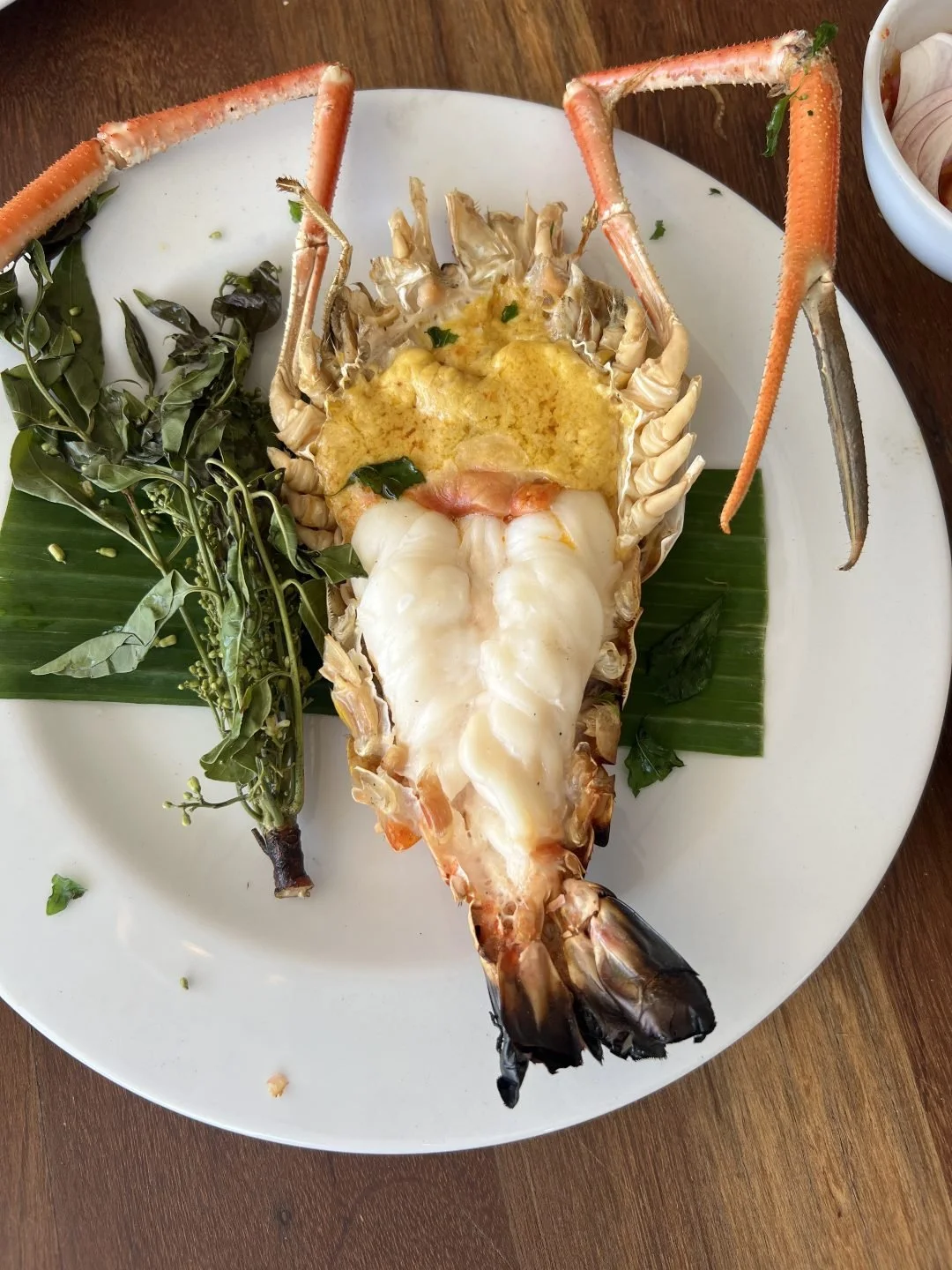
Giant River Prawns, Ayutthaya
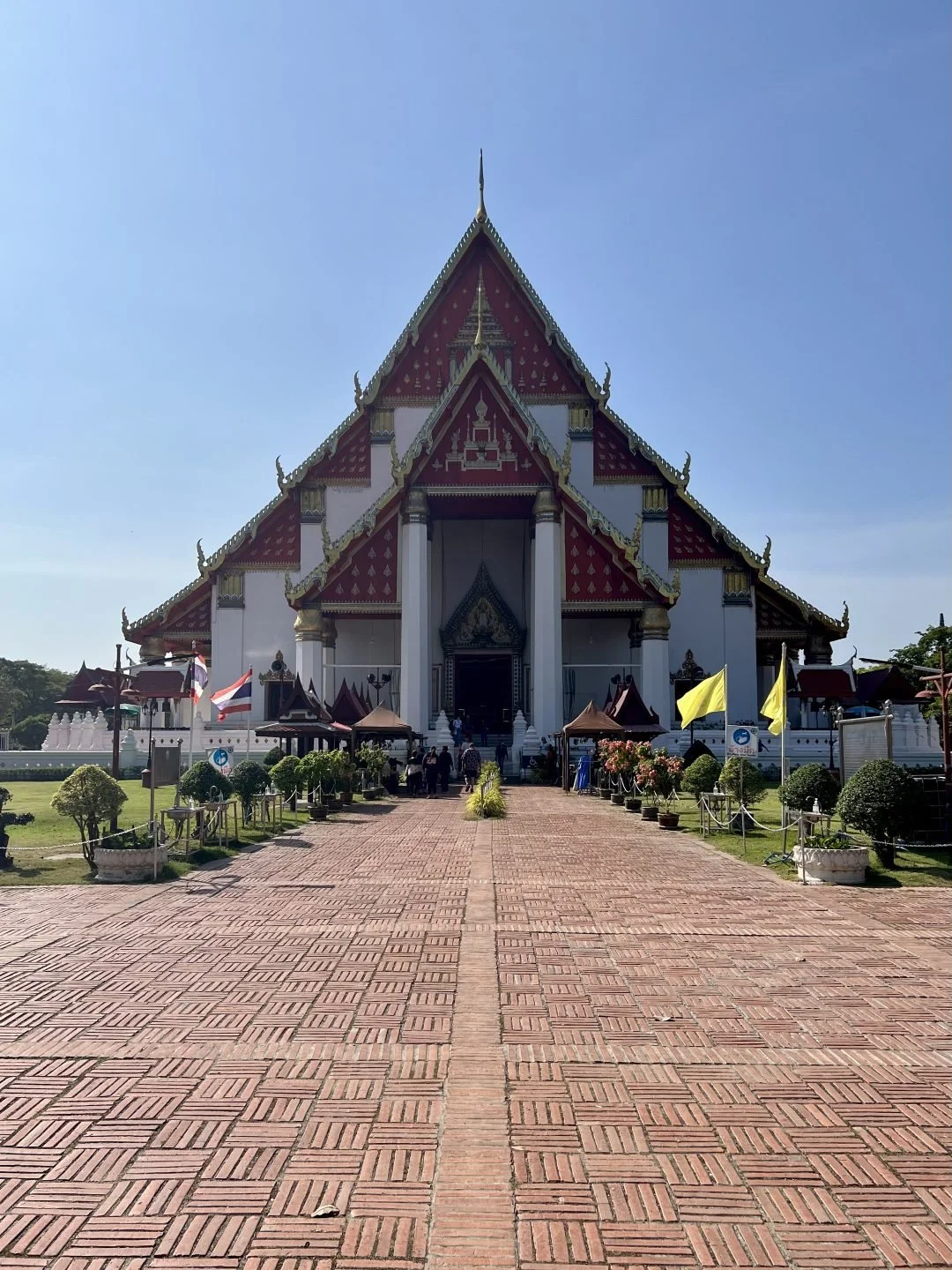
Ayutthaya
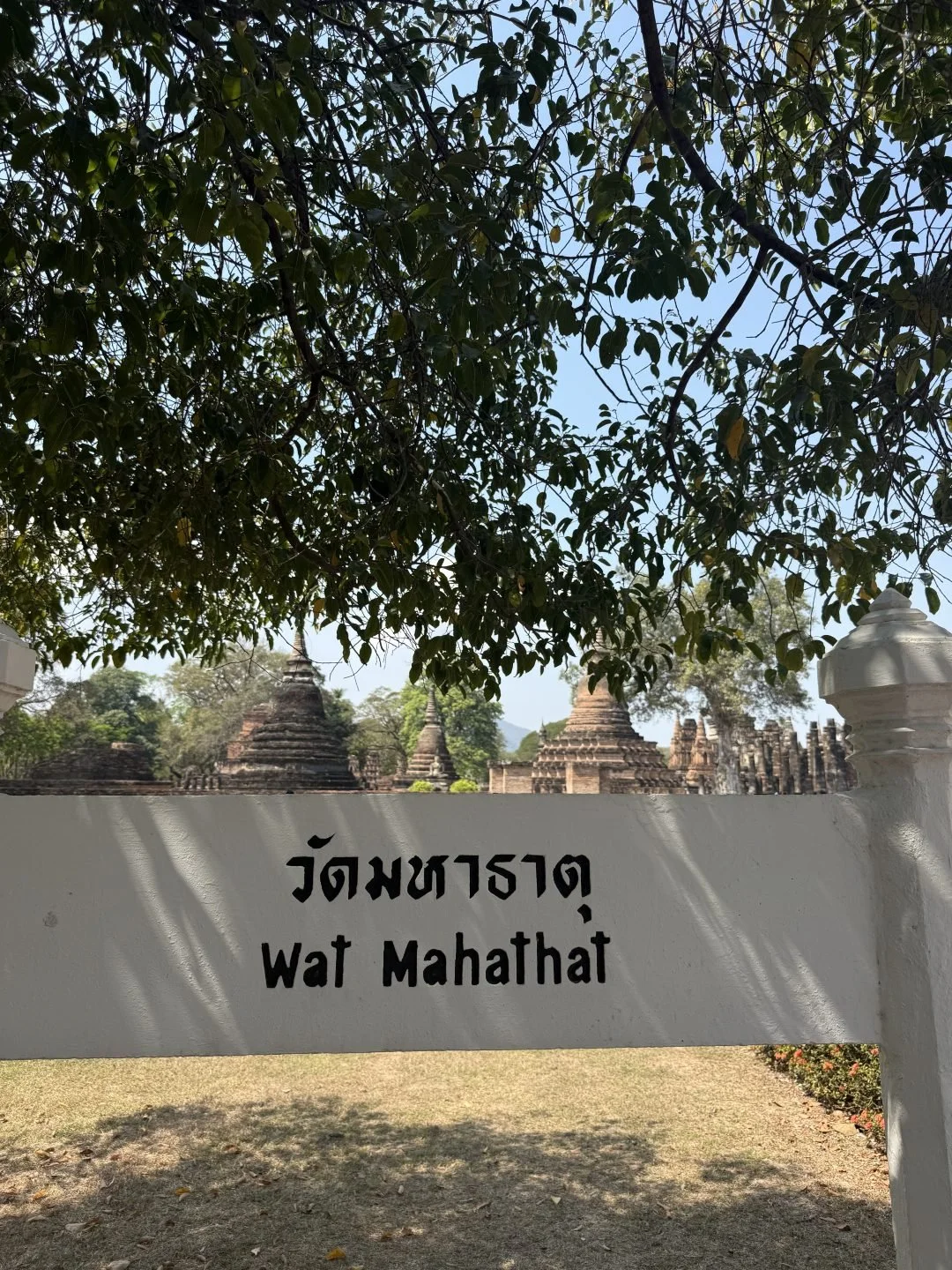
Wat Mahathat, Sukhothai
Ayutthaya vs Sukhothai: Which Temples are More Impressive?
Both Ayutthaya and Sukhothai are former ancient capitals, with Sukhothai being slightly older and home to more well-preserved temples. Many of the ruins in Ayutthaya are in fact “ruined”. By that we mean there was a brutal Burmese invasion in 1767 where many of the Buddha statues literally lost their heads. Sukhothai was invaded and conquered too, but that’s enough history for now. You’ll find out more when you visit yourself.
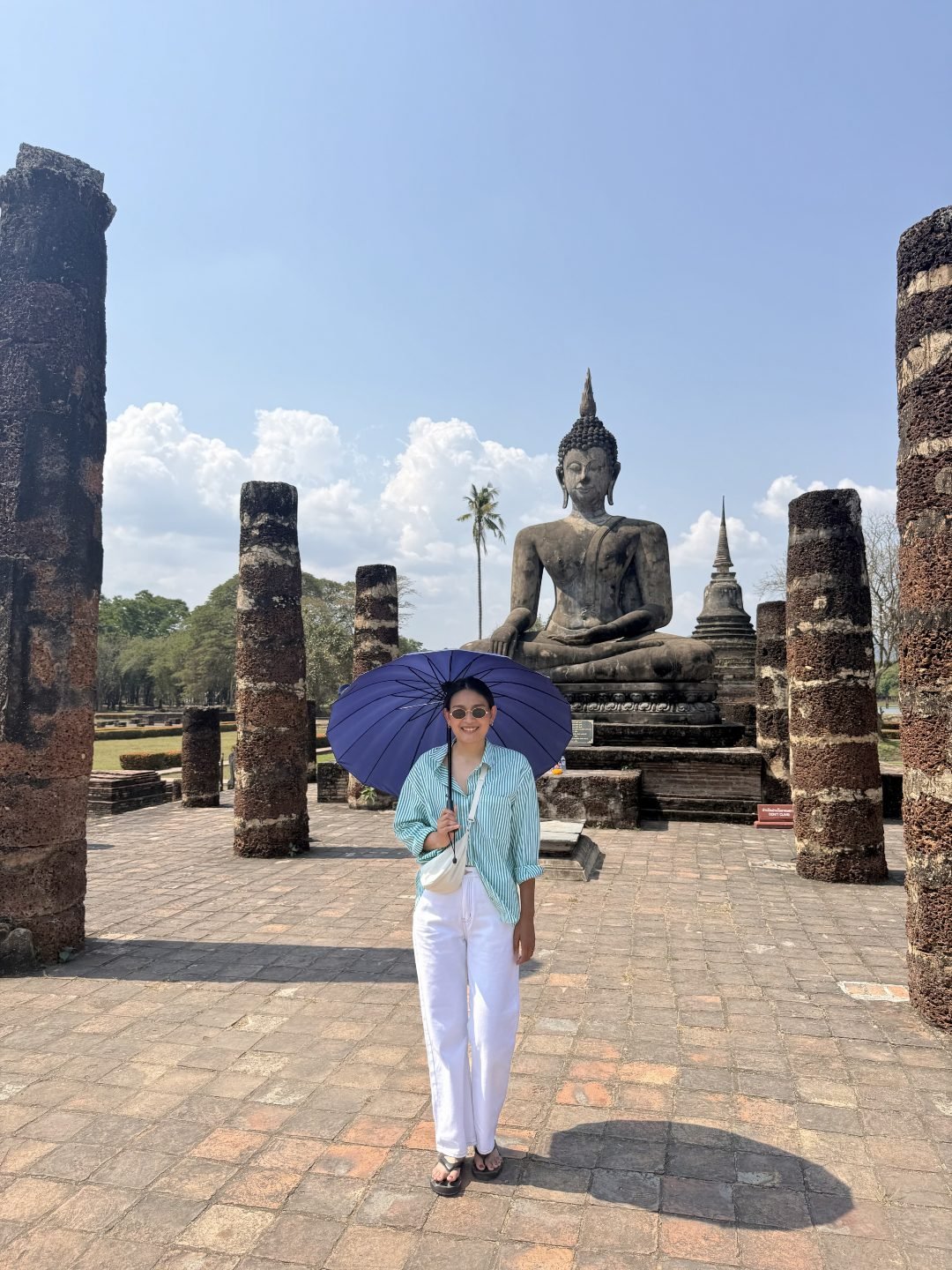
We thought the ruins were most impressive at Sukhothai. The majority of the Buddha statues are undamaged, albeit heavily weathered over the course of centuries. The highlight for us was the reveal at Wat Si Chum. You walk along a red brick pathway and see the face of Phra Achana poking through a square sanctuary. Wat Mahathat was epic as well, and we loved the ritual ponds dotted throughout the historical park.
While the river is nice in Ayutthaya, you don’t get as much nature or as many quiet paths to stroll along. The main sites are all within or right by the city, like Wat Yai Chai Mongkhon and the famous Buddha Head in a Bodhi Tree. Crowds tend to pour into Ayutthaya, and you’re often stuck behind a tour group with that annoying way they wave flags and shout to keep everyone together. Contrast that with the serenity of Sukhothai, where the only tour groups we saw were cycling through respectfully.
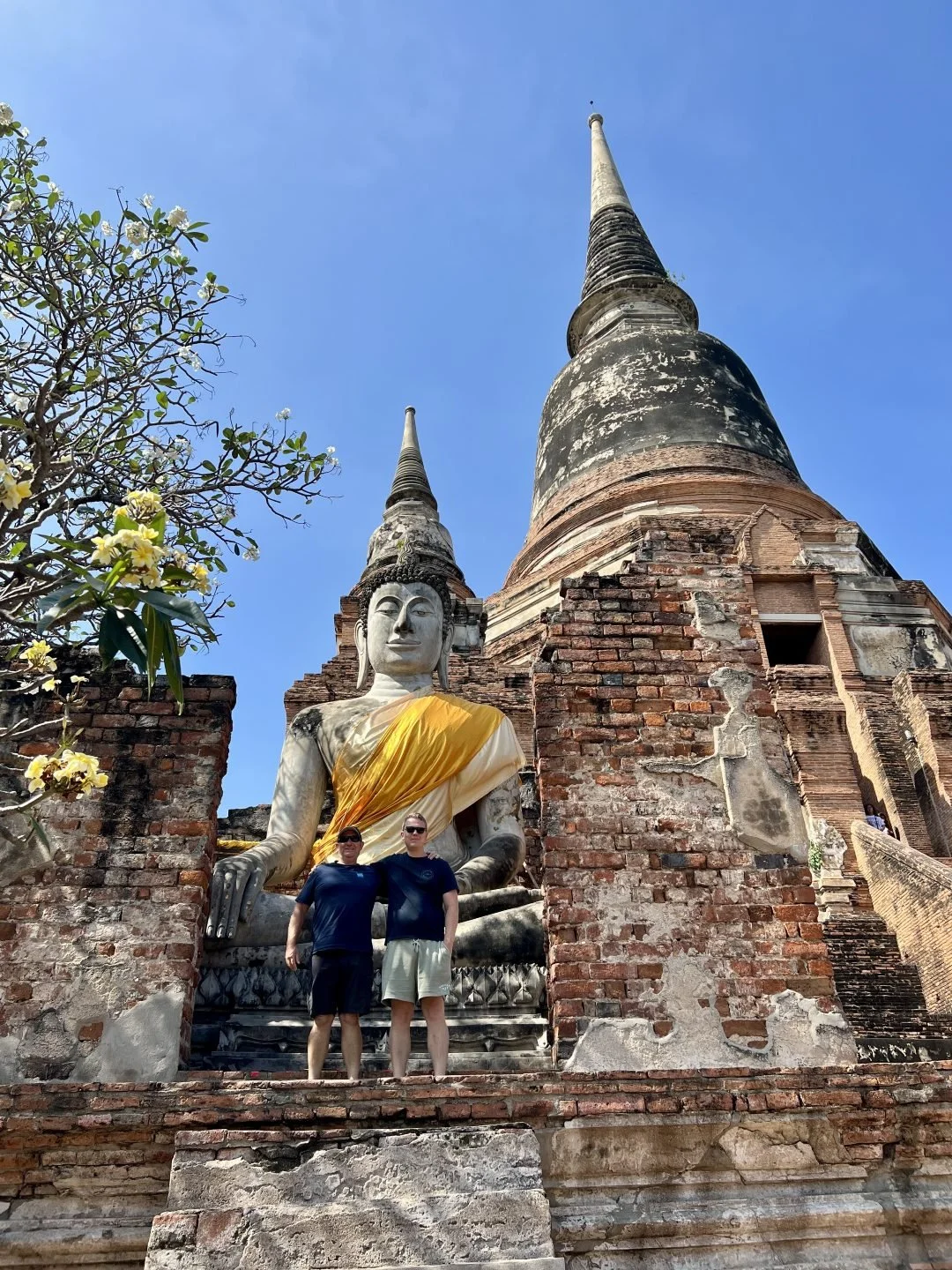
Additionally, many of the temples in Ayutthaya are Khmer-influenced. After already visiting Angkor Wat, we prefer to see places that have a vividly Thai design when we’re actually in Thailand. On the plus side, we did enjoy the brick structures and the Buddhas draped in orange cloth. Having an experience like this so close to Bangkok also means you can be absorbing history in the morning and standing atop a rooftop bar in the evening. If that sounds like you, check out our Day Trip Guide to Ayutthaya.
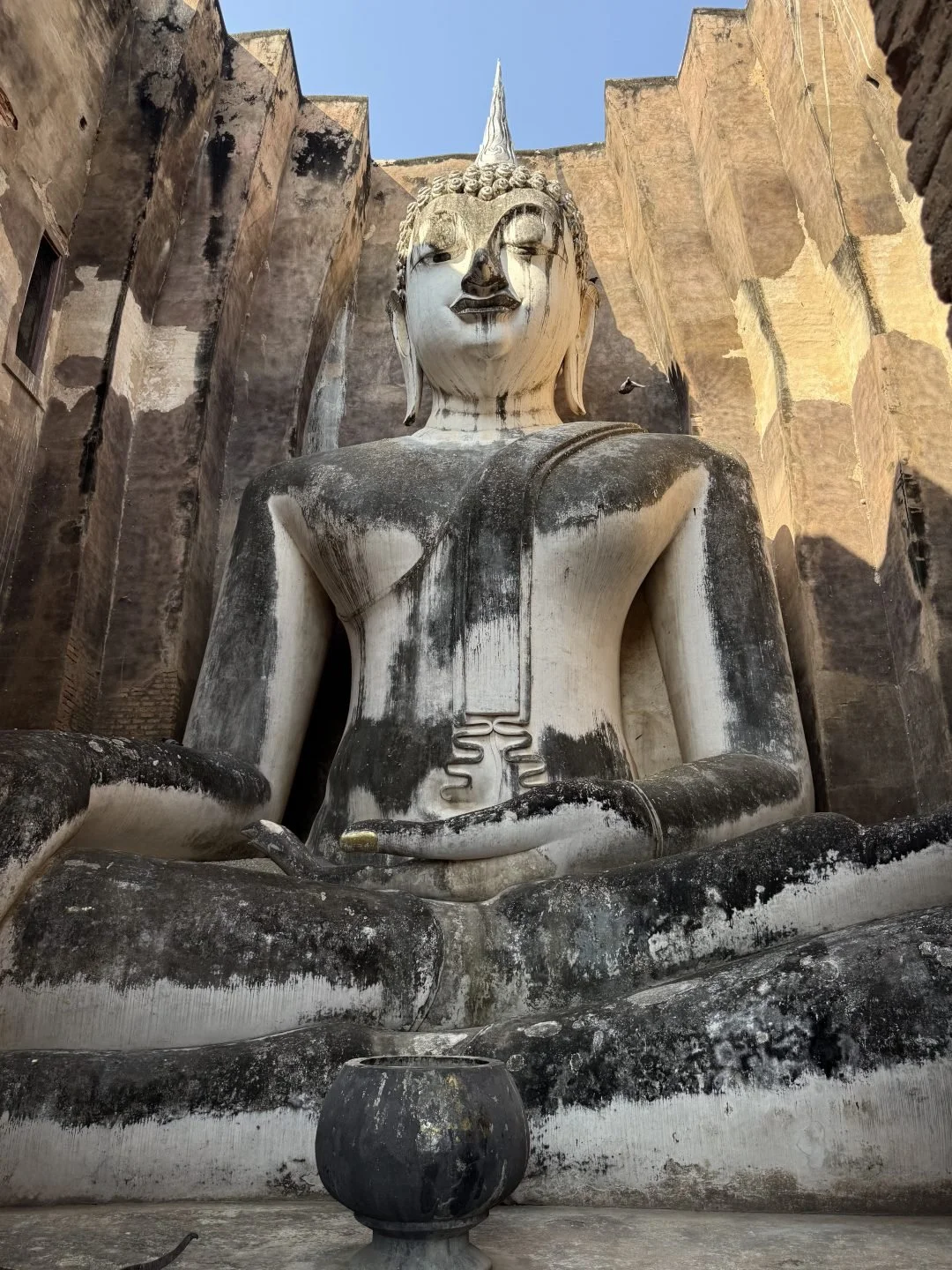
Wat Si Chum, Sukhothai
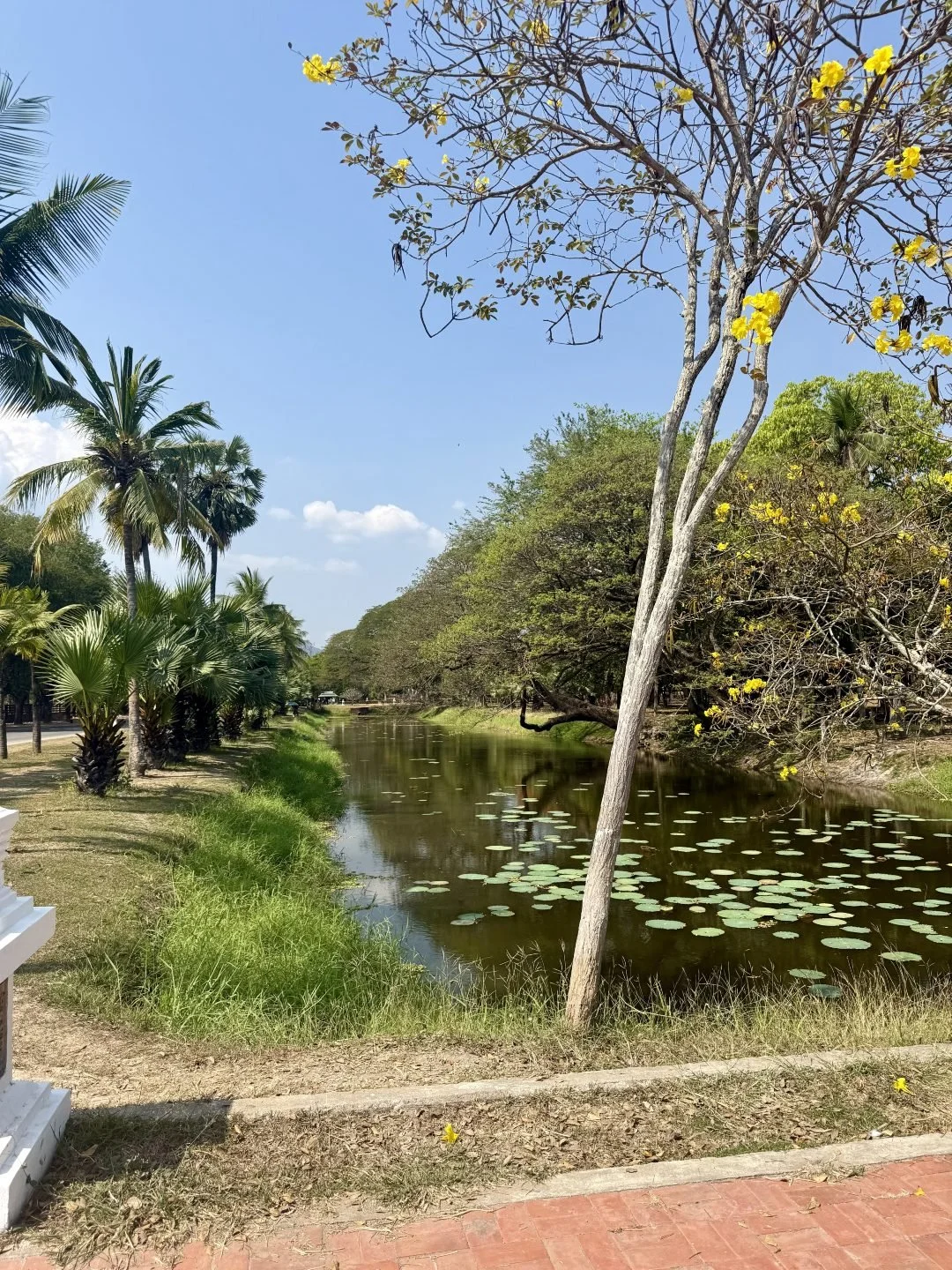
Ponds of Sukhothai
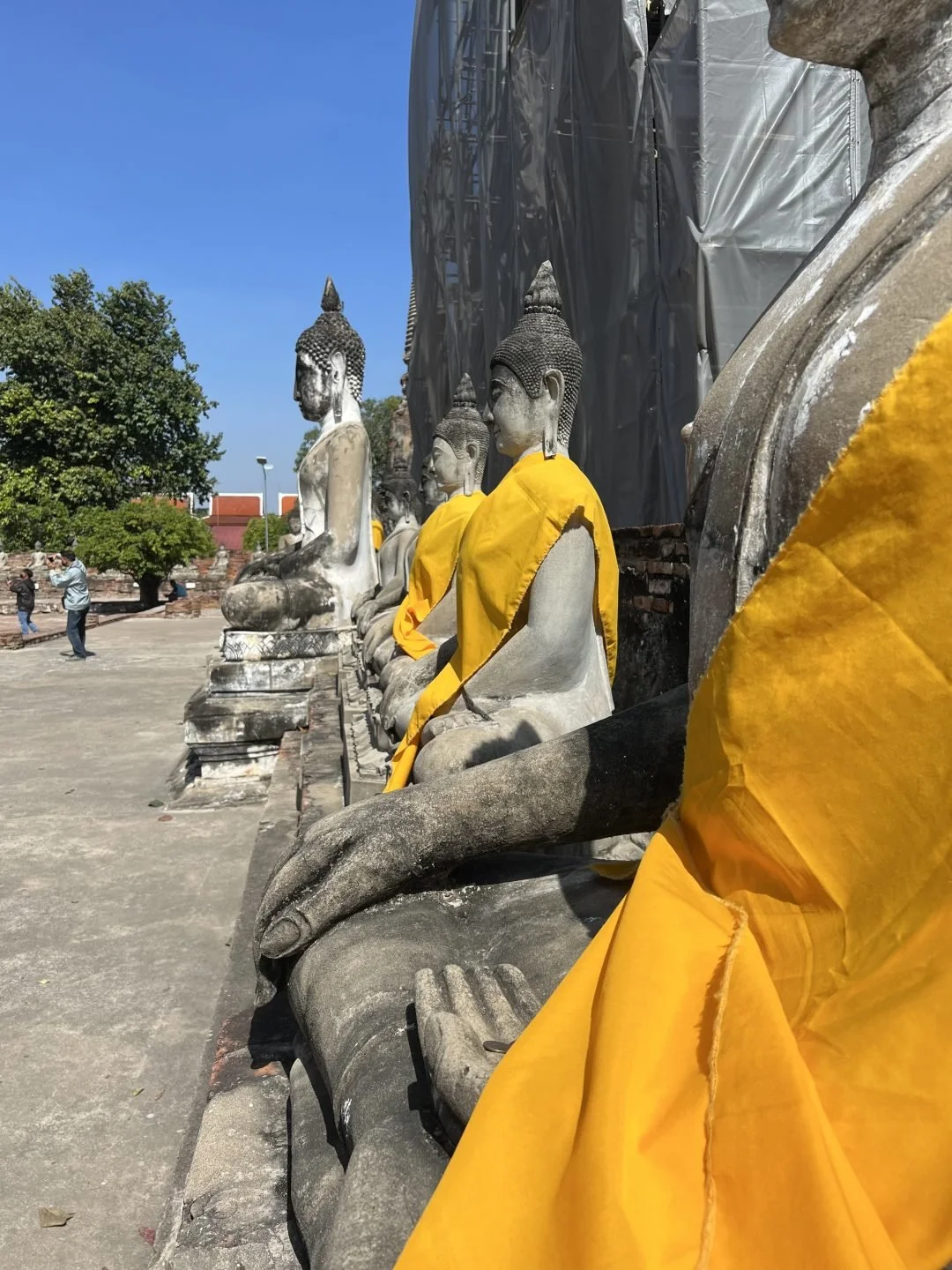
Buddhas draped in orange cloth, Ayutthaya
Why Sukhothai Beats Ayutthaya for a True Adventure
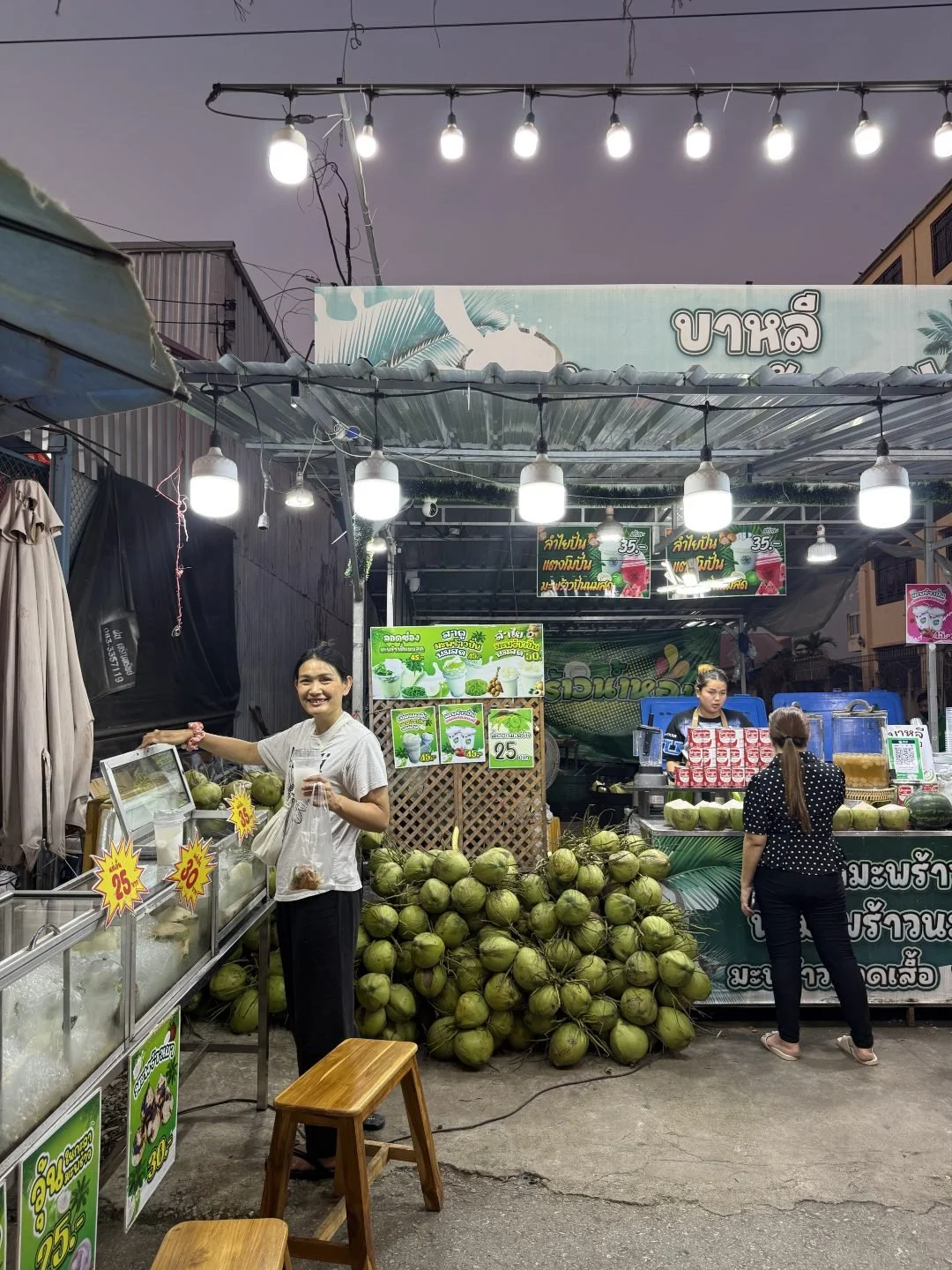
What surprised us the most about Sukhothai wasn’t the temples, it was how quirky the main town felt. The streets of New Sukhothai look almost identical to a place called Sa Kaeo, a province near Chanthaburi that we often visit to see Kat’s family. When you explore non-touristy towns like this in Thailand you often appreciate the little things like the guardian lion statues (Singha), ramshackle songthaews, and sunrise over the banana leaves.
Wandering around the town, there’s hardly any tourist signage that tells you how close you are to such an important archaeological site. And that’s why we loved it. There’s the odd touristy bar and restaurant but beyond that it’s just workers, monks, and children going about their daily lives. Some of this filters through to the historical park as well. We bumped into a group of school kids on a field trip who were far more interested in Cam as a “farang” (foreigner) than they were with the ruins. Sitting in the shade and chatting with the kids over an ice-cold Coke was a cool moment.
In our opinion, the best temples in Thailand can be found in Sukhothai and that’s saying something considering the sheer number of “wats” scattered across the country. But temples are only part of the equation. Choosing between these two ancient capitals mainly comes down to personal preference: do you want a buzzing add-on to your Bangkok trip or the chance to discover a remote part of Thailand? We know where we stand. Made your decision? Don’t miss our Sukhothai Travel Guide that features a detailed itinerary on how to explore the historical park properly.
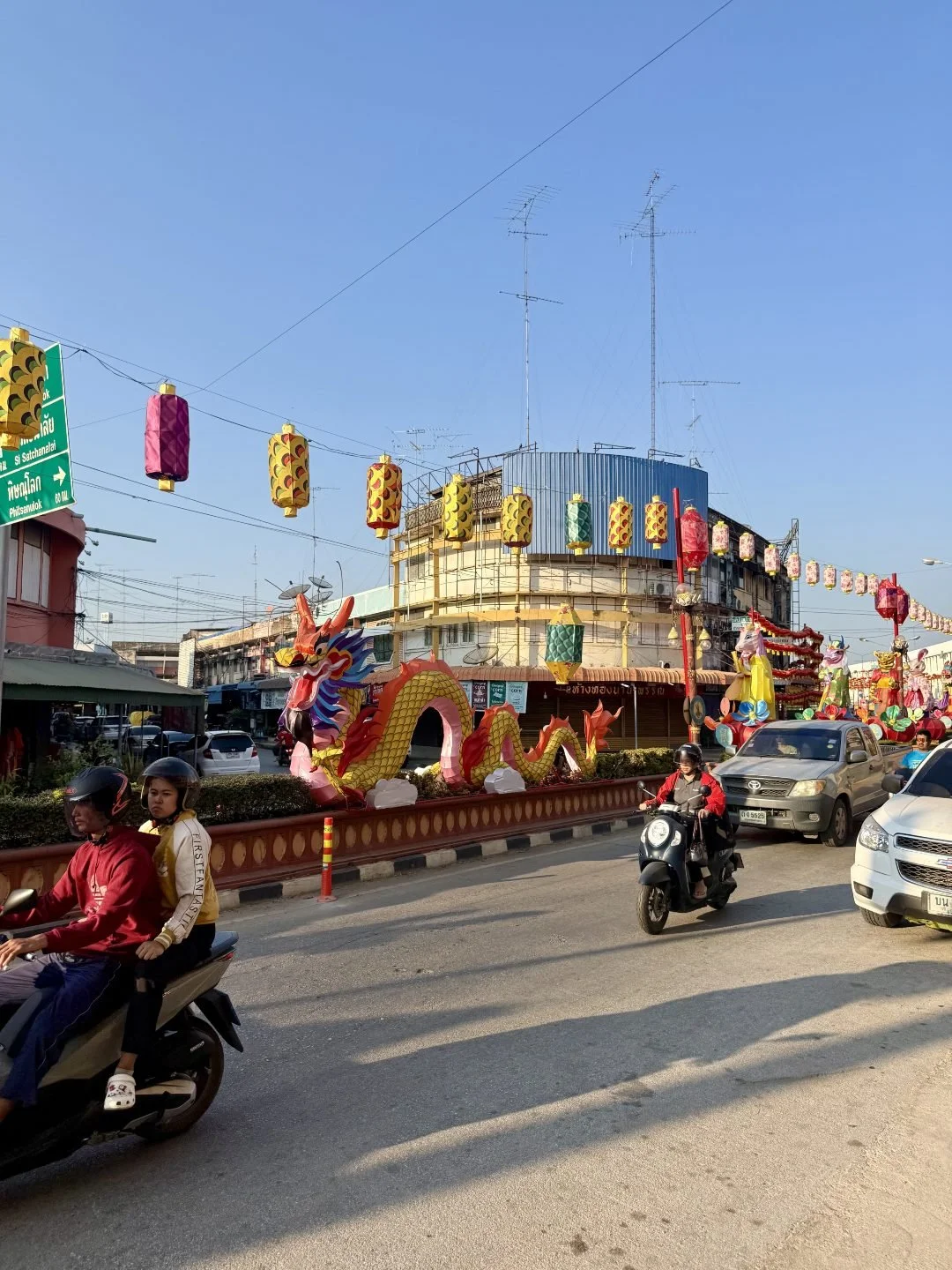
New Sukhothai
New Sukhothai
FAQs for Thailand’s “Big Two” Ancient Capitals
Which is the more family-friendly option?
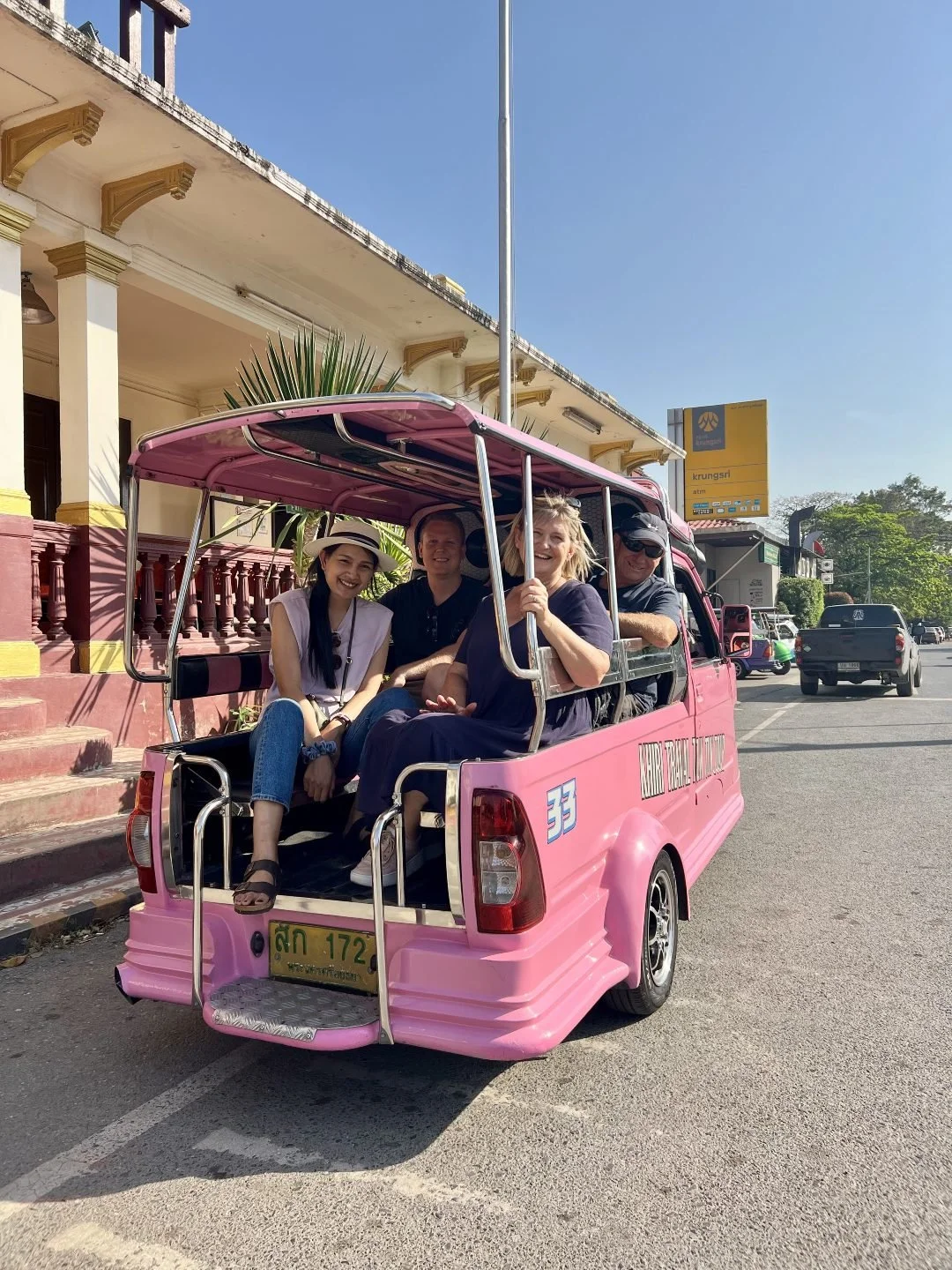
Ayutthaya can make for a fantastic outing with the kids when you factor in things like a fun train ride from Bangkok and an even more thrilling tuk-tuk ride. However, the traffic around Ayutthaya can diminish the experience and potentially cause some stress. Since Sukhothai Historical Park is more spacious and less crowded, young ones might actually prefer it. They’ll be able to stretch their legs in green spaces, and you won’t need to worry too much if they wander off. Plus, there’s the added benefit of riding around in electric golf carts, which is always a hit with families.
Riding a tuk-tuk in Ayutthaya with Cam’s family
What else can you do in Ayutthaya and Sukhothai?
Outside of temples, Ayutthaya stands out for its river activities and unique cuisine. Staying overnight would give you the opportunity to jump on a longtail boat at sunset and cruise around the historic island. Or hunt for treats such as Roti Sai Mai (cotton-candy dessert) at the night markets. The highlights in Sukhothai revolve more around the countryside landscapes. You could explore the rice fields, eat Sukhothai Noodles at the rural villages, or head back to the historical park at night to see the ruins lit up.
Is it worth visiting Ayutthaya and Sukhothai on the same trip?
We don’t suggest visiting both Ayutthaya and Sukhothai on the same trip, unless you’re a huge fan of ancient ruins. It’s better to pick one destination and then focus on the top three or four temples you really want to see. To be honest, many of the ruins look similar and “diminishing returns” can quickly set in (if you know what we mean). There’s so much to do in Thailand that it wouldn’t be wise to lose a week to the ancient capitals.
Temple hopping in Ayutthaya
What other ancient ruins or historical parks does Thailand have?
If you do have more time up your sleeve, because you’ve managed to sort a 60-day Tourist Visa or simply taken advantage of the 30-day extension, then it could be worthwhile to explore a few other far-flung ruins in Thailand. Phimai Historical Park is our top recommendation in this regard, with its Khmer-style sandstone structures. It could be combined with an immersive trip through Nakhon Ratchasima, otherwise known as Korat.
